A chief executive who makes playlists has accepted a small but revealing responsibility: other people will have to listen to his choices. Dr. Darren White enjoys that pastime alongside skiing, and his company’s rituals have included an all-company gathering called Friday Fire. It is a pleasingly human introduction to Aduro’s co-founder. Before the platform diagrams and investment announcements, there is someone thinking about what might get a room moving.
The musical detail suits a career spent thinking about participation. White and Dr. Toni Best founded Aduro in 2007. The company works with employers, bringing together technology, coaching and experiences designed around individual goals. White’s particular interest is the space between what an organization wants to accomplish and what gives a person a reason to take part. A compulsory good time, after all, has a formidable record of disappointing everyone.
His story moves between two scales: the person in front of you and the company you hope to build. Over the years, the scale has changed considerably. The question of how to make an invitation feel personal has remained.
Twelve years before the first outside cheque
White’s route to the chief executive’s office included running Clear Chiropractic in Washington’s Puget Sound area. He graduated from Life University in September 2001 and founded Clear in 2004. His early working life took him through associate, director and owner responsibilities. Those are different vantage points on a business: doing the work, organizing the work and being responsible for whether the enterprise can keep doing it.
Aduro carried him into a different kind of organization. By 2017, it had appeared on the Inc. 5000 list. The recognition put a public marker on the company’s expansion. The name itself comes from Latin, meaning to ignite or kindle. White and Best had chosen a word with rather more animation than the average business software noun, and the flame would become a recurring part of the company’s identity.
In January 2019, Aduro announced a $22 million investment from Abry Partners. It was the company’s first outside investment, arriving about twelve years into its life. At the time, Aduro reported nearly $40 million in annual recurring revenue and employed 240 people. These figures belong to that moment, when an established business was deciding how much faster it wanted to move.
The timing gives the investment its interest. Many startup stories begin with a fundraising announcement and supply the business later. White and Best had already spent years building theirs. Money arrived with an operating history attached. It also arrived with competitors in view: White said that competing with better-funded rivals was part of the reason for the round.
His plans for the money were specific. Product managers, designers, data scientists and data architects featured in his hiring intentions, alongside other business functions. He was also open to acquisitions as a way of adding capabilities and people. “Sometimes, finding an intact team can be a better way to grow,” he said. An intact team brings something an organization chart cannot quite order: people who already know how to work together.
Aduro had already taken that route in 2016, acquiring the Seattle startup Pivotal Living and bringing in its founder, David Donovick. By the time of the investment announcement, Donovick was Aduro’s chief product officer. The acquisition connected a founder from another enterprise with a role in shaping this one, giving White’s later comments a practical precedent.
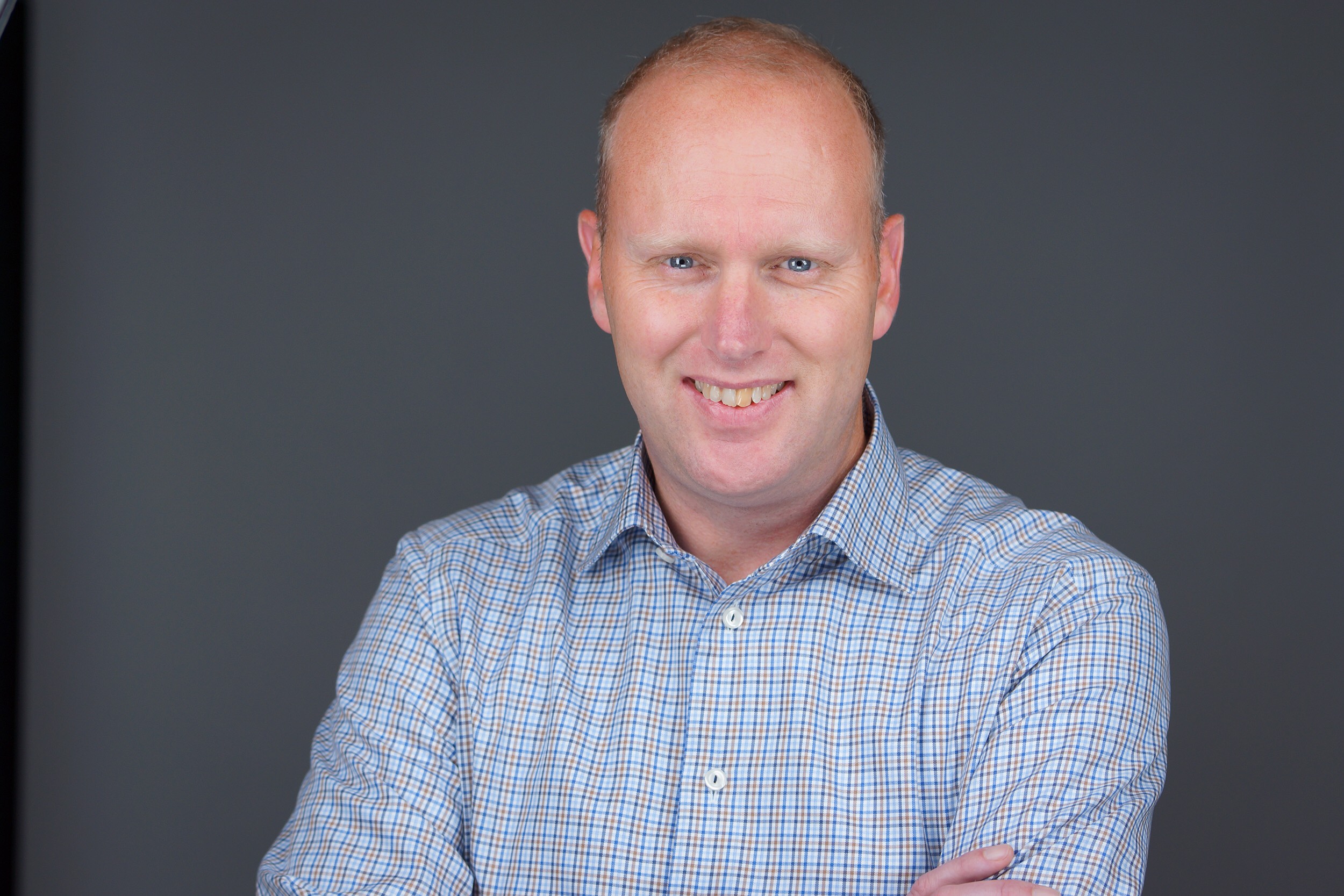
An invitation with room for the individual
What, exactly, was White trying to grow? Aduro’s offer extended into professional development, financial goals and social contribution. An employee could arrive with an ambition that mattered personally, rather than merely responding to an employer’s preferred agenda. The business proposition depended on making that first encounter useful enough to invite another.
This gives White’s work a familiar tension. A company buys a service for a workforce; the people using it have their own reasons for caring, or for ignoring it. Purchasing and participation are separate events. The contract can secure the first. Earning the second requires attention to the person who is being asked to spend time.
That interest also shaped his public conversations. At the 2018 Conference Board gathering, White appeared alongside Kathy Farmer of Levi Strauss & Co. for a session connecting individual interests with organizational outcomes. Its stated concern was how to judge success for both the individual and the business. The pairing matters: a platform founder and an employer representative were considering the same question from opposite sides of the purchase.
At the 2020 Culturati Summit, he joined a closing keynote with Eileen McNeely and Kathryn Farmer, moderated by Steven Tomlinson. The subject was a flourishing workplace culture and how to measure it. This was an appropriate setting for White’s recurring question: how do the things people experience in an organization relate to what that organization eventually accomplishes?
“From the beginning, our flame has symbolized the spark of change.”
Darren White, on Aduro’s brand identity
Friday has a name of its own
Inside the company, the language becomes less conference-like. By 2018, Aduro’s all-company gatherings included a huddle called Friday Fire. A weekly gathering is a modest piece of organizational machinery, but giving it a name makes it recognizable. Repetition can turn a meeting into a shared reference point. The calendar invitation has acquired a little personality.
Aduro’s current vocabulary continues the theme. Employees are called Firestarters. Its values include Bring Your Verve, Start Inside and Open to Possibility. The company uses Happy (8) Hours to describe an approach to the working day that makes room for flexibility, connection and humor. Such language tells you what an organization wants its atmosphere to feel like. The practical test is always what happens during the hours themselves.
Best belongs at the center of this story too. She co-founded the business with White and has spoken about its leadership practices. Her account of coaching emphasizes asking questions, allowing time for answers and giving employees room to develop their own thinking. That is a useful companion to a founder’s appetite for growth. A company needs people who can act without waiting for every answer to arrive from the chief executive.
The flame leaves its circle
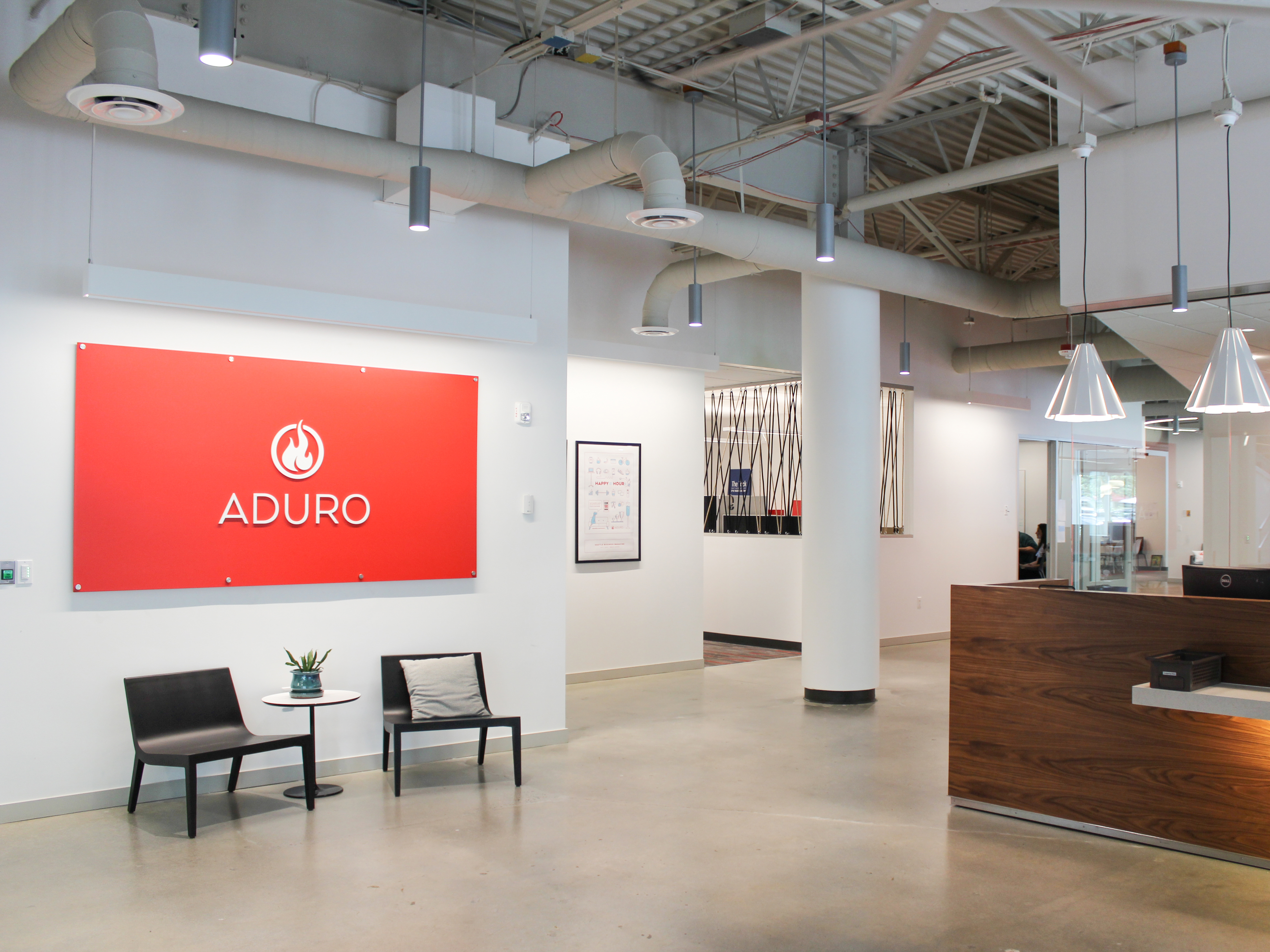
In 2025, White gave the company’s emblem a new chapter. Aduro introduced a refreshed identity alongside a redesigned platform. The earlier flame had sat within a circle. In the new design, it broke beyond that boundary. White explained the visual change in terms of greater control over the company’s technology and a more connected experience across its three platforms.
There is something endearingly founder-like about explaining a software strategy through the escape of a small graphic flame. The image makes an abstract operating decision visible. Owning more of the technology means accepting more responsibility for how its parts work together. The logo supplies the picture; the product has to supply the evidence.
White’s announcement also named the people behind the work, including Justan Peterson, Eduardo Gil de Montes, Christine Roy, Jennifer Griffin, Toni Best, Renee Petrie and Chris Cannon. A rebrand is easily narrated as an executive revelation. His account made space for designers, product colleagues and collaborators. The detail gives a better view of the work than a logo unveiled in splendid isolation.
White described the new identity as a reflection of how the platforms work together.
A larger world than the office
White’s interests extend well beyond the company’s Redmond base. By 2020, he had traveled to more than 100 countries with his wife and friends. At home in Seattle, life included a puppy, winter skiing and summer mountain biking. The specificity is welcome. There is a difference between announcing a passion for adventure and arranging one’s leisure around mountains, seasons and other people.
The travel number is striking, though the companions are the warmer detail. Shared experience sits comfortably alongside personal ambition here. The playlist habit belongs in the same picture. Both suggest an interest in experiences people have together. Founders are allowed to enjoy a weekend without turning it into a management principle. Some experiences deserve the pleasure of being enjoyed before anyone asks what they taught the leadership team.
There is also a quieter record of contribution. White took on a Summit Fellows mentoring role in November 2019 and is also a Summit Impact supporter. Life University recognizes him through its Academy of Fellows, a distinction for donors whose cumulative cash giving reaches at least $100,000. Mentoring and giving occupy a different register from funding rounds: time and resources directed beyond the business he runs.
Keeping the invitation open
White remains Aduro’s founder and chief executive, as well as a board director. The long tenure gives his public story continuity, while the changes in technology and branding show a willingness to revise the machinery around the original ambition. His aim is still expressed in terms of helping individuals and organizations realize more of their potential.
The portrait that emerges has several ordinary pleasures in it: a good playlist, a day on a mountain, a journey with friends. Alongside them are the less leisurely choices of building teams, taking outside capital and deciding what a company should own. White has spent years working across those scales. The invitation is personal; making it work for an organization is the business. Friday Fire is a fitting name for the point at which the two meet.
Follow the conversation
Explore White’s work, public appearances and company updates.
Aduro ↗Darren White on LinkedIn ↗Culturati speaker profile ↗The 2019 investment story ↗Aduro newsroom ↗Summit Impact supporters ↗