At the Port of Seattle, wellness could mean getting out to a baseball field. Earl Parker, a facilities and maintenance manager, volunteered with Baseball Without Borders. His employer supported the activity with time off, wellness points, and a place in its giving campaign. The detail is easy to overlook. It is also a useful introduction to Aduro, the company telling the story: an employee’s reason to participate might have very little to do with an employer’s reason to buy.
- Aduro combines employee well-being software with coaching and clinical services.
- Its core buyers are employers, particularly those paying their own health claims.
- A 2026 therapy launch adds an employed clinical team to its integrated care model.
In Aduro’s account, the Port’s Spirit and Wellness Program embraced hiking, volunteering, community events, and professional development. Participation rose from 28% to nearly 90%. That is a company-published case study, not an experiment isolating Aduro’s contribution. Still, the design choice is revealing. The program made room for things employees already cared about. Baseball counted.
The barrier comes before the behavior
Aduro, founded by Darren White and Toni Best, describes its mission as unlocking human potential at work. Its current releases date the company to 2007. The phrase “human performance” sounds broad until you examine the problem it is meant to address. A health goal exists inside a life: money, family, work, confidence, sleep. Changing one behavior may require understanding several of the others.
That is the logic behind Aduro’s six areas of well-being: lifestyle and health; purpose and contribution; development and growth; mindset and resilience; money and prosperity; relationships and community. The list puts a financial worry and a fitness goal inside the same frame. It also explains why a program might offer both a biometric screening and help thinking through a personal goal.
“Be free to be your whole self.”
Dr. Toni Best, co-founder
The company applies similar language internally. Employees are “Firestarters,” and its values include “Start Inside” and “Bring Your Verve.” There is some cheerful corporate vocabulary here. But the underlying proposition is concrete: people arrive with different motivations. A program designed around that variation has more possible starting points than one built around a single prescribed activity.
A screening needs somewhere to go
The product range follows that argument. Wellmetrics gathers health information through workplace screenings, home kits, offsite laboratories, and forms completed by a member’s provider. Connect supplies digital learning. Human Performance Coaching adds confidential phone or video conversations. Connect Care brings lifestyle education, coaching, and biometric tools, including continuous glucose monitors, into cardiometabolic support.
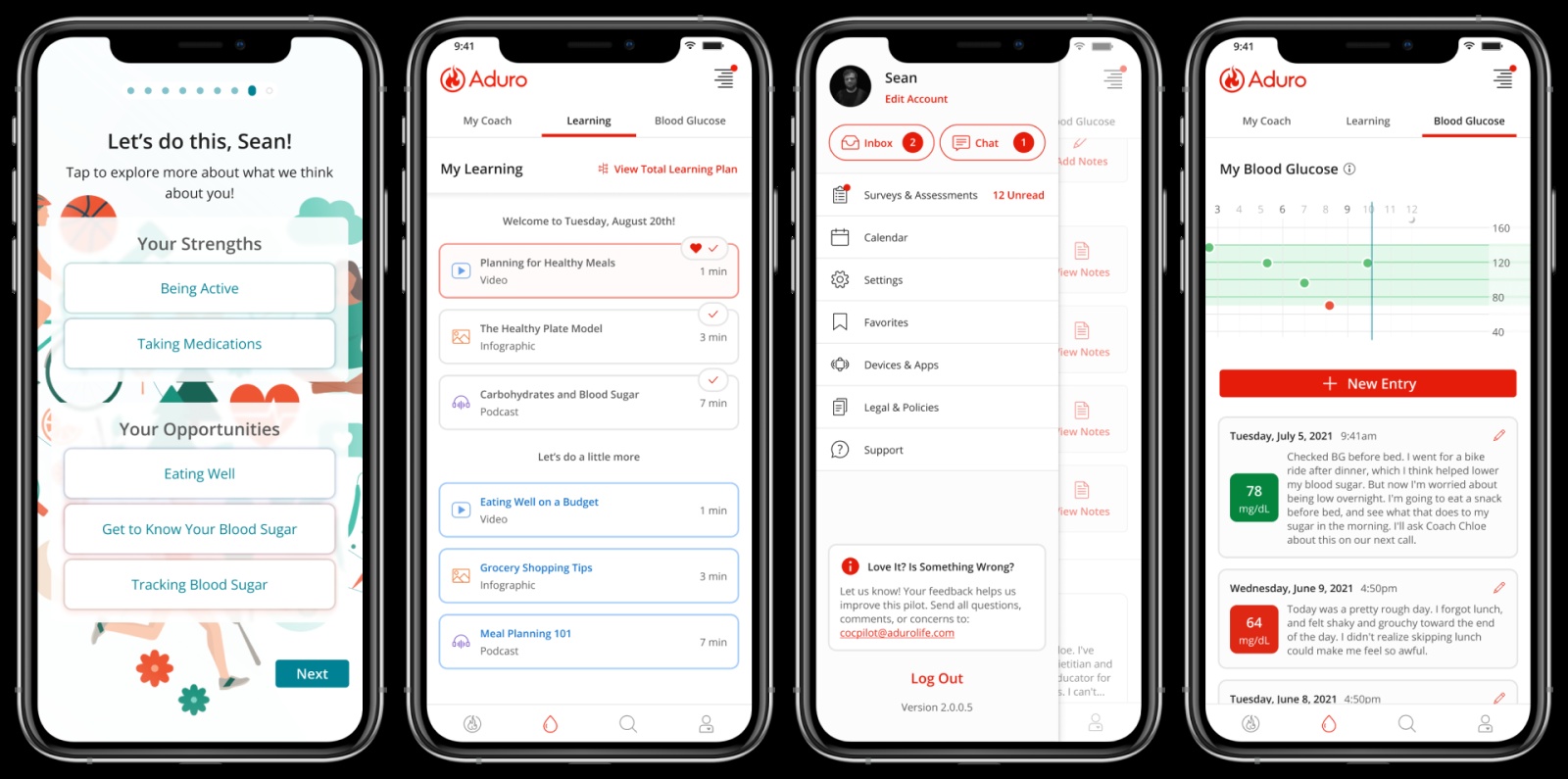
A member can learn from a measurement and discuss what to do next with a coach. That sequence is the product’s practical attraction. The number is only the beginning. Aduro names Bon Secours Mercy Health and Providence Health as Connect Care partners, placing the offering alongside healthcare delivery as well as the familiar employer wellness budget.
Mercy Health’s customer story makes the connection tangible. Its caregivers needed support for their own health while caring for other people. Aduro describes employees discovering a reason to change through a screening, then finding help through classes and coaching. The entry point varied; the need for follow-through remained. That example explains why the company sells a combination of services. A screening can uncover an issue, a lesson can explain it, and a conversation can help a member decide which change is realistic in daily life.
Aduro Intelligence is the company’s AI layer. Its Food as Medicine experience analyzes meal photos, provides a Real Food Score and macronutrient information, and offers guidance informed by personal goals. The proposed advantage comes from combining information across interactions. Whether that produces better outcomes is a separate question from whether the software can produce a recommendation.
Buying the people who deliver care
In September 2025, Aduro announced an agreement to acquire Trusana, a virtual mental health service. A subsequent release says the acquisition occurred in December. In July 2026, Aduro launched Mental Health & Resilience, a dedicated therapy benefit for self-insured employers. The sequence moves its whole-person argument into a consequential operational decision: who actually provides the care?
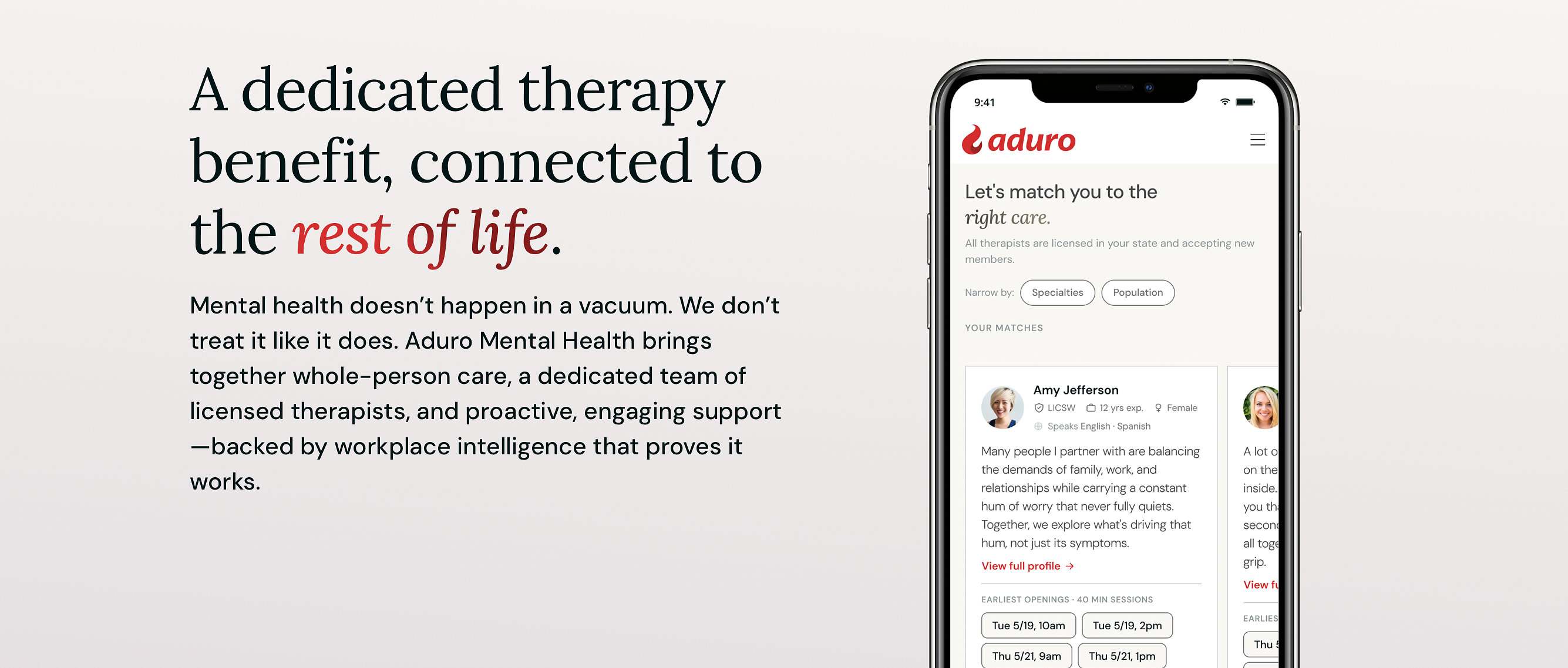
The service uses employed licensed clinical social workers. Aduro describes therapists working with its board-certified coaches, supported by Trusana’s credentialing, intake, and scheduling operations. It also offers digital content and workforce-level insights. The staffing choice makes its integration claim more specific. The company is taking responsibility for a provider layer, with the coordination work that entails.
The employer’s arithmetic
Aduro’s buyer has a different starting point from the baseball volunteer. A self-insured employer bears the financial consequences of covered healthcare claims and wants employees able to work and live well. Aduro sells platform access and services to organizations. Its solutions can stand alone or work together, allowing a buyer to choose a narrower benefit or a broader program.
In January 2019, Aduro secured a $22 million strategic investment from Abry Partners. The announcement tied the money to innovation, growth, and expansion. Abry’s portfolio page describes an integrated business built around testing, measurement, and intervention. That architecture helps explain Aduro’s position between conventional wellness software and more focused care providers.
The alternatives include platforms such as WellRight, Limeade within WebMD Health Services, and meQ, formerly meQuilibrium, plus combinations of separate coaching, screening, and therapy vendors. Comparing them requires looking at the purchased services. A shared interface can simplify access. Employers still need to examine eligibility, clinical availability, data handling, and whether a referral becomes an appointment. Those handoffs determine how much integration an employee actually experiences.
The breadth also sets conditions for success. A member must trust the service enough to use it, and the available support must fit the problem. A home screening option helps a remote worker enter the program; a coach can help turn information into a plan. Neither guarantees that someone will continue. An employer evaluating Aduro should therefore follow the journey beyond enrollment: whether people return, receive appropriate support, and make progress on the measures relevant to their goals.
Copy the question
The lesson worth borrowing is modest: ask what a person wants to do before deciding how to help them do it. Then make the next step easy to find. At the Port, that could include supporting community volunteering. In Connect Care, it can mean interpreting biometric feedback. In therapy, it requires an available clinician. Aduro’s broad promise becomes useful when those individual encounters work. The whole story is assembled one encounter at a time.