At FCP Euro, an employee suggestion can end up on a wall. The Connecticut auto-parts distributor uses a “Wall of Wins” to show changes made in response to staff feedback. It is a small detail with a large implication: people can see whether speaking up accomplished anything.
- WebMD Health Services sells workplace well-being programs to organizations.
- Its portfolio pairs digital health tools and human coaching with TINYpulse employee listening.
- The useful lesson: assign someone to act on feedback, then show the result.
WebMD Health Services publishes the FCP Euro case as evidence for TINYpulse, its employee engagement software. Managers learn to use team dashboards, leaders explain decisions, and employees see the follow-through. The reported Engagement Index rose from 3.79 in 2024 to 4.71 in 2025; survey completion reached 93% in 2026.
Those are customer results, not a controlled experiment. Still, the wall suggests an interesting question about the company behind the software. What business is a health company in when its product helps a manager answer a complaint?
01 / The health company inside the workplace
WebMD Health Services occupies the employer and health-plan side of the WebMD family. Organizations buy programs for employees and members. The work includes population health management, lifestyle and condition support, coaching, and the practical business of getting people to use their benefits.
Its customers include large employers, health systems and public agencies. Farm Credit Foundations and ITW appear in its customer stories. The company reports more than 3,500 clients and 65 million people empowered. Those figures describe its stated reach; they should not be read as a count of people opening an app every morning.
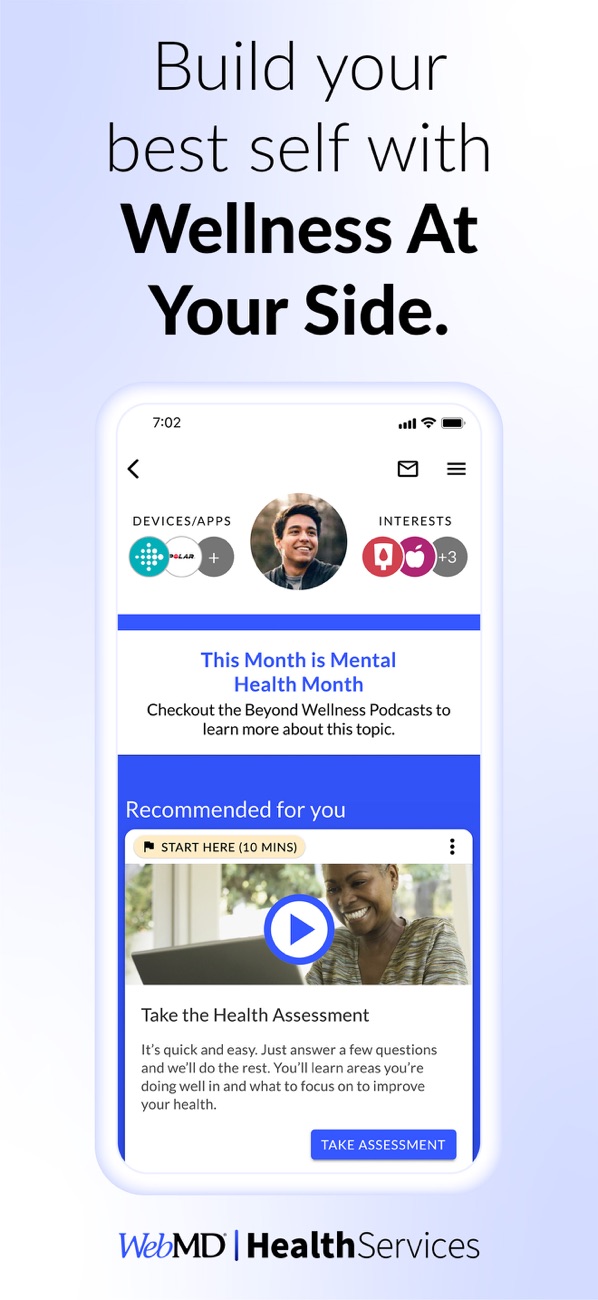
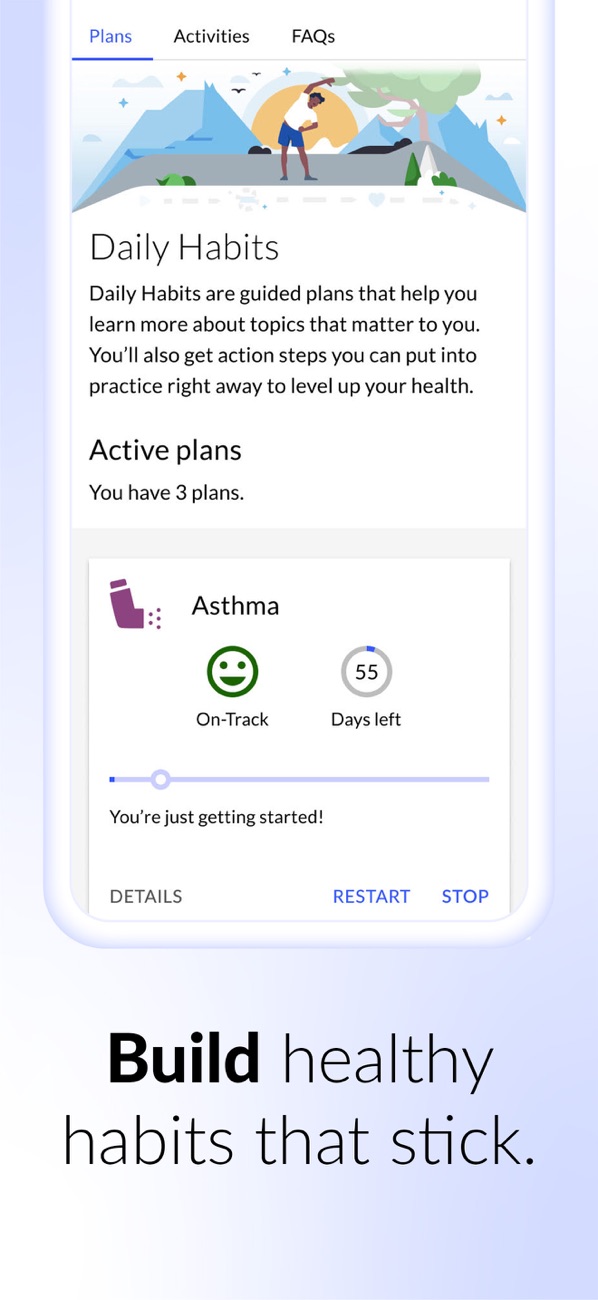
The central product, WebMD ONE, brings several dimensions of well-being into a configurable experience. A participant might complete an assessment, follow a habit plan, join a challenge or find relevant support. Employers get help designing programs and understanding participation. The proposition is to make scattered resources easier to find and use.
02 / A human being behind the login
The app is only part of the service. WebMD supplies health coaches, program specialists and communications support. A reminder can point someone toward a resource; a coach can help turn an intention into a manageable next step. Dedicated well-being staff can also take on work an employer’s benefits team struggles to fit into its day.
That service layer helps explain its competitive position. Alternatives include Personify Health, TELUS Health, Sharecare and Vitality. WebMD emphasizes personalization, customer support and its combination of digital tools with people. A buyer has to compare the actual package: a platform subscription and a program with substantial staffing are different purchases.
Its expertise also has an institutional home. The Center for Research includes specialists in psychology, epidemiology, behavioral science and data analysis. A Clinical Advisory Board supports clinical credibility. Within its own workplace, the company describes wellness challenges, volunteering and social activities as expressions of the culture it sells to clients.
03 / The acquisition that widened the question
In August 2023, WebMD completed its acquisition of Limeade. A securities filing puts the amount payable to Limeade common shareholders at approximately $74 million, funded from WebMD’s available cash. Alongside a well-being business came employee listening capabilities, including TINYpulse.
Well-being programs and employee listening now sit in the same portfolio.
In March 2024, the company announced the return of the TINYpulse name after the product had been called Limeade Listening. The tool collects employee feedback, supports anonymous exchanges and offers recognition through Cheers for Peers. Its purpose extends beyond measuring sentiment: managers can respond while a concern is still a concern, rather than an exit interview.
The acquisition announcement emphasized more personalized experiences and meaningful engagement. The strategic interpretation is straightforward: employee health and workplace experience belong in the same conversation. A coach can support an individual. Employee listening can reveal something the organization needs to change.
“Buy-in from leadership is so important.”
Nicole Batista · Wellness Manager, FCP Euro
04 / Who pays, and what the numbers mean
WebMD’s business model puts the organization in the buyer’s seat. Employers and health plans pay for platform access and services; eligible participants receive sponsor-funded access. Pricing depends on the workforce, selected services and customization. The free download of Wellness At Your Side still requires a qualifying employer or health-plan account.
A useful concrete example comes from Marathon Petroleum. Its WebMD-supported Well ALL Ways program offers employees up to $400 and eligible spouses or domestic partners up to $200 for qualifying activities. These are participant rewards. They are separate from what Marathon pays its vendor.
The distinction matters when evaluating results, too. Survey completion measures participation. An Engagement Index measures something else. Neither number, by itself, tells a buyer what happened to healthcare spending or whether software caused the improvement. Choose the outcome before choosing the chart.
05 / The next question is getting more specific
The company’s 2026 research surveyed 3,872 full-time U.S. employees. Financial well-being ranked lowest among five dimensions for the third consecutive year. Its partner network addresses needs beyond exercise, with Enrich for financial guidance, meQuilibrium for resilience and Togetherall for moderated peer support.
In September 2026, WebMD added a Sourcewell cooperative purchasing contract, opening another procurement route for eligible public agencies. Its October newsroom update focused on employer support through menopause. Both developments make the offering more concrete: particular buyers, particular needs, particular ways to get help.
For a prospective customer, the practical test starts before signing. Decide who owns the response to feedback, which changes managers can authorize and how employees will hear about progress. A system can organize that work. If leaders collect answers and leave conditions untouched, even a handsome dashboard becomes another place where suggestions disappear.