A person goes for a walk, records a workout, and opens the company wellness challenge. Two streams of data describe one piece of exercise. Should the leaderboard reward both? It is an unglamorous question for a business born of meditation. It is also a good place to meet Wellness Coach.
- For employers: wellness content, human coaching and team challenges in one platform.
- For employees: daily tracking, nutrition tools and support, with access through workplace apps.
- The commercial bet: a benefit earns its place when people keep using it.
The company calls its answer TrueStep Validator. It compares recorded steps with steps estimated from activities, applies rules to overlapping workouts, and avoids simply adding everything together. Where the rule applies, the higher eligible count wins. The conversions are estimates, as the company’s help guide acknowledges. A bicycle has not secretly become a pedestrian.
This tiny referee tells you something about the larger business. Wellness Coach sells an employer-funded platform for mental and physical wellbeing. Its territory includes personal coaching, meditation, fitness, nutrition, challenges and recognition. Once colleagues compete, and rewards become possible, the plumbing matters. Encouragement needs rules that people can understand.
The retreat, and the reply
Before the dashboard came the exhaustion. In the founders’ account, D and Julie Sharma had reached a breaking point after years in the startup world. They went looking for a different way to live. At a retreat in Thailand, coaching from a monk introduced them to mindfulness, journaling and attention to the present.
The interesting discovery was the interaction. A recording can tell you what to do. A teacher can hear what you are struggling with and respond. Early reporting on Meditation.live described a service where participants could ask coaches questions during live sessions. That was the experience the founders wanted to carry out of the retreat and into an app.

With Bhartesh Chhibbar, they built Meditation.live. The business dates to 2018. In September 2019, it announced a $3 million investment led by SoftBank Capital NY, with plans to expand its experts, classes and language support. Slack integration was already part of the proposition. Even in its meditation years, this was a product with an eye on the office.
When meditation became too small a name
On March 16, 2020, the company announced that Meditation.live would become Wellness Coach. It was adding live and interactive classes in nutrition, professional development, leadership and entrepreneurship alongside mindfulness and fitness. The company said it had signed more than 50 new enterprise clients in the preceding six months.
“There is incredible demand for a full-service, tech-enabled enterprise wellness solution.”
D Sharma / March 2020 company announcement
That sequence matters. The broader offering was announced alongside reported enterprise demand. It makes more sense to read the rebrand as a widening of the product’s job than as evidence that meditation had failed. The customer wanted help with more of the working person’s life.
In December 2021, Zoom named Wellness Coach among the second batch of Zoom Apps Fund investments. The amount was undisclosed. Zoom described a platform with individual and group coaching, team tools and on-demand sessions. The investor was also one of the places employees could encounter the product.
An app with two customers
There is the person who approves the invoice, and there is the person who opens the app. Their needs overlap, but only partly. HR wants a program it can introduce, administer and evaluate. An employee might want help sleeping, a nutrition coach, or a reason to take a walk at lunch.
Wellness Coach addresses the first audience with an administration portal, engagement reporting and implementation support. Its current plans describe dedicated customer-success and implementation specialists for mid-market and enterprise customers. The second audience gets daily tools and access to human support, depending on the package.
Integrations with Microsoft Teams, Slack and Zoom give the benefit a route into familiar software. The company advertises an interface supporting more than 100 languages, while its Premium plan describes human coaching in more than 30. Those figures describe different things. A translated button does not guarantee a coach for every language and every specialty.
Public testimonials place the product in organizations including Certinia, Wynn Resorts and 2U. One Certinia testimonial singles out the ability to host company challenges. That is a wonderfully practical compliment. A benefit manager needs something the organization can actually run, not merely admire in a sales demonstration.
What the monthly bill buys
The current public monthly selector lists three plans: Starter+ at $6, Premium at $12 and All Access at $18. The first ten Starter+ licenses are free. Larger programs are personalized through a demo, and coaching credits and extras need to be understood before a buyer treats the headline price as a complete budget.
Listed license prices. Enterprise configuration, coaching credits and reward budgets affect the package.
Starter+ covers challenges, tracking, the on-demand library, community group coaching, AI support and nutrition tracking. Premium adds personal coaching with configurable credits. All Access adds leadership and team coaching, recognition and weight management; rewards are conditional on an available budget. The structure lets an employer buy daily habit tools before paying for a broader service.
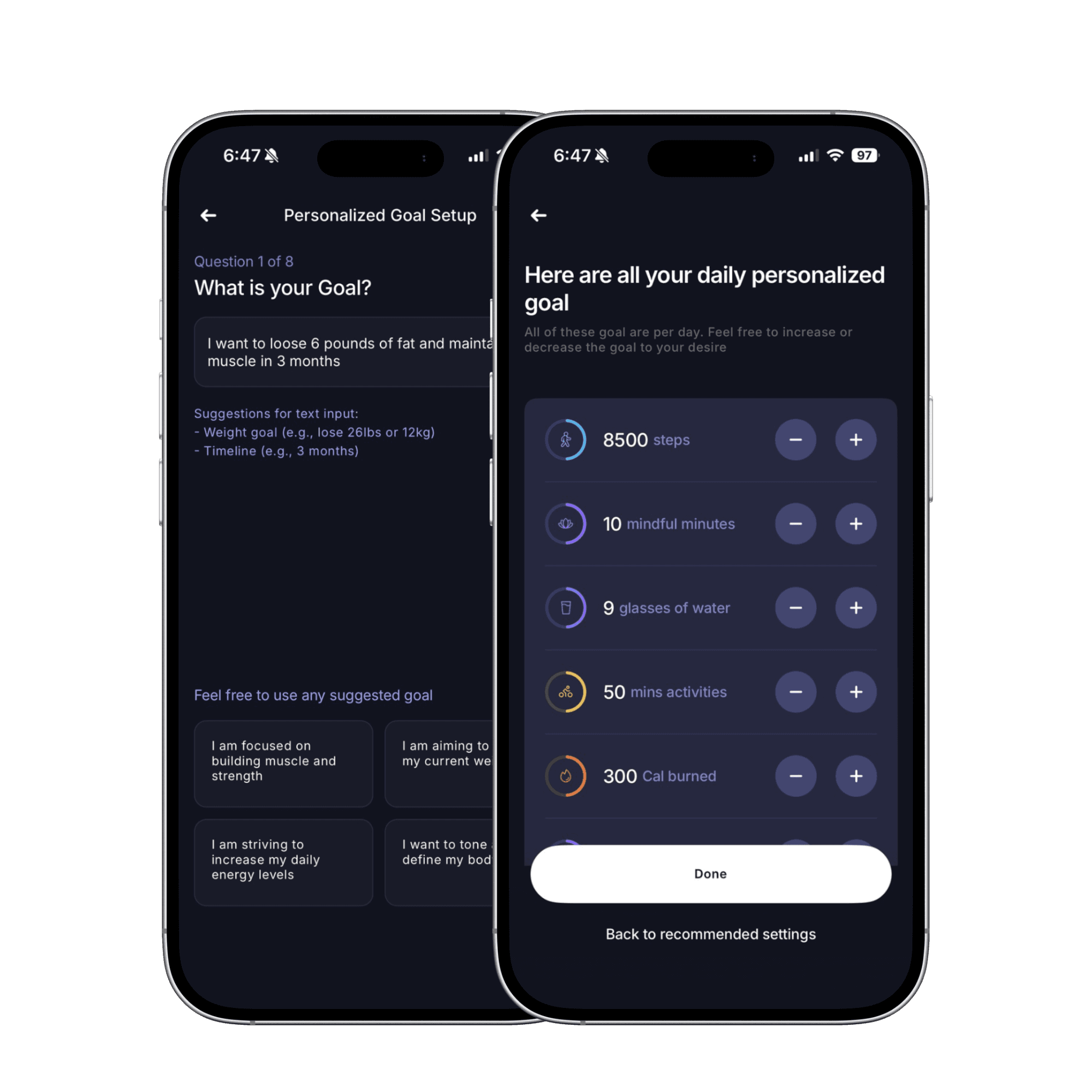
The product’s expertise comes through its coaches and structured content. The advertised library contains more than 4,000 resources. Coaching topics include stress, career development, parenting, fitness and financial wellbeing. Nutrition tools let users photograph meals and receive estimates, while AI guidance can suggest meal plans, grocery lists and relevant content.
In the market, Calm Health offers an adjacent mental-wellness proposition, while Wellhub connects employees to fitness and wellness options. Wellness Coach’s particular pitch is the combination of coaching, daily tracking and employer-run engagement tools. A buyer choosing among them should begin with the actual need: clinical support, fitness access, personal guidance or a company-wide participation program.
Trust has to survive the leaderboard
A company-sponsored app sits in a delicate position. The employer pays, but employees supply the personal goals and health information. Wellness Coach says individual information, care-plan details and progress remain private, with employers receiving anonymized aggregate insights. That boundary is central to whether someone will use the service candidly.
In March 2025, the company announced completion of a SOC 2 Type II audit conducted by Accorian Assurance, covering September 2024 through March 2025. It is an enterprise security milestone. It does not, by itself, measure whether coaching improves someone’s health or whether a challenge changes their habits.
TrueStep addresses another kind of trust: trust in the game. Its help documentation describes taking the higher eligible activity count and handling overlapping exercise. The lesson is easy to export. Before you attach recognition to a number, decide how that number is produced. Otherwise your cheerful competition acquires a very tiresome appeals department.
A smaller experiment worth copying
For an employer, the useful experiment is modest. Choose a voluntary group, define a participation goal, make access easy, and explain what the employer can see. The free Starter+ licenses make a small pilot possible. Measure repeat use and ask participants which features they would miss. Registration alone is a low bar for a benefit intended to become a habit.
The limits are equally ordinary. People need time, confidence in the privacy boundary and a service that fits their language and circumstances. An overloaded workforce may need workload changes as much as a wellness resource. Coaching availability, credits and reward budgets must match the promises made at rollout. An app cannot manufacture room in the working day.
There is a gentler detail in this otherwise administrative story. During the early pandemic, Wellness Coach chose a dog mascot called Pawsitive to make its nudges feel approachable. The dog and the validator belong to the same product: one offers encouragement, the other keeps the score honest. Between them lies the company’s real assignment - making a purchased benefit useful enough to return to.
Take a closer look
Explore the tools, watch the company’s videos, or follow its updates.