The first version of Opción YO had a neat startup answer to a painful question. Millions of Hispanic people wanted therapy, many of the big online platforms worked mainly in English, and two Latina psychologists knew qualified Spanish-speaking specialists. Build the marketplace. Match the people. Put the appointment on a screen. This was November 2019, when a video call with a therapist still felt like a compromise rather than a category.
Then co-founders Daniela Sichel and Mariana Morales Girala watched the premise wobble. A therapist could speak flawless Spanish and still miss the emotional grammar of the person across the screen: the guilt attached to migration, the family member who has an opinion about everything, the obligation to send money home, the uneasy split between identities. Translation opened the door. Recognition made someone stay.
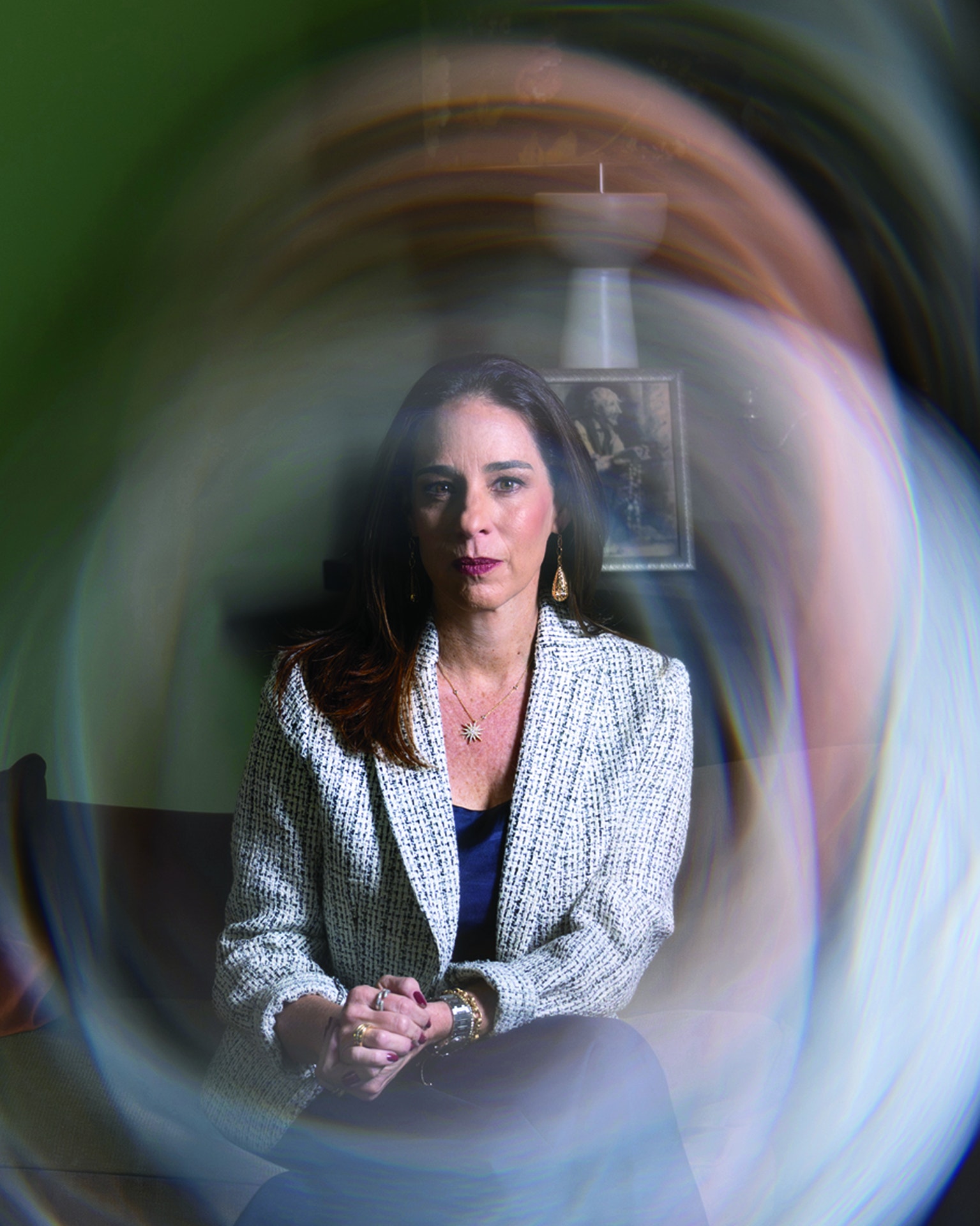
“Very quickly, we realized something deeper - that the language wasn't the real difference, it was the culture.”Daniela Sichel, co-founder and CEO
That correction is the useful part of the story. Opción YO did not abandon its original wedge. It dug underneath it. Today the Miami company sells Spanish-first emotional-wellness programs built around cultural matching, one-to-one video sessions and a proprietary five-stage method. The appointment is surrounded by a client app, emotional journals, practical activities, messaging, masterclasses, community challenges and progress checks. It is less a directory with a calendar than a guided loop.
01 / What it actually sells
The session is not the whole product
Opción YO serves adults working through anxiety, low mood, migration, relationship trouble, stress and personal growth. The company offers individual and couples programs and has historically promoted coaching and nutrition alongside emotional support. Its website says more than 35,000 people have found support through the platform; Inc. reported more than 40,000 clients in 2026. The company advertises a network of more than 300 specialists.
A new customer completes a short assessment. The company then matches that person with a specialist who fits the need, language and context, promising a match in less than 48 hours. Sessions last 50 minutes and happen over integrated video. If the chemistry is wrong, eligible plans include a change of specialist. This is not a decorative guarantee. The first failed match is the most obvious failure point in therapy, and Opción YO has turned it into an operating procedure.
The method gives an open-ended service a visible spine. A customer can see where the work is going, while mood records and periodic assessments make improvement more legible. The company is careful to describe its free tests as self-knowledge tools, not diagnoses. That distinction matters in a market where a cheerful interface can blur the line between wellness support and medical treatment.
02 / The price of continuity
A subscription, not a meter running by the hour
As of August 2026, the basic individual plan costs $118 a month for two sessions, or $59 each. The premium plan costs $190 for four sessions, bringing the session price to $47.50 and adding progress tests, more rebooking flexibility and the option to combine two specialties. A $300 plan keeps four sessions but sells greater scheduling flexibility and priority when a customer needs to change specialists or recover a missed appointment.
What does it cost?
Monthly list prices shown by Opción YO in August 2026
All three plans include the app, emotional journal, activities, messages, follow-up and masterclasses. Customers can change plans, pause or cancel without a mandatory long-term commitment. This is the business model in miniature: recurring consumer revenue wrapped around recurring human labor. The software does not eliminate the specialist. It tries to make each specialist hour more useful and the gaps between hours less empty.
03 / The founder-market fit
A childhood loss, a licensing detour and a lucky calendar
Sichel's interest in therapy began with loss. Her father told the family he had pancreatic cancer when she was six; he died when she was eight. Therapy in Venezuela helped her process the trauma and pointed her toward psychology. After moving to the United States in 2008, she learned that her existing degree would not let her practice there. She returned to school, earned a marriage and family therapy qualification at Nova Southeastern University and met Morales, her future co-founder.
Both women built private practices. The question behind Opción YO was how to extend their impact beyond the arithmetic of one clinician and one calendar. They launched fully online before the pandemic. At first, customers were not accustomed to discussing private feelings over video. Within months, COVID-19 erased much of that behavioral resistance while creating more isolation, uncertainty and demand. Opción YO was lucky in timing and ready in architecture.
Luck does not explain the whole curve. Inc. reported $4.5 million in 2025 revenue, more than 100 employees and 2,227 percent three-year growth. The company landed at No. 141 on the 2026 Inc. 5000. Its site says customers rate the service 4.8 out of 5 and that 98 percent would recommend it. Those latter figures are company-reported, useful as traction signals rather than clinical evidence.
04 / The acquisition
The mentor became the buyer
Opción YO entered Endeavor Miami's EndeavorLAB in 2021. Abi Mandelbaum, the former YouVisit chief executive who had sold that virtual-tour company to EAB and Vista Equity Partners, became an adviser. The relationship grew. In December 2022, Mandelbaum acquired Opción YO for an undisclosed amount and became president and chairman. Sichel and Morales stayed in operating roles.
The terms remain private, so there is no honest answer to what the company itself cost. The public reason for the deal is clearer. The founders had developed a care model and a specialist network; Mandelbaum had experience scaling a digital company. Adviser familiarity reduced the usual acquisition theater. He knew the team before he bought the company, and the founders knew how he worked before handing him a board seat.
“We believe in the human connection.”Sichel on keeping AI out of core therapy
That sentence also draws the company's product boundary. Opción YO uses software for intake, matching, scheduling, video, exercises and measurement. In 2024, Sichel said it was steering clear of AI in core therapy. Plenty of rivals will take the other side. Opción YO's bet is that automation can organize the relationship without impersonating it.
05 / What a founder can steal
Copy the questions, not the therapy company
Spanish access was specific enough to launch and broad enough to reveal the deeper cultural problem.
The weak point was not video. It was a match that looked right on language and felt wrong in context.
Journals, prompts and follow-up make the time between paid sessions part of the product.
A staged method gives customers orientation and gives operators a way to monitor the journey.
The portable playbook is simple. Begin with the most obvious access barrier. Interview the customers who cross it but still leave. Find the contextual variable the incumbents flatten. Then package the service around its gaps, not just its billable event. Finally, create an escape hatch for the first predictable failure. Opción YO's specialist-change policy is a good example: it protects the customer without pretending every human match will work.
When this playbook does not travel
- When the service needs emergency, in-person or locally licensed medical care that a cross-border wellness platform cannot provide.
- When cultural matching becomes a stereotype instead of a conversation about an individual's actual experience.
- When subscription convenience encourages customers to confuse coaching or wellness support with diagnosis and clinical treatment.
- When the supply of qualified specialists cannot grow without weakening screening, supervision or continuity.
- When software adds chores for the customer but no useful signal for the specialist.
06 / Its place in the market
Narrow by audience, broad by need
Opción YO sits between traditional private practice, broad teletherapy platforms such as BetterHelp and Talkspace, self-guided wellness apps and community clinics. Private practice can offer continuity but often at a higher price. A general platform can offer scale but may treat Spanish as a filter rather than a worldview. A wellness app can be cheap and available at midnight but cannot supply a human relationship. Opción YO bundles the useful pieces and accepts the operational burden that comes with people.
Its moat is not the app. Journals, reminders and video calls can be copied. The harder assets are a trained specialist network, a matching process informed by cultural context, trust with a defined audience and the routines that keep quality from drifting as volume grows. The company said in 2022 that all therapists had at least five years of experience and received regular supervision. At that time, it had more than 2,000 registered specialists in 35 countries, a larger pool than the 300-plus currently promoted as committed specialists.
There is still tension in the model. Emotional care is not ordinary e-commerce. Outcomes are hard to compare, safety boundaries matter, and the customer may need a kind of care the platform does not provide. But Opción YO's progression is unusually legible: marketplace, cultural matching, structured program, subscription, app. The company did not discover a magic feature. It kept asking what had to happen before and after the call for the call to matter.
That is why “I choose myself,” the English sense of Opción YO, is more than a warm brand line. It names the purchase decision. The software's job is to make that decision easier to begin, easier to repeat and less likely to dissolve when the video window closes.