The company announced itself as a referral source. Daniel Maloney and Alex Topiler were building BridesView, a visual wedding-planning site, when its traffic began arriving from somewhere curious: Pinterest. This was early Pinterest, before every bakery, boutique and bedroom mood board treated the platform as familiar territory. The visitors kept coming. The founders began building tools to identify and understand the brides planning weddings there.
The tools worked. Then friends asked whether the same machinery could work for their businesses. That request contained a verdict on the original plan. BridesView had found a useful product, only the product was not BridesView. Maloney later compressed the moment into five clean words: “We were our own first customer.”
There is a mild cruelty to good market evidence. It rarely arrives wearing a name tag. It appears as a behavior, a workaround or an awkward request that does not fit the roadmap. The BridesView team paid attention. In 2012, they turned the insight into PinLeague, an analytics and marketing product for brands using Pinterest. PinLeague became Tailwind, and the side instrument became the business.
- Build a visual wedding planner
- Notice Pinterest referrals climbing
- Create tools to understand the traffic
- Follow outside demand into Tailwind
An education in scale
Maloney did not arrive at that coffee-shop pivot without a supply of institutional memories. After graduating from the University of Pennsylvania in 2005 with degrees spanning systems engineering and Wharton, he spent two years at The Boston Consulting Group. Then came Google, YouTube and DoubleClick, where he worked on new initiatives including Street View, global local-business search and early creator and monetization programs at YouTube.
His description of the Google lesson is admirably unromantic. Conceive the large, consequential product, then bring it to market “in a phased approach based on what is possible to achieve now.” Ambition, in this version, is not the volume of the announcement. It is the patience to find the first buildable slice.
At YouTube, he watched a social platform balance influential users with advertisers. At AOL, where he led the video operation after the Time Warner spinoff, he had his first general-manager role and built a team largely from scratch. Maloney says the video business climbed from thirteenth to second in U.S. audience size. He has also been candid that the chapter supplied lessons from failures as well as successes. A résumé preserves the nouns. Operators tend to remember the bruising verbs.
“At Google, I learned how to conceive of big, game-changing products and then get them to market in a phased approach based on what is possible to achieve now.”Daniel Maloney
Tailwind offered the same problems at closer range. In its first ten months, the company was still searching for basic product-market fit. By the end of that period it served about 200 brands. In 2013, local reporting counted 650 customers, including Nike, Target, Microsoft and the Humane Society. Later that year, an investment round led by i2E supplied $1 million for hiring and customer support. The young company had found its object: help marketers understand what happened on Pinterest, then help them act on it.
A headquarters chosen by life
Maloney's route to Oklahoma City was personal before it was strategic. His wife, Megan, is an Oklahoma City native, and he moved to the state “in the name of love,” as one local profile put it. Tailwind developed with teams in Oklahoma City and New York. Maloney saw an unexpected likeness between them: each possessed an underdog's appetite, New York measuring itself against Boston and Silicon Valley, Oklahoma City racing toward the company of Austin and Boulder.
In 2013, he argued that midsize markets would drive more of America's technology growth in the coming decade. The prediction came with practical participation. He co-founded OK Coders, described locally as Oklahoma's first developer boot camp. He mentored founders through LaunchOklahoma and the Oklahoma City Thunder's Thunder Launchpad. In 2020 he joined the advisory board of regional venture firm Cortado Ventures.
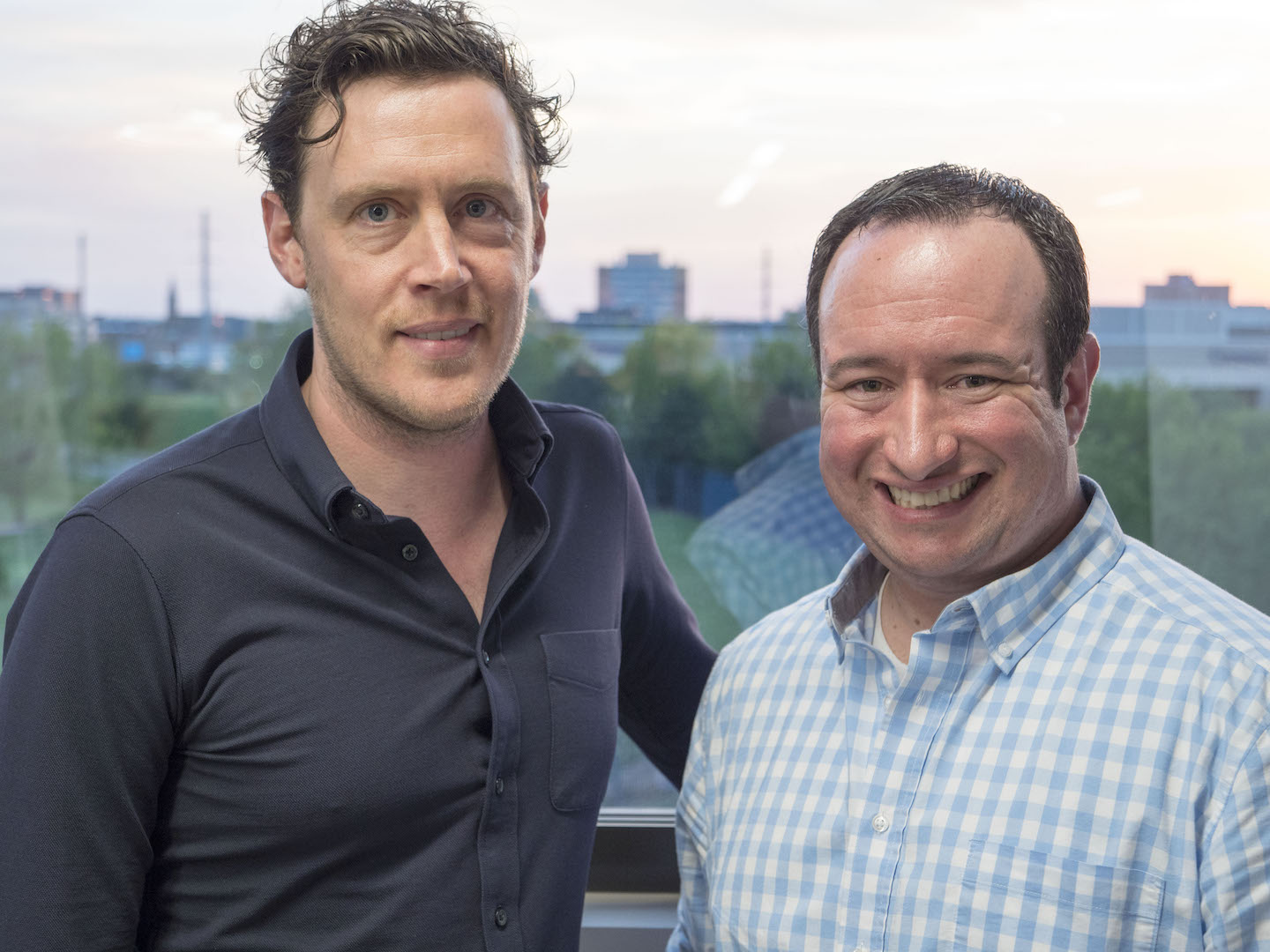
This civic work sits beside a demanding chief executive job, which makes it more revealing than a polished speech about ecosystems. Rod Whitson, a local CEO adviser, described Maloney as deeply occupied with an early-stage company yet still willing to invest time, money and effort in other Oklahoma City founders. Tailwind gave Maloney a base. He appears to have treated the base as something to widen.
What ownership requires
Inside Tailwind, Maloney's recurring words are ownership and transparency. By 2019, every employee held an ownership stake. The company shared details of goals and performance across the team, then empowered people to make decisions that could alter its direction. This is transparency with consequences. It produces more informed disagreement, which is inconvenient in precisely the way a useful dashboard is inconvenient: it makes the actual condition harder to avoid.
Colleagues have described a leader who cares about customers, teammates and the communities around the company's two early offices. They also point to trust, clear expectations for growth and a tendency to turn immediate problems into longer-range systems. Those traits rhyme with the founding story. A business born because its founders listened to evidence could hardly prosper by asking employees to ignore it.
Give people the context to understand the company, then enough authority to change it.
More questions, more opinions and fewer comfortable hiding places for a weak decision.
Continuous learning is the third part of that internal design. It sounds agreeable because no one campaigns for continuous ignorance. In practice, learning means allowing the product to embarrass its previous assumptions. Tailwind has done that repeatedly: wedding planning to Pinterest analytics, analytics to scheduling and design, then broader marketing plans, copy and advertising support.
The blank page meets the machine
The latest turn is artificial intelligence. Tailwind began applying AI to help small brands create content in 2019, before generative AI became the compulsory garnish on every software menu. Maloney now describes the platform as a kind of marketing-team substitute for businesses that cannot hire one: help with the plan, the visual options, the words, the calendar and, increasingly, the advertising.
His case for the technology rests less on synthetic cleverness than on access. In one interview, he recalled non-native English speakers becoming emotional during user research because the software removed anxiety about communicating in a second language. He connected that feeling to his YouTube years, when people could use free videos to learn calculus or software development far from traditional classrooms. Technology, at its best, changes who gets to attempt the work.
Maloney is equally clear that the models require judgment. He has discussed privacy, misinformation, scams and floods of undistinguished content. Inside products such as Tailwind's Ghostwriter, prompt design is not a magic incantation completed once. The team tests outputs, tracks performance and revises the machinery as models and user behavior change. Automation still needs an editor. The editor merely starts with more options and fewer excuses.
The practical promise of AI is not an infinite supply of words. It is a smaller distance between an idea and a competent first attempt.
This makes Tailwind's evolution less abrupt than it first appears. Pinterest analytics reduced uncertainty. Scheduling reduced repetition. Design generation reduced the tyranny of the empty canvas. AI planning and writing reduce the cost of beginning. Each layer tries to return a scarce resource to the small operator: attention.
The danger, naturally, is that saved attention becomes more output rather than better work. Maloney's public emphasis on personalization and human creativity suggests the more interesting route. Let the machine prepare possibilities. Let the person decide what is true to the business, useful to the customer and worth adding to an already noisy world.
The clue is still the work
More than a decade after BridesView's traffic graph changed direction, Maloney remains at Tailwind's helm in Oklahoma City. The company says it has served more than 1.5 million people worldwide; a 2025 interview placed the figure above two million sellers, creators and small businesses. Its remit now stretches well beyond the Pinterest data that first gave the founders their clue.
Away from the product vocabulary, Maloney offers a simpler answer about his own time. Asked in 2024 what he enjoyed when he was not working, he said, “Being a dad.” His daughter was nearly eight, an age he described as ideal for being goofy, playing and having fun. The answer was short enough to sound unoptimized.
There is an appealing continuity here. The executive who learned at giant technology companies, moved for love, built in a coffee shop and stayed to mentor a city's founders keeps returning to practical leverage. See what people are already trying to do. Notice the friction. Build the next useful layer. The future sometimes arrives as a grand thesis. Tailwind's arrived as referral traffic.