The money arrived before the delivery system. In 2003, Jason VandeBoom listed a piece of software in a free online directory. Someone paid $35 for it. He accepted the payment and then confronted the gloriously primitive problem of how to get the product to its new owner. The transaction was modest enough to be overlooked by anyone hunting for destiny. VandeBoom remembers it as one of his defining achievements.
He had moved to Chicago to attend fine-art school. ActiveCampaign was meant to help cover living and tuition costs, an extension of the consulting work he had already been doing, packaged into something a customer could download and install. There was no thunderclap, no heroic market map pinned to the wall. There was a young maker trying to put useful work in a box, except the box was digital and the instructions were still under construction.
The origin suits him. VandeBoom has said that, as a child, he liked building with wood. As a teenager in the late 1990s, he persuaded his parents to buy a computer and began tinkering with that instead. Fine art, design and self-taught programming became neighboring rooms in the same house. ActiveCampaign grew out of the corridor between them.
Act IThe luxury of being small
For roughly a decade, ActiveCampaign remained a company of about eight people. This was not the sort of velocity that makes a conference audience reach for its phone. It offered a different advantage: the distance between the builder and the buyer was almost nonexistent. VandeBoom described attaching himself to early customers so he could learn everything possible from them. Revenue interested him less than interesting work and the chance to provide real value.
Close listening produced abundance, perhaps too much of it. The company eventually offered eight products, each addressing some portion of customer communication. The software lived on customers' own servers. Licenses could sell for $500, $5,000 or $50,000. ActiveCampaign was profitable in its first year and stayed steady. It was a nice business, which is frequently the most dangerous sort to change.
“As someone bought it, I just glued onto them to learn as much as I could.”Jason VandeBoom on his earliest customers
By the early 2010s, cloud software had altered the bargain. An installed product gave ActiveCampaign less control over the experience and made support harder. A subscription could tighten the relationship, improve the product faster and make revenue more predictable. It would also require a piece of corporate self-harm: exchanging large license payments for plans that could begin at $9 a month.
Act IIThe profitable thing he chose to break
The shift took years. VandeBoom has called its early phase one of the most miserable processes he experienced. Subscription revenue could grow quickly and still only replace money the company had intentionally stopped taking. On a spreadsheet, progress wore the costume of stagnation.
The deeper choice was focus. Eight products became one platform centered on marketing automation. Installed software became software as a service. A tiny, profitable shop began preparing to become an organization. In 2016, with about 15 employees at the start of that year, ActiveCampaign accepted its first institutional investment: $20 million after approximately 13 years of bootstrapping.
Then the quiet company became loud in numbers. It raised $100 million in 2020 and $240 million in 2021, bringing total funding to $360 million. The latter round valued ActiveCampaign above $3 billion. At the time, the company reported 145,000 customers and $160 million in annual recurring revenue. Its present leadership page puts the figures at more than 180,000 businesses, more than 700 employees and over $250 million in ARR.
The growth did not revise VandeBoom's preferred explanation. He credited customers finding success and telling other people. “Organic word of mouth is our primary driver,” he said during the 2021 raise. This is a pleasantly unfashionable answer. Advertising can purchase attention. A recommendation borrows somebody's reputation.
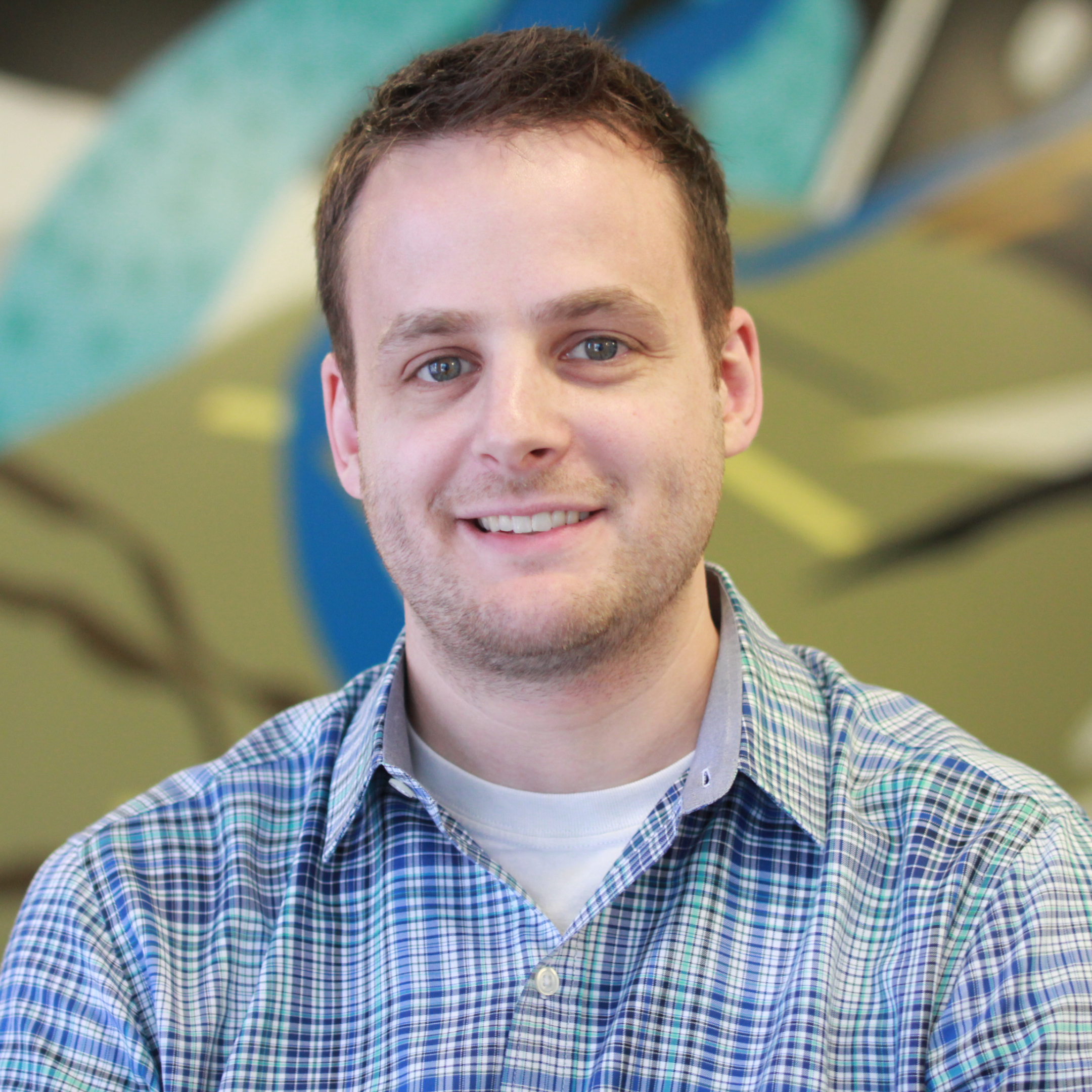
The founder's paradoxHow to stay close from far away
Scale created an oddly personal problem. In the early company, VandeBoom could know nearly everything. By 2021, he described it as exciting that the organization had become too large for that. His management ideal gives leaders autonomy and surrounds him with people whose skills complement his. His instinct, he admits, is more liquid. Given the opportunity, he is “like water,” finding the niches and the nitty-gritty.
The tension is useful. Founders who refuse to let go turn themselves into expensive bottlenecks. Founders who float too far above the work lose the very signals that once made them sharp. VandeBoom's recurring subject is proximity: to the detail, to the front line, to the customer's frustration. A buffer can be comfortable, he has argued, but comfort blurs pain points.
The transition also changed what counted as an achievement. His first paying customer remains vivid because it proved a stranger would value something he made. Years later, he found meaning in the opposite realization: ActiveCampaign had become too large for him to know every detail. One milestone rewarded intimate control; the other required accepting its limits. Between them lies most of the emotional work of becoming a chief executive. The title stays the same while the useful behavior keeps changing.
His work with Future Founders extends that idea beyond his company. VandeBoom joined the Chicago nonprofit's board after saying that, as a young entrepreneur, he would have valued a mentor and a community of founders. He became board chair in 2022. The appointment connects the accomplished executive to the student with the $35 invoice: assistance offered backward through time, delivered to somebody else.
Act IIIMaking the old playbook obsolete
ActiveCampaign is now attempting a second difficult transition. Traditional marketing automation follows instructions: when a customer does this, send that. The company's newer pitch is “autonomous marketing,” where software can study a business's history, audience, brand and performance, then propose or take the next action.
In 2025, ActiveCampaign introduced Active Intelligence. In February 2026, it acquired Feedback Intelligence, whose tools examine conversations for intent, satisfaction and friction. In August came Active Intelligence 3.0, called Wavelength. Its features include adaptive memory, proactive campaign drafts, recurring tasks, automation monitoring, outside market signals, brand tracking, image generation and email translation. The aspiration is software that does not begin each conversation as a charming amnesiac.
Four snapshots of a long build
The language has changed from email to customer experience to autonomous marketing. The old concern survives underneath it: how much machinery can a business use before its personality gets milled away? VandeBoom has long argued for balancing automation with human touch. His recent writing makes the same complaint in AI-era clothes. Faster generic campaigns remain generic. The draft should sound like the team, learn from what worked and leave judgment in human hands.
“The speed is real... But that was never the headline.”VandeBoom on Active Intelligence, 2026
This is a harder promise than speed. Speed is counted in minutes saved. Character is harder to measure and easier to counterfeit. A system must know enough to be specific without becoming presumptuous, act enough to be valuable without becoming unruly, and preserve the small business's voice while operating at software scale. VandeBoom has built his career around that contradiction.
There is some comedy in the symmetry. The young founder received money and had to figure out delivery. The mature company now wants software to anticipate what customers need before they request it. Between those points sit 23 years of answering one practical question after another.
The durable habitStay near the work
VandeBoom's story resists the tidy worship of either speed or slowness. Thirteen bootstrapped years gave ActiveCampaign customer knowledge and optionality. They also left it with eight products and an old delivery model. Venture capital accelerated a machine that already worked. It did not spare the company from having to reinvent that machine again.
Nor did success make the choices less consequential. A small company can turn because a few people agree. A global one must change its technology, language, habits and promises while customers continue using yesterday's product. VandeBoom's newest bet is therefore less romantic than the first and more revealing. Starting from nothing demands nerve. Reworking something valuable demands nerve plus restraint.
The useful constant is attention. Attention to the first buyer. Attention to the experience that an installed license could no longer provide. Attention to the moment when a focused platform mattered more than a cabinet of tools. Attention, now, to whether artificial intelligence produces work anybody is proud to send.
A $35 sale can become a $250 million company, but only in retrospect does the line look straight. Up close, it is a series of corrections made by someone still willing to inspect the grain. The material changed from wood to code to organizations. The craft did not.