For about two hours in 2011, David Karandish watched the internet revise the value of his company. Ninety days earlier, at 28, he had helped engineer the $127 million purchase of Answers.com, taken it private and merged it with the comparison-shopping business he had built with Chris Sims. Then Google changed its search algorithm. Traffic buckled. An acquisition that had looked formidable in the morning was unprofitable by afternoon.
Karandish later compared the sight to a house burning in slow motion. The image is dramatic, but the first response was almost comically practical. Had somebody accidentally told search engines not to crawl the pages? Was there a faulty robots.txt file? The team checked its own wiring before blaming the weather.
Nothing had broken inside Answers.com. The ground beneath it had moved.
First lessons, cheap tuition
Six companies and enough money for pizza
The calamity was not Karandish's first encounter with a plan that declined to cooperate. Before finishing college, he had built six ventures. His accounting for them is cheerfully severe: they made “pizza money.” The phrase improves the usual founder folklore. It is hard to pose as a titan while holding a pepperoni slice.
His appetite for making things came early. His father was an electrical engineer, so computers appeared around the house. Karandish learned basic commands, taught himself to code in high school and started building websites and Windows applications for teachers, friends and neighbors. He also discovered commerce in an unpromising uniform. He was poor at Cub Scout knots, he has recalled, and the badges did not stay attached. Selling candy for the troop suited him much better.
At Washington University in St. Louis he combined computer science with entrepreneurship, graduating cum laude in 2005. Graduation itself lost out to a stranger invitation. After taking his final competitive-strategy exam early, he boarded a plane to New York to appear on The Apprentice: Martha Stewart. He was barely into his twenties and had never visited the city.
He did not win, a result he now regards with gratitude. Winning might have diverted him from the company he started next. The program still paid an improbable dividend: a connection to sponsor Yahoo helped his new comparison-shopping venture, Find Stuff, secure a partnership that became its largest source of revenue for six or seven years. Reality television is rarely included in a sensible distribution strategy. In this case, it worked.
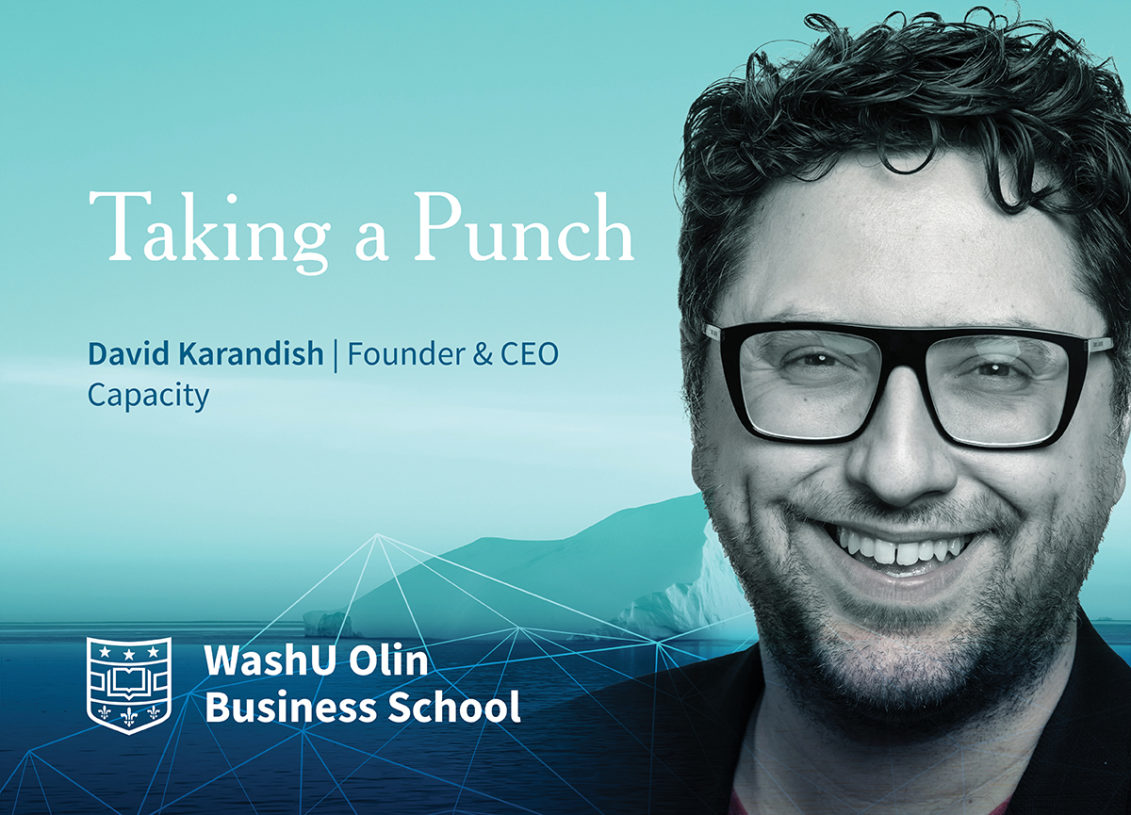
The seventh venture
When the platform owns the weather
Find Stuff, founded with Sims in 2006, began as a collection of vertical search sites covering subjects such as travel, finance, automobiles and health. The pair developed a question-and-answer system to create useful material around those searches. Answers.com was already operating nearby in the conceptual neighborhood. In 2011, Karandish led the take-private deal and joined the businesses.
The Google shock exposed the cost of relying on borrowed distribution. Answers.com carried broad, community-written material. The revised search logic favored deeper specialist sites. An advertising business that depended on search referrals suddenly had a very attentive landlord.
Karandish split the response. One group continued fighting for the media operation. Another went shopping. Over the next two and a half years, Answers acquired roughly six or seven companies and assembled a subscription business from reviews, content syndication and customer-experience analytics. The company moved from zero subscription revenue to more than $100 million, including acquired revenue and subsequent growth. In 2014, the parent company sold to private equity for more than $900 million.
The sale makes the episode look inevitable. It was not. The useful inheritance was a collection of habits: diversify distribution, prefer recurring revenue, buy capabilities when speed matters and keep a crisis narrow enough to work on. His slogan about failure is easily mistaken for motivational wallpaper. The important word is cost. Failure should teach, but it should not consume the right to try again.
The second act
A rock in the shoe called Alexa
After the sale, Karandish traveled and considered a long list of possible businesses. One idea became difficult to ignore during the 2016 holiday season, when Amazon's Alexa made conversational computing feel ordinary at home. Inside offices, people were still rummaging across disconnected systems, answering the same questions and pushing routine requests by hand. Karandish described the idea as a rock in his shoe: workplace AI was coming, and neglecting it would produce regret with every step.
He and Sims founded Capacity in 2017. Its original premise was modest enough to understand and difficult enough to occupy a decade: let software handle repetitive support questions and workflows so people can spend time on work requiring judgment. The company began as Jane.ai, then adopted the Capacity name in 2019.
Conviction came with an expiration date. The founders agreed that if the enterprise product did not win a customer within six months, they would close it and try another idea. Before launch, they spoke to dozens of prospects. The first contract arrived on month five, day 30. A less punctual customer might have changed the story.
It is an unromantic credo for an engineer, and therefore a useful one. Karandish has argued that founders routinely adore their products while remaining hazy about acquiring customers. Capacity's deadline forced the two ideas to meet. Market belief needed an invoice.
Build, partner, acquire
The old lesson returns with more channels
Capacity expanded from chat and knowledge retrieval into voice, text messaging, social communication, agent assistance, quality monitoring and workflow automation. The route recalls the Answers turnaround. Some capabilities were built internally; others arrived by partnership or acquisition. Textel added enterprise messaging. Denim Social added compliant social selling. LumenVox added speech technology. Lucy, Envision and Linc broadened knowledge, call-center and commerce tools. Call Criteria and Verbio brought automated quality assurance, analytics and enterprise voice AI.
Karandish calls the approach a compound-startup strategy. Its appeal is simple: customers would rather manage a coherent platform than a drawer of unrelated tools. The risk is equally clear. Buying products is faster than integrating them. Capacity's claim rests on a shared knowledge-orchestration layer that can train information once and use it across channels.
By August 2025, Capacity said it was profitable at $60 million in annual recurring revenue and had completed 11 recent acquisitions. In June 2026, it reported passing $100 million ARR, a twentyfold rise in three and a half years. The company said more than 20,000 organizations used its platform. September brought more than $54 million in Series E funding, taking its reported total above $159 million.
Work after the work
Dignity, sandwiches and a ukulele
Karandish's public argument for automation is not that people are inconvenient. It is that repetition is. In a 2019 letter, he wrote of dignity in honest work and of software removing the friction that prevents people from using their gifts. Capacity's later research refined the distinction: a customer ticket can be technically closed while the person remains unsure whether the problem is actually over. Efficiency without reassurance merely produces a faster variety of irritation.
His interests outside the balance sheet point in a similar direction. He has supported computer-science education through Create a Loop and has been connected to Prepare.ai and education technology company Nerdy as a board member or early investor. Corporate biographies also disclose a wife, four children and a fondness for playing the ukulele. Capacity, meanwhile, advertises a sandwich-appreciation Slack channel. No management theory has yet improved on a good lunch.
The central ambition has grown larger: remove friction across the customer experience and make AI agents easier to build, test and deploy from the same foundation. Yet Karandish's method remains recognizable from the pizza-money years. Talk to customers before polishing the monument. Put a clock on the experiment. Control more of the distribution. When the platform changes the weather, check your own wiring, divide the problem and start buying umbrellas.
A founder cannot arrange a career without surprises. Karandish has arranged his so the surprises become tuition. The bill has occasionally been spectacular. So, too, has the education.