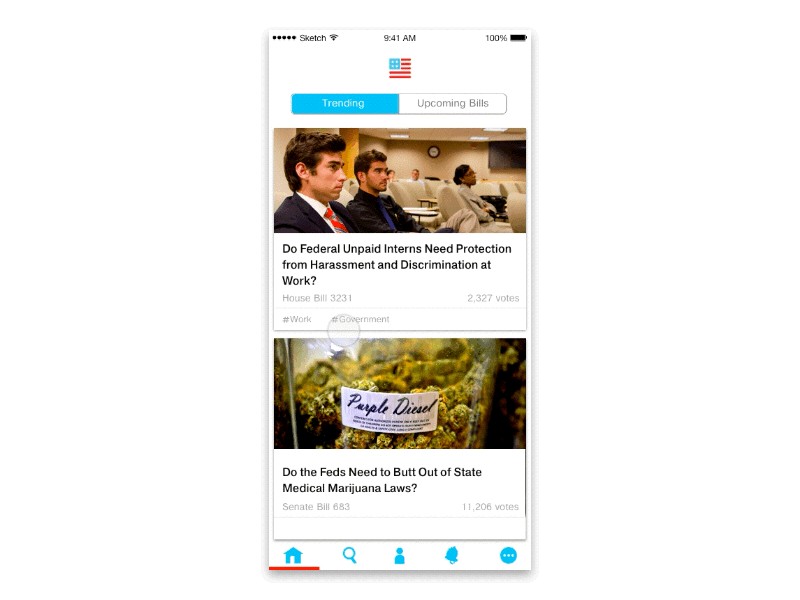
In 2014, a citizen could read about a bill in Congress, develop an opinion, and then face the ancient problem of what to do with it. An opinion, after all, makes no noise in a representative's office until someone sends it there. Countable built a small bridge over that gap. Its app translated legislative language into plain English and made the next move - contacting a lawmaker - unusually easy. The point was less to predict how a bill would pass than to let an ordinary person enter the conversation while it still mattered.
- It began with voters: explain legislation, then make it simple to contact a representative.
- It followed demand: companies, nonprofits and campaigns wanted that same route from information to action.
- It sold owned communities: branded spaces with stories, calls to action and useful audience data.
- It found a buyer: EV3 Global acquired the platform in June 2024 for its community and employee engagement capabilities.
That civic app is the first act of the Countable story. The second act is more revealing. A tool designed to help people speak to power became software that power could use to hear them. The company did not throw away the underlying idea. It changed the customer. An employer, a nonprofit and a political campaign all face versions of the same awkward question: after someone reads the message, what happens next?
The trouble with a thumb
A conventional social feed is very good at collecting reactions. It is less helpful when the desired outcome is a conversation with a representative, a story from an employee, a volunteer at an event or a supporter willing to make a call. Countable's original app joined the explanation to the action. By April 2017, the company said its users had sent eight million messages to Congress. In a 2020 interview, founder Bart Myers said the wider consumer platform had produced more than 40 million actions. Those are company-reported figures, but they describe the behavior Countable was trying to sell: participation with a verb attached.
The first snag was closer to the screen. In an independent usability study of the early app, product designer Emily Bell found that test users struggled to search for issues and to find a clear way to contact their representative. Her proposed redesign made the route through the app more obvious. That is a small but telling failure: an action platform can have the right button and still hide it behind the wrong journey.
The first business lesson was hiding inside the product analytics. Myers said demand from organizations helped create Countable Pro, its enterprise arm. TechCrunch reported that the company pivoted toward enterprise software in 2017, with Canaan Partners backing the move. The civic app had proved that people would take steps beyond reading. Now Countable could sell an organization a place to invite, guide and measure those steps. It was an answer to a practical problem, not a declaration that every brand needed to become a social network.
A room with the organization's name on the door
Countable's later product, often described as an Impact Hub, offered a custom-branded space for content, questions, supporter stories, video testimonials, events and calls to action. Sites could stand alone or fit into an existing web presence. Organizations could choose public or private access, manage a community, and see how members participated. The older Countable Action tools included lawmaker messaging and campaign action centers. Its Connect offering added large-scale calling and texting with guided scripts. Causes.com supplied a consumer-facing community and, in Countable's pitch, an additional audience for campaigns.
This is where the company differed from a generic social page. The host could shape the experience and keep a direct relationship with its members. Countable sold the infrastructure and associated services to organizations, though it did not publish a reliable standard price list. A public social account might still be the quickest way to announce a campaign. Countable's wager was that the more valuable part - the story shared, the call made, the supporter who came back - deserved a home the organizer controlled.
The repeatable part is the sequence, not the software: a clear issue, a personal reason, a specific action, and a way to learn from the response.
By 2021, Countable named Starbucks, Uber, Patagonia, Twitch and PG&E among its clients and said it had completed more than 120 implementations. The use cases ranged widely. Starbucks used the platform for employee civic engagement; Twitch used it in a net neutrality effort; PG&E used a site to share emergency preparedness resources. Countable's customer list also included nonprofits and political organizations. The platform's common job was to turn a scattered audience into a group that could be informed, asked and mobilized.
“We started Countable with the mission of bringing customers together in brand-safe online communities.”Bart Myers, 2021 company announcement
The audience came with an inheritance
In 2019, Countable acquired the technology and data of Brigade, together with Causes, the once enormous Facebook-era civic platform. This was not simply a purchase of a familiar name. It brought an existing audience and a stock of civic organizing tools into Countable's orbit. It also illustrated a warning from the same market. Brigade had tried an open debate product that its chief executive later said encouraged personal attacks and drove people away. It shifted back toward petitions and contacting representatives. Countable's own first product was not reported to have failed in that manner, but the episode helps explain why a defined action can be more useful than a room built for argument alone.
The purchase also put a hard question behind the pleasant word community: who owns the relationship, and what permission does that owner actually have? A large inherited audience is not automatically an active one. A campaign still needs a credible reason for someone to participate. Countable's product could reduce friction, but it could not manufacture trust, a coherent cause or a good answer to what the organizer would do with a person's story.
What the money bought
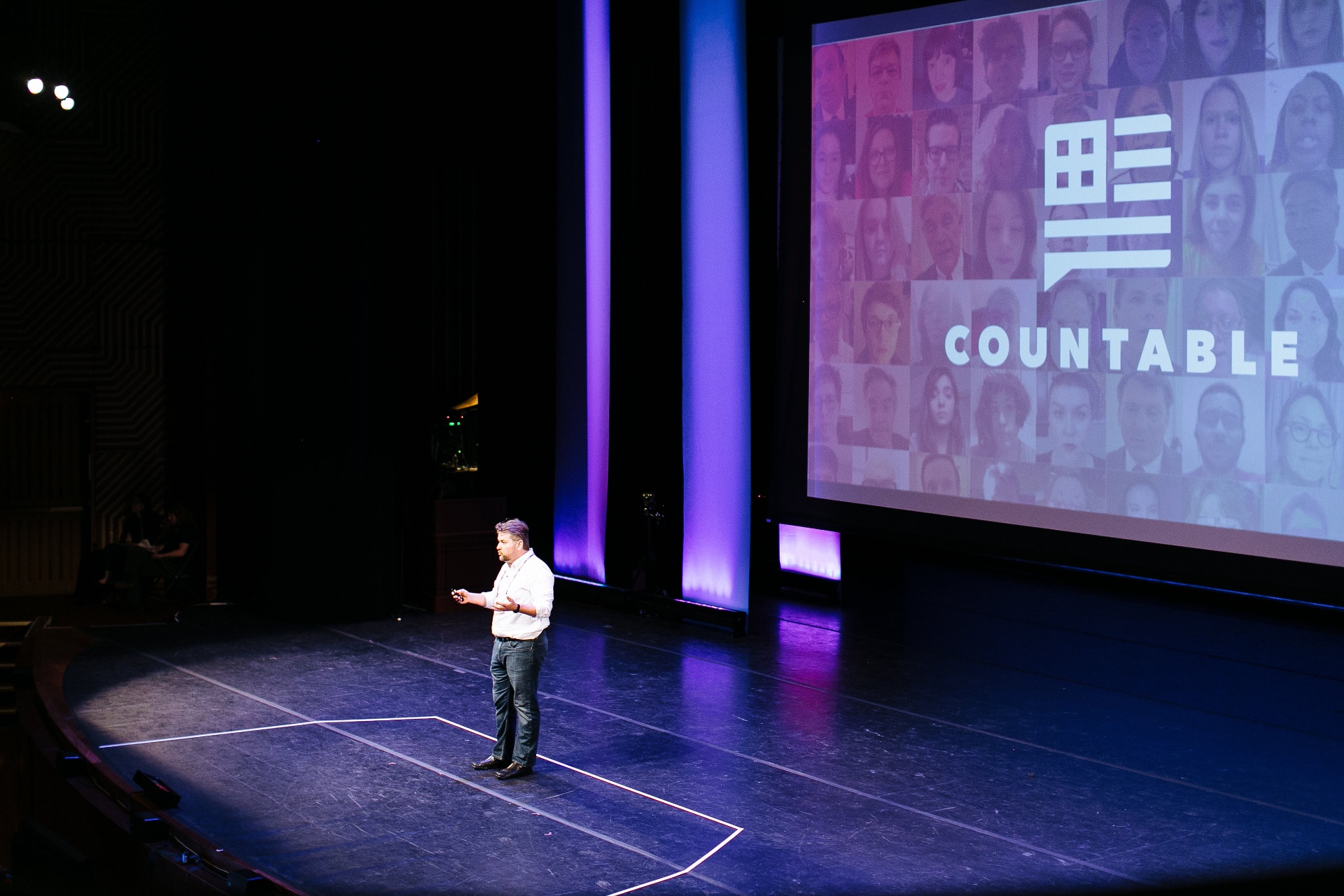
Countable announced a $12 million Series A in October 2021, led by Canaan Partners with Ulysses Management and Global Catalyst Partners participating. Its release reported 277 percent year-over-year growth in annual recurring revenue and nearly 300 percent revenue growth. Those percentages describe a fast year, not the company's absolute revenue: it did not give a public revenue figure in that announcement. The funding was earmarked for operations and product development, including integrations and international expansion. Countable also discussed social token exchange, although its lasting public identity remained community and engagement software.
The amount a customer paid to run a Countable community is not publicly established. The more instructive cost is organizational. Someone must define a campaign goal, explain it clearly, moderate the resulting conversation, respond when people offer their stories, and carry out the promised next step. Software can make that work orderly. It cannot make an unanswered message feel heard. This is why the product makes the most sense when an organization already has a real audience, a specific outcome and staff prepared to follow through.
In June 2024, EV3 Global announced that it had acquired Countable. EV3 framed the deal around employee engagement: connecting dispersed workers, listening to their needs and giving them a place to find one another and useful resources. It was a narrower setting than the entire public square, but recognizably the same design problem that had started Countable: information reaches a person; the person needs a meaningful way to answer.
The portable idea
Countable's story has an unusually practical lesson for anyone building a community, even without buying software. Start with a question people can understand. Give them an action proportionate to their interest. Let them speak in their own words. Then show what happened to the action they took. The company used code to make that sequence repeatable for clients. The sequence itself belongs to no company.
The civic app's promise was that democracy might feel less like watching a program and more like joining a conversation. The enterprise product made a related promise to organizations: an audience could become a community if members were given more to do than applaud. A town square is a grand name for a piece of software. Countable's sharper insight was much smaller. The distance between caring and doing is often just one well-designed step.