A manager learns that a colleague is burning out. The usual toolkit is a calendar slot, good intentions, and a certain amount of dread. What should the manager say? How much should they ask? Is the colleague looking for relief, recognition, or simply a chance to be heard? Rising Team has built a business around that small, consequential gap between caring and knowing what to do.
- Rising Team sells guided team sessions and an AI leadership trainer called Arti.
- Its distinguishing input is team context that colleagues choose to share during those sessions.
- Managers can use it to run workshops, plan development, get coaching, and rehearse difficult conversations.
- Google Cloud and Bank of Hawai‘i describe repeated sessions and measurable gains in company case studies.
The company’s original product was disarmingly practical: software that walks a manager through a team session. It supplies ground rules, warm-ups, activities, reflection prompts, and a survey at the end. The manager does the human part. The software remembers the sequence, minds the clock, and saves the insights. A development or connection session can last one to two hours; a Mini can fit into 10 to 20 minutes. Topics include psychological safety, working styles, appreciation, feedback, and resilience.
That design solves an awkward economics problem. A gifted facilitator can help a team talk honestly, but no organization can put one in every regular meeting. A survey can show that people feel disconnected, but it cannot lead Tuesday’s discussion. Rising Team puts the facilitator’s outline into a repeatable tool and leaves the relationship in the room.
The first product was a conversation
Jennifer Dulski founded Rising Team in 2020 after leadership roles at Google, Facebook, Yahoo!, and Change.org. She had seen the distance between what organizations expect of managers and what they equip them to do. In a 2024 funding announcement, she put it plainly: companies measure engagement, yet often leave managers without tools to improve it. The early Kits took that complaint literally. One of the first covered psychological safety: how to make it easier for people to voice concerns, questions, or mistakes without expecting embarrassment.

A Kit does more than prompt nice remarks. Team members can reveal how they prefer to work, what makes them feel appreciated, and where misunderstandings begin. A manager who learns these things can act on them next week. The company also says those voluntarily shared insights give Arti, its AI coach, the context that generic advice lacks. It is a clever sequence: earn specific information through a useful group exercise, then use it to help the manager behave more thoughtfully in private.
A guided session gets the team talking about a concrete skill or relationship.
Shared preferences and commitments survive the meeting.
The manager asks for advice or rehearses a real conversation.
This loop is the company’s answer to a crowded field of coaching apps, training libraries, engagement surveys, and outside facilitators. The point is the connection between them. A leadership course can teach a general principle; Rising Team can help a manager ask how a particular colleague prefers feedback. That specificity depends on colleagues sharing candidly and on a manager using the information with care. Without both, the software has less to work with.
The content changed as customers used it. Rising Team says more than 1,000 psychological safety sessions had been run by 2025, but customers asked for a more systematic path through the subject. The company responded with a four-quarter track, pairing different Kits and weekly leader actions with stages of safety. That is a useful correction to the idea that one good workshop fixes a team. A team changes its habits through several conversations, and the manager has to keep coming back.
Practice before the moment counts
Arti has grown from a conversational coach into what the company calls an AI leadership personal trainer. Its 2026 launch brought together growth plans, coaching, voice roleplay, working sessions, and team building. A manager can set development goals, put practice on the calendar, draft a feedback script, or rehearse an uncomfortable discussion. In roleplay, Arti can draw on a teammate’s shared working style; the manager can pause, try another approach, and get feedback before speaking to a real person.
The scenario is easy to imagine. A high performer wants more responsibility but resents a teammate. A colleague says she is overwhelmed. A manager needs to recognize good work in a way that will actually land. In each case, a polished generic script may be worse than a hesitant, informed one. Rising Team’s bet is that rehearsal, tied to real team context, can make the latter more likely.
Privacy is part of the product claim. Rising Team says Arti uses individual information already shared within team sessions; private coaching conversations are not shown to managers or administrators, and customer data is not used to train its AI models. That matters because a team exercise only works if people trust the conditions under which they speak. It also marks a practical boundary for anyone copying the approach: collect only context that helps people work together, explain who can see it, and avoid turning the workshop into surveillance.
What changed in the field
Google Cloud’s Business Platform group gives one view of how the product works at scale. Its case study describes a rollout across 1,200 team members and more than 1,000 sessions. The group settled on a quarterly rhythm of one development or connection Kit and two Minis. It also changed the rollout as it learned: start smaller, reduce overload, allow managers to choose topics, and make the sessions fit the organization’s existing work. The case study reports 94% session satisfaction, 30% higher engagement scores, and a 12% rise in retention. These are customer-reported results, not a controlled experiment, but the operating detail is useful: repetition beat the ceremonial annual workshop.
The gains they chose to measure
Engagement at Google Cloud; branch employee retention at Bank of Hawai‘i. Bars use a shared visual scale only and compare different outcomes.
Bank of Hawai‘i faced another version of the same problem: branch staff, hybrid workers, and corporate teams did not all need the same meeting. The bank used manager-led sessions and custom Kits aligned to its leadership principles. Rising Team says more than 1,800 employees participated, over 90% of engagement dimensions improved, manager effectiveness scores rose 10 to 12%, and branch retention rose 18%. The bank’s description of the earlier approach is telling: classroom training and one-off programs were hard to scale. The workshop had to become part of ordinary management rather than an event that appeared when calendars allowed.
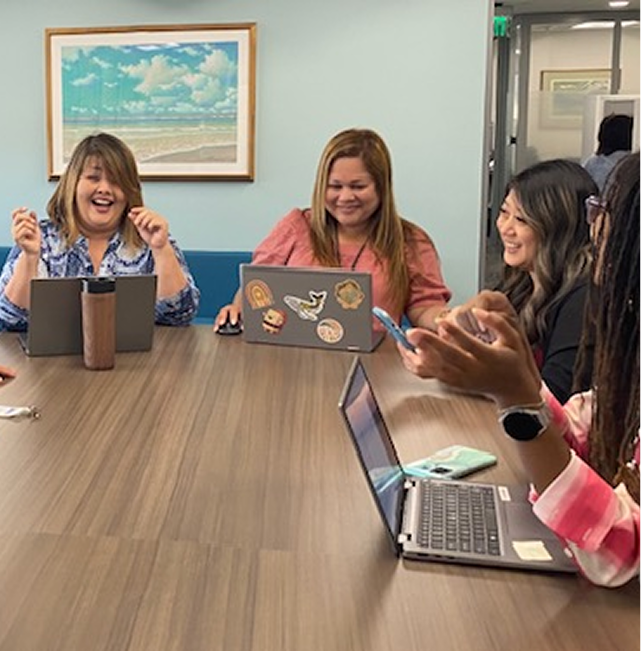
Fanatics Commerce offers a newer example. Its technology organization has used Rising Team across distributed teams. In a public conversation with the company, a Fanatics leader said the out-of-the-box Kits removed the creative burden from managers while Arti offered a private place to practice. That is the product’s appeal in a sentence: give a busy manager a path into the room and a safe place to prepare for what happens after it.
The price of a better meeting
Rising Team is a subscription software business. Its public pricing page describes a Team plan with sessions, Arti, surveys and basic reporting, plus an Enterprise plan with large-group sessions, tailored curricula, single sign-on, deeper reporting and dedicated support. It does not display a numeric price; enterprise buyers request a quote. The company raised an $8 million Series A in June 2024, led by Zeal Capital Partners, bringing reported funding to $11 million. That round was announced alongside plans to expand the AI layer and the workshop software.
“Companies regularly measure employee engagement, [but] they often leave managers without tools to help them improve it.”Jennifer Dulski, 2024 funding announcement
What can another organization borrow without buying the platform? The less glamorous part may be the most portable. Pick one recurring team difficulty. Give the manager a short, structured session with a warm-up, a real exercise, and a follow-up commitment. Repeat it often enough that it becomes a habit. Then ask whether the next coaching suggestion reflects something the team actually said. That sequence is more demanding than purchasing another dashboard, because it asks the manager to show up.
There are limits. A session cannot manufacture trust where speaking honestly carries a real penalty. Roleplay cannot make a manager follow through. And customer case studies, however encouraging, do not isolate the software from the other things those organizations changed. Rising Team’s strongest idea is narrower and more credible: managers get better at the human part when the practice is regular, specific, and close to the work.