At Microsoft in the United States, Sourabh Deorah and Smiti Bhatt Deorah enjoyed the sort of employee perks that make an employer feel faintly clairvoyant: useful discounts, convenient privileges, small signals that somebody had considered life beyond the desk. Then they discovered the interesting bit. Microsoft did not run the program. A third-party provider did, for Microsoft and other large companies. The machinery behind feeling valued was outsourced.
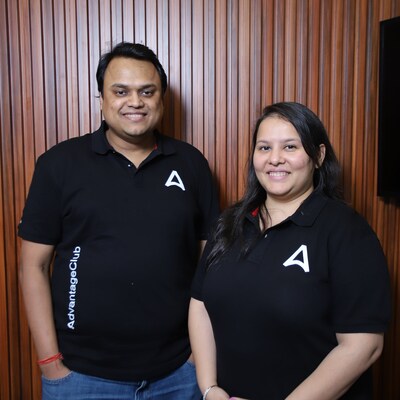
The couple, both UCLA alumni with technical backgrounds, saw a gap in India. Corporate benefits there often meant statutory provisions, scattered discounts and a heroic amount of spreadsheet work. They returned, formed the business now known as AdvantageClub.ai, and began with a modest proposition: give employees worthwhile deals while giving brands access to a salaried audience.
The current product is far less modest. It combines recognition, rewards, wellbeing, surveys, employee communities, loyalty programs, flexible benefits and incentive compensation. The company says it now reaches more than 16 million users at 1,200-plus clients in over 100 countries. That is a company-reported scoreboard, not an audited census. Still, the arc is instructive. A coupon was the wedge. The business on the other side is an operating layer for the small, recurring transactions between an employer and its people.
Current scale figures are reported by AdvantageClub.ai. The company also lists 10,000+ reward partners and more than $300 million rewarded.
First, pick a side
The first thing to fail was not a server. It was marketplace logic. Brands wanted corporate users before offering deals; employers wanted a convincing catalog before inviting employees. “It is always a chicken-and-egg problem,” Sourabh told YourStory. A marketplace with two empty sides is just a nice landing page.
The founders changed the sequence. They approached brands first and asked them to join at no cost. While waiting for corporate demand, they kept those partners interested with updates. After assembling roughly 75 brands, they signed 10 companies into a beta and launched. The early team was three people - the two founders and a content intern - which made focus less a productivity philosophy than a staffing fact.
The cold-start sequence
That choice is the most portable lesson in the story. Do not attack a marketplace's two-sided problem symmetrically. Find the side you can recruit cheaply, make its participation reversible, then use that inventory to sell the scarce side. It worked here because brands wanted targeted access to employed consumers and could participate with limited upfront cost. It would not work where suppliers carry expensive onboarding, regulated inventory or immediate fulfillment obligations.
The coupon grows up
By 2018, the platform let employers issue points that workers could redeem for meals, movies, shopping vouchers or grooming. It also paired those points with a social feed where colleagues could recognize peers. This combination mattered. Discounts gave people a reason to browse; recognition gave employers a reason to budget; transactions produced data about what employees actually used.
Then client requests pulled the product outward. Rewards gained automated service anniversaries, spot awards, approval rules and flexible wallets. Wellness added health services, fitness challenges and benefit catalogs. Pulse added surveys, polls, quizzes and a mood meter. Communities supplied employee resource groups, hobby clubs and mentoring spaces. The newest edge, incentive compensation, calculates sales commissions and routes approved value into the same redemption network.
The old perk drawer
- Regional gift-card vendors
- Birthday spreadsheets
- One annual survey
- Manual sales payouts
- Utilization guessed later
The platform pitch
- One reward catalog
- Automated milestones
- Continuous feedback
- Rules-based incentives
- Live redemption analytics
The pandemic accelerated that expansion. In 2020 the company was running digital awards, remote surveys, hobby clubs and online health services. Its site describes a technology client with more than 20,000 employees that needed work-from-home equipment; AdvantageClub.ai says it assembled a 400-item marketplace of chairs, tables, routers and backup power in 10 days. A one-off fulfillment scramble eventually became a continuing rewards-and-recognition program.
“Ideas fight, people don't.”AdvantageClub.ai's public shorthand for discuss, disagree and commit
What the customer is really buying
The buyer is usually an HR, total-rewards or people-operations team. Incentive modules also bring in sales operations and finance. Their problem is not a shortage of ways to say “well done.” It is consistency: recognizing the correct event, enforcing budgets, getting an appealing reward to the recipient, reconciling the money and proving anybody used the program.
AdvantageClub.ai's differentiation is breadth plus delivery. A recognition specialist can make praise social. A survey tool can measure mood. A wellness app can count steps. This platform tries to connect all three to a localized reward marketplace. Its integrations with systems such as Workday, SAP, Darwinbox and PeopleStrong pull employee data; links to Teams, Slack and other collaboration products put recognition where conversation already happens. A 2026 Workday Marketplace listing makes that distribution strategy particularly visible.
The catalog is the unglamorous center. The company advertises more than 10,000 global and local brands, with options spanning gift cards, travel, electronics, wellness and experiences. A recommendation engine is only useful if the recommended reward is available in the employee's country, fits the budget and can be redeemed without a support ticket. AI can choose from the shelf. The partner network keeps the shelf stocked.
Selected company case studies
Redemption or utilization figures are drawn from anonymized case studies published by the company and should be read as examples, not portfolio-wide averages.
Price: software plus behavior
AdvantageClub.ai does not publish a standard price. That is normal for enterprise software whose cost changes with employee count, selected modules, countries, integrations, support and reward budgets. Early reporting said the company earned fees from both client firms and brand partners. Today it presents a configurable B2B platform with marketplace and managed-service economics attached.
The invoice is only part of the cost. Someone must define what behavior deserves recognition, assign budgets, clean employee records, communicate the launch and keep managers participating. Global programs also need tax review, local catalogs, currency handling and support. A platform can consolidate those jobs; it cannot abolish them.
That is where programs fail. Generic rewards feel generic. Public praise can embarrass employees who prefer privacy. Points expire unnoticed. Managers recognize the loudest people. A shiny wellness challenge becomes a ghost town by week three. The company addresses pieces of this with personalization, automation, purchase-parity features and analytics, but the quality of the underlying management system still determines whether the software amplifies sincerity or bureaucracy.
Money, mistakes and the wider market
The company joined Y Combinator's Summer 2021 batch. That year it raised $1.7 million from Y Combinator, Broom Ventures, Kunal Shah and others, followed by $3.3 million from Jetty Ventures, Earlsfield Capital, SMC Advisors and additional investors. In December 2024, Axilor Ventures led another $4 million round with AFG Ventures, former Rippling CTO Prasanna Sarkar, Bytez Ventures and existing backers. AdvantageClub.ai said the round brought total funding to $11 million and would support US and Asian expansion plus new products.
Not every lesson required venture capital. Sourabh has described an early hiring mistake: the company relaxed its process for a known, strongly referred candidate and hired the wrong person for the role. The fix was procedural - evaluate domain talent and experience even when familiarity tempts a shortcut. The culture page now emphasizes customer focus, transparency, flexibility and debate followed by commitment.
In the market, the company sits among Workhuman, Achievers, Reward Gateway, Vantage Circle, Bonusly, Awardco and other recognition platforms. Its broad stack also overlaps wellness vendors and incentive-compensation specialists. The real incumbent is often not another logo. It is a patched-together system of HRIS reminders, gift-card portals, survey subscriptions and spreadsheets that already works badly but is politically familiar.
Five things worth stealing
- Use one painful transaction as the wedge; earn the right to become a platform.
- Break a two-sided deadlock by subsidizing the side that is cheaper to recruit.
- Turn unusual client requests into reusable workflows and catalog capacity.
- Integrate with systems of record and daily communication tools before asking for another habit.
- Measure redemption and participation, but never confuse either with genuine belonging.
When the playbook breaks
The all-in-one pitch is strongest for large, distributed workforces with recurring recognition budgets, messy regional vendors and an HR team capable of owning the program. It is weaker for a 30-person startup that could solve recognition with good management and a modest card budget. It also struggles when employee data is unreliable, leaders will not participate, rewards have little local relevance or procurement cannot support another enterprise integration.
There is a second condition: choice must remain legible. Packing recognition, wellbeing, communities, surveys, meal cards, loyalty and commissions into one system creates cross-sell and convenience. It also risks a department-store interface in a world of specialty boutiques. AdvantageClub.ai has to prove that the modules reinforce one another rather than merely share a login.
Still, the founders' original observation holds. The employee experience contains mundane infrastructure, and somebody has to run it. Appreciation may be emotional. Delivering it at enterprise scale is catalogs, identity, budgets, rules, integrations and customer support. AdvantageClub.ai's bet is that the machinery should disappear behind one cheerful button. The coupons were never the whole company. They were the first reason to press it.