The useful detail in Company.com’s story is a bill. Not a vast investment cheque, but the ordinary bill a business owner must reconcile after buying another tool. In 2019, the company described a platform that brought software and services into one dashboard, one account and one bill. The ambition was almost comically domestic: tidy the digital desk. Anyone who has spent a morning hunting for a vendor login can appreciate the market.
- The job: gather business services and connect the systems behind customer experiences.
- The route: sell directly and through partners already serving small businesses.
- The telling project: a new My ACG portal built around existing technology.
- The present: Company.com’s domain is advertised for acquisition.
A merchant is already somebody’s customer
Founded in 2008, Company.com was led by Bill Wade, whose background included payment processing and Sage Payment Solutions. That experience matters to the story. A merchant buying payment services already has a commercial relationship with a provider. Adding useful business tools to that relationship offers a different route to market from asking an unfamiliar shop owner to discover yet another software brand.
The arrangement became explicit in the 2017 iPayment partnership. Company.com supplied a customized suite covering email, websites, collaboration, hiring, local search presence, IT support and equipment protection. iPayment could distribute it through its own customer base and its agents, independent sales organizations and referral partners. The email and website packages were described as free within the offering.
The numbers require manners. iPayment said it served more than 140,000 SMB customers; Company.com cited more than 470,000 registered entities in its program. Neither figure establishes how many merchants paid for the new bundle. The commercial logic was clearer: give the customer more reasons to keep the relationship, while giving the partner more services to offer. Distribution was part of the product.
Convenience acquired an architecture
By 2019, that promise had a name: STAC, short for Service & Technology Application Cloud. The company said the platform followed more than three years of development and refinement. Its Impact Award finalist announcement described access for more than 200,000 small businesses, through direct acquisition and distribution partners. Again, access is a useful measure; it is not a subscriber census.
“one dashboard, with one account and one bill to manage.”Spero Lyons, Company.com President and Chief Revenue Officer, 2019
In March that year, a business funding marketplace joined the platform. The service matched a business’s circumstances with financing options and offered expert assistance. Company.com was positioning itself between the owner and a collection of providers. Its expertise lay in packaging, integration and distribution, rather than a claim that it personally built every underlying service or supplied every loan.
The distinction explains its place in the market. A business could assemble separate website, email, security and financing vendors. Company.com offered a managed point of access to such needs. For enterprise partners, customized suites and negotiated rates supplied a way to extend an existing offering. The business case depended on making the collection easier to use than its individual parts.
Conceptual model of the historical partner offering.
The price of another reason to stay
A security bundle makes the economics tangible. Historical payments-industry sponsor material advertised antivirus, dark-web scanning, anti-phishing protection and round-the-clock technical support. At volume, the quoted cost was less than $5 per merchant per month. It also advertised co-branded or white-label dashboard deployment in 30 days or less. These were commercial claims for that offering, not a price list for every Company.com implementation.
The pitch addressed payment providers facing merchant frustration over PCI non-compliance fees: accompany the charge with something useful. That is a revealing customer-experience argument. A fee arrives whether the merchant feels helped or not. A working service gives the provider something concrete to explain. Whether that improves retention must be measured; the reasoning alone cannot settle it.
ACG needed a better front door
The later Digital Experience Platform widened the proposition from bundling services to joining disconnected technology. The Association for Corporate Growth supplied a visible example. In October 2022, Company.com announced completion of an ACG digital experience project that retained legacy technologies and brought them into a personalized destination. ACG’s chief operating officer, Matt Hickman, said its existing technology had prevented the experience it wanted.
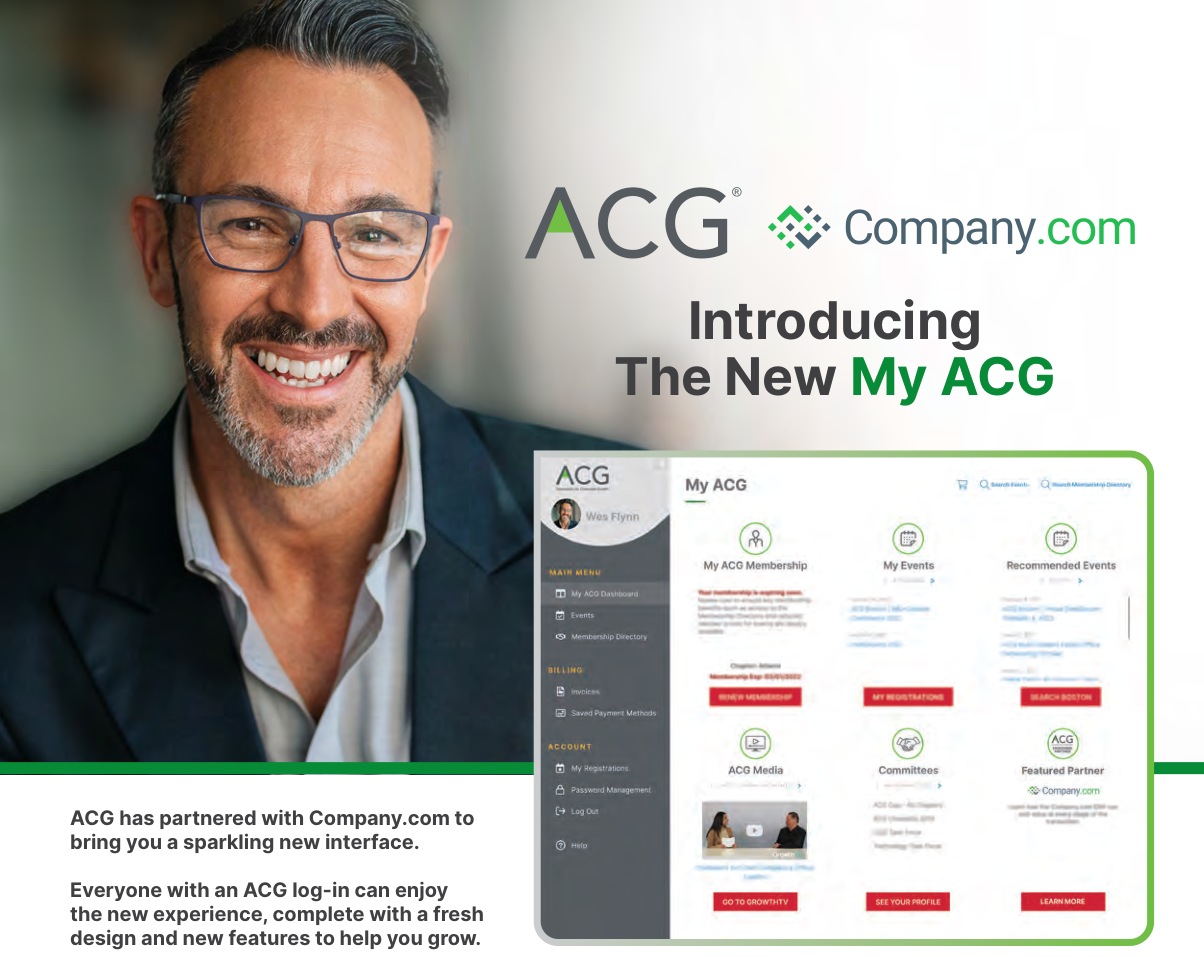
ACG’s launch communication made the work understandable: recommend events across chapters, present relevant industry material, match people with resources and offers, and improve the member directory. A completed profile helped personalize the experience. Behind that pleasant front door were membership and event systems that still had their own jobs to do.
ACG expected improved retention, event registration and operational efficiency. Those were expectations at announcement, rather than published before-and-after results. Still, the project makes the problem specific. The limitation appeared in what members could conveniently do across systems. Company.com’s response was to connect the experience while retaining the stack. For an association, a renewal button may matter more than a fashionable technical vocabulary.
The lesson fits inside one customer journey
A July 2022 FaceCake partnership put the same division of labour into retail: FaceCake supplied virtual try-on technology; Company.com brought onboarding, marketing, billing and identity tools. A fourth-quarter launch was planned. The announcement describes an intended offering, so the sensible lesson concerns the design: an impressive shopping feature still needs the machinery that lets a retailer adopt and manage it.
In a sponsored 2022 interview, CTO Ryan Clark advocated incremental transformation that shows value along the way. Readers can copy the question behind that approach: which ordinary task gets lost between your systems? Start with a renewal, registration or onboarding journey. Define its result before expanding the project. If the underlying data cannot be trusted, or the services cannot exchange it safely, a handsome dashboard will merely organize the confusion.
Today, Hilco Digital Assets lists Company.com for acquisition, and the website carries an acquisition notice. That puts the platform story in the past tense without making the domain listing a verdict on every earlier project. What remains useful is the company’s practical observation: buying software is easy to count. The time spent making it cooperate is easier to overlook.