Jon Adams had been counting. In June 2022, while political consultants argued in public about whose emails reached the inbox and whose disappeared into spam, he produced a small piece of evidence with a large number attached. A unique address he said he had used on a senator’s website in 2017 had received 24,453 messages from 72 senders. The campaign inbox had become a crowded room, and Adams had apparently kept the guest list.
There is something wonderfully specific about that intervention. Politics offers no shortage of people willing to announce that the system is broken. Here was a strategist pointing at one address, several years of traffic and a count. His example did not settle the dispute. It did make the discussion harder to conduct entirely in abstractions.
Adams is the founder and CEO of TAG Strategies, based in Austin. The familiar version of his job involves campaigns, advertising and fundraising. The less visible version involves the distance between deciding to say something and having somebody actually receive it. That distance contains data, software, creative work, budgets and other people’s attention. It is a surprisingly busy place.
A single example Adams described in June 2022. These figures are his reported counts, not a measurement of the whole campaign industry.
The address that acquired a crowd
The original use of the address was quite narrow: Adams said he had entered it on Senator Jacky Rosen’s website in 2017. By June 2022, he described receiving an appeal signed by Senator Raphael Warnock, sent through Senator Kirsten Gillibrand’s domain. His point concerned how political senders used addresses and how those practices related to delivery.
The argument around him was partisan. Republican and Democratic consultants challenged one another’s sending practices and explanations for emails being filtered. Adams’s example became part of that exchange; Targeted Victory figures, including chief executive Zac Moffatt, circulated his posts. It was a technical discussion conducted with the temperature of a political one.
“72 senders have launched 24,453 messages into this inbox”
Jon Adams · June 28, 2022
There is an ordinary human experience beneath the professional quarrel. An inbox is where a recipient discovers how many organizations believe they have something urgent to say. The sender sees a campaign. The recipient sees the morning’s mail. Those two views do not automatically agree.
That tension is a useful way into Adams’s career. The public language of politics concerns persuasion; the working questions are often more modest. Which address? Which audience? Which response? A speech can be admired as a performance. A digital appeal also has to function as a piece of machinery.
Presidential politics, viewed through the data
His campaign résumé begins well before TAG. Adams worked on John McCain’s 2008 presidential team and managed digital analytics for Mitt Romney’s presidential campaign. He also worked at Targeted Victory as a project manager of data platforms before joining the National Republican Senatorial Committee.
At the NRSC, he served as senior adviser and digital director through the 2016 and 2018 election cycles, when Republicans maintained their Senate majority. Those roles placed him inside the party’s national campaign operation. They also connect several kinds of work: presidential politics, analytics, technology projects and Senate strategy.
Read the sequence and the public face of a campaign begins to look different. A candidate speaks; other people work out where that speech should travel. An appeal is written; someone studies what happened when it arrived. These tasks seldom supply the image on the evening news, but they help determine which images people encounter.
The distinction matters when describing an achievement. Adams held consequential campaign jobs. An election result still belongs to candidates, voters, staff, volunteers and circumstances far beyond a digital department. His career can be taken seriously without awarding him personal authorship of every Republican victory during his tenure.
A political message enters the pocket
In January 2019, Adams appeared on a MediaPost panel about peer-to-peer texting. He was listed alongside Greta Carnes of ACRONYM and Ted Peterson, formerly the NRCC’s digital director. The session considered whether the channel worked: for fundraising, turnout and reaching voters whom other media might miss.
The panel’s title, “Pocket Pester Politics,” understood the problem with admirable economy. A phone offers access to a person. It also offers the person a very convenient way to be annoyed. The intimacy of the device gives the sender an opportunity and a reason to exercise judgment.
It is tempting to describe each new campaign channel as another way to speak. Texting also changes where the speech appears. A message arrives beside conversations with friends, family and colleagues. That setting makes the question of reception feel different from buying space in a broadcast schedule.
Adams’s appearance put him among practitioners discussing those consequences as working questions. The useful test for a channel is whether it helps accomplish a campaign task. Novelty alone cannot answer that. Neither can the satisfaction of having sent something.
The Adams in The Adams Group
The business has a personal name hiding in plain sight. Michael McCollum Adams has explained TAG as The Adams Group. She is the firm’s managing partner, as well as Jon’s wife. In a public interview, she described the couple building the business together at their dining room table in 2020, bringing their professional worlds into the same enterprise.
Her account offers a domestic scale for an agency with national campaign experience. A dining table is a practical place to begin a discussion. It also has other duties. A business organized around family life starts with a fairly direct reminder that the work must share the day.
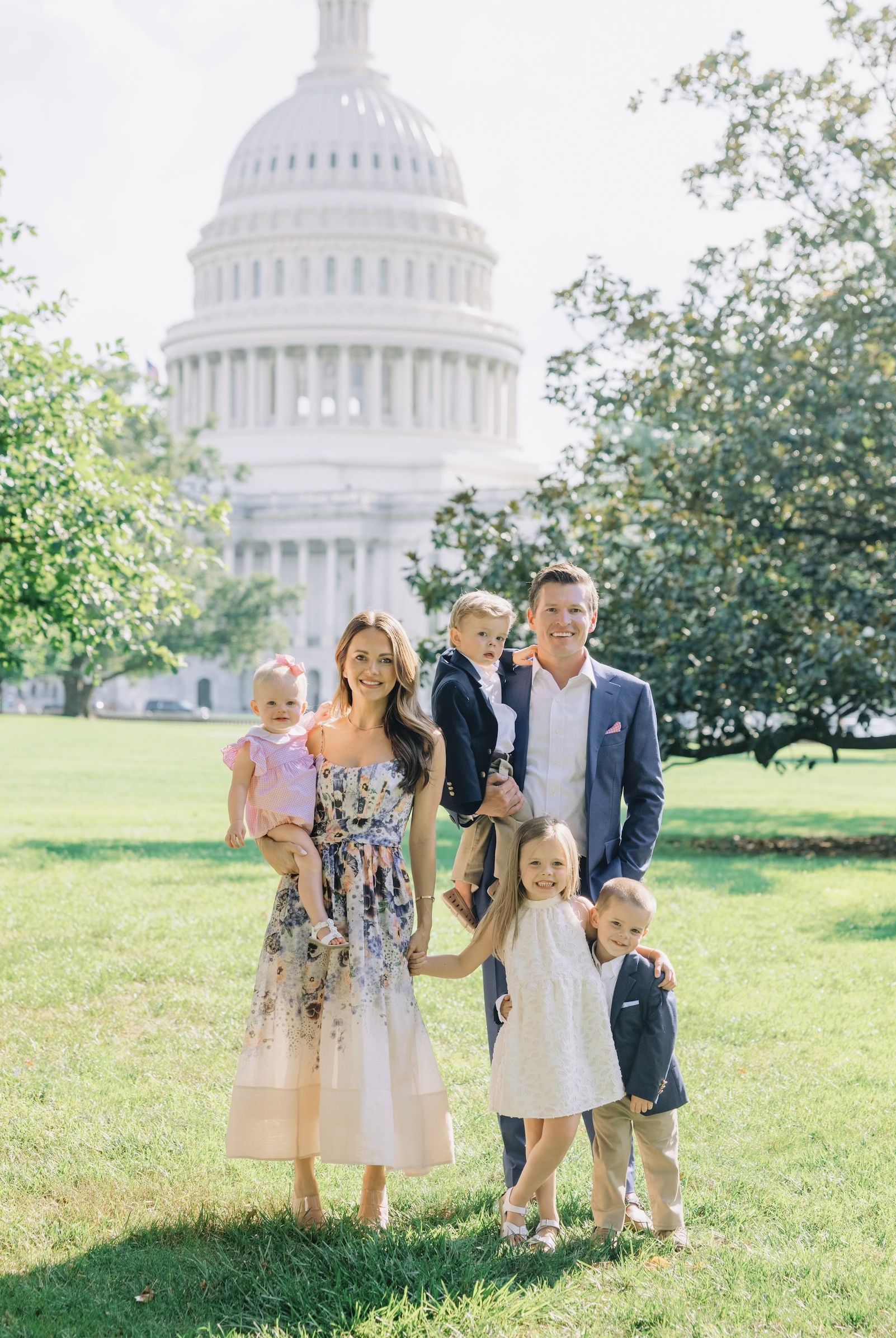
The couple lives in Austin with four children. Michael described their working relationship in equally personal terms: “Jon is my best friend.” She also spoke about the understanding that comes from knowing a spouse’s daily priorities. That is her description of the partnership, and it gives a more useful glimpse of their shared work than a slogan would.
Jon’s career in digital operations meets Michael’s background in political finance. There are different habits in those specialties: studying how a message performs and sustaining the relationships that support fundraising. The partnership places both kinds of experience inside TAG.
The business after the send button
TAG offers consulting, grassroots and major-donor fundraising, creative strategy, media buying, data, branding and web development, and voter contact. Its data work spans fundraising, persuasion and getting voters to the polls. Its voter-contact offering includes phone banking, direct mail, canvassing and digital outreach.
The combination is revealing. An audience can encounter the same campaign through several routes, while a campaign has to coordinate the people responsible for those routes. Adams now leads a business that sells services across that journey. The organizational question becomes part of the communication question.
Editorial map of TAG’s published services. The sequence illustrates related tasks; it does not claim measured results.
A beautiful piece of creative has a destination. A fundraising appeal has a transaction to complete. A voter-contact program has people to reach. Looking at the tasks together helps explain why the head of a marketing agency might be interested in a single overworked email address.
The small details belong to the larger purpose. They are where a broad ambition encounters a functioning link, a recipient’s patience or a decision about money. In campaigns, the grand sentence and the mundane process have to coexist.
Competition, constraints and a classroom
Adams joined Wesley Donehue for a forty-minute podcast conversation released in January 2024. Donehue acknowledged that they competed in client pitches and primaries. Their discussion concerned slower fundraising, changing digital strategies and the case for digital having a larger leadership role in campaigns.
That setting has its own appeal. Rival consultants can discuss the industry they share, even when they would prefer to win the next piece of business from each other. Professional disagreement does not prevent a useful conversation about how work gets organized.
Later in 2024, Adams spoke at the Pollies on creative content with a shoestring budget. The subject brings the discussion down to a recognizable constraint. A campaign can want every format, every audience and every idea. The budget introduces a shorter list.
In March 2025, he joined Ryan Dollar’s study group at Harvard’s Institute of Politics to discuss reaching voters in a changing media environment. The advertised session concerned examples from Senate, gubernatorial and House races, with attention to earned media and grassroots interest.
These public appearances trace a consistent professional subject: how campaigns get heard under practical conditions. The audience changes from industry peers to a university community. The problem remains stubbornly familiar. People have other things to do.
That is where the inbox returns to the story. Twenty-four thousand messages can demonstrate activity. The recipient’s response asks a separate question. Adams’s career has moved through the systems connecting those two things. The send button occupies very little space on a screen. The work around it can occupy an entire professional life.