Walk into the store on West Anderson Lane and the first thing you notice is that nobody is in a hurry to sell you anything. Someone is developing a roll of film in the back. Someone else is teaching a retiree how to hold a mirrorless body steady. A dog wanders past the used-lens case. This is Precision Camera & Video, the largest camera store in Texas, and it has spent fifty years betting that the future of retail is the part of the transaction you cannot put in a cardboard box.
That bet looks smarter every year. Camera phones flattened the entry-level market. Amazon, B&H, and Adorama own the price war on gear. And yet Precision Camera keeps three physical stores open, staffs a working photo lab, runs a rental counter, repairs decades-old equipment, and teaches paid classes most weekends. The company does roughly $6.5 million in annual revenue with about 57 employees. None of that comes from being the cheapest place to buy a camera. All of it comes from being the place you go when a screen and a search bar are not enough.
Where it startedA repair bench, not a cash register
Jerry and Rosemary Sullivan opened Precision Camera in Austin in 1976, and the detail that explains everything about the company is what they opened it as: a camera repair business. The store did not begin by selling shiny new bodies. It began by fixing the ones people already owned. Sales, rentals, printing, and classes were layered on top of a service counter over four decades.
That order of operations - service first, product second - turned out to be a durable moat. Anyone can stock a Sony a7 or a Canon RF lens. Very few retailers can open one up, diagnose a failing shutter, and hand it back working. When the Sullivans sold the business in 2019, Jerry stayed on with the repair side. The founding craft outlasted the founding ownership.
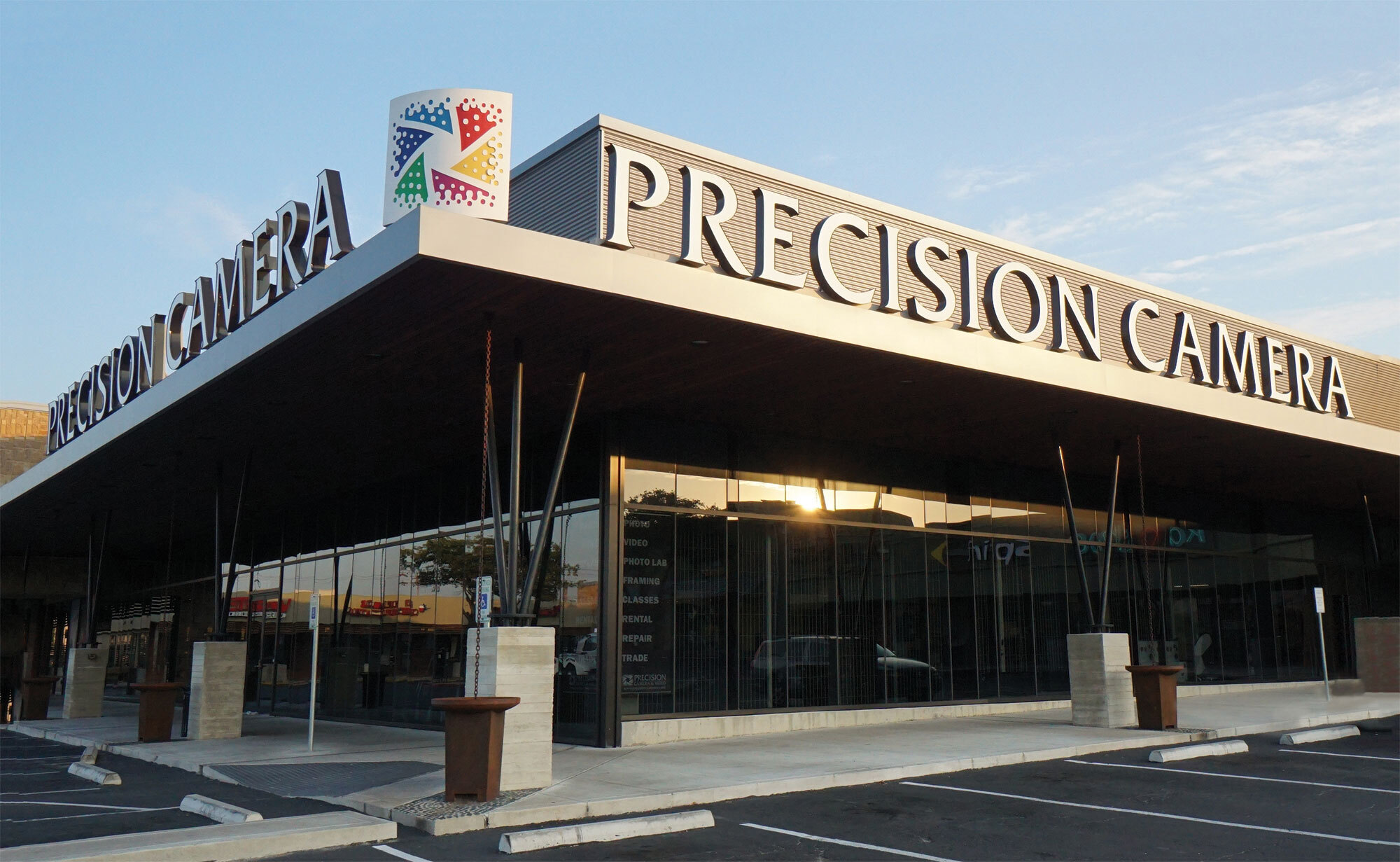
The plot twistA wrestling and legal-data executive walks into a camera store
In April 2019, Precision Camera announced it had been sold to Phil Livingston and a group of investors. Livingston was not a lifelong camera-shop operator. He had been a top executive - CEO and CFO roles - at LexisNexis and World Wrestling Entertainment, and most recently managing director of the investment firm 3K Limited Partnership. The company said he was chosen as the preferred buyer for his love of photography and his commitment to invest in the store's growth rather than strip it for parts.
The read here is straightforward. An operator who has run large, cash-flowing businesses looked at a specialty camera store and saw something most people miss: recurring, defensible service revenue wrapped around a product catalog. The gear gets people in the door. The lab, the rentals, the repairs, and the classes are what keep them from ever needing to leave.

The modelSix businesses under one roof, feeding each other
It is tempting to call Precision Camera a store. It is closer to a flywheel. Each service creates demand for the next one, and none of them is easy to copy from a warehouse.
What actually drives the business
Relative role of each service, illustrative - based on the company's stated offerings, not disclosed financials.
Consider how it connects. A customer trades in an old lens, which stocks the used case, which draws in a bargain hunter, who signs up for a beginner class, who eventually rents a cinema rig for a paying gig, who brings a jammed body to the repair bench, who drops a roll of film at the lab on the way out. The trade-in program and financing (including Klarna at checkout) lower the barrier to walking in. Everything after that raises the cost of ever walking out.
The classroomWhen the store becomes a school
The clearest expression of the strategy is Precision Camera University, or PCU. It runs hands-on classes and workshops led by working professional photographers and videographers, for everyone from first-time buyers to refining pros. There are single-session classes on shooting and editing, and there are multi-day PCU weekends - the next one scheduled for March 28-29, 2026 at Austin's Palmer Events Center.
Education is not a charity line item here. It is a retention engine. A customer who learns their craft inside your building associates the craft with your building. They come back for the next lens, the next class, the next print. Teaching people to use the product is the most durable way to sell them the next one.
Precision Camera at a glance
- Founded1976, Austin, Texas, by Jerry and Rosemary Sullivan as a repair business.
- OwnerPhil Livingston and investors, since 2019.
- FootprintNorth Austin (flagship), South Austin, and Shenandoah near The Woodlands.
- ServicesSales, photo lab, repair, rentals, classes, trade-ins, financing.
- Nickname"The Photographer's Candy Shop."
- ValuesPassion, Community, Education, Trust.
The mapAustin's anchor, now reaching Houston
For most of its life Precision Camera was an Austin story, built around the flagship on Anderson Lane, with a second location in South Austin. In June 2022 it opened its first store outside the city, on I-45 in Shenandoah, serving The Woodlands, north Houston, Spring, Conroe, and Montgomery County. At the opening, Livingston floated the possibility of more Houston-area stores in following years - Katy or downtown were mentioned. The company has since run brand expos and PCU sessions at the Woodlands location, treating each new store as a community hub rather than a shelf.

The customersWho actually walks through the door
The customer base is deliberately wide. On any given afternoon the store serves working professional photographers and filmmakers, weekend hobbyists, film-shooting students, content creators building a first kit, and business and government buyers placing larger orders. The keyword list the company markets against runs from B2C and D2C shoppers to B2B and corporate sales support - a spread most single-category retailers never attempt, and one the service mix makes possible. A pro renting a cinema rig and a beginner buying a used body are both, ultimately, being sold the same thing: somewhere to keep learning.

The competitionWhy it doesn't fight on price
On paper, Precision Camera is outgunned. B&H and Adorama have deeper catalogs and national scale. Best Buy has locations everywhere. Amazon has everything. Mail-order services like LensRentals and Borrow undercut a local rental counter on selection. If the only axis that mattered were price and inventory, this store would have closed years ago.
It competes on a different axis entirely: proximity plus expertise plus service you can only get in person. You cannot ship a conversation with someone who has shot the exact lens you are considering. You cannot download a shutter repair. You cannot email a print off a 35mm negative you shot last week. The store leans into precisely the transactions the internet handles badly, and it has been recognized for it - voted Best Electronics Store by the Austin Chronicle in 2020, and marketed, with some earned confidence, as Austin's best camera store.
The takeawayWhat another operator could copy
The transferable lesson has nothing to do with cameras. It is that a product a customer can buy anywhere becomes defensible the moment you wrap it in services they can only get from you. Start with the hardest-to-commoditize service - here, repair - and build the catalog around it, not the other way around. Turn education into a paid retention loop. Let trade-ins and financing lower the on-ramp. Give people a reason to be in the room, up to and including a dog.
Where would it not work? Where there is no service worth performing in person, or where the customer genuinely only wants the lowest price and the fastest box. For commodity electronics, the shipping warehouse wins. But for gear people care about, learn on, break, and keep for years, the store you can walk into remains hard to replace. Precision Camera has spent half a century proving the point in one Austin building, and it is still open.