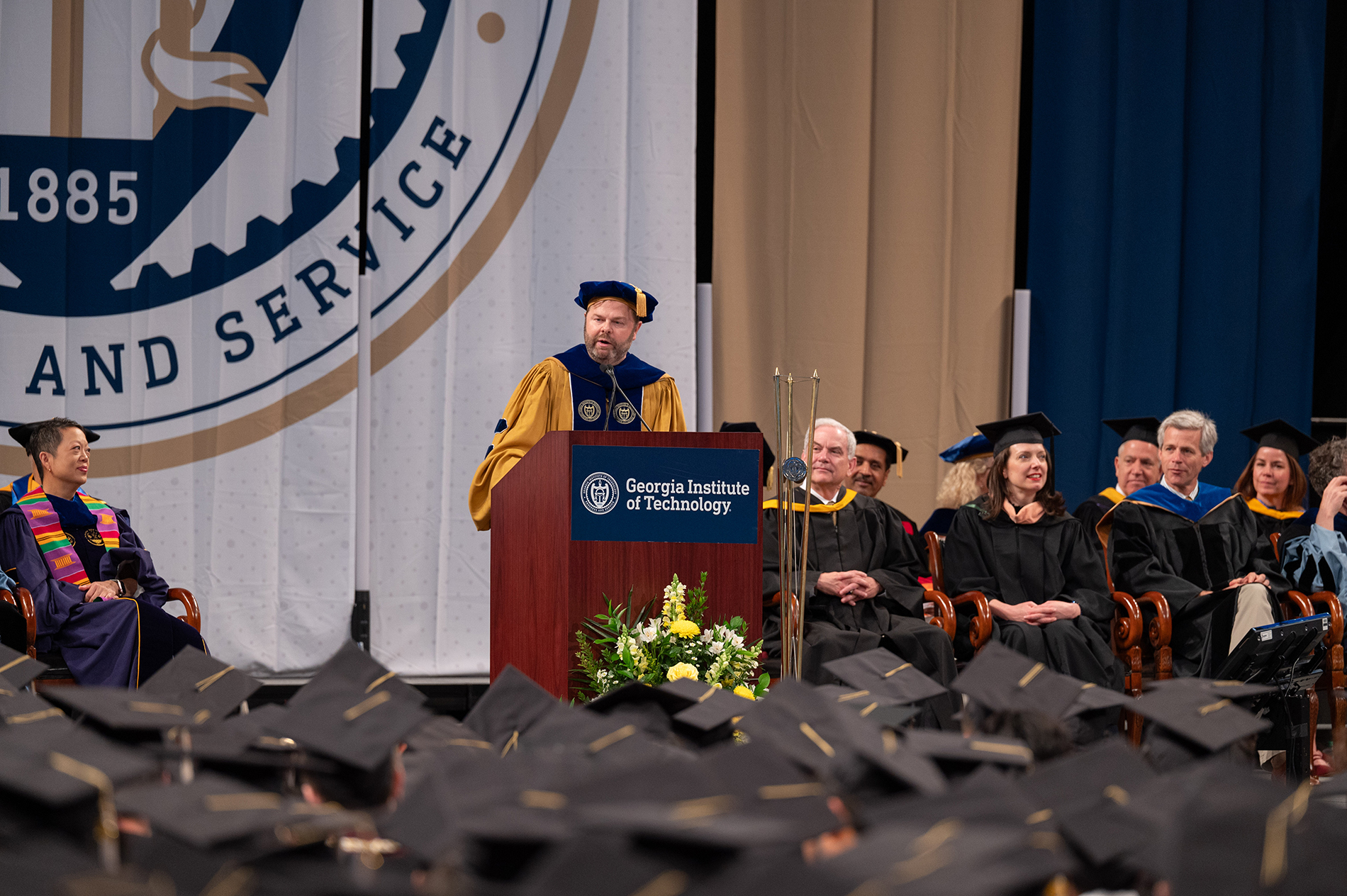
A commencement speech usually arrives with advice. Christopher W. Klaus arrived with an offer to pick up a bill. On May 2, 2025, the entrepreneur told Georgia Tech's graduating students that he would cover the incorporation costs for those ready to start a company. Academic ceremonies have no shortage of people telling the young to pursue their dreams. Here, at least, someone had remembered the paperwork.
Klaus was also receiving an honorary doctorate. He had left Georgia Tech to build Internet Security Systems, the cybersecurity business that IBM acquired in 2006 for approximately $1.3 billion. Now he was back in academic robes, inviting a new class to try entrepreneurship. There was a pleasing symmetry to the occasion: the student who interrupted his education had returned to help other students begin an experiment of their own.
His offer fits a longer pattern. A computing building bears his name. He helped establish CREATE-X. Through Fusen World, where he is founder and CEO, he works with students before their ideas have acquired the reassuring polish of an investor presentation. His career has moved from finding weaknesses in computer networks to giving prospective founders somewhere to begin.
A scanner, a spare bedroom, a market
Before there was a company, there was a technical problem. During a Department of Energy internship, Klaus became interested in computer security and developed software to identify vulnerabilities. Networks were becoming useful to more people, which also made their weaknesses useful to people with less charitable intentions. His proposed contribution was practical: find the openings and show administrators what needed attention.
At Georgia Tech, he released an early scanner online for free. Requests followed. People wanted the software, wanted improvements, wanted more of what a student had made. That response supplied a form of encouragement more persuasive than polite praise. It suggested a market. The familiar founder's question, whether anyone would care, had begun answering itself.
The young business operated from his grandmother's guest bedroom. It is a detail worth keeping in view when the billion-dollar acquisition enters the conversation. A spare room is a rather different setting from a corporate headquarters. It also makes the starting point legible: someone writing software, responding to demand and working out how to turn useful code into a company.
Tom Noonan became his business partner in 1994. Their partnership joined the technical founder with an executive who could help build the organization around the product. Internet Security Systems incorporated that April and went public in March 1998. In four years, a business begun around a scanner had reached the public markets. The guest bedroom had proved an unusually productive branch office.
- 1994ISS incorporates
- 1998Public-market debut
- 2006IBM acquisition
Approximately $1.3 billion: the announced cash transaction value in 2006.
The partner matters as much as the prototype
Success can make a founding story appear inevitable. ISS's early history offers a more useful lesson about companionship. Klaus supplied the technical invention; Noonan helped turn it into an enterprise. Noonan later described their relationship in terms of shared purpose, trust and commitment through expansion and difficult markets. A working product and a working partnership had to develop together.
The company's business eventually extended across security software, appliances and services. By the time IBM announced the acquisition in August 2006, ISS was protecting companies and governments against threats across networks, desktops and servers. The original vulnerability-finding idea had grown into a broader operation serving customers whose security problems were considerably larger than a student's research project.
Klaus explained the sale partly through customers' changing expectations. Security was becoming something they wanted built into the wider technology infrastructure. IBM offered reach and resources, as well as an existing commercial relationship. The transaction therefore belonged to the company's technical story as well as its financial one: how would the protection ISS had developed reach more organizations?
There is a useful restraint in that explanation. An acquisition price is easy to repeat. The customer problem takes longer to explain, yet it is what makes the price intelligible. Klaus's own account returned to the work: a network, its vulnerabilities, and the possibility of protecting more of it. The money made the headline; the software supplied the reason.
Science fiction gets a business address
Klaus's imagination had another address, too. He credited William Gibson's Neuromancer with helping inspire his interest in cyberspace. Fiction offered a way to picture a digital environment before building something useful within it. For an entrepreneur usually introduced through cybersecurity, this is an appealing complication: one of the influences behind the scanner was a novelist.
His next venture, Kaneva, explored online communities and three-dimensional virtual worlds. In 2006, while discussing ISS's planned acquisition, he was already talking about a platform where people could share media, meet and create experiences. He also pointed to Snow Crash as an influence. The interest in inhabited digital spaces ran alongside the interest in keeping digital systems secure.
When asked whether he would go sailing after the sale, he described his work on Kaneva. Retirement had apparently encountered a competing application. This part of the story helps explain why the later student-founder work feels connected to the earlier companies. Klaus kept returning to environments where people could make something, whether the environment was a virtual world or a university program.
“Some of your best learning takes place outside of the classroom.”
Christopher W. Klaus, 2006 building-opening remarks
The dropout who gave the campus more room
In 2000, years before IBM bought ISS, Klaus gave $15 million toward a new computing facility at Georgia Tech. He was 26. The chronology matters. The gift was made while his first company was still independent, rather than as a ceremonial flourish after its eventual sale. He was supporting the institution where his own technical ambitions had taken shape.
The Christopher W. Klaus Advanced Computing Building opened in October 2006. Its 414,000 square feet brought together computing and engineering activity, including laboratories and teaching spaces. A donation of this kind has an everyday afterlife. Students attend classes, researchers work and colleagues encounter each other in a place that began as an expression of gratitude.
Klaus used the opening to talk about risk and learning. Leaving school, in his account, had carried educational value even if the company had failed. That is a more interesting argument than recommending that everyone abandon a degree. It treats the attempt itself as something a person can learn from, while preserving a connection to the university that made the attempt possible.
Giving the next student a first investor
CREATE-X, co-founded in 2014, gave that connection a program of its own. By its tenth anniversary in 2024, it had helped launch more than 500 student startups. Klaus also co-founded CyberLaunch, focused on cybersecurity and machine learning. His attention was spreading from operating an individual company to helping other founders acquire the support a young company requires.
Fusen World, founded in 2022, extends that work internationally. Its community brings students together with mentors, investors and funding opportunities. The premise is close to Klaus's own experience: useful founders can emerge while they are still students. Universities contain people learning to solve difficult problems. Turning that ability into a business requires further practice, access and encouragement.
The Klaus Startup Challenge makes the proposition concrete at Georgia Tech's College of Computing. The published 2026 competition offered three winning teams investments of $150,000 each, with Fusen providing strategic advice. Participants had to attend workshops, mentor sessions and pitch practice. Money came attached to work. A promising idea still had to survive the exercise of being explained to somebody else.
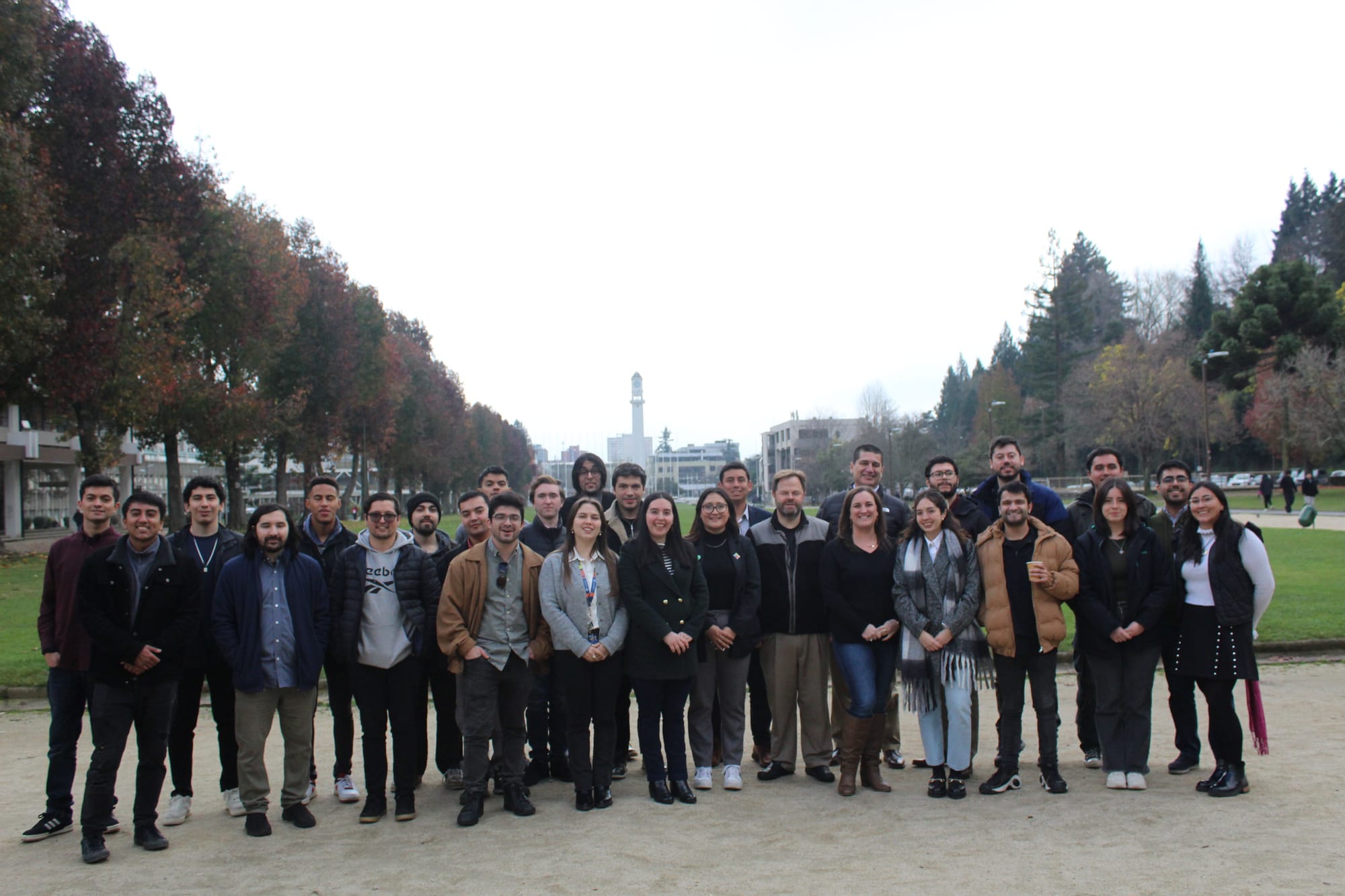
In Chile, the same interest in student enterprise took Klaus to the Universidad de Concepción. During an April 2023 visit for the 7th Gear Challenge, he selected three ventures for investment. He spoke about helping engineering students create future jobs and connect their companies beyond the domestic market. The local university and the international customer belonged in the same conversation.
Still making room for beginners
By September 2026, Fusen's reported network included 123 active student-founded companies across more than 15 universities. Its summer fellowships had run for two cohorts, allowing students to form teams and test problems before arriving with a finished business concept. Later-stage support included the Ignite Accelerator, aimed at companies already showing early evidence of a market. The programs meet founders at different points in the work.
Klaus sees artificial intelligence as another opportunity for small teams to build with capabilities that previously demanded more resources. His enthusiasm follows an established pattern in his career: a new technical possibility appears, and he becomes interested in what a person might make with it. The undergraduate with a scanner now spends time helping undergraduates investigate possibilities of their own.
His public advice retains a practical edge. In a leadership conversation, he urged founders to let evidence outrank personal certainty: “Let the data be the answer, not your ego.” It is sound advice for a beginner and a useful discipline for someone whose name is already on a building. Success gives a person many things; immunity from being wrong is an unwise addition to the list.
Back at commencement, the incorporation offer brought that outlook down to an ordinary first step. There would still be customers to find, teams to assemble and assumptions to correct. Klaus had volunteered to help with the beginning. After a career measured in acquisition dollars and square feet, he was again interested in the student at the threshold, wondering whether to start.
Keep the conversation going
Explore Fusen World, CREATE-X and the Klaus Startup Challenge.
Follow Klaus on LinkedIn, X and Bluesky.
Watch his EdUp interview on YouTube ↗
Read the September 2026 Fusen feature ↗
Read his 2006 conversation about ISS and Kaneva ↗
Explore the 2025 commencement announcement ↗