Greg Foster kept returning to Georgia Tech. He returned as an alumnus, as a judge of student inventions, and eventually as someone charged with helping students launch companies. A career that took him through a Madrid office, Atlanta startups, venture capital and corporate acquisitions kept finding its way back to campus. The business world is very fond of an exit. Foster’s story has an unusual number of entrances.
BrightWhistle made him a co-founder and CEO; in 2014, he added chairman. Experience later put him in charge of a mobile ticketing business. Yet the university relationship began before any of those titles, when he was an undergraduate with a student government job and an honor code to champion.
Foster died on January 30, 2019. His career belongs to a particular period in Atlanta’s technology business, when digital media, online advertising and mobile commerce were changing what companies could sell and how customers could buy it. Following his route through those changes reveals a person repeatedly willing to take responsibility, then return what he had learned to the next group starting out.
A campus with a long memory
Born and raised in Atlanta, Foster attended Riverdale High School before entering Georgia Tech. His mechanical engineering degree placed him in the class of 1995. During the 1994-95 academic year, he served as undergraduate student body president. That is a useful early detail: before he was negotiating over companies, he was participating in an institution whose members could argue back.
He championed the creation of an academic honor code. Student leadership gave him something more demanding than a line on a résumé: an issue that required other people to agree. An honor code concerns the terms on which a community trusts itself. It is a rather ambitious undertaking for someone who also has coursework to finish.
The connection survived graduation. In April 2001, Foster visited the undergraduate representatives and spoke about his time in student government. The visit sits quietly among the larger corporate milestones. It deserves its place. Returning to speak with students was already part of his life years before mentoring became an official appointment.
His formal education continued at Harvard Business School, where he earned an MBA. Engineering and business would both appear in his professional biography. One concerned how things work; the other made room for the awkward question of who might pay for them. His subsequent jobs repeatedly brought those questions into the same room.
Madrid, Atlanta, and the other side of the table
At iXL, Foster’s responsibilities included leading the Madrid office as vice president and general manager, as well as serving as senior vice president of corporate development in Atlanta. The geographical range is striking. An executive biography can make an overseas office sound like a decorative accomplishment. A general manager’s title carries the less decorative business of making an operation function.
Silverpop added another chapter in business and corporate development. Foster also founded Southern Direct and served as its CEO. The company worked on branded e-commerce extensions for cable channels, putting commerce alongside the attention that television had already gathered. It was a practical meeting of established media and a different way of selling.
After Turner acquired Southern Direct, Foster joined the broadcaster in corporate development. His remit included acquisitions and investment opportunities across brands such as CNN, TNT, TBS, Cartoon Network and Adult Swim. The founder was now working inside a buyer. Seeing a transaction from both positions is an education with unusually consequential homework.
He later became a partner at Noro-Moseley Partners, concentrating on early digital media businesses. His departure in 2009 came as the firm reconsidered the resources it devoted to that area. The episode adds a useful wrinkle to the tidy progression of job titles: investment firms make choices about their own business, too. Foster subsequently served as an entrepreneur-in-residence at Chrysalis Ventures.
His board work brought another set of connections: The Onion, StatSheet and PlayOn Sports, with advisory roles at companies including Clearleap and SolidFire. Satire, sports and technology make a varied set of boardroom subjects. The Onion, in particular, supplied a pleasing footnote to a career otherwise furnished with very serious titles.
The business behind the Likes
BrightWhistle brought Foster together with co-founder Chad Mallory. Their early responsibilities were distinct: Foster led the business as CEO, while Mallory led technology and product work as CTO. Mallory had previously founded Nexteppe, a marketing platform for automotive dealers. The partnership joined executive and investment experience with a background in building marketing software.
In its early years, BrightWhistle worked on Facebook advertising and the pages people reached after clicking an advertisement. The distinction sounds small until someone is paying for the clicks. An advertisement can attract attention successfully and still leave a prospective customer wondering what to do next. The landing page is where an expensive introduction has to become useful.
“Some people in the industry still think it’s just about Likes, just about brand building.”
Greg Foster, discussing Facebook advertising in 2011
That observation put revenue and customer acquisition at the center of Foster’s argument. The early business combined a managed advertising service with plans for a licensable software tool. There were developers to hire, an agency market to approach, and an eight-person team in Atlanta. Beneath the platform terminology sat familiar company-building decisions: what to sell now, what to build next, and who would buy it.
By April 2014, BrightWhistle reported that revenue had tripled between 2012 and 2013. Existing investors participated in new funding, including Eastside Partners, Hamilton Ventures and Paul Iaffaldano. Foster added the chairman title while Scott McFarland arrived as chief operating officer. Mallory added chief strategy officer to his responsibilities.
2013 revenue relative to 2012, as reported in the company’s April 2014 announcement.
The leadership changes give that growth figure some human scale. More business required attention to how the company would run. In 2015, BrightWhistle was acquired. By April, Foster was appearing on an Atlanta acquisition panel alongside fellow CEO Andy Monin, investors Jamie Hamilton and Phil Molner, and moderator John Yates. He had become someone other business owners could question about the process.
A ticket, a seat, a reason to go
Experience took Foster into the business of live events. As president and CEO, he worked with mobile technology that could change what fans bought and how they used a visit. A 2016 partnership with Coca-Cola at Darlington Raceway offered race access, ticket upgrades and other purchases through the app. The phone became another place for the event to do business.
His own preferences were pleasantly specific. In a 2017 interview, Foster talked about wanting to see the view from his seat and being able to upgrade it. Here was an executive with a history in acquisitions and venture capital discussing an extremely recognizable customer concern. One can admire the strategic possibilities of mobile commerce and still prefer a better view.
The attraction of that work was its closeness to a decision. Someone has a ticket, wants to attend, or sees an opportunity to improve the evening. There is little room for abstraction when the event has a start time. Foster’s move from marketing software to mobile ticketing placed him at another point where digital systems had to persuade people to act.
He retired as Experience’s CEO in 2017. His public announcement said he would remain active in Atlanta’s startup community while spending more time with family and fishing. He wished his friend Junior Gaspard well as Gaspard took the helm. It was an executive handover with a refreshingly intelligible personal agenda.
Back where the companies begin
By then, Foster had already spent years around student entrepreneurs. In 2011, he judged Georgia Tech’s InVenture Prize alongside Sara Blakely, Deborah Kilpatrick and David Phelps. The competition included automated advertising software, a self-powered skateboard and a guitar capo. A founder who had worked in digital media could watch an inventor demonstrate a device by riding it across a stage.
In April 2018, Georgia Tech announced that he would join CREATE-X as associate director and professor of the practice in the College of Engineering. He would be responsible for Startup Launch, the program’s final phase. At the time, participating students received mentorship, $20,000 in seed funding and other resources to take their companies to market.
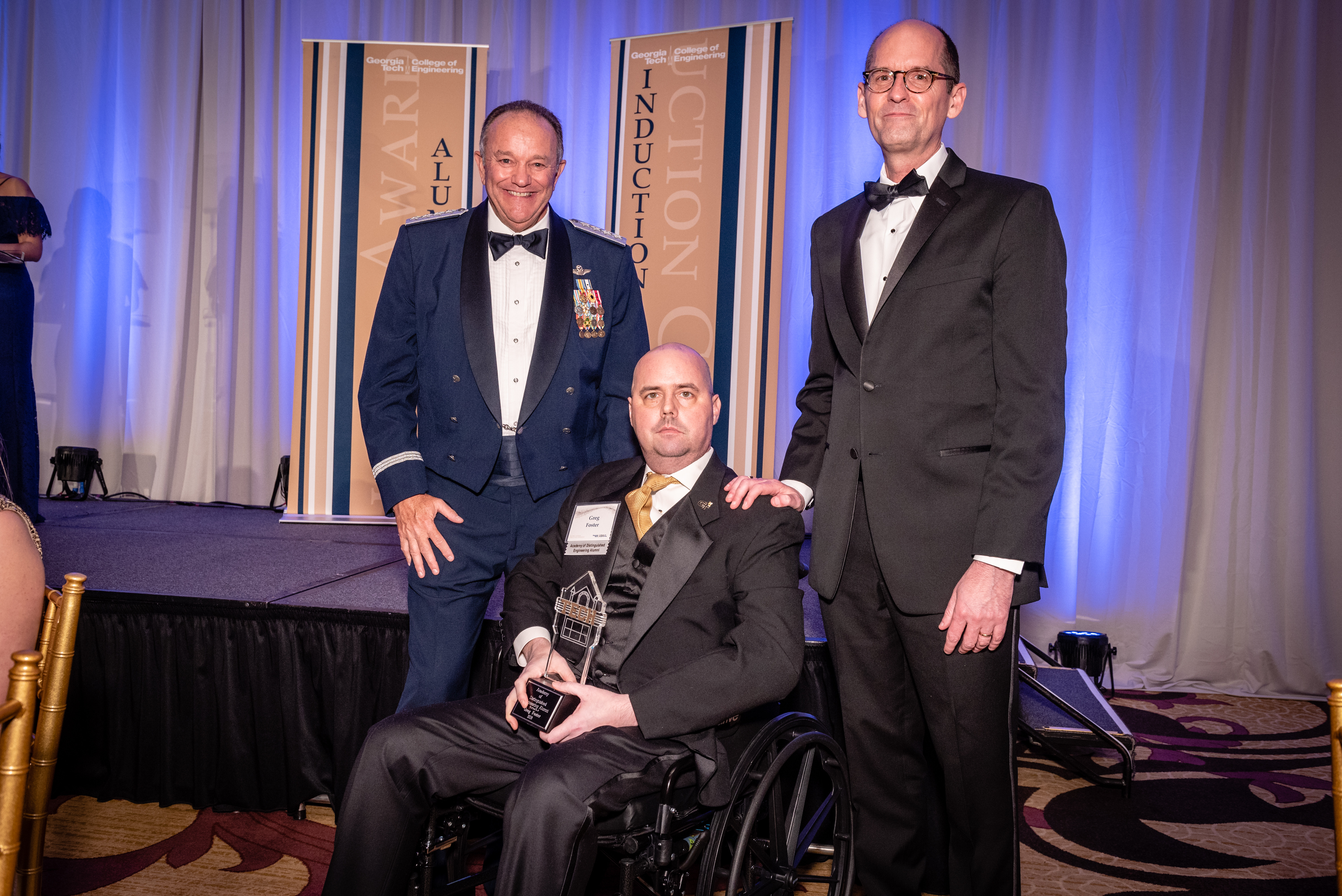
That spring also brought his induction into the Academy of Distinguished Engineering Alumni. Recognition and responsibility arrived together: an institution honoring an alumnus while giving him another way to contribute. The award looked back over a career. Startup Launch concerned people whose careers were still taking shape.
There was life outside the companies and committees. Foster enjoyed singing, classical music and fly-fishing. With his sons, Jack and Henry, he traveled, played chess and watched movies. Those details belong beside the board memberships. They show where some of the hours went when there was no transaction to complete and no audience waiting for a pitch.
His return to Georgia Tech gives the career its shape. The student president became an operator, founder and investor, then came back to help students put their own ideas into business. He knew several sides of the table. At the end of this route, he had chosen a seat close to the people getting started.