Garrett Langley had already helped build a business around making a night out more enjoyable. He had helped start another around making a car fit the occasion. Then his uncle offered a less flattering test for whatever came next: “build a business that isn't dopey.” Family members have a talent for reducing a strategic planning session to a sentence you cannot put in a pitch deck.
The advice stayed with him. A company could make money and still leave him wondering what it had changed. Langley wanted work with consequences. In Atlanta, where he lived, burglaries in his neighborhood supplied a problem close enough to stop being theoretical. He asked the police what they needed. The answer would redirect his career toward a small piece of information attached to the back of a car.
Flock Safety began in 2017. Its co-founders were Langley, fellow Georgia Tech graduate Matt Feury, and Paige Todd. The business grew from neighborhood cameras into a network used by police departments and private organizations. Along the way, the question facing its chief executive changed. Making evidence easier to find was one task. Deciding how much power to give the people searching for it was another.
better evidence?Who gets to
search it?
Before the pole, the phone
Langley grew up in Atlanta and studied electrical engineering at Georgia Tech, graduating in 2009. Entrepreneurship arrived earlier than the diploma. In middle school, he started helping people with their home computers and internet connections. He preferred that to spending the summer cutting grass. His mother drove him to customers before he could drive himself. Every young business needs logistics; his came with parental supervision.
The work brought together two things he enjoyed: technology and people. Both his parents worked in sales. On his personal website, he describes himself through that inheritance and his engineering education. He presents coding and sales as complementary interests. The pairing describes the distance a founder has to cover between a working device and somebody willing to pay for it.
At 18, he joined a startup led by Georgia Tech alumni. Firethorn was working on mobile financial services, years before paying through a phone became an everyday reflex. He worked there while attending college. Qualcomm eventually acquired the business. Langley had an early view of how a technical idea becomes an organization, and how much of that education happens around other people.
“I like to write code and sell things.”
Garrett Langley · personal website
The evening out, the garage, the next question
Experience followed, a mobile business that let fans upgrade their time at live events. Langley oversaw engineering, design, product, data science and customer support. That collection of responsibilities put him close to both the machinery and the complaints. Cox Enterprises acquired Experience in 2014 in a transaction valued at $200 million. The figure describes the deal, rather than his personal proceeds.
Clutch offered a different kind of flexibility: a car subscription that let customers change vehicles to suit their needs. In one business, the fixed object was a seat. In the other, it was the car in the driveway. Both involved asking whether an arrangement people accepted could be made more convenient. Neither required the founder to spend the rest of his life devoted to that particular industry.
His own list of possible businesses has included toilets and constrained social networks. Plumbing, he concedes, is tricky. The list is funny because its author is willing to place an unglamorous household fixture beside a fashionable technology idea without apology. His stated interest is a product that solves a real problem. A founder who thinks that way can end up a considerable distance from the industry where he began.
A number plate becomes a business
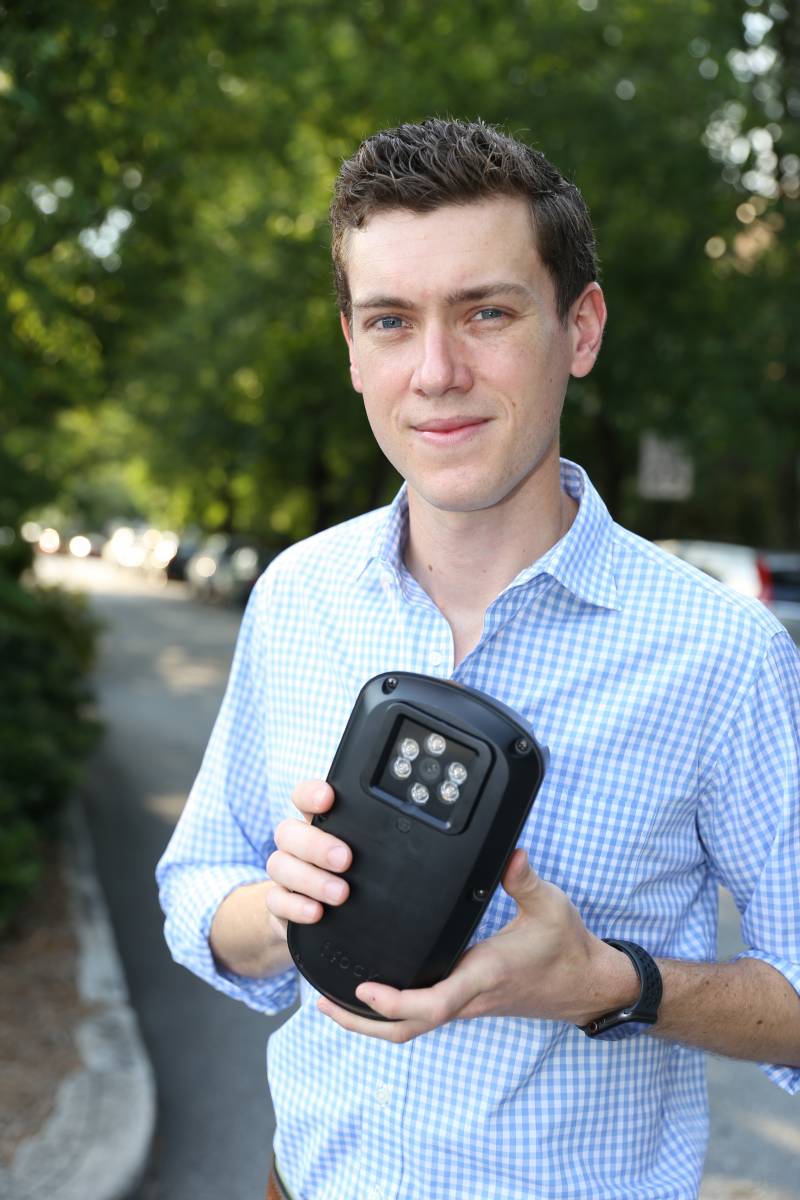
The neighborhood problem was more specific than a general desire for better security. Police needed evidence they could act on. A blurry recording could establish that something had happened while failing to identify the vehicle involved. Langley looked at existing equipment and found cameras priced at $25,000 apiece. He and Feury began combining available components with machine learning to build something cheaper.
Langley later recalled that their cameras helped police make an arrest within 60 days. He also went back to Steve Chaddick, his senior design project mentor, for technical and business advice. The engineer was returning to hardware after years away from circuit boards. Having a degree did not remove the need to call someone who knew more.
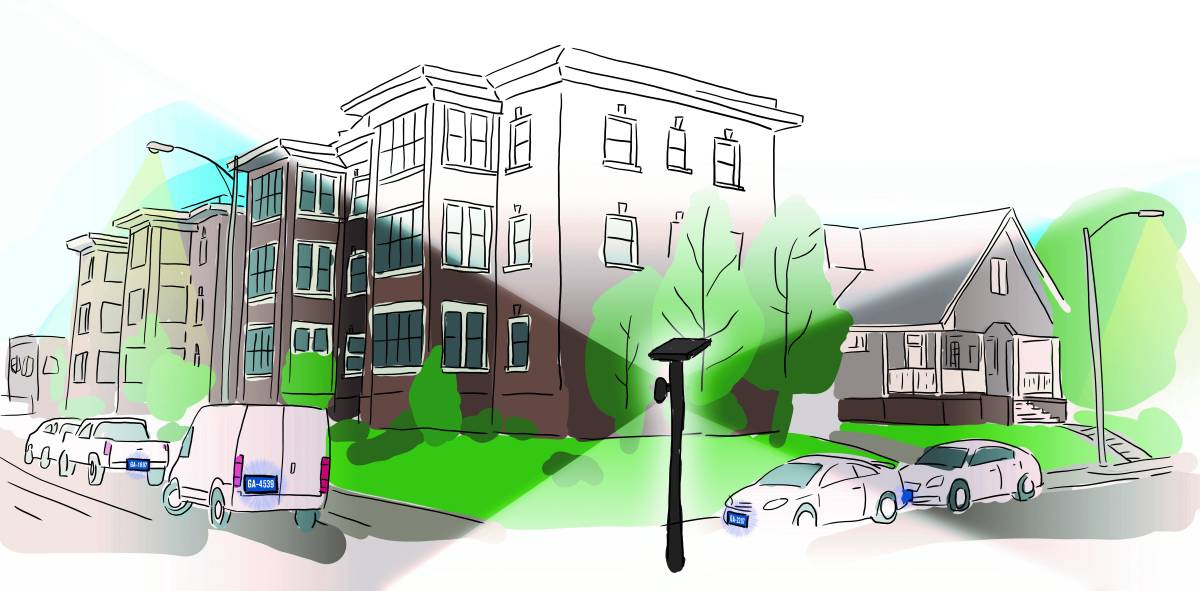
Flock joined Y Combinator’s summer 2017 batch. Its starting proposition connected residents who wanted evidence with investigators who could use it. The camera could capture a plate; software could make the record searchable. That was a practical improvement with a larger implication. Once records could be shared across boundaries, a neighborhood purchase could become part of a much wider investigative system.
The camera acquires an organization
By March 2025, Flock announced a $275 million financing led by Andreessen Horowitz at a $7.5 billion valuation. It also reported passing $300 million in annual recurring revenue. These were company-reported business measures, taken at that moment. They show how far an experiment on a residential street had traveled, without saying how any particular investigation turned out.
The product range traveled too. In October 2024, Flock acquired Aerodome, adding drone and remote-piloting technology to its ambitions. A camera records what passes its position. A drone can move toward an incident. The expansion brought a different kind of equipment, a different operating problem and more decisions about how technology enters public space.
Langley’s account of the business emphasizes controlling the work from hardware and software through installation and service. He also describes sending engineers on police ride-alongs so they can understand the jobs they are designing for. There is a recognizable continuation of the young computer technician here: go where the problem occurs, listen to the person having it, then try to make the equipment useful.
Investment announced
Annual recurring revenue reported
People who never bought the product
There is a complication in that approach. The person operating a system is only one of the people affected by it. A resident driving past a camera has a stake in the rules even if they never attend a sales meeting. As Flock spread, Langley increasingly had to answer questions from people who wanted less surveillance, tighter restrictions or an explanation of how a search could be challenged.
The concerns became concrete. In August 2025, Langley acknowledged that Flock had communicated inaccurately about federal agency involvement and had failed to create distinct permissions and protocols for those users. He said limited pilots involving Customs and Border Protection and Homeland Security Investigations had been paused. It was an admission that the boundaries inside a product matter alongside the promises made about it.
By August 2026, police misuse was also driving changes. Officers had been accused of using the system for personal searches, including tracking romantic partners. Langley called misuse unacceptable and described a broader responsibility to the communities affected. A system built to make investigations easier also needs to make an improper investigation harder. That requirement belongs in the product itself.
Seven days, and a longer argument
On August 13, 2026, Flock announced a seven-day default for retaining license plate data, replacing its previous 30-day default. The details matter: existing customers could retain their approved periods, and communities could choose their own rules. An Evidence Mode would preserve specific records for active investigations. Seven days was a new default and recommendation, rather than a universal deletion deadline.
The company also said it would require law enforcement customers to adopt Audit Assistance by the end of the year. That tool flags abnormal searches; planned automatic lockouts would suspend access pending review. These commitments move some oversight from a policy document into the software. Their value depends on how they work when someone with authorized access starts asking unauthorized questions.
The argument continued beyond Flock’s own announcements. Senator Josh Hawley opened an investigation in August into the collection, retention and sharing of camera data. A Senate subcommittee held a hearing in September. Langley and the invited heads of three other surveillance companies did not testify. For a founder who wanted consequential work, the consequences now included questions from Congress.
The other thing he makes
Atlanta remains a thread through Langley’s career. Georgia Tech supplied his education, early colleagues and a network he has continued to support through advisory and alumni roles. His connections to the city also extend to cultural institutions, including the High Museum and Atlanta History Center. Flock grew nationally while its founder’s professional story kept returning to the same place.
There are smaller details beside the corporate ones. Georgia Tech included him in its 2021 class of 40 Under 40 and recorded baking as his preferred way to unwind. The university also lists him as a 2009 recipient of the Alvin M. Ferst Leadership and Entrepreneur Award. The baking detail is especially welcome in a biography so heavily populated by cameras. Even a founder needs something that comes out of an oven.
Langley’s ambition is to eliminate crime, a mission he connects to giving people the security to build their own lives. That ambition leaves him with two demanding audiences: people asking for help after something has happened, and people asking what can happen to information about them. The next stage of his story will be measured in the answers he gives both. His uncle asked him to find work that mattered. He has certainly found work that people argue about.