At Ocean Prime in Fort Lauderdale, the wireless network had an awkward assignment. It needed to reach the people serving dinner on the patio. It also needed to stop inviting the nearby boats to the party. In the account published by networking vendor Extreme Networks, this small geographical problem became part of a much larger project: modernizing Cameron Mitchell Restaurants’ network across 74 locations. Logically, the managed services company helping with the work, was dealing with something more interesting than signal strength.
- Logically combines managed IT, cybersecurity, cloud infrastructure, and technical advice.
- Customers can hand over daily operations or keep an internal team and share the work.
- Its central proposition: fewer handoffs between the people keeping systems running and the people protecting them.
Every organization has them. Between an internal IT team and an outside contractor. Between a firewall and a cloud application. Between the person who spots a problem and the person authorized to fix it. Logically’s argument is that these seams deserve as much attention as the equipment. The company sells a service built around bringing those responsibilities together. For a customer, the useful question becomes surprisingly simple: when something goes wrong, who stays with it?
The Wi-Fi had to know where dinner ended
Cameron Mitchell’s move to a wireless-first Toast point-of-sale system made dependable coverage an operational requirement. The published case study describes inconsistent reception, configuration constraints, and an internal team stretched by a distributed estate. Logically’s work combined Extreme switches and access points with SonicWall firewalls. Centralized management and location-specific configurations gave the restaurant team room to retain control while sharing operations. The lesson travels well beyond hospitality: specify where a system must work, who must manage it, and where its reach should end.
“Now we have stronger signal strength where it matters most”
Orlando Sprockel, Senior Director of IT, Cameron Mitchell Restaurants
First, they had to make the name work
The business began in Portland, Maine, in 1999 as Winxnet, founded by Chris Claudio and Michael Williams. The engineering-minded name mixed Windows with networking. Customers struggled to pronounce it. A 2018 combination with California’s K&R Network Solutions, alongside an investment from Riverside, gave the company a national expansion platform. In April 2019, it became Logically: logic plus ally. The merger came first; the shared identity followed.
Former marketing chief Jeff Loeb’s account supplies the less polished details. The rebrand took seven months. The team considered more than 500 names. One favored choice ran into trademark trouble. The eventual domain cost a low-five-figure sum. What changed management’s mind was a need to unite acquired businesses and cultures under a name that could travel. The copyable move is organizational: give one experienced leader responsibility, interview customers, and clear the legal obstacles before falling in love with a word.
A security team, without building a security team
Today, Logically operates in the crowded market between a company’s own technology department and the vendors selling it software. Managed IT covers monitoring, patching, service-desk work, and infrastructure support. Security services add detection, investigation, and response. Cloud and infrastructure work addresses migration, hosting, backup, and recovery. Advisory services help connect those technical decisions to budgets and business priorities. A healthcare operator, financial firm, college, or local government can need several of these at once.
SentryXDR is a central piece of that security proposition. The service brings together signals from endpoints, networks, identities, and cloud systems, combining AI-driven analysis with a security operations center available around the clock. The attraction is investigating suspicious events across systems. It remains a managed service with people responsible for interpretation and response.
Network
Identity + cloud→Connected
signals→Human review
+ response
One Logically case study describes an unnamed higher-education institution whose existing arrangements lacked continuous network monitoring as updated GLBA requirements approached. The customer compared providers, then selected SentryXDR; Logically credits its SonicWall relationship and wider visibility. Risk assessment, awareness training, and penetration testing accompanied the monitoring. This is a vendor account, rather than an independent audit. Still, it reveals the buying trigger: a specific operational gap and a deadline, rather than an abstract wish to become more secure.
The bill depends on the work
The commercial model combines recurring managed services with project work and optional additions. LogicBase supports co-managed environments; LogicCare adds remote support and a dedicated team. Security packages range from baseline controls to broader detection and monitoring. Pricing depends on users, infrastructure, complexity, and risk. These distinctions matter when comparing proposals: monitoring an alert and resolving it are different commitments. A buyer should map each promised activity to an owner and ask which support hours, recovery services, and on-site visits are included.
$83,176.55Additional expenses
$1,489.00
A public record makes the project side unusually tangible. Pleasant Valley, New York, authorized $83,176.55 for Logically to supply and install a computer refresh. A March 2024 resolution recorded another $1,489, including a file-server migration expense. That makes $84,665.55 for that particular project. It is not a rate card for another organization’s managed services.
National scale. Familiar people.
Riverside’s acquisition strategy added businesses including Cerdant in Ohio and Network Guidance 2.0 in Minnesota. That brings expertise and geographic reach; it also makes consistency a management job. Logically describes itself as remote-first, with employees in more than 30 states and regional offices. Its stated culture emphasizes accountability and long relationships. Logically University backs the learning theme with monthly technical assessments and continuing education.
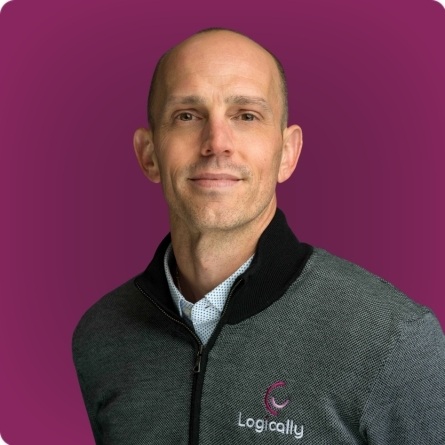
Chief executive Joshua Skeens arrived through Cerdant. His background connects security operations with training: he created Cerdant University before leading Logically. Partnerships with Microsoft, SonicWall, Fortinet, Extreme Networks, and others put the company in the role of integrator and operator. Its differentiation rests on how those technologies are run together. The alternatives include retaining specialists internally, employing a regional MSP, or separating IT support from a dedicated security provider.
The next boundary is AI
Logically now extends the same idea to managed AI: controlled access, governance, onboarding, and help choosing practical uses. In a public reflection on its own automation work, Skeens described months of ambitious effort with little to show, followed by progress when the team focused on smaller sources of friction. There is a useful limit here. Integration requires clear responsibilities, access to the relevant systems, and customer participation. A business determined to keep every function isolated will struggle to get the promised coordination. Start with one troublesome handoff. Decide who owns it. Then see whether the service actually closes it.