Chris Wang wanted to retire early. This is an inconvenient beginning for anyone hoping for a founder’s origin story involving destiny, a garage and a solemn promise to change the world. Wang’s explanation is more economical. He wanted to earn money young, then have the freedom to put it into things he cared about. Building a company seemed a practical way to arrange that freedom. Retirement, however, would have to compete with his interest in the next problem.
In 2010, Disney agreed to acquire Playdom, the social games company he had co-founded, for $563.2 million, with another $200 million tied to performance. A transaction of that size supplies a perfectly respectable ending. Wang’s career carried on through Disney, investing and a return to company building with ThunderCore. The recurring subject was participation: how to turn something technically possible into something people would choose to do.
A dragon before Disney
Wang was born in Taiwan and moved to the United States at 13. He studied computer science at the University of California, Berkeley, then earned his doctorate at Carnegie Mellon in 2006. He completed the doctorate at 22, after studying there from 2003 to 2006. The quick academic progress is striking. The surviving student website is more revealing. Before there was a corporate biography, there were games, puzzles and things he had made because he could.
Among them was Ultimate Dragon Slayer, a Berkeley graphics class project with multiplayer support, spells and real-time three-dimensional scenery. Its description includes the wonderfully deflating qualification: “This project focus on technology, not gameplay.” A dragon could evidently wait while its rendering engine received attention. The same website offered a Reversi program and a C++ solution to the four fours puzzle, alongside his work on data structures.
The projects offer a useful way into his later career. Here was someone willing to move between an abstract problem and a working object. A program could embody an argument; a game could demonstrate a technical idea. His doctoral advisers were Gary Miller and Daniel Sleator. Research supplied a rigorous vocabulary, while the downloads on his homepage supplied another kind of evidence: things that ran.
The audience was already there
Playdom’s opening was a change in distribution. Social networks were becoming places where people could play together, and the players already knew how to find their friends. Facebook and MySpace provided the gathering places. The games could arrive inside a social habit instead of requiring an entirely new one. For a developer, that distinction changes the question from where to find an audience to what that audience might enjoy.
Wang co-founded Playdom with fellow builders including Ling Xiao and Dan Yue. Its portfolio included Social City, Sorority Life, Market Street and Bola. These were different invitations into the same broader possibility: entertainment distributed through relationships. A friend could become a reason to try a game. A network built for communication could also carry a business selling amusement.
By July 2010, Disney put Playdom’s audience at an estimated 42 million active players each month. It wanted the company’s social gaming capabilities as well as its games. The acquisition announcement described software tools, business intelligence and rapid innovation as benefits for Disney’s interactive operation. Behind the purchase price sat a less photogenic asset: knowledge of how people behaved inside a new distribution system.
Announced consideration for Playdom shareholders, plus a performance-linked earn-out of up to $200m.
Company transaction value; not Wang’s personal proceeds.The numbers need their proper nouns. The $563.2 million was consideration for Playdom shareholders, subject to conditions. It was a company transaction, with multiple founders and investors. Disney completed the acquisition on August 27, 2010. The distinction between a deal and a personal fortune matters, especially in a biography where one large number can otherwise elbow every other fact out of the room.
A founder who lets an idea lose
Wang’s account of entrepreneurship gives considerable room to failed attempts. Before settling on games, his team tested other applications, including commerce, news sharing and dating. In his telling, the durable business emerged through experimentation. The finished company makes the route look direct. The route itself involved abandoning possibilities that had initially looked worth trying.
That willingness to change direction runs through his advice to founders. He emphasizes demand, the skills available to a team and the money required to keep going. There is little romance in the list. It does have the advantage of describing the conditions under which a business can survive long enough to become interesting. An idea needs an audience; the audience needs a reason to return.
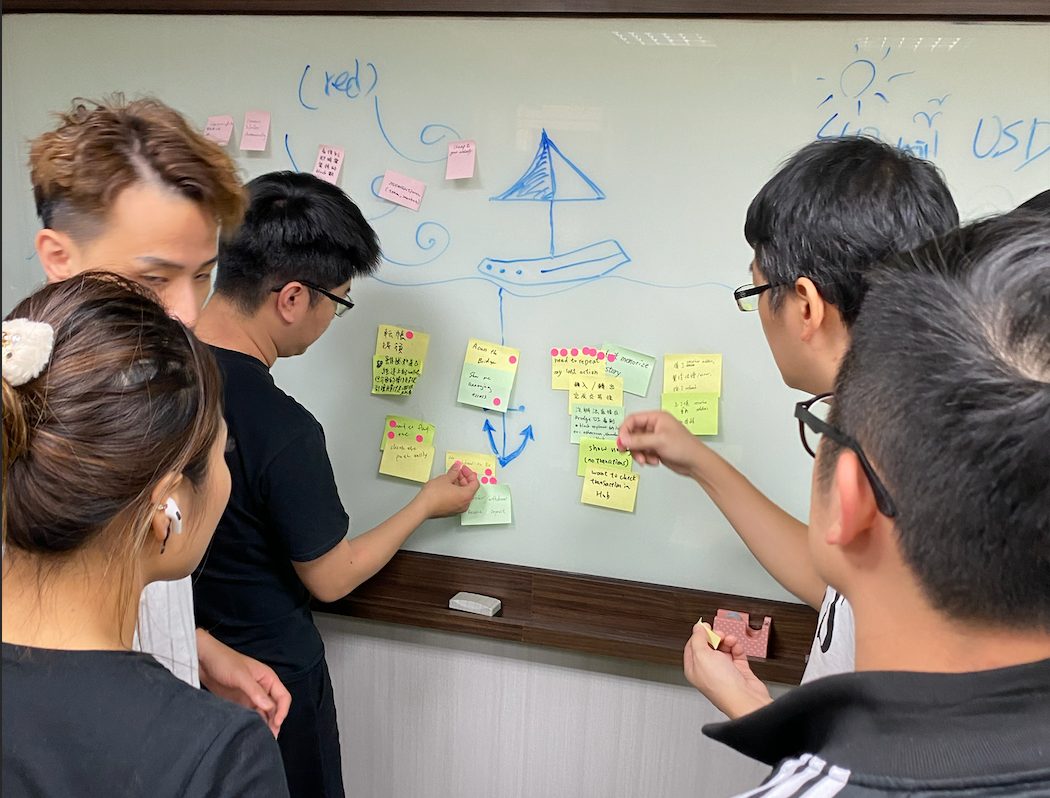
His investment interests also put him among people who had built consumer businesses. He is listed as a partner at 886 Studios, alongside founders associated with companies including Twitch, Kabam and Guitar Hero’s creator, RedOctane. The connection fits a career concerned with getting products into people’s lives. Building a technically sound product and finding a workable way to distribute it remain separate jobs, even when the same founder must do both.
One piece of his advice travels particularly well: examine what has changed to make an opportunity possible now. A platform opening, a new capability or a shift in behavior may create room for a company. The question forces a founder to explain the present tense of a business. Why should this work today? An attractive answer also needs customers willing to supply evidence.
When the game needs a faster road
ThunderCore brought Wang back to infrastructure. He was interested in blockchain’s capacity to let people cooperate through rules encoded in software, including people who had no previous relationship. The practical attraction was coordination. The practical obstacle was a system that could be slow and expensive to use. For someone whose earlier company had reached a mass audience, that obstacle was difficult to overlook.
In a 2022 community discussion, he connected the decision to build ThunderCore with CryptoKitties and the congestion it brought to Ethereum in 2017. A game had exposed a limit in the underlying network. The episode joins two parts of his career rather neatly: entertainment creates demand, then the machinery beneath it has to cope. A successful invitation is only useful if the guests can get through the door.
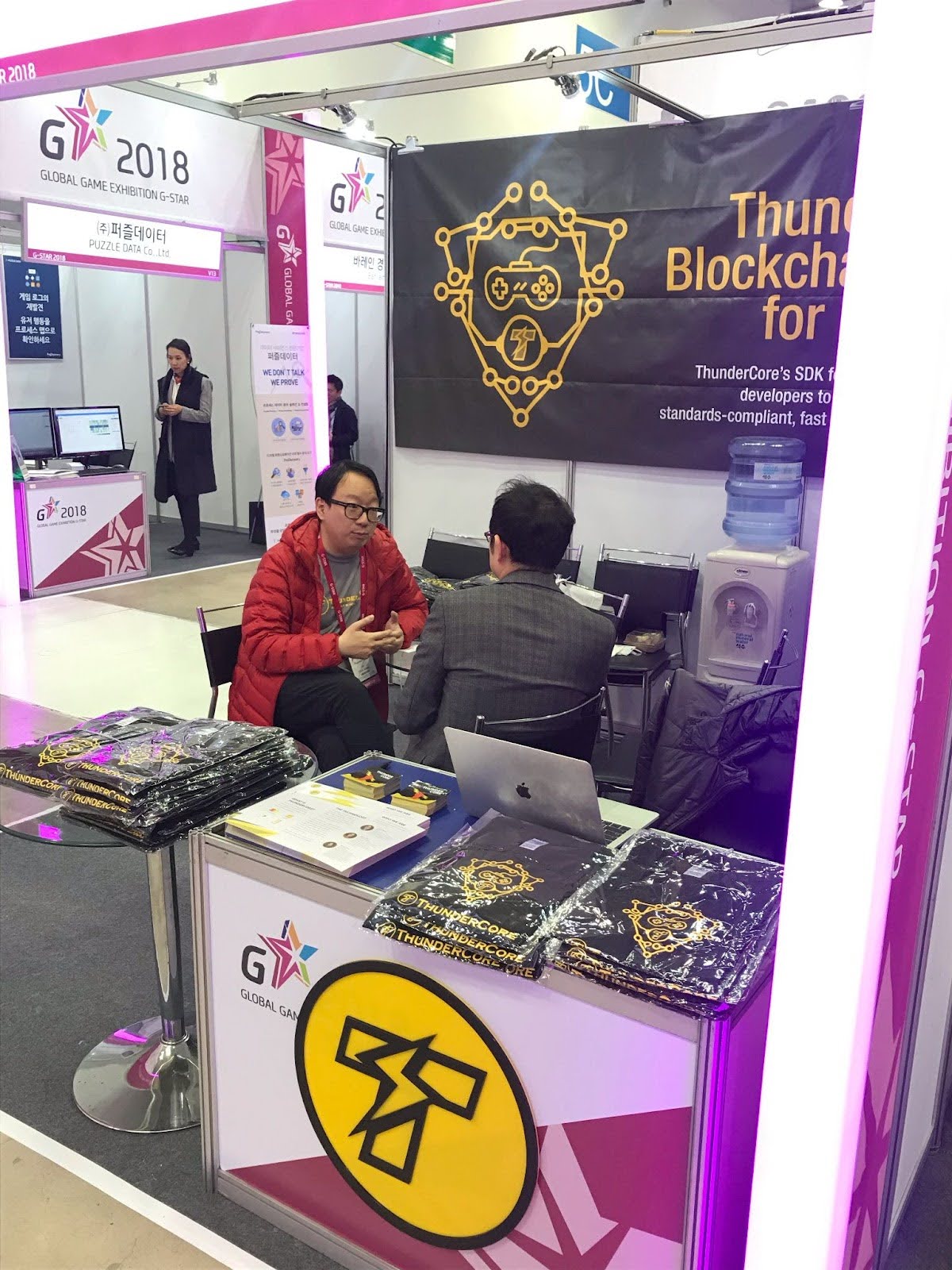
ThunderCore’s mainnet launched in 2019. The project pursued compatibility with Ethereum’s developer ecosystem while seeking lower costs and faster confirmations. Compatibility matters because developers bring existing skills and software with them. Asking them to discard all of that creates another obstacle before an application reaches its first user. Wang’s move into blockchain carried a familiar concern about how much effort an unfamiliar product demands.
His role also needs a date attached. Wang was ThunderCore’s founding CEO; a February 2024 company interview identified Scott as the current CEO. By August 2026, a company statement explicitly named Scott Tsai in that position. Wang’s significance to the project rests in founding it and shaping its early direction. The operating leadership changed as the company’s story continued.
The person on the other side of the screen
For Wang, faster infrastructure was only part of the adoption problem. In his 2022 discussion of Web3, he argued for mobile access and applications that people could try without navigating a series of unfamiliar preliminary tasks. His description of the target experience was “seamless and integrated and free to try.” That is a consumer product ambition expressed in ordinary words.
“seamless and integrated and free to try”Chris Wang, 2022
A wallet, an exchange account and a separate set of transaction rules may each make sense to an experienced participant. Together, they ask a newcomer to acquire a small profession before enjoying an application. Wang’s ambition was to reduce that burden for developers as well as users. Tools such as the ThunderGene API were part of that effort to keep more of the experience inside an application.
The through line to Playdom is easy to see. People have their own reasons for opening a screen: a friend, a game, something they want to accomplish. The builder’s enthusiasm for the underlying system is unlikely to be enough. Wang’s career makes an argument for paying attention to the distance between the technical demonstration and the ordinary person deciding whether to stay.
A final block, and an unfinished question
The latest chapter is a change of course. On August 24, 2026, ThunderCore announced that its community had approved a proposal to migrate TT to BNB Smart Chain. Its September 1 announcement confirmed that the mainnet’s final block had been produced. The original independent chain had reached an endpoint. TT would continue through migration, rather than continued operation of that mainnet.
The company’s proposal connected the decision to a changed operating environment after Upbit and Bithumb decided to end trading support. It also described the continuing resources required to maintain a Layer 1 network. These are project-level decisions and explanations. They belong in the story of the company Wang founded, without assigning him a personal position on decisions made under its later leadership.
This ending complicates the familiar founder arc. Playdom supplied the acquisition; ThunderCore supplies a reminder that building usable technology, sustaining an ecosystem and supporting an independent network involve different demands. A working system still needs a workable institution around it. In Wang’s story, the interesting question has outlasted any single platform: what gives people enough reason to participate?
Early retirement was a clean initial ambition. Games, investing and blockchain made the subsequent itinerary considerably busier. Wang keeps returning to the space between an invention and its audience. There is an engineer’s pleasure in making something work, and a founder’s harder task of persuading others to care. The dragon on the old student website could survive on technology. A business has to find its players.