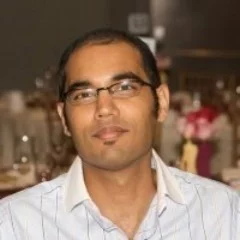
In 1999, Gagan Palrecha joined a startup whose audacity was so complete it seemed almost reckless: build the internet's infrastructure from scratch, before anyone had figured out what infrastructure should even look like. Loudcloud, co-founded by Marc Andreessen and Ben Horowitz, was betting that companies would eventually want someone else to run their servers. That bet took years to pay off. By the time HP acquired the successor company Opsware for $1.6 billion, Gagan was long gone - onto the next thing. He's been doing that ever since.
Today, he runs Stealth, a Los Angeles-based fiber internet provider targeting the enterprise and urban markets that legacy carriers have consistently underserved. It's a different kind of infrastructure than Loudcloud - fiber optic cable in conduit under city streets, not virtual machines in data centers - but the underlying instinct is the same. Spot the essential layer. Build before the window closes.
Stealth closed a $17.5M venture round in October 2023, bringing total funding to $22.8M. The keywords on file tell the story of the company's ambitions: dedicated fiber, dark fiber, fiber peering, wavelength division multiplexing, city-wide deployment, gigabit internet for enterprise. This is not a reseller play. This is physical infrastructure, built to last.
The YC Years and What Came Before
Before fiber, before NFTs, before car-sharing - there was a paper goods startup and a Y Combinator acceptance letter. In January 2010, Gagan and his brother Neel Palrecha walked into YC with Chirply, which TechCrunch described as "Threadless for paper goods." The concept was crowdsourcing: let the community design the stationery. It was an early signal of a pattern that would define his career - identifying platforms that aggregate taste, leverage communities, and reduce friction for creators.
The YC experience gave him something more durable than a company: a framework for evaluating what matters, and a network of founders who would become the connective tissue of the next decade of tech.
"He was at Loudcloud in 1999 - the same year Marc Andreessen and Ben Horowitz founded the company that would eventually become Opsware, acquired by HP for $1.6 billion."
- Career timeline from public sourcesGetaround, Dapper Labs, and the Art of Operations
Between YC and his current role at Stealth, Gagan built a reputation as one of the more capable operators in consumer tech. At Getaround, the peer-to-peer car sharing platform, he served as VP Operations from 2014 to 2017 - right through the period when the sharing economy was moving from novelty to infrastructure. Running operations for a company where the product is literally cars parked in strangers' driveways requires a tolerance for ambiguity and an obsession with logistics that most executives only approximate.
Then came Dapper Labs. The Vancouver-based blockchain company had done the impossible: made NFTs interesting to people who didn't know what a blockchain was. NBA Top Shot - officially licensed NBA highlight clips on the Flow blockchain - created a cultural moment that predated the broader NFT frenzy by about a year. Gagan joined as VP Operations during the ascent. He was in the room when it counted.
His time at Dapper naturally led to his next move: COO at NFTSTAR, a Web3 sports NFT platform under The9 Limited, appointed in September 2021. He arrived as NFTs were peaking and left having built operational infrastructure designed to outlast the hype cycle. It's a recurring theme.
The Investor Side: Palrecha Capital
Running companies and investing in them require different minds, but Gagan appears comfortable in both chairs. As General Partner at Palrecha Capital, a San Francisco-based venture firm, he has built a portfolio of more than 36 companies. Two of the disclosed names are revealing in what they share: Houzz and Headspace. One is a home design platform that became a data company. The other is a meditation app that became a corporate wellness product. Both are consumer businesses with strong retention loops and a clear understanding of where daily attention actually lives.
That's not a coincidence. It's a thesis.