The Most Consequential Nerd in America
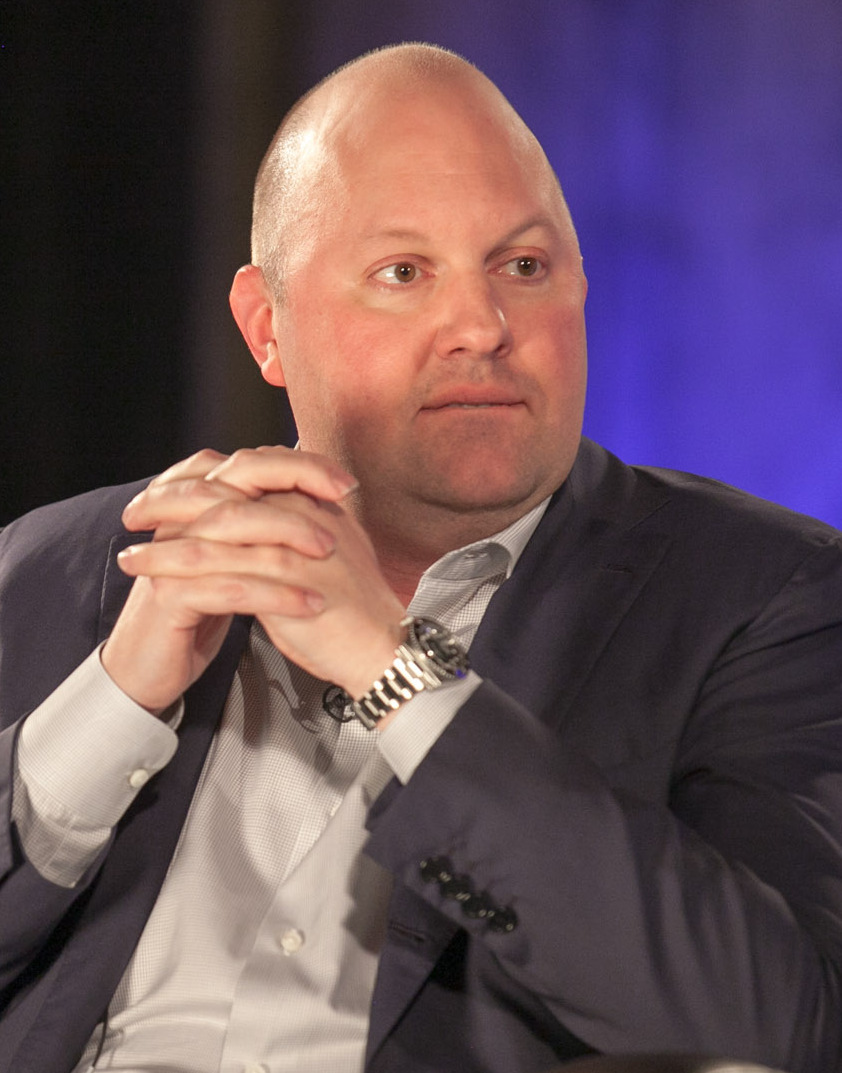
Marc Andreessen doesn't need an introduction. He needs a reckoning. At 54, he sits at the intersection of every major force reshaping civilization - artificial intelligence, crypto, venture capital, and now American government policy. He got there by being right about software before anyone else dared write it down, and by betting his own money on the same thesis repeatedly until the thesis became reality.
Today, Andreessen runs Andreessen Horowitz (a16z) alongside Ben Horowitz, a venture capital firm that has grown from a $300 million seed in 2009 to over $42 billion in assets under management. The firm has backed everything from Facebook's early growth rounds to the crypto infrastructure underpinning Web3. More than a fund, a16z operates like an intellectual platform - producing podcasts, manifestos, research papers, and op-eds that shape how Silicon Valley thinks.
But in 2024, Andreessen made a move that reordered his public identity entirely. He announced support for Donald Trump's presidential campaign, donated $2.5 million to a pro-Trump PAC, and funneled $33.5 million toward pro-cryptocurrency political groups. After the election, he began spending roughly half his time in Florida advising the newly formed Department of Government Efficiency (DOGE). The internet pioneer who once sat in Barack Obama's White House as a friendly donor had pivoted - hard - toward a different vision of American governance.
"The world is a very malleable place. If you know what you want, and you go for it with maximum energy and drive and passion, the world will often reconfigure itself around you much more quickly and easily than you would think."- Marc Andreessen
His reasoning, stated plainly: the Biden administration's approach to cryptocurrency regulation and AI governance represented an existential threat to the technologies he believes will save humanity. Silicon Valley's silent bargain with liberal politics - money flowing toward Democrats in exchange for regulatory restraint - had broken down. And Andreessen, who has never been comfortable with comfortable positions, said so out loud.
This is, in some ways, perfectly on-brand. Andreessen has built a career out of seeing clearly what others only glimpse at the edge of their peripheral vision - and then acting on it before the consensus forms. He did it with the web browser in 1993. He did it with cloud infrastructure in 1999. He did it with mobile's transformative potential in 2007. He did it with crypto's institutional inevitability in 2012. Whether his political bet lands the same way remains the central open question of his latest chapter.
Born in a Small Town. Built for a Big One.
New Lisbon, Wisconsin has a population of roughly 2,500 people. Marc Lowell Andreessen was born in nearby Cedar Falls, Iowa on July 9, 1971, and grew up in New Lisbon. His childhood home had a computer. That was enough.
He taught himself BASIC in elementary school, writing games as a way to avoid boredom in a town that didn't have much else to offer a kid with his particular kind of restless intelligence. By the time he landed at the University of Illinois at Urbana-Champaign to study computer science in 1989, he had the skills and the hunger to do something serious with them.
He found a part-time job at the National Center for Supercomputing Applications (NCSA) for $6.85 an hour. The internet existed. The web existed. But nobody had built a way to make it accessible to normal humans. Andreessen and his colleague Eric Bina started working on that problem in January 1993.
In six weeks, they built Mosaic - the first web browser capable of displaying images inline with text. Before Mosaic, the web was text on black screens, navigated by people who already knew what they were looking for. After Mosaic, it was something anyone could explore. Within eighteen months of its release, the internet's user base grew from negligible to 20 million people.
The University of Illinois saw what they had. They responded by declining to credit Andreessen properly and attempting to commercialize the browser themselves. Andreessen graduated in December 1993 and left NCSA shortly after. In 1994, Silicon Graphics founder Jim Clark cold-called him and proposed they build a better browser together. The result was Mosaic Communications Corporation, quickly renamed Netscape Communications after the University of Illinois objected to the trademark.
First browser with inline images. Released March 1993. Grew internet users from minimal to 20 million in 18 months. Changed the trajectory of human communication.
August 1995. The company had never turned a profit. Andreessen was 24 years old. The IPO priced at $28 and hit $75 on the first day. Silicon Valley's appetite for the internet was officially insatiable.
Netscape Navigator captured 75% of the browser market by 1996. AOL acquired the company for $4.3 billion in 1998. Andreessen walked away with tens of millions of dollars and, more importantly, a model for how to identify technological shifts years before they become consensus. He has been running that same playbook ever since.
The $42 Billion Machine
Andreessen Horowitz launched in 2009 with a deliberate thesis: the best venture capital firm wouldn't just write checks. It would provide portfolio companies with a full-service platform - recruiting, marketing, legal, policy, and a network of relationships that no founder could assemble independently. The pitch was that a16z would be the firm that treated founders like the chief executives they were, not the unproven bets that most VCs saw them as.
Before formalizing the firm, Andreessen and Horowitz had already deployed roughly $80 million across 45 startups as angel investors between 2005 and 2009, including early bets on Twitter and Qik. They had tested the model. They knew what worked. When they opened the doors of a16z, the LP (limited partner) community took notice immediately.
Within three years, the firm had grown to $2.7 billion under management across three funds. By 2024, that number had grown to over $42 billion, spanning software, biotech, and a dedicated crypto division that placed a16z at the center of Web3's institutional adoption cycle.
The pattern is consistent: Andreessen identifies a technology that incumbents are dismissing as too early, too niche, or too dangerous - and bets on it before the window closes. His Facebook investment came before the social network was open to the general public. His crypto conviction hardened years before institutional adoption was considered plausible. His current AI thesis - that artificial intelligence will be the most transformative technology in human history - has shaped a16z's positioning as one of the most AI-forward VC firms operating today.
Software, Manifestos, and the Art of Being Right Early
Andreessen is as much an intellectual as he is an investor. His writing has shaped how an entire generation of technologists, entrepreneurs, and investors understand the world. He does not write to inform. He writes to provoke - to make the reader see a truth they have been avoiding.
The pmarca blog, which he published between 2007 and 2009, became essential reading in startup circles. His essays on product-market fit, career planning, and hiring were passed around company Slacks and reprinted in startup bibles. They were collected into a free ebook that a generation of founders studied with the intensity others reserve for MBA textbooks.
"The spread of computers and the Internet will put jobs in two categories. People who tell computers what to do, and people who are told by computers what to do."- Marc Andreessen
"Why Software Is Eating the World," published in the Wall Street Journal on August 20, 2011, is the essay that cemented his reputation as a genuine thinker rather than a lucky investor. The core thesis was disarmingly simple: software companies were not disrupting existing industries at the margins. They were consuming them entirely. Amazon wasn't competing with Borders. It was replacing the category of bookstore. The same dynamic was unfolding in every sector - logistics, media, finance, healthcare, defense.
The Techno-Optimist Manifesto
In October 2023, Andreessen published the most ambitious thing he had ever written: a 5,200-word declaration of intellectual war on what he called "Luddites, Malthusians, and doomers" - the critics of technological progress. The Manifesto was a defense of infinite growth, a rebuke of AI risk discourse, and a sweeping argument that technology is the primary driver of human flourishing - and that its enemies are, intentionally or not, enemies of humanity.
The essay was polarizing by design. Critics called it naive libertarian cheerleading. Supporters called it the most important piece of tech writing in a decade. Either way, it was read. It sparked global debate about the responsibilities of the people building the technologies that are reshaping civilization.
His Substack, pmarca.substack.com, now counts hundreds of thousands of subscribers. His Twitter/X account (@pmarca) with 1.9 million followers is one of the most widely read tech feeds on the platform - a relentless stream of commentary on politics, technology, media, and culture. He also invented the "tweetstorm" format, threading long arguments across multiple consecutive tweets, long before the platform officially supported threads. As with most things Andreessen does first, the rest of the world caught up eventually.
From Sand Hill Road to Mar-a-Lago
The shift didn't happen overnight. For years, Andreessen had been growing restless with what he saw as a creeping regulatory hostility toward the industries he backed - crypto especially, but also AI governance frameworks that he believed would strangle innovation before it could deliver on its promise. The Biden administration's aggressive posture toward cryptocurrency regulation, combined with what Andreessen described as a breakdown of the unspoken compact between Silicon Valley and Washington, pushed him toward a decision.
In July 2024, he and Ben Horowitz announced their support for Donald Trump on their podcast, "The Ben and Marc Show." The rationale was economic rather than cultural: Trump's platform was better on crypto and AI deregulation. The announcement sent shockwaves through a Silicon Valley donor class that had long viewed Democratic affiliation as the path of least resistance. Andreessen called it as he saw it, the way he always has.
Whether this bet pays off the way his others have remains to be seen. Andreessen's track record of being early and right is remarkable. But politics operates on different timescales and with different feedback mechanisms than venture investing. The companies he backed either worked or they didn't, and the market kept score in real time. Policy outcomes are slower, messier, and far harder to attribute to any single actor.
What is not in doubt is that Andreessen means it. He told Joe Rogan in November 2024 that there are now "two kinds of dinner parties" in Silicon Valley - those where his political shift is celebrated and those where it is condemned. He attends both, apparently unperturbed. This is, after all, a man who was dismissed as a kid playing with toys in the early 1990s, who spent the late 1990s being told his company was worthless, who spent the 2000s watching the dotcom crash consume people who had laughed at his original vision. He has learned to hold his convictions through noise.
From $6.85/hr to $42 Billion
The Andreessen Quotebook
- "Software is eating the world."
- "My goal is not to fail fast. My goal is to succeed over the long run."
- "The difference between a vision and a hallucination is that other people can see the vision."
- "In the startup world, you're either a genius or an idiot. You're never just an ordinary guy trying to get through the day."
- "Bad managers hire very, very bad employees, because they're threatened by anybody who is anywhere near as good as they are."
- "The smartphone revolution is under-hyped. More people have access to phones than to running water."