Dom Maskell’s early running business included five minutes of theatre. A customer paid £80, entered their running history and received a personalised marathon plan by email. The software could prepare the PDF without the pause. The delay was there to make the work seem more complicated. Somewhere, a machine was being asked to look busy.
It is a pleasingly human detail in a story about automation. The customer wanted something considered, something that felt made for them. Maskell and his friend Ben Parker were trying to turn the experience of having a running coach into a product. Even at the PDF stage, they were thinking about how that experience would feel on the receiving end.
Runna eventually became a subscription app, attracted customers around the world and was acquired by Strava in 2025. Yet the deliberate pause makes a better place to begin than the acquisition announcement. It catches Maskell before the polished company biography: an engineer, a paying customer of his future co-founder, and someone prepared to put a rather modest product in front of actual buyers.
The friendship came before the pitch
The relationship began at the University of Southampton’s lacrosse club. Maskell studied electronic engineering, graduating with an MEng in 2017. Parker studied geography and graduated the same year. They became friends, ran a half-marathon together and went on to develop different kinds of expertise. The eventual partnership had time to acquire a history before it acquired a business model.
Maskell’s academic record was precise enough to please an engineer: first-class honours, an 82 per cent average and a place at the top of a year of more than 100 students. He then worked at McKinsey. Parker became a running coach. The useful encounter came when the friend who understood technology became a customer of the friend who understood training.
That arrangement gave their conversations an unusual advantage. Parker could see the work required to deliver coaching; Maskell could judge what it was worth to receive it. A founder interviewing prospective customers can spend months trying to recreate that view from both sides of the counter. These two already had it, along with a shared university past.
The lacrosse connection also gives the origin story its agreeable sideways quality. A running company emerged from a different sport. The commercial partnership followed the friendship, rather than requiring the founders to manufacture one on the way to a pitch meeting.
A salary goes missing
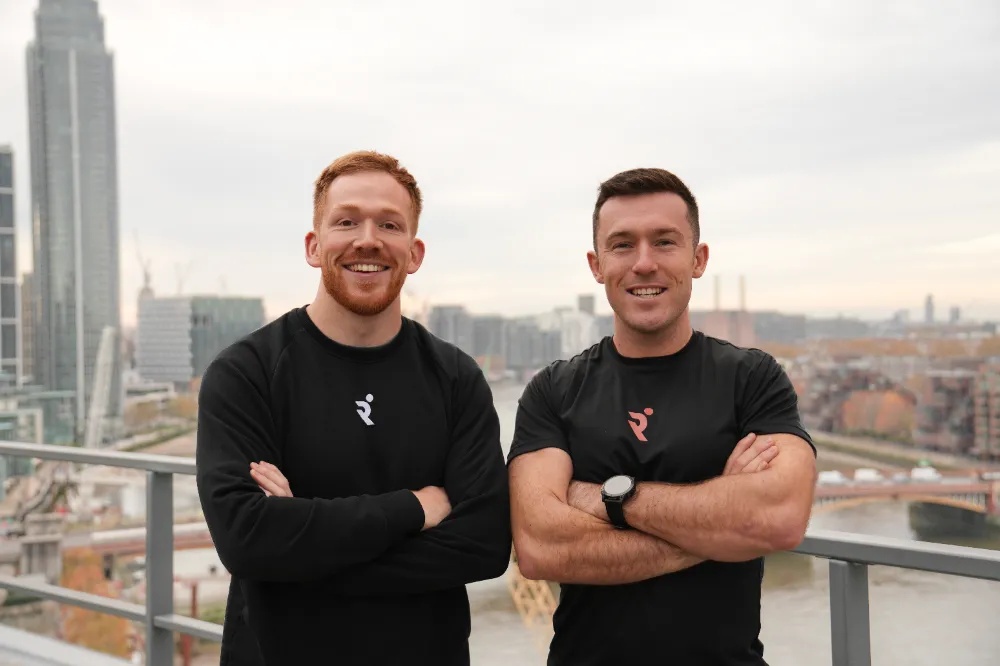
In 2021, Maskell left McKinsey to work on the business. A year later, he described the departure in a public anniversary post: he had gone without a salary or investment lined up. The available equipment was two founders and their laptops. It is an economical inventory for a new company, although less comforting when the next month’s income is your concern.
His anniversary figures showed what had followed: more than 10,000 users in over 100 countries, about £700,000 raised and seven full-time team members. Those were the numbers he reported at that point, rather than a prediction dressed as a result. The distinction matters in a company that would soon become much larger.
The early business was called The Run Buddy. A PDF was a manageable way to sell the service while the founders worked out what deserved to become software. It asked a plain commercial question: would runners pay for a plan built around their own starting point and goal? An answer paid for by a customer is useful evidence. It also arrives with fewer compliments than advice from friends.
- 2021Personalised PDFs
- 2022Subscription app
- 2025Strava acquisition
The first customers bought a little more
By late 2021 and early 2022, some customers were willing to own a small part of the operation. The crowdfunding raise brought in £485,000, with 303 early customers becoming investors. Their relationship with the business now extended beyond opening a training plan. They had backed the people sending it.
The company developed a network that crossed venture capital and sport. Joshua Patterson was an early backer. Stephanie Davis and Beth Potter became involved as investors and coaches; Alex Yee and Greg O’Shea were among the athlete investors. For a business selling running expertise, those connections were closely related to the work on offer.
In November 2023, Runna announced a further £5 million round led by JamJar, with Eka Ventures, Venrex and Creator Ventures participating. The money was intended to support the app, the team and the coaching technology behind it. The paperwork had become considerably more elaborate than the original PDF.
There was practical work behind the international ambitions, too. As Runna prepared for US expansion and its relationship with the Los Angeles Marathon, it arranged cover for both its online business and its in-person events. Building a company that turns up at races involves contracts and administration as well as trainers and enthusiasm. Someone has to read the unexciting pages.
Early users who took a stake through the crowdfunding raise of late 2021 and early 2022.
An app gets an office, then more walls
The subscription app launched in March 2022. RunBuddy became Runna. A customer could now follow the service through a product designed for repeated use, rather than treating an emailed document as the whole relationship. For Maskell, the job had widened from getting a plan delivered to helping build an organisation that could keep improving the experience.
The company’s own timeline gives that change a physical shape. In 2023, it moved into its first office in Vauxhall and reached 10,000 subscribers. In 2024, it knocked down office walls as the team grew, opened in Boston and finished the year with its hundredth teammate. Office expansion rarely earns the romance of an origin story. It does, however, tell you when two laptops have ceased to be sufficient.
The workplace made room for the product’s subject. Weekly slots allowed employees to leave their screens for individual exercise or a team session. That is a fairly literal answer to the question of how a running company spends its time. The calendar had to accommodate the activity the app was asking customers to make room for.
The larger organisation also changed the nature of the achievement. A founder can personally inspect a small service. With offices in two countries and a growing staff, the product depends on colleagues making decisions the founders cannot make one by one. More people bring more capability, and a much longer list of conversations.
Recognition, with the doubt left in
In 2024, Maskell and Parker made Forbes’ 30 Under 30 Europe list. Maskell had wanted that recognition for years. His response still contained a useful admission: when he left McKinsey, he had been unsure whether Runna would even reach the market. A retrospective success story tends to tidy away that sort of uncertainty. He left it in.
He also credited the early employees who had left jobs and taken substantial pay cuts to join. It shifts attention from the solitary decision to resign towards the people who made their own decisions afterwards. The founders’ confidence had to become convincing enough for somebody else to exchange a known salary for an unfinished company.
His stated priorities that year were concrete: grow the London team, release more features and expand in the United States. Later in 2024, Apple selected Runna as one of three iPhone App of the Year finalists, alongside Kino and Tripsy. Apple highlighted its tailored plans for runners of different experience levels. The recognition concerned the thing customers used.
There is a more playful public version of the partnership, too. On the Runna Podcast, the conversation wandered into whether the two founders could run a marathon faster while tied together. It is an excellent co-founder question, provided nobody mistakes it for an operating plan. Their shared history gave them material beyond the company’s growth figures.
“I had no idea we'd ever make it to market, let alone reach this point.”
Dom Maskell, 2024
Strava was already in the picture
On 17 April 2025, Strava announced an agreement to acquire Runna. The founders said discussions had begun the previous year. By the announcement, Runna had a London base, a Boston office and just under 150 employees. The purchase price was undisclosed.
The attraction was easy to explain in ordinary running terms. Strava had a large community recording activities; Runna helped people decide what training to do. A completed run and the next scheduled session sit next to each other in a runner’s day, even when they belong to different apps.
The founders described Strava as the home they had hoped for. Their letter promised investment in people and features, while saying Runna would remain a separate team and product for the foreseeable future. That was the commitment made at the time of the announcement. For customers, the next useful question was what the relationship would produce.
One answer arrived in August 2025 with the public beta of Races by Runna. The platform let people search for events by location, distance, terrain and other preferences, then connect a chosen race with a training plan. Dog-friendly races and night runs had their own tags. The business was addressing the decision before the training began: which finish line was worth putting in the diary?
A different sort of itinerary
Maskell’s personal website now gives his working life a shorter description. He is travelling the world, occasionally angel investing, building things and helping other founders. Runna appears in the past tense: the company he co-founded and led. It is a change of pace in the biography, with the next destination left open.
The investing has a public example. Sarah AI co-founder Christopher Kong announced Maskell as a backer and described a breakfast with him that opened up a new way to think about pricing and positioning. The conversation suggests how experience from a consumer app can be useful to another founder: specific questions, discussed over a table, before they become expensive decisions.
The early Runna story is full of those small, practical choices. A friend becomes a coach. A customer sees work that could be automated. Two people leave their jobs. A document finds paying buyers. Much later, there is an acquisition announcement. The order is part of what makes Maskell interesting. The company had to earn each larger version of itself.
Today his itinerary has more room in it. The five-minute pause belongs to an earlier business, when the product needed a little theatre to make its effort visible. The work since then has supplied its own evidence: people who bought a plan, joined a team, backed a company and invited its founder to help with their next question.
Keep pace with Dom
More from Maskell, the company he helped build and the conversations along the way.