Consider the peculiar person who reads three thousand words about a graphics card. This reader has work to do: compare performance, check compatibility, justify the price. An advertisement may interrupt that work. A useful recommendation may finish it. Purch built its business around the difference, assembling publications and shopping tools for people approaching a decision with their wallets still closed.
- The job: turn specialist advice into an easier purchase.
- The income: commissions, business leads and advertising.
- The ending: consumer brands went to Future in 2018; Business.com continued separately.
The unglamorous genius of the proposition was that the reader already wanted help. Purch did not need to persuade a hardware enthusiast to become interested in hardware. It needed to make that interest useful. The company was a publisher, a matchmaker and, increasingly, a provider of the machinery joining the two. Its name sounded like a verb interrupted just before the money changed hands.
A name with somewhere to go
The predecessor business dated to 2003, under founder Jerry Ropelato. By 2011, TechMediaNetwork was raising $33 million to expand through acquisitions and develop its news operation. Buying Bestofmedia in 2013 brought the Tom’s brands into the group. A collection of specialist audiences was taking shape, each arriving with its own vocabulary and expectations.
In April 2014, TechMediaNetwork became Purch. The new name accompanied a buying-decision platform and an exclusive advertising partnership with Mobile Nations. The company described its purpose as easing complicated purchases and connecting marketers with buyers at the right moment. It was a fairly candid admission for a media company: reading was valuable partly because of what happened afterward.
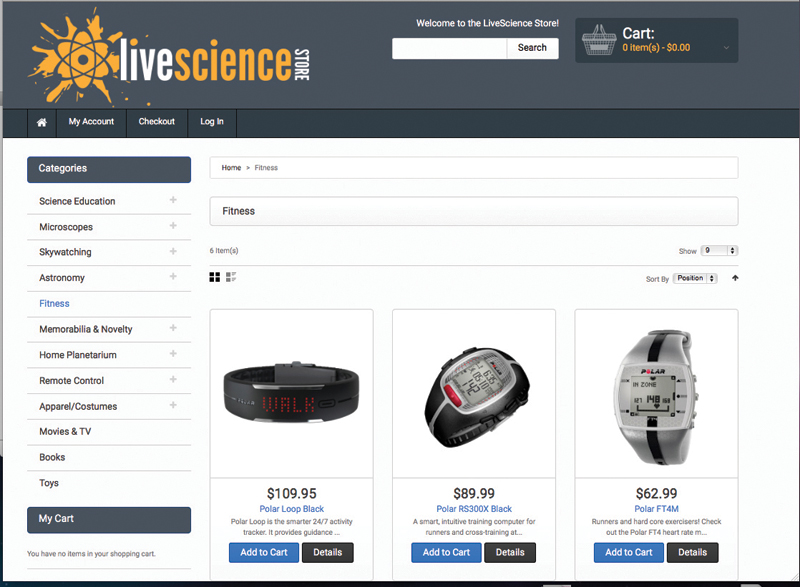
Tom’s Hardware served the technically demanding reader; Tom’s Guide offered consumer buying advice; Top Ten Reviews organized choices into comparisons. Live Science and Space.com widened the editorial territory beyond shopping. That mix matters. Purch was an umbrella over recognisable destinations, rather than a single website asking everyone to share the same interests.
The billion dollars belonged to the shopping
In June 2015, Purch reported helping generate more than $1 billion in annual commerce, reaching over 100 million monthly users and connecting buyers with more than 7,000 marketers and sellers. Those were company figures. The billion dollars described transactions facilitated across the business, a much larger pool than the income Purch kept.
Digiday reported roughly $100 million in group revenue for 2014, about 55 percent of it from commerce activities including lead generation and performance marketing. Advertising supplied the rest. A reader’s purchase could produce an affiliate commission; a business buyer’s enquiry could produce a paid lead. Purch earned from directing a decision as well as displaying a message.
The distinction separates Purch from an ordinary online store. Its central asset was access to people researching a purchase, supported by editorial expertise and communities. Merchants wanted customers; readers wanted confidence. The publisher could serve both, provided its advice remained useful enough to deserve the reader’s return visit.
Buying the missing steps
Expansion cost real money. Purch’s June 2015 Series C brought in $135 million through private equity and debt financing, led by Canso Investment Counsel. Calling the whole amount venture equity would lose an important detail. The stated uses included acquisitions and further development of its content-and-commerce model.
ShopSavvy joined in December 2015. The mobile app brought barcode scanning, price comparisons and deals, with more than a million active monthly users reported at acquisition. Purch planned to integrate its search and comparison technology across the publishing portfolio while keeping the app available separately. A review could answer which product; a shopping tool could answer where and at what price.
The business customer needed a different kind of assistance. Purch acquired Business.com in 2016, adding business advice and a marketplace to assets including BuyerZone and Business News Daily. Here the difficult decision might concern a service for a small company rather than a gadget for a household. The useful common feature was a buyer who needed informed help.
Even good advice needs plumbing
The company also developed RAMP, its Revenue and Advertising Management Platform. It managed bidding partners and used auction information to understand advertising inventory. In August 2015, Purch reported a 30 percent year-on-year increase in average open-market CPMs after adding competition among programmatic partners. The software was a second commercial engine beneath the editorial pages.
By 2017, Purch was adding bot detection and other anti-fraud measures across its sites and partners. The problem was practical: an advertiser paying for an audience needs that audience to be human. Reviews might bring people through the door, but measurement and advertising operations helped determine what their visits earned.
“There was an expectation for us to complete the journey for them.”Antoine Boulin, Purch president of media, 2015
The marketplace made another weakness visible. Folio reported a seven-figure investment in talent and technology to make parts of the portfolio transactional. Editorial and ecommerce teams had to care about fulfilment and complaint handling. A sound recommendation followed by a frustrating purchase could still disappoint the reader. The first vulnerable point was the handoff.
The sale had two destinations
Future announced a $132.5 million cash agreement for Purch’s consumer business in July 2018. The acquired operation had generated $63.5 million in revenue and $10.1 million in adjusted EBITDA during 2017. These figures describe the consumer division, not the earlier whole group. The transaction included consumer brands, the Purch name and RAMP’s licensing business.
The sale completed that September. The retained SMB operation became Business.com, with Doug Llewellyn as CEO; Centerfield announced its acquisition in February 2021. Purch’s leadership presented the consumer sale as a way to accelerate growth under Future. Two audiences that had shared a commercial philosophy now had separate corporate homes.
The transferable lesson requires less capital than Purch spent: find the task your reader is trying to complete, then improve the next step. The conditions are demanding. Advice needs credibility, products need a natural connection to the subject, and the buying experience must hold up. A reader enjoying a science story may have no shopping task at all. Purch’s strategy was strongest where useful knowledge met an actual decision.