The origin story of LinkUnite does not begin with a pitch deck. It begins at a hotel bar in Boston, during LeadsCon, with Amanda Farris, Sara Malo and a few industry friends writing down the names of women they considered formidable. The gesture was casual; the observation behind it was not. Performance marketing was full of women doing consequential work, yet too few of them appeared on stages, in executive circles or at the center of the industry's deal-making networks.
Farris and Malo founded LinkUnite in 2018 around a narrow question: what if those women had a room built for them? Not a giant social platform. Not another conference track tucked between vendor pitches. A recurring, deliberately shaped room where a conversation could continue long enough to become a mentorship, a job, a client or a friendship.
The first thing to fail was the business card
Traditional conference networking works brilliantly at producing evidence that networking occurred: a badge, a tote bag, a stack of cards, perhaps a photograph under a sponsor wall. LinkUnite's founders had lived inside that machinery. Their complaint was not that conferences lacked people. It was that scale could flatten people into leads.
At LinkUnite's inaugural forum and retreat in 2022, attendees hiked, spent time together and swapped contacts on their phones and social profiles. Farris later described returning without the usual cards or swag, but with relationships. That detail explains the company better than its category label. LinkUnite is listed as a public-relations and communications business, but it behaves like a hybrid of a trade association, leadership circle, education company and events operator.
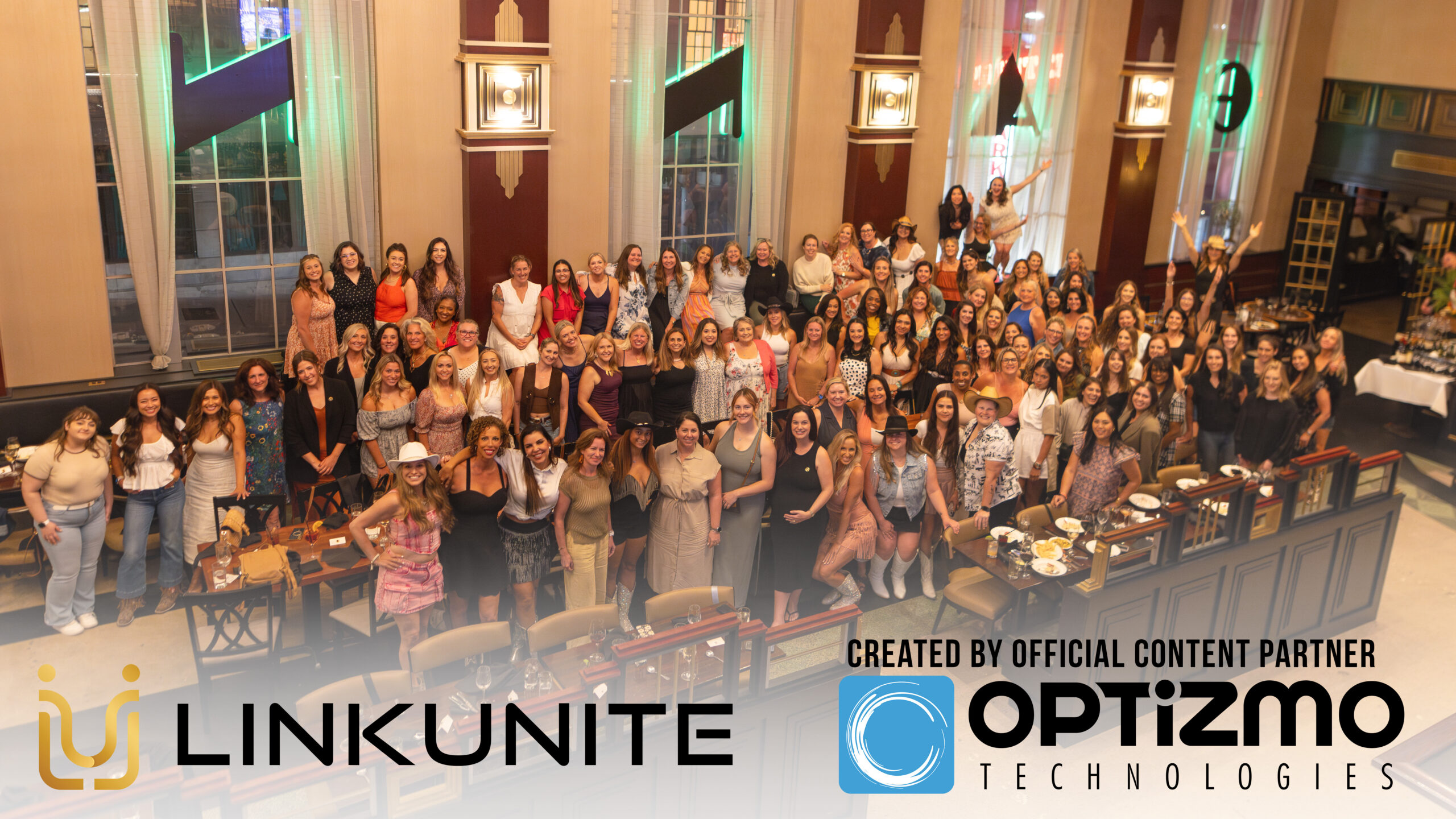
The customers are women working in performance marketing, affiliate marketing, lead generation and nearby digital businesses. Some are founders or vice presidents. Others are students, interns or operators trying to find the next rung. Corporate buyers include agencies, software platforms, insurers, banks and marketing-services firms that want employees in the network or want to support it. The public attendance lists run from specialist firms such as Madrivo and ActiveProspect to names including Deloitte, Bank of America, Shell and PwC. Attendance is not the same as endorsement, but the variety shows where LinkUnite sits: at the intersection of a compact professional niche and the much larger companies that buy, regulate or depend on its work.
A community with an invoice
The business model is refreshingly legible. A 2026 individual membership costs $450. It includes a women-only Discord, monthly member meetings, quarterly L.I.N.K. certification sessions, eligibility for the mentorship program, a member profile, a newsletter, partner-produced podcasts and webinars, event discounts and invitations to dinners and educational gatherings. Director-level members and above may be invited to the annual retreat. A referral trims $100 from the fee.
The corporate package costs $2,500 for six women. It adds two social posts, one video interview at the annual retreat and a listing on LinkUnite's partner page. Memberships and partnership packages are non-refundable. Event sponsors and program partners provide another commercial layer: IntegriShield supported 2024 programming around compliance and ethical leadership; Madrivo backed mentorship; Beyond 13 supported the 2025 program; Email Agency partnered on the 2026 First Lady initiative.
Community, monthly meetings, quarterly education, mentorship eligibility, visibility and event access.
Six memberships, partner-page presence, two social features and one retreat interview.
This is not SaaS economics disguised as sisterhood. There is no infinitely reproducible dashboard. The inventory is attention, trust and time - scarce goods that get harder to protect as a network grows. The company's 2026 answer is revealing: take LinkUnite VI to four cities. More local gatherings create more touchpoints while keeping rooms small enough for people to remember one another.
Mentorship needed plumbing
LinkUnite's most consequential change was to add structure to the goodwill. The L.I.N.K. mentorship program launched in February 2023. The letters stand for Link, Inspire, Network and Knowledge. Experienced leaders are paired with emerging professionals through planned meetings, resources and networking. The program later added an executive-leadership tier and internships, moving from advice toward work experience.
The educational series does similar work. Sessions have covered compliance, SEO, partner programs, mental health and emerging technology. A member does not merely attend and disappear; she can learn in one setting, meet a mentor in another, create a podcast with a partner and return for dinner. LinkUnite is trying to make the network recur.
The product is not any one box. It is the motion from one box to the next.
The First Lady of LinkUnite program completes that loop in public. Each year, one woman receives a run of podcasts, webinars, panels, fireside chats and promotion. Gayla Huber held the inaugural title, followed by Lindsay Stone and, for 2026, Ignite Media Group's Chelsea Denning. The title is theatrical - there is a “gold carpet” - but the mechanism is practical. Recognition becomes a calendar of visibility rather than a trophy that gathers dust.
What changed their minds
Farris and Malo did not reject industry events. They changed the unit of value. The useful moment was rarely the keynote; it was the conversation after it. LinkUnite moved that after-hours intimacy into the program itself: guided roundtables, dinners, walks, small groups and open discussion. Even its relationship with technology follows this logic. The founders speak publicly about using AI for content and event organization, yet Farris's governing idea is blunt: “You can't replace human connection with a computer screen.” Software helps arrange the room. It does not become the room.
This also explains how LinkUnite differs from broad women's networks such as Chief or Ellevate and from giant industry shows such as Affiliate Summit or LeadsCon. It is narrower than the former and more continuous than the latter. Its advantage is density: people arrive with overlapping commercial vocabulary, recurring conferences and enough mutual acquaintances for reputation to travel.
The part worth copying
- Start with a specific room, not a vague audience. “Women in performance marketing” is useful because members can help one another immediately.
- Design a second meeting before the first one ends. Monthly calls, quarterly classes and mentor check-ins keep introductions from expiring.
- Give members a way to be useful. Speaking, mentoring, hiring and creating content turn community from consumption into contribution.
- Let partners fund concrete access or programming, not merely place a logo beside the door.
The model is less persuasive for someone seeking a passive content subscription, an enormous general-purpose audience or guaranteed transactions. Its returns depend on showing up, sharing context and following through. A curated network can also become a victim of its success: grow too broad and the relevance thins; grow too large and the dinner table turns back into a ballroom. LinkUnite's local-city strategy will test whether intimacy can be reproduced without becoming formula.
That is the quiet intelligence of the napkin. It did not contain a total addressable market. It contained names. Eight years later, LinkUnite still works best when it remembers that the names - not the badges, posts or stages - are the business.