The first artifact of LinkUnite was not a logo, a membership tier or an events calendar. It was a list of names. Amanda Farris and Sara Malo were at a lead-generation conference, sitting at a hotel bar with people from the industry, when they began writing down the women they knew who were doing serious work in performance marketing. One name led to another. The exercise migrated into a spreadsheet. Farris would later give that swelling document a more affectionate name: the “Excel apocalypse.” It is difficult to imagine a more fitting creation myth for a connector. Before there was an organization, there was attention.
The list exposed a problem that was easy to feel and harder to quantify. Women were present in the industry, including in director and executive roles, but the network between them was thin. Conferences supplied crowds, lanyards and a steady trade in business cards. They did not necessarily supply a place to compare notes without posturing, ask for an introduction without awkwardness or keep the conversation alive when everyone flew home. Farris and Malo decided to build that place themselves.
A small list learns to travel
The long game of the introduction
Farris had spent years rehearsing the essential skill. Her career moved through design, sales, business development and marketing technology. She owned a photography business called FarrisFotos for a decade, a history still visible in her LinkedIn handle. At LeadsPedia, she worked in business development and rose to a vice president role. In 2021, Phonexa hired her as director of strategic partnerships, asking her to expand the marketing platform's network of technology partners. She later served as chief strategy officer and spoke at LeadsCon about artificial intelligence in lead generation.
Different titles, same useful question: who belongs in this conversation? Strategic partnerships sound grand in a job description. In practice, they require a peculiar mixture of curiosity and memory. You must understand what one person is building, remember what another person needs, and recognize the quiet overlap before either of them does. Then you have to make the introduction without turning it into theatre. Farris's public persona is unusually candid about that instinct. Her LinkUnite profile rates her “People Connector” score at 100 percent. The joke lands because the evidence is all over her calendar.
“The best partnerships I've built came from relationships formed years earlier.”Amanda Farris
That sentence contains the patience behind LinkUnite. A conference can manufacture proximity, but it cannot manufacture trust. Trust arrives in the follow-up: the thoughtful message, the favor with no immediate invoice attached, the introduction made because two people genuinely ought to meet. Farris has said that networking is about genuine conversations rather than cards, and that people can detect a hidden agenda. Her remedy is hardly mysterious. Show up as yourself. Listen. Follow up. Repeat long enough for the relationship to become more interesting than the transaction that started it.
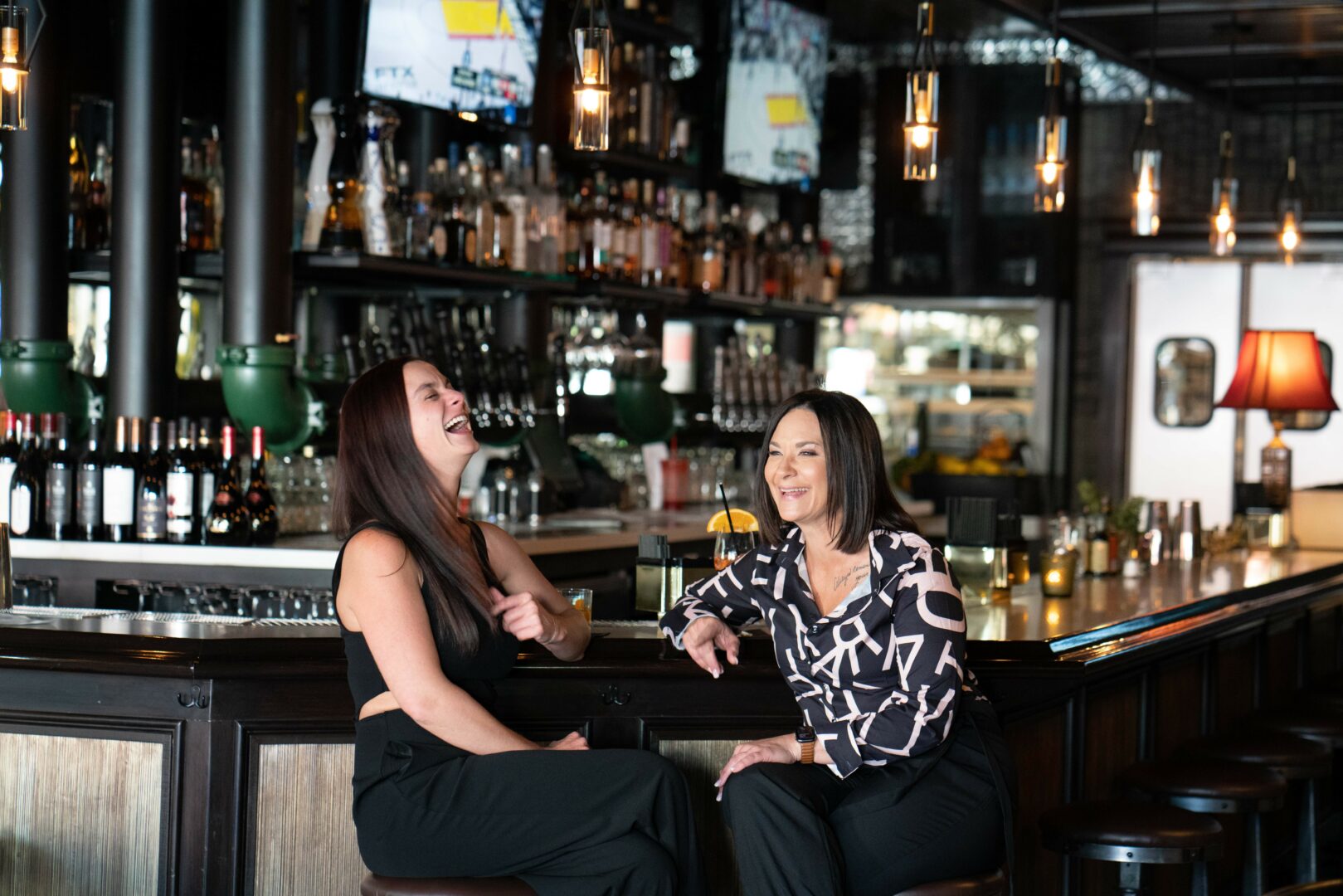
A community needs somewhere to go on Tuesday
LinkUnite's first formal forum and retreat took place in 2022. The premise was deliberately less transactional than the conventional trade show. Shared meals, outdoor activities and smaller conversations gave participants a chance to become people to one another before becoming leads. One attendee described returning without the usual swag bag but with new contacts in her phone and the sense that she had made actual friends. It is a neat inversion of the expo economy: fewer objects to carry home, more reasons to call someone later.
The retreat became the visible peak of a broader system. LinkUnite added monthly virtual meetups shaped by member requests, a private Discord where someone can ask who knows a particular company, and gatherings around major industry conferences. Its L.I.N.K. programs pair mentorship with education and professional development. Workshops, interviews and member spotlights create reasons to contribute knowledge, not merely consume it. The design answers an overlooked community question: after a memorable weekend, where does everyone go on Tuesday?
Mentorship is especially revealing. A directory can tell a younger professional who has an impressive title. A functioning community can give her permission to ask that person a clumsy early-career question, then create enough continuity for the answer to become a relationship. LinkUnite has expanded its mentor and mentee pairings and connected the work to internships. The organization describes its goal as helping women advance through practical support. Farris puts it more personally: people carry untapped potential, and sometimes they need someone willing to illuminate the strength they cannot yet see themselves.
People connector: 100%. Nomad traveler: 85%. Old-fashioned fan: 75%. Crystal-loving hippie: 75%. It may be the only executive biography that reads like a cocktail napkin crossed with a personality quiz.
Curiosity with an operating budget
Asked which qualities mattered most in her own journey, Farris named curiosity, community-building and the attempt to let spiritual values coexist with business goals. Curiosity kept her learning. Community gave that learning somewhere to circulate. Values kept the enterprise attached to a purpose beyond filling a room. She has spoken about kindness in almost molecular terms: one smile can begin a chain reaction. In the abstract, that sounds modest. In an organization, small gestures become operating choices - how a newcomer is greeted, whose question receives an answer, whether success is hoarded or celebrated in public.
There is play in the mix, too. Farris poses over a chessboard in her best-known portrait. Her biography declares affection for crystals and old fashioneds. She quotes Alan Watts on becoming absorbed enough in work that it feels like play. None of this cancels the logistics. LinkUnite still has venues to secure, sponsors to serve, workshops to program and members to support. The whimsy makes a different point: professionalism need not require sanding away every eccentric edge. A memorable community is built by recognizable people, not impeccable brochures.
“You can't replace human connection with a computer screen.”Amanda Farris
That conviction has not made Farris hostile to technology. She and Malo have discussed using artificial intelligence for content, event organization and social media, and their work on NotSoArtificial aimed to make the tools easier to approach. They encouraged experimentation while raising concerns about privacy and proprietary information. The position is practical rather than doctrinaire: use the machine where it helps, understand what you are handing it, and do not mistake accelerated output for a relationship.
In fact, the faster communication becomes, the more valuable deliberate attention may be. An algorithm can recommend a contact. It cannot vouch for the person, remember the generous thing she did three years ago or sense that two strangers will trust one another after ten honest minutes. Those are human calculations, performed with imperfect data and a surprising amount of feeling. Farris has built her career around making them.
From one crescendo to many rooms
In 2026, LinkUnite changed the shape of its signature series. Instead of concentrating everything in one annual gathering, it announced a four-part format across Austin, Kansas City, Toronto and Fort Lauderdale. The move traded a single crescendo for more local access and repeated points of contact. It also made the underlying product easier to see. LinkUnite is not one retreat. It is the connective tissue running between retreats, monthly calls, online questions, mentorship conversations and the moment someone says, “I know who you should meet.”
Farris and Malo continue to open programs together, a partnership that has outlived the original list and absorbed far more complexity. The public ambition is to broaden access, deepen engagement and make the community useful throughout the year. The private challenge is the one every growing network faces: keep the warmth while adding rooms. More members create more possible connections, but also more chances for the individual to disappear into the crowd.
The original list offers a safeguard. It began not with a demographic abstraction, but with names. A real person, remembered by another real person, invited into a circle for a reason. Scale can improve the machinery. The names must remain legible. Farris's most consistent message is also her simplest: reach out. It is advice for the nervous newcomer, but it doubles as a founder's job description. Notice the distance between people. Shorten it.
There are grander ways to describe leadership. Few are as useful. LinkUnite grew because two women paid attention to who was missing from one another's lives, then started writing. The spreadsheet was messy. The idea was precise. A community begins when somebody makes the first connection and cares enough to make the next one.