Running has a paperwork problem. The shoes are by the door, the race is in the diary, and somewhere between enthusiasm and Tuesday sits a training plan nobody particularly wants to assemble. Runna built a business in that gap. It sells runners a sequence of decisions: how far, how fast, when to push and where to put the easier days.
That proposition began with personalized PDFs. By April 2025, Strava had agreed to acquire the company behind them. The attraction is easy to understand. A fitness platform that records yesterday’s effort has good reason to own a product that helps prescribe tomorrow’s. Runna arrived with coaching expertise, a subscription business and a recognizable audience: ordinary runners taking their next race seriously.
Its next chapter is more demanding than digitizing a calendar. A runner gets tired. The weather turns oppressive. A work meeting eats the evening. The interesting question is how much of that untidy reality a coaching app can accommodate without losing the structure people paid for.
A PDF with somewhere to go
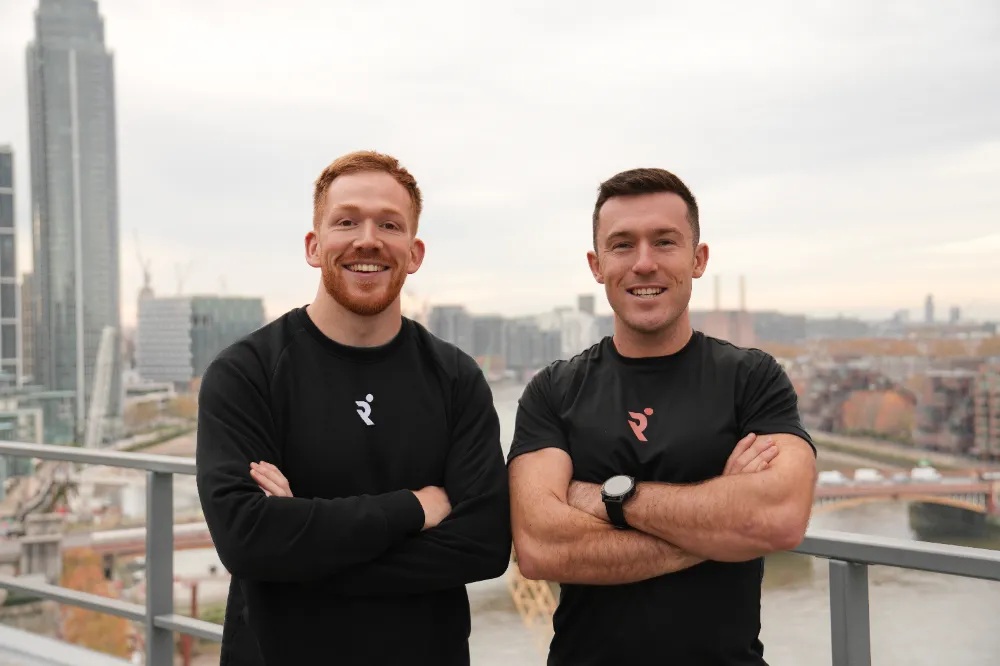
Dom Maskell and Ben Parker, university friends, founded the business in 2021. Maskell brought a consulting background; Parker brought coaching and endurance-sport experience. Their relationship also included coach and client, giving the eventual product a practical starting point: the value of having someone knowledgeable organize your training.
Runna’s own careers timeline puts the first product in wonderfully unglamorous terms: personalized running PDFs. The founders went full time in 2021; the subscription app followed in 2022, formally launching that March. The business moved through The Run Buddy and RunBuddy before becoming Runna. The shorter name was easier to put on a phone. The underlying job stayed recognizable.
There is a useful lesson here for anyone building a service business. Runna’s sequence suggests testing the paid expertise before automating its delivery. A document can establish whether someone values a plan. Software can then make that plan easier to distribute, follow and revise. The lesson travels best where expert decisions are repeatable enough to package; it travels less well where every customer needs extensive individual judgment.
The customers helped buy the first lap
Some early runners put money behind more than their next training block. Runna reported an initial £485,000 crowdfunding raise in late 2021 and early 2022, involving 303 early customers. A subsequent £2.25 million round was led by Eka Ventures. In November 2023, JamJar led a further £5 million investment, joined by Eka, Venrex and Creator Ventures.
The financing supported the machinery around the coaching: people, product development and distribution. CMS, which advised on the 2023 round, described plans to improve the app and develop its coaching algorithms, including AI features. This was already a consumer software operation with international reach, rather than a coach emailing a handful of clients.
The team’s public history records 10,000 subscribers in 2023 and its hundredth employee at the end of 2024. It also describes a Boston office and scheduled exercise during the working week. Individual workout time alternates with longer team sessions and lunch. That is the employer’s account, but it is a concrete cultural detail: a running company putting movement into the calendar it controls.
What $119.99 actually buys
Runna’s published US price is $19.99 a month or $119.99 a year, with a seven-day trial. Twelve monthly payments total $239.88. The annual option therefore costs $119.89 less over a full year, provided the customer wants the whole year. A cheaper monthly equivalent still comes with an annual commitment.
Published standalone prices. Local and checkout pricing can vary.
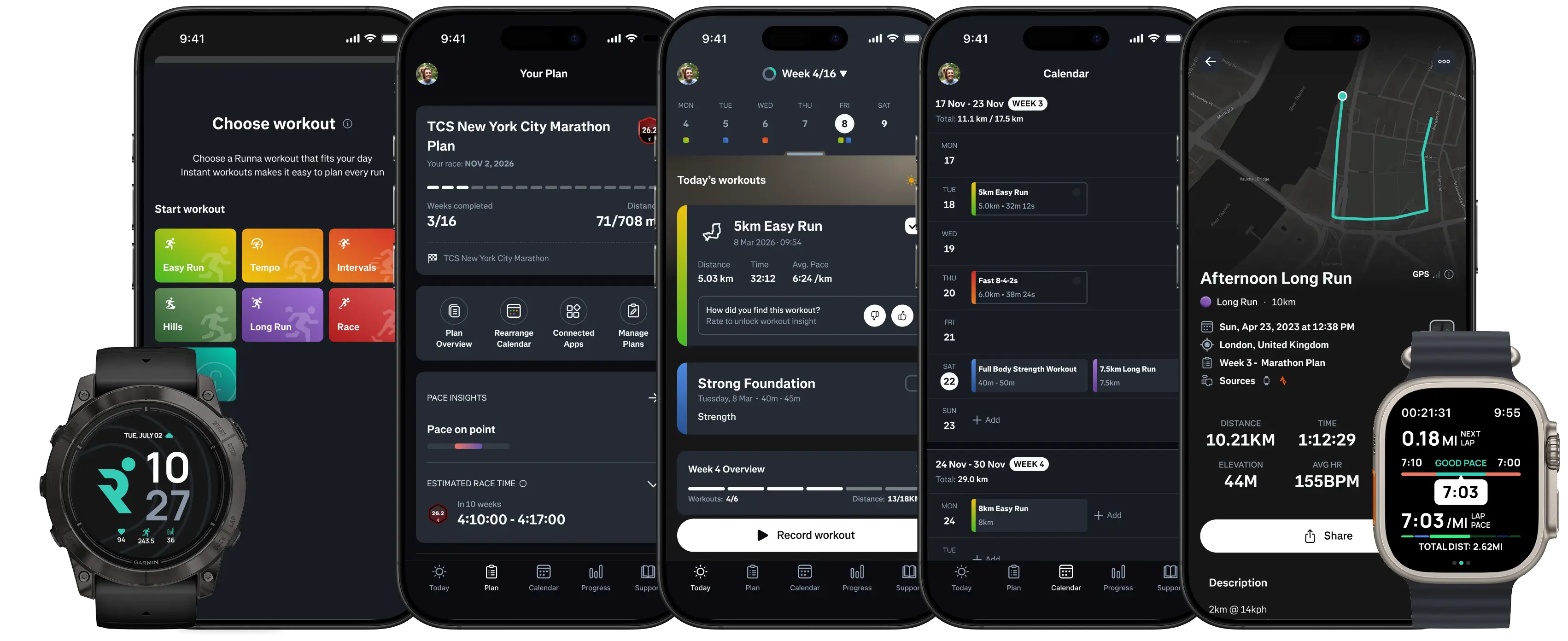
The app combines running schedules with workout instructions, strength training, mobility and support. Its plans cover first 5Ks through longer-distance ambitions, including ultramarathons. Phone and compatible watch integrations put the session where it can be used while running. That last step matters: a training prescription loses some of its charm if the runner must manually rebuild every interval on a watch.
The customer is buying reduced preparation as well as a plan. Instead of choosing among conflicting workouts, arranging them across a week and transferring each session between devices, the runner gets a connected workflow. The product’s value is most visible to someone who wants structure but does not want planning to become a second hobby.
Your ambition is not your starting pace
One revealing product choice sits in Runna’s support documentation. The app sets training paces using an estimate of current race ability. It does not offer a field where a runner simply enters a desired finishing time and receives training directed at that number. The distinction is small on a screen and substantial in practice: an aspiration is not a measurement.
Users can revise their estimated current race time as their fitness changes. Beginner and return-to-running plans work differently, using effort rather than those pace targets. Runna is therefore serving several kinds of runner through different instructions, even when the broad promise of personalization sounds the same.
Pace Insights adds a feedback mechanism. It reviews compatible sessions and may recommend faster or slower targets. Mixed results can produce a request for more consistency; insufficient evidence can leave the system monitoring. Recommendations require acceptance. The runner remains involved in deciding what changes.
“Our mission is to help people train better and love running.”
Runna’s public careers page
That makes the AI claim easier to evaluate. The useful question is what evidence a feature reads, what decision it proposes and who approves it. Here, the answer is more specific than an all-purpose digital coach: workout data supports a bounded recommendation about training pace.
The workout can outrun the data
Runna’s support pages document where that feedback can stumble. A free run manually linked to a planned workout may be incompatible with Pace Insights. So can missing repetitions, inconsistent data or a workout recorded directly in Strava instead of through the planned Runna session. Completing a run and producing analyzable training data are different achievements.
This is a practical constraint, not a footnote. Someone expecting every activity upload to reshape the plan could misunderstand what the system has actually learned. The copyable habit is simple: understand the recording workflow before depending on the feedback. An app can only compare the intended session with the completed one when the necessary information survives the trip.
Runna also competes with capable alternatives. Nike Run Club offers coached training plans and guided runs. Garmin Coach provides free custom plans for compatible Garmin products, with adaptive options using performance and recovery information. Individual coaches offer another relationship altogether. Runna’s argument is the convenience of its assembled experience across supported devices. For a runner already satisfied with a watch’s included plan, that extra subscription needs to earn its place.
Strava bought what comes next
In their April 2025 letter, Maskell and Parker said discussions with Strava had started the previous year. Their stated reasons centered on its reach, team and capacity to invest. They also emphasized its openness across devices and brands. That explains the founders’ public rationale for the deal without turning the acquisition into a fairy tale about an inevitable destination.
Strava initially said Runna would remain a standalone business and app. Integration then became tangible: a combined annual subscription launched on July 2, 2025, at $149.99 in the US. For customers wanting both products, the offer joined coaching with Strava’s progress, route and community tools under one purchase.
A further connection arrived in July 2026, when Strava announced that Runna’s race database would appear in its Events experience. Race discovery now offered a route into training. Commercially, that is an attractive sequence: find an event, choose a plan, record the effort, then look for another event. It places Runna near the moment a runner’s vague intention becomes a date.
Apple had already named Runna an iPhone App of the Year finalist in 2024. That recognition helps explain its visibility as a consumer product. It is an award shortlist, however, rather than a controlled demonstration that subscribers run faster or stay injury-free.
The finish line is becoming a comma
The 2026 product agenda shows Runna working on the days that do not fit neatly into race preparation. January brought rebuilt New to Running and Return to Running plans. The former spans six to 16 weeks; the latter four to 16. Short walk-run sessions, flexible scheduling and the ability to extend a plan give beginners more room than a fixed countdown.
In July, Runna announced Adapt for Heat, adjusting pace targets in hot and humid conditions. It also scheduled Upcoming Plans and refreshed Post-Race Recovery Plans for August. These changes address an obvious subscription problem: a race has an end date. Training needs to remain useful after the medal goes into a drawer.
On August 25, Loughborough University announced a partnership to examine Runna’s training logic against sports-science research. The commissioned review, led by Dr Richard Blagrove, covers pace and distance progression, training intensity and recovery. The scope is meaningful. It describes work on the underlying decisions, rather than simply adding another famous athlete to a promotional photograph.
The partnership is an investment in scrutiny, not a published outcome study proving every plan works. Runna’s commercial promise ultimately depends on ordinary repetitions of a modest experience: a workout that makes sense, a plan that can accommodate disruption and a runner willing to return. The PDF grew into an app. The harder job is keeping its advice useful on a Wednesday nobody planned for.