The smallest unit of Brainly is a student who is stuck. A question sits on the page. The teacher has gone home. Somebody else probably knows how to solve it. The trick is finding that somebody before frustration wins. Brainly began by putting that familiar classroom exchange online. Its more interesting problem, years later, is deciding what should happen after the answer arrives.
- A student community became the foundation for AI-guided homework help.
- Subscriptions sell extra support; advertisers buy access to student attention.
- The product’s real test is whether understanding survives the next assignment.
The classmate becomes the product
Michał Borkowski, Łukasz Haluch and Tomasz Kraus founded the business in Poland in 2009. The original service was called Zadane.pl. Its premise had an appealing symmetry: being baffled by mathematics did not stop you helping somebody with history. A person could need help and provide it in the same afternoon. That gave the service something a static answer book lacked: participants with reasons to return.
Then growth flattened. In Borkowski’s account to Nesta, the founders faced a choice between monetising Poland and expanding internationally. They chose expansion. For their first 18 months, they bootstrapped and went without salaries. Later, a New York office helped connect the company with American investors, while the distance between teams created communication tensions. Going global required more than translating questions.
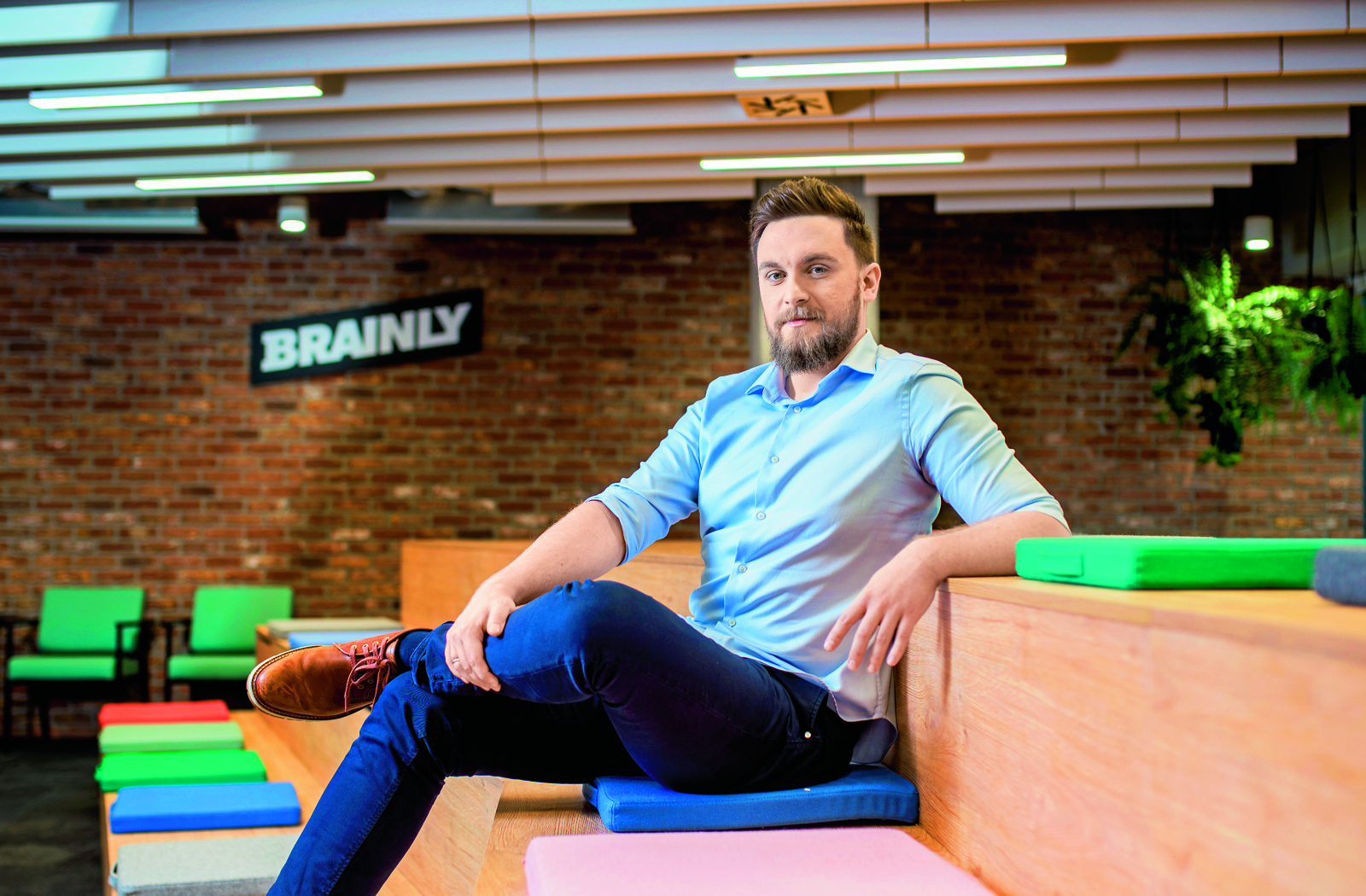
By July 2019, Brainly announced a $30 million round led by Naspers. Its funding announcement described 150 million monthly users and ambitions in the United States. In December 2020, amid pandemic schooling, the company reported 350 million monthly users and raised another $80 million, led by Learn Capital. Total funding stood at approximately $150 million. Those are dated company figures, a snapshot of extraordinary demand rather than a current attendance register.
An answer that can change its shape
Brainly’s first widely announced generative-AI features were wonderfully literal. In April 2023, students could “Simplify” an explanation, “Expand” it, or ask a follow-up question. The company introduced Ginny, a digital mascot, alongside tools developed using GPT-4. It said the features drew on a knowledge base exceeding 250 million answers from moderated student and expert communities.
The change mattered because explanations are not interchangeable. A paragraph that settles a question for one student can leave another stranded on the second sentence. Adjustable detail offered a practical response. As then-chief technology officer Bill Salak put it: “It’s about getting students the help they need when they leave the classroom.” The company’s expertise lay partly in the accumulated school questions beneath the interface.
“It’s about getting students the help they need when they leave the classroom.”Bill Salak · Brainly announcement, April 2023
The February 2025 Learning Companion announcement widened that ambition to homework guidance, study planning and test preparation, with features scheduled to arrive over time. By its July 2026 product explanation, Brainly described assignments becoming targeted practice, expert review supporting answers, and parents seeing progress. The intended loop runs from today’s difficulty to tomorrow’s revision. That is a product proposition; it does not, by itself, establish improved grades.
The worksheet has two customers
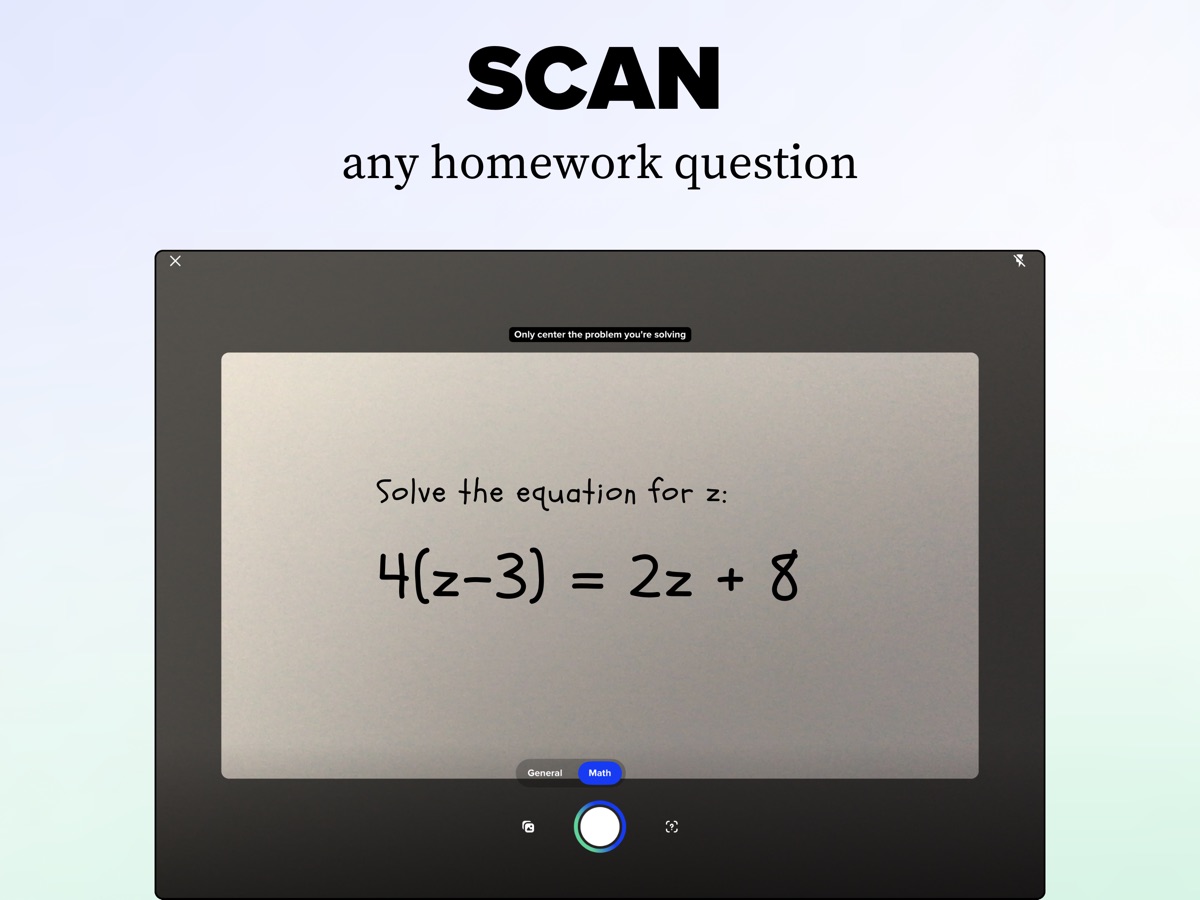
For families, the entry point is concrete: photograph a problem or type it in, then work through an explanation. The US app listing advertises limited free access and paid Tutor access including human tutoring. Students are the daily users; parents can become the buyers. Brainly occupies the space between an answer search, a study tool and an on-demand tutoring service.
Cost depends on the purchase. The US Apple storefront lists several options, including Plus Monthly at $9.99 and Tutor Monthly at $29.99, alongside annual and other differently priced purchases. These are listed options, not a promise about every checkout. The distinction matters when comparing a quick homework lookup with ongoing support across subjects.
There is another paying customer: the advertiser. Brainly Ads sells formats including banners, video and custom integrations, with direct campaigns typically starting at $25,000. Its pitch includes targeting by subject, grade and geography. Educational intent becomes commercial context. The business must make room for both the family buying help and the brand buying attention.
One sensible way to evaluate the service is to bring an assignment you already understand. Compare its explanation with the method taught in class. Then try a question you find difficult, ask for clarification, and close the app before attempting a similar one. That small experiment tests the experience a family is actually buying. An impressive answer on the screen is easy to admire. Being able to reproduce the reasoning on paper is a more useful result.
Sometimes the obstacle is starting
In October 2025, Brainly introduced ClarityPods: brief guided audio sessions grouped into Focus, Reset, Grow and Reflect. It named advisors AnneMarie Rossi, Zindel Segal and Christopher Willard. A homework company offering breathing and attention exercises is an instructive detail. Difficulty can begin before the first calculation, with an anxious student staring at a task they cannot bring themselves to start.
That same emphasis on learning appears in its recruitment pitch. Brainly’s careers site asks for an AI-first approach and a team-first mindset, and advertises development budgets and employee stock options. These are employer promises, but they show the organisation it wants to build: people sharing knowledge while using AI to change how the work gets done.
Borrow the sequence, earn the learning
Brainly competes for study time with dedicated tools such as Quizlet, maths solvers such as Photomath, and general-purpose chatbots. Its case rests on connecting a student’s own coursework with explanations, expert input and later practice. For a parent, the useful question is whether that connection helps the child explain the method without the screen.
Founders can borrow the sequence: start with a frequent, specific frustration, build participation around it, then add tools that make the next visit useful. Students can borrow a smaller habit: ask for the explanation, try the next problem alone, and return with the exact step that broke. The approach depends on accurate guidance and willing practice. If an answer is wrong, or merely copied, the loop stops at completion. Brainly’s opportunity begins where completion ends.