Mathias Strasser thought it would take about a year. In 2009, he founded WSD with an ambition to bring fully automated issuance to the American structured products market. By August 2026, he was describing a seventeen-year pursuit. Software had travelled a considerable distance. The final legal review had proved rather less inclined to hurry.
There is something endearing about that initial estimate. A lawyer accustomed to complicated transactions had looked at a complicated industry and allowed it twelve months to change. Seventeen years later, he was revisiting the prediction. He had also found a new way to approach the problem: a partnership between Scissero, his legal technology business, and Mayer Brown.
The interval contains much of his working life: investment-bank documents, a private equity investment, contract software, acquisitions and an unlikely detour into music. Strasser is an Austrian lawyer based in London who writes software. His career keeps returning to a practical question: how much of an expert's work can a machine usefully take on?
“At the time, I genuinely thought it would take about a year to get there. Little did I know.”
Mathias Strasser, August 2026
A lawyer with another occupation in mind
The legal training came first. Strasser studied law at the University of Vienna and completed an LL.M. at Harvard Law School in 1999. His qualifications include Vienna's Mag.Jur. and Dr.Jur. degrees. He went on to spend a decade at Sullivan & Cromwell, working as European counsel, before joining CMS in Vienna as a partner in July 2010.
His practice at CMS covered mergers and acquisitions, private equity and capital markets. Those are useful places to learn how documents behave under pressure. A transaction demands consistency across its many moving parts; an apparently small change can require attention elsewhere. The appeal of automation becomes easier to understand when the person building it has worked inside that process.
He continued developing WallStreetDocs alongside his work at CMS. In 2014, the arrangement appeared in a discussion of the firm's approach to accommodating people with unusual combinations of experience. His software business was already part of his professional identity while he was still practising within an established partnership.
Asked in the firm's 2013-14 annual review which client had most influenced his career, he chose Goldman Sachs. He admired the standards its people set and the fairness with which they treated lawyers. Asked about memorable experiences, he pointed to colleagues whose work ethic and problem-solving had impressed him. People occupied the answer where a trophy transaction might have gone.
His advice to younger lawyers was equally revealing: “Spend some time abroad, embrace technology and be entrepreneurial.” As for an alternative profession, he could imagine software development or authorship, though earning a living from books gave him pause. A man willing to tackle bank documentation had apparently identified a more alarming commercial proposition.
The business hiding in the paperwork
WSD gave his interest in software a specific customer and a specific job. Structured investment products require substantial legal and regulatory documentation. Preparing those documents repeatedly by hand created an opportunity for a business that understood both the financial instruments and the rules governing their description.
In April 2022, Bowmark Capital acquired a majority shareholding in WSD. At the time, the business had recorded annual revenue growth above 15% since 2019. The investment supported further product development and expansion across North America, Europe and Asia. Strasser's long-running interest in document automation had become a business an outside investor was prepared to back.
WSD then bought Solvians in April 2023. The German company's market data and web-portal capabilities broadened the work the group could do around its original document business. Strasser led the combined organisation, which had more than 200 employees across the United States, Britain, continental Europe and Asia-Pacific.
By August 2024, WSD had more than 250 employees and offices in London, New York and Frankfurt. It joined the Swiss Structured Products Association that month. It was also introducing Melody, a virtual consultant for structured products developed in partnership with NVIDIA. The business had grown around an unglamorous but persistent customer need: getting complicated financial information into usable documents and systems.
The contract still needed a lawyer
Scissero addressed another kind of document problem. The idea grew out of a request from KKR for something akin to the service WallStreetDocs supplied. Private equity documents presented a different challenge: fewer repetitions, less rigid form and more negotiation. Strasser responded by developing a business that combined legal services with technology.
By April 2019, Scissero had joined Allen & Overy's Fuse innovation space. Its early application read agreements and suggested changes, using a client's approach to negotiation as a guide. Strasser was already discussing natural-language processing, pattern recognition and clustering. The attraction was concrete: help a lawyer make progress through a routine contract.
He could discuss the underlying software as well as the legal task. That combination matters in his story. A lawyer can explain why a clause needs changing; a developer has to decide how the system will recognise the problem and what it should do next. Strasser was working across that boundary before the current enthusiasm for generative AI.
In December 2025, Scissero acquired Robin AI's managed services team. Roughly 70 incoming staff joined an existing organisation of around 85, taking the combined business above 150 people. The transaction concerned the services team; Robin AI's technology group and chief executive Richard Robinson were outside the acquisition.
Strasser described a company built around legal delivery with its own technology. Fincap Law and the Scissero technology operation had come together under the Scissero brand in 2024. Buying a sizeable team of people was a useful expression of his view that AI and legal expertise would continue to work together.
An open door, and a conference lectern
His technical interests have kept moving. His public professional profile lists NVIDIA certificates in diffusion models and building AI agents with multimodal models. These were issued in 2024 and 2025 respectively. They sit alongside the legal degrees, an unusually literal record of continuing education.
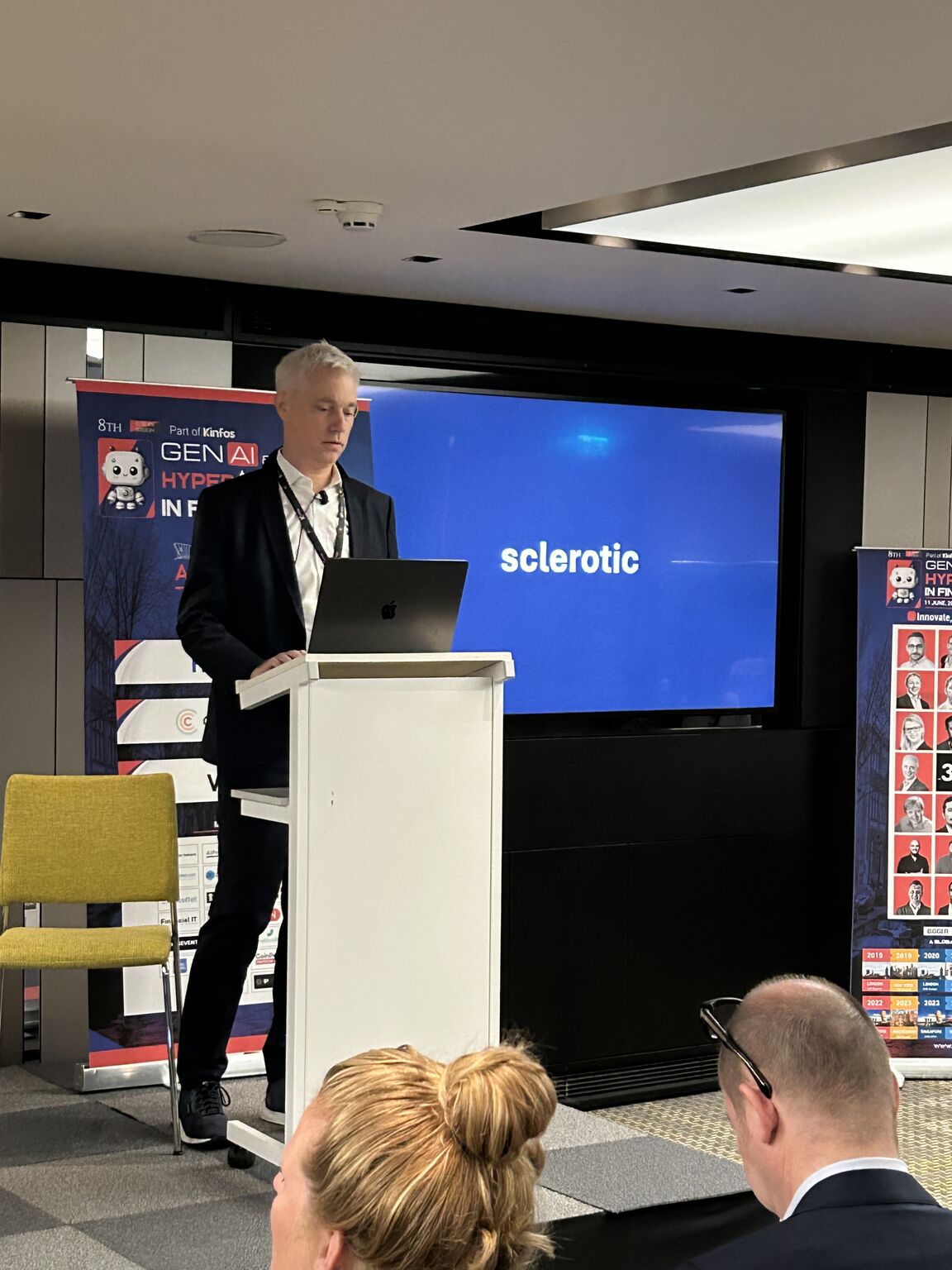
At WSD, an AI project called Autocoder pursued the generation of multilingual templates for investment documents. Consultants would supervise the process, check accuracy and test outputs. Even as the technology became more capable, the practical design retained people with enough knowledge to judge its work.
In WSD's November 2025 video newsletter, Strasser handed the leadership to Frances Weston and said he would remain involved through its AI efforts. The conversation had the informality of colleagues passing responsibility between them. He was leaving the chief executive's chair while keeping a place in the work that interested him.
In May 2026, he publicly introduced Suzie Law, an open-source legal application built on Team Suzie. His proposition was that legal specialists could adapt software around their own practices. The baseline could be available to everyone while Scissero developed more specialised systems above it.
One early exchange gave that ambition a human scale. Argentine lawyer Isabel Trossero suggested adding support for her jurisdiction. Strasser described building Argentine-law coverage and invited other lawyers to contribute links to useful public legal resources. A conversation about a particular country's law became an invitation to improve a shared tool.
And then there was Eurovision
There is another version of Strasser's career in which the documents come with a soundtrack. He founded Casperaki, a business applying generative AI to music production. His Amsterdam Dance Event biography also records songs published through Universal and his involvement in San Marino's 2018 Eurovision effort.
In early 2024, Casperaki brought musicians together in London to develop AI-generated ideas into four songs for San Marino's national Eurovision selection. It was a songwriting camp, with human performers and writers taking material further. For someone used to systems that help professionals produce work, the setting changed more dramatically than the underlying interest.
He had already shared a Casperaki virtual-singer demonstration from Goldman Sachs's 2023 Disruptive Technology Symposium in London. The client he once named as a formative influence on his legal career had become an audience for a music-technology experiment. There are tidier career narratives. Few would place a synthetic singer so close to a pricing supplement.
Harvard listed him among its alumni in residence in autumn 2024, identifying him through both Wall Street Docs and Casperaki. The pairing neatly captured the range: a document business on one side, an AI music venture on the other, with the same founder finding reasons to build in both.
The last signature
In August 2026, the Mayer Brown arrangement put a new structure around his original ambition. Scissero would supply workflow and verification technology; Mayer Brown would provide legal services and opinions. Documents would be checked against approved templates and trade parameters, with human oversight retained.
- 01 / GenerateThe issuer's document platform
- 02 / VerifyScissero checks the documentation
- 03 / ReviewMayer Brown provides legal services
A division of responsibilities, with human oversight throughout.
The arrangement made room for the institution that the customer already trusted. It also gave Strasser a route back to the problem that had occupied him since WSD's beginning. After years spent building the machinery, he was changing how the participants worked together.
His public software work continues too. By October 2026, his GitHub projects included Jeff, a small open model designed to choose between supplied options, alongside Suzie Law. The projects differ in scale and purpose, but the habit is recognisable: take a task apart, build something that performs a piece of it, and make the result available to use.
The one-year estimate remains a good opening line because it leaves room for everything that followed. Strasser built companies, kept learning and returned to a stubborn problem with a different arrangement of people and software. Seventeen years later, he was still at work on it. Some ideas demand a longer engagement letter.