Aizada Marat had done the careful thing. She had hired immigration lawyers. She was a lawyer herself, a Harvard Law School graduate with a career to resume and a family in Kyrgyzstan she helped support. Yet the advice she received left her unable to work in the United States for roughly a year and a half. Leaving the country could jeopardize her immigration process. Professional competence had brought her a long way. Now she was waiting for permission to use it.
In her telling, the trouble included a particularly galling exchange: she researched the issue, challenged the advice, and was reminded that the people she had hired were the immigration specialists. A client can pay for expertise and still be left carrying the consequences. Marat had enough legal training to recognize the problem. That did not give her a shortcut out of it.
Today she is the co-founder and CEO of Alma, which combines technology with immigration legal services for professionals and employers. The connection between those two chapters is easy to state. The years between them are more revealing. She returned to legal work, switched into consulting, listened to founders, tried selling software, and changed the business. Frustration supplied a motive. She still had to learn how to run a company.
The school in the music video
The first American institution that caught Marat’s imagination was a school on television. As a teenager in Kyrgyzstan, she watched Britney Spears and noticed the surroundings: a school, a gym, the possibility of a different classroom. Pop music had inadvertently acquired an admissions department.
She was born in Jalgyz-Oruk in Kyrgyzstan’s Issyk-Kul region in 1988. Her family later lived in Jeti-Oguz, Kyzyl-Suu, and Karakol. She completed school in Karakol before an exchange year took her to the United States. The geography matters. Her early life involved several moves before an international career ever became a prospect.
The Future Leaders Exchange program, known as FLEX, gave that prospect a route. She went to Washington state and attended Sequim High School. A photograph from those years shows her leaning on the school’s stone sign, wearing a pink sweater. The wolves on the sign look suitably stern. The exchange student looks pleased to have arrived.

Harvard required another kind of application
After the exchange, Marat returned to Kyrgyzstan and studied law at Kyrgyz National University. She worked at a law firm and became a deputy dean at the university’s law school. In her early twenties, she was already acquiring the less glamorous education that comes with responsibility: managing people, representing an institution, and building relationships beyond it.
Admission to Harvard brought a fresh problem. Getting accepted and paying for the place were separate assignments. In 2014, she sought help through crowdfunding and approached supporters in Kyrgyzstan. Citizens contributed, and the president’s education fund provided support. A career often described through American institutions also depended on people back home putting money behind her chance to study.
She completed the LL.M. in 2015. During her Harvard year, she spoke about wanting more students from Kyrgyzstan to study there. The ambition extended beyond collecting a qualification for herself. She was thinking about who else could follow, and what access to that education might mean for her country.
Her next job took her to the European Bank for Reconstruction and Development in London. Once again, the ability to work shaped the route. A degree could widen the set of possible employers; immigration rules still influenced which possibilities she could actually pursue.
- KyrgyzstanSchool and early life
- WashingtonFLEX exchange year
- KyrgyzstanLaw degree and legal work
- CambridgeHarvard LL.M., 2015
- LondonEBRD legal work
- CaliforniaCooley, consulting, Alma
Six stops, including a return home to study law. Places are listed in career order; spacing does not represent time.
A business education with a salary
Marat moved to California in 2018, when her husband, Chyngyz Dzhumanazarov, was going to Stanford Graduate School of Business. Her work authorization difficulties followed. During the delay, she attended business-school classes alongside him. The circumstance was involuntary; the interest in how businesses worked was her own.
She eventually joined Cooley. Her boss there, John Hale, became a connection that outlasted the job and later invested in Alma. For someone changing professions, that kind of continuity matters. Leaving a firm does not require leaving behind everyone who saw you learn your trade.
When she decided she needed a practical business education, she considered business school and management consulting. Consulting had an appealing financial feature: it paid her, rather than asking her to pay tuition. She went to McKinsey. There is something refreshing about an entrepreneurial origin story containing a sensible comparison of cash flows.
She also learned through conversation. She and her husband hosted backyard dinners through SV Icons, bringing founders into a setting where she could ask about building companies and the changes arriving with generative AI. By the time she approached Assel Tuleubayeva about an idea, her personal experience had been joined by a working interest in products, operations, and customers.
The customer changed
The early Alma idea was software for immigration law firms. Marat and Tuleubayeva raised pre-seed funding and began building. Shuo Chen later joined as technical co-founder. The team brought legal, product, and engineering experience to a process all three knew as immigrants.
Marat’s early public introduction to Alma, in 2024, still described a product helping law firms draft documents. The subsequent change was substantial: Alma would offer immigration services directly to individuals and companies. Better tools inside someone else’s practice would give way to a business responsible for more of the experience a client received.
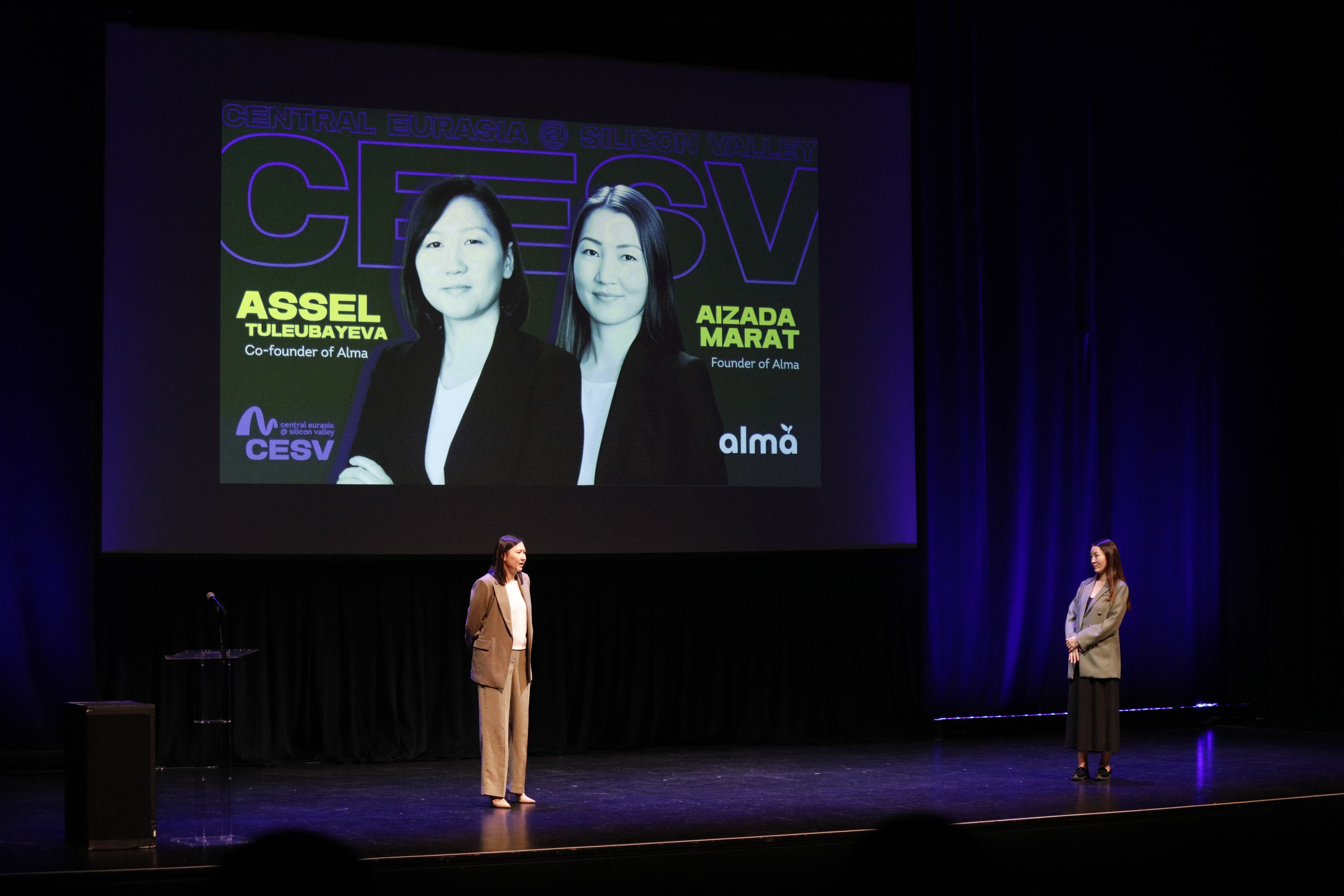
The distinction is important to understanding her as a founder. She had begun with a lawyer’s view of repetitive work. She moved toward the client’s view of the entire service. A faster draft would be useful. Someone still needed to explain the next step, gather the right evidence, make a judgment, and keep the case moving.
Alma’s current structure separates its technology business from the provision of legal advice: its website identifies Alma Legal Services, P.C. as the partner providing legal services under a separate attorney-client agreement. The operating ambition is to give attorneys more room for strategy while software handles administrative work and makes progress visible.
“speed, excellence, and care”
The priorities Marat names for Alma
A founder learns to follow up
Her account of learning sales is usefully unromantic. Customer discovery came first. She used The Mom Test to help steer conversations toward actual problems. Friends and colleagues supplied early prospects, but the company also needed customers who had no personal connection to its founders.
She spent 60-70 percent of her time on sales in the early days. Leads went into Notion before a CRM took over. The decision to hire sales help came when demand exceeded what she could handle and she understood the process well enough to pass it on. The sequence gave her firsthand knowledge of what she was asking someone else to do.
“Trust is the most important currency in sales.”
Aizada Marat
In March 2025, she described the journey past 150 customers in three stages. The first ten came through relationships and referrals. Getting to fifty required wider outreach. Beyond that, the team worked more systematically across content, outbound efforts, events, and partnerships. Her account leaves room for campaigns that plateau and channels that take time to work.
and referrals
manual outreach
tested together
Stages described by Marat, not a time-scaled growth chart.
These are the details that make the career change tangible. The former attorney was spending her days explaining a service, answering objections, tracking conversations, and deciding when a process could survive without her in every exchange. Founder became a job with a calendar.
The next person in the queue
In September 2026, Marat announced Alma’s $17 million Series A. The funding round, led by Bling Capital, brought more resources to a company increasingly addressing employers as well as individuals. Her argument to hiring teams is that immigration support becomes part of the employee experience before a new colleague has even started.
That brings the story back to the stalled career. An employer sees an unfilled role. A candidate sees a job and a life waiting to begin. Marat has occupied the second position while being trained to understand the first. It helps explain why she keeps returning to responsiveness and ownership alongside the technology.
Her public role now includes helping other people understand the work. She has spoken to founders about building careers across borders and is scheduled to appear at a mobility conference on October 28, 2026. A November webinar with Alma colleague Jihan Merlin is aimed at HR and People Ops teams. The audiences have widened from an individual seeking a way to work to the people responsible for hiring and supporting a workforce. Her listed conference session considers the changing role of the mobility manager. The webinar addresses how companies build and manage immigration programs. Both engagements put her in conversation with the employees who must turn a policy into a process that colleagues can follow.
That shift brings a different set of conversations: how a team keeps track of cases, who answers employees, and how immigration fits into hiring plans. The distance from her exchange year is considerable. The subject remains familiar. Work and movement are still entangled, and someone has to understand the route between them.
For a business with fresh capital, the challenge is to make those qualities survive more clients, more staff, and more cases. For Marat, the reference point remains unusually concrete: she knows how long a year and a half can feel when someone else has the paperwork. Alma’s next chapter will be measured, one client at a time, in what happens to the person waiting for an answer.