The modern private-equity deal begins with a document whose whole purpose is to stop people from talking. Before a buyer sees the financial model, tours the factory or decides whether the founder is brilliant, somebody has to negotiate the NDA. It is necessary work. It is also repetitive, deadline-sensitive and spectacularly capable of eating an expensive professional’s afternoon. Troy Pospisil saw the absurdity while working at H.I.G. Capital. Routine contracts were slow, inconsistent and scattered. In 2014, he joined Ben Levi, a lawyer from Kirkland & Ellis, and software engineer Lane Lillquist to build an alternative.
Their company was first called InCloudCounsel, a name with all the romance of a secure file transfer. Its initial product, then called Document Processing, did one thing: take recurring agreements such as NDAs, translate a client’s negotiating preferences into a playbook, route the work through software and let a trained legal professional handle the judgment calls. Customers paid a flat amount per contract instead of watching a law-firm clock. The founders did not attempt to automate the Supreme Court. They picked the queue that kept refilling.
The first thing that failed was the handoff
There is no public tale of a disastrous first product or a smoking server rack. The failure Ontra was built around happened inside its customers. An NDA landed with a deal professional who should have been evaluating the deal, an in-house lawyer with a strategic backlog, or outside counsel charging by the hour. A loose Word document might describe the firm’s preferred terms. Precedent lived in inboxes. When volume jumped, consistency usually fell.
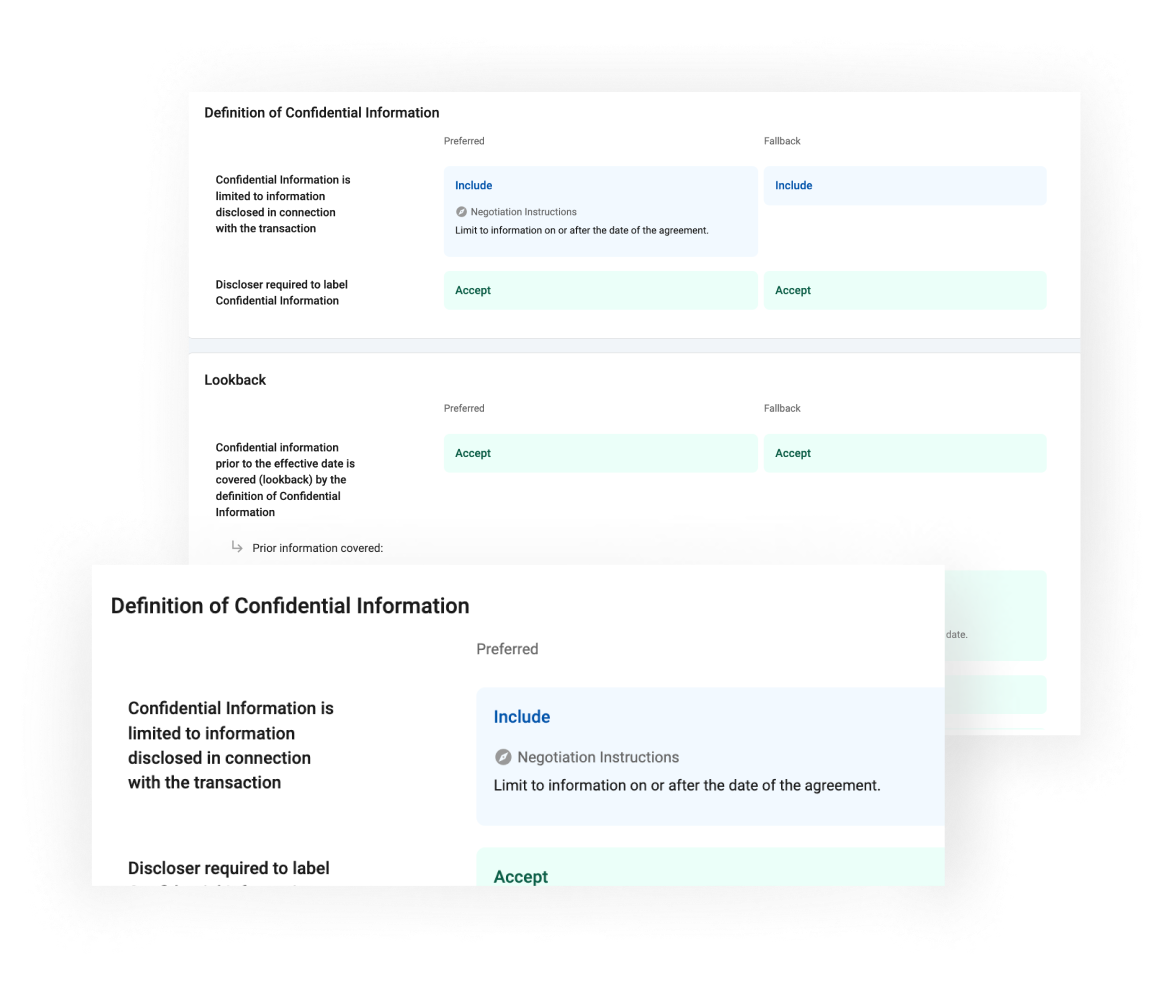
Ontra’s answer was neither pure outsourcing nor pure software. The customer agrees preferred positions, fallback language and escalation rules. Software compares the incoming contract with those instructions and past deals. A legal professional handles negotiation, while the system records what happened. That design matters. The machine does the matching, retrieval and administrative work; a person remains accountable for exceptions. In a field where a plausible wrong answer can be worse than no answer, the human is not a decorative safety label.
The original Ontra loop
The economics become visible only at volume. Bain Capital Credit says it can complete four times more NDAs annually with Ontra. Fir Tree Partners, which sends all its NDAs through the service, reported cutting turnaround time in half. An unnamed venture firm estimated that it recovered more than 520 hours a year. Those are customer case-study figures, not controlled experiments, but they explain who buys the product: asset managers, credit firms, investment banks, venture funds and advisers whose legal work arrives by conveyor belt.
What changed their mind: the NDA was not the market
The founders’ first insight was that a routine contract could be productized. The second came from customers: the negotiated document was merely the beginning of the operational mess. Private-fund managers also had side letters promising special terms to investors, limited partnership agreements spread across repositories, corporate entities mapped in stale slide decks, and obligations tracked in spreadsheets. A contract could be signed on Friday and forgotten by Monday, even though its promises might last a decade.
That changed the company’s ambition. In 2021, the same year it raised $200 million and renamed itself Ontra, it introduced Insight. The product extracts terms from fund documents, builds searchable digital compendia, tracks obligations and runs most-favored-nation elections. In 2023 came Atlas, an entity-management system developed with input from customers including Motive Partners. It centralizes ownership and governance data, generates structure charts and supports compliance tasks. Customer pain, not a brainstorm about “platform strategy,” supplied the roadmap.
The clever move was to treat every finished contract as the beginning of a workflow, not the end of a negotiation.YesPress analysis
The product line widened again in 2025 and 2026. Accord gives in-house teams the negotiation tools without requiring them to outsource every contract. Insight for Credit extracts covenants and compares loan terms. KYC supplies dedicated analysts for the reverse due-diligence requests that fund managers receive from banks and vendors. DDQ builds a reusable answer bank for investor questionnaires. The newest connector, an MCP server, lets Claude and ChatGPT query current entity information held in Ontra, subject to the firm’s data and permissions.
A service business wearing a software company’s shoes
Ontra now calls itself an AI platform for private markets, but the business model is deliberately mixed. Insight, Atlas, Accord, DDQ and the credit product are sold as annual software licenses with custom quotes. Contract Automation has used flat per-document charges. KYC uses per-request pricing and a dedicated analyst. Public rate cards do not disclose dollar amounts, so buyers have to compare a proposal against internal salaries, outside-counsel bills, delay and error risk.
That opacity is inconvenient, but the hybrid is the point. Generic contract-lifecycle systems such as Ironclad, Icertis, Agiloft and LinkSquares help companies create and manage agreements. General legal AI products such as Harvey and Legora help professionals research, draft and analyze. Entity platforms manage corporate records. Ontra’s bet is narrower: a private-markets firm will prefer one domain-specific layer that understands its documents, turns them into structured data and carries work across negotiation, compliance and governance.
Its claimed advantage is therefore not a single language model. Commercial models improve and become widely available. Ontra owns customer playbooks, a workflow trained by more than two million processed contracts, and an implementation apparatus staffed by people who know side letters, MFN rights and credit covenants. The company says it does not train models on customer data and backs the platform with SOC 2 Type II, ISO 27001 and, as of June 2026, ISO 42001 certification for AI management.

The back office became a market sensor
The strangest payoff from the original NDA wedge arrived in 2026. Ontra processes more than 1,000 NDAs each day. Because an NDA usually appears before diligence and a closed transaction, the aggregate flow can signal where dealmaking is headed. The company’s Market Index compares anonymized NDA volume with later closed-deal data. Its midyear edition used 237 validated firms and found a correlation of 0.577 with deal volume three months later.
In July, the index reported June NDA activity up 7.2 percent from a year earlier and projected third-quarter deal volume growth of 3.2 percent. The forecast may be wrong; correlations shift, Ontra’s customer mix is not the entire market, and the dataset naturally reflects firms that chose Ontra. Still, the move is revealing. A company hired to remove clerical friction has accumulated a timely view of intent. The paperwork is no longer just paperwork. It is exhaust from the deal engine.
The bit worth copying - and the conditions that break it
Ontra’s replicable lesson is almost offensively practical. Start with a task frequent enough to measure, expensive enough to matter and bounded enough to encode. Ask experts to write down preferred outcomes and acceptable compromises. Use software to handle retrieval, comparison and routing. Keep human attention for exceptions. Save the result as structured memory. Only then move into the next workflow used by the same customer.
The Ontra sequence, minus the legal jargon
- Choose a repetitive bottleneck with an obvious owner and visible cost.
- Turn tacit expert judgment into a preferred, fallback and escalation playbook.
- Deliver the outcome as a managed workflow before expecting self-service behavior.
- Capture clean data from every completed job.
- Expand into the adjacent problem customers already complain about.
It will not work everywhere. A company negotiating five unusual contracts a year may be better served by a trusted lawyer and a folder of precedent. A litigation brief, novel acquisition agreement or crisis response contains too much bespoke context for a routine playbook. Firms whose negotiating positions change by partner, or whose source data is inaccurate, will automate disagreement. Smaller teams may not recover enough time to justify an enterprise implementation. And any buyer unwilling to maintain permissions, review outputs and define escalation rules is buying a very polished way to reproduce confusion.
Ontra’s culture faces a related scaling test. The remote-first company grew from late-night work by two roommates into a workforce that the supplied company data puts near 590. It uses regional gatherings, an annual company meeting and employee resource groups to keep people connected. Pospisil has been candid that preserving a close culture while hiring rapidly is an unsolved problem. The operational playbook is easier to codify than belonging.
Still, the company’s arc is unusually coherent. It did not abandon services when software became fashionable or discard humans when generative AI arrived. It kept moving the boundary: people handle fewer repetitive steps, software remembers more, and the firm adds another private-market workflow. The NDA nobody wanted turned out to be a fine place to start because everyone wanted the deal on the other side.