Chris Carson’s story about Hayden AI begins with a bus driver doing two jobs. One was driving. The other was pressing a button on a camera whenever a car was parked where a bus needed to go. Carson noticed the second job and began wondering whether software could take it over. It was a modest piece of street theatre: a steering wheel, a camera, an obstruction. The obstruction, of course, had given itself permission to be there.
In Carson’s account, the driver’s repeated gesture supplied the opening for a business. A camera could spot the vehicle. Software could assemble the relevant evidence. The driver could keep attention on the road. Hayden AI, which Carson co-founded in 2019, turned that proposition into technology bought by transit agencies. He led the company until September 2024.
Today he is founder and global CEO of EchoTwin AI, pursuing a broader version of the idea: vehicles already moving around a city could help municipal departments understand its infrastructure. Between those two roles sits a difficult departure and a civil dispute. Carson’s career makes an absorbing case study in the appeal of a recurring idea, and the complications of building companies around it.
The Porsche before the public bus
Years before the bus-lane business, Carson was thinking about a parked car. While developing Caruma, he described searching for a camera system that could alert him if someone bumped his street-parked Porsche in San Francisco. When he could not find the product he wanted, he began developing one. The city had supplied another small irritation with commercial possibilities.
Caruma Cam combined cameras, connectivity and a phone application. The concept allowed an owner to see into and around the vehicle, with recording and alerts triggered by particular events. Carson began working on the device in 2014. His ambitions extended beyond protecting paintwork: he discussed using the camera’s view of the road to collect information about traffic and the surrounding environment.
By November 2016, Caruma was publicly describing a platform made from three components: an in-vehicle camera, cloud software and an app. The hardware could be added to an existing vehicle. That choice matters in Carson’s story. Rather than wait for an entirely new fleet, he was proposing to make the fleet already on the road more informative.
He presented Caruma at Plug and Play’s Winter Summit that year. A pitch has to make a collection of components feel like a coherent purchase. Cameras and software are ingredients; a driver needs a reason to install them. For Carson, that reason increasingly involved the information a vehicle could gather simply by being where vehicles ordinarily go.
A bus lane has a very literal business case
Hayden gave that recurring camera idea a customer with a specific problem. Its co-founders were Carson, Vaibhav Ghadiok, Bo Shen and Michael Byrne. An illegally parked vehicle in a bus lane is easy to understand. It occupies space set aside for another use. Automating the evidence collection offered a practical entry into the larger business of helping governments manage streets.
In September 2021, Hayden announced a $20 million Series A led by TYH Ventures. The stated uses included expansion and hiring in research, cybersecurity and customer support. Those last two functions deserve their place beside invention. A government technology company must look after data and help customers use a system after the installation crew has departed.
Carson’s public explanations emphasized processing at the edge: analyzing potential violations on the vehicle rather than sending all recordings elsewhere for analysis. He associated that approach with speed, privacy and security. He also discussed encryption and auditable chains of custody. For a camera system connected to enforcement, the path from observation to evidence is part of the product.
By December 2023, KDDI had announced an investment through its open innovation fund. Mitsubishi Electric separately announced its investment that month, identifying traffic analysis and digital twins as areas of interest. Carson’s customer was public transportation, but the relationships around the company included investors and industrial partners thinking about broader uses for the information being collected.
The progression explains why his bus story kept expanding. In his interviews, the attraction of municipal vehicles included their repeated travel through urban areas. A camera aboard a bus encounters more than illegally parked cars. The larger opportunity, as he described it, was to turn observations into maps and useful knowledge about infrastructure. A route becomes a recurring appointment with the street.
Ninety million dollars, then a farewell
On July 10, 2024, Hayden announced a $90 million Series C led by TPG’s The Rise Fund, with existing investors participating. Its customer list included New York’s MTA, Washington’s Metro, Los Angeles Metro and AC Transit in the East Bay. Carson described using the financing to develop a broader urban platform and explore additional applications.
The distance between a bus driver pressing a button and a financing announcement of that size is considerable. It also contains other people: engineers, transit employees, customers and investors. Carson’s visible role was chief executive, a position that asks someone to hold the product argument and the institutional relationships together. A founding observation alone cannot perform that work.
Two months later, his Hayden tenure ended. In a public farewell, Carson thanked colleagues and investors and described having room to explore what came next. He wrote about friendships and shared challenges. His parting advice to himself was to “go where the mission takes me”
“go where the mission takes me”
Chris Carson, on leaving Hayden AI
The tone was affectionate. The separation would acquire a much more adversarial public account. Both belong in the chronology. A farewell tells readers how a departing executive chooses to describe a chapter; it does not settle every question about why the chapter ended.
The next company, and the unfinished argument
EchoTwin AI was founded in 2024. Its current leadership page identifies Carson as founder and global CEO. The company describes using AI and sensing to help cities monitor infrastructure and coordinate operations. Its global headquarters is at the Boca Raton Innovation Campus, a former IBM research site. The setting supplies computing history; the company’s proposed work takes place out on the streets.
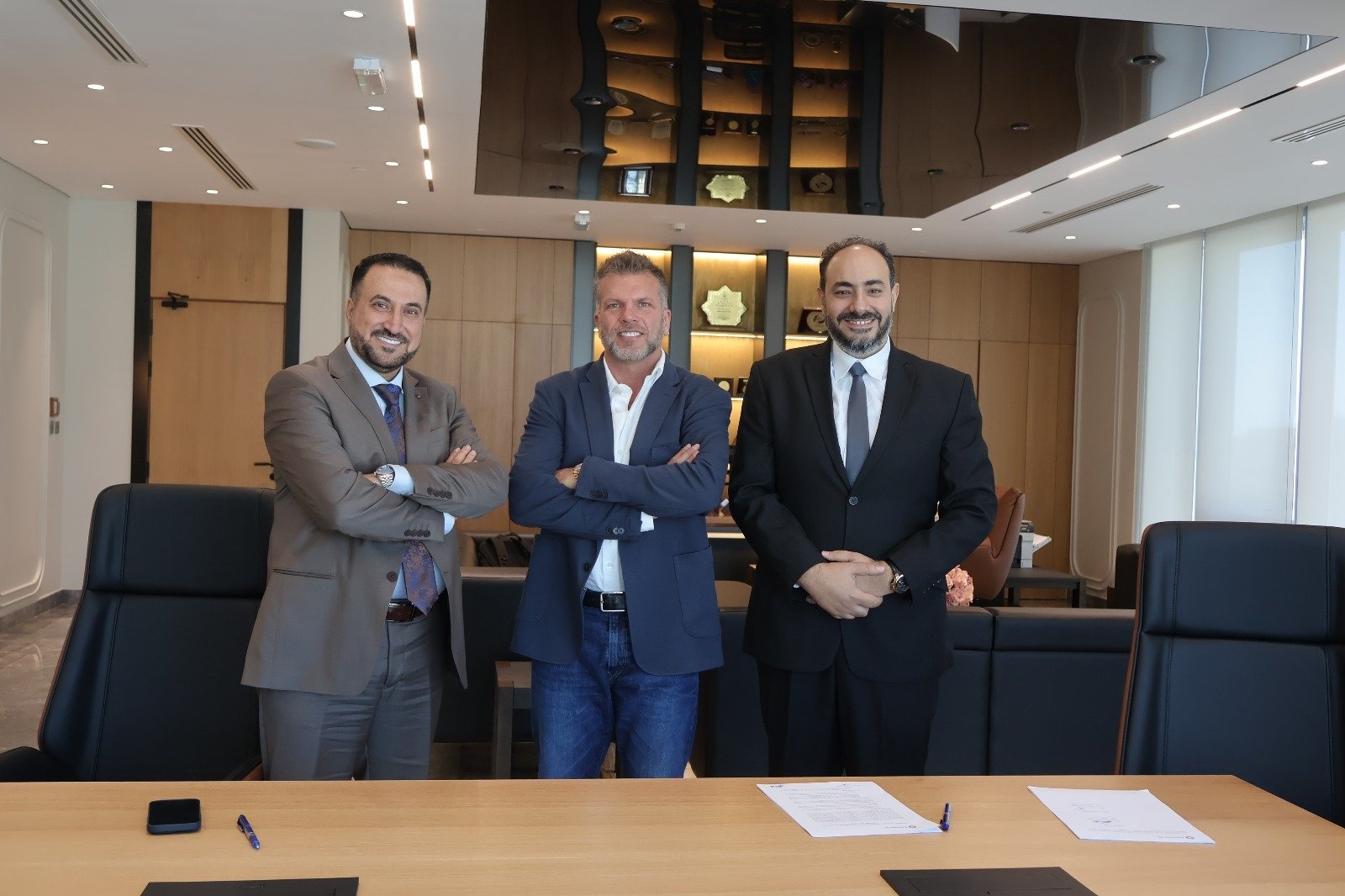
A February 2025 partnership announcement with Traffic Tech (Gulf) placed Carson at a signing ceremony with the partner’s leadership. The accompanying photograph is ordinary business diplomacy: suits, a table, paperwork. It is a useful counterweight to the abstraction of urban AI. A proposal still needs organizations willing to work together and people willing to sign.
On February 23, 2026, Hayden filed a civil complaint against Carson in San Francisco Superior Court. It alleged breach of contract, trade-secret misappropriation and unlawful computer access, and challenged parts of his earlier professional biography. These are Hayden’s allegations, rather than findings that Carson committed the conduct described. The dispute makes an uncomplicated celebration of the founder’s journey inappropriate.
The case also has a procedural development: a published tentative ruling dated May 11, 2026, granted Carson’s motion to compel arbitration. That concerns the forum for the dispute, rather than resolving its underlying accusations. The distinction matters. Neither a complaint nor a procedural success supplies a complete account of what happened between a founder and his former company.
Seeing a problem is the first assignment
Meanwhile, Carson has continued promoting EchoTwin’s technology. His April 28, 2026, CityVLM announcement described a proprietary vision-language model intended to interpret urban scenes and support operational decisions. The ambition now includes understanding what an observation means in context, then connecting it with an appropriate workflow. It is a larger assignment than identifying an object in an image.
EchoTwin describes a cycle of observation, interpretation, action and verification. Municipal vehicles would gather information on their existing rounds; the platform would interpret conditions and initiate relevant work. Subsequent observations would help establish whether the issue had been addressed. In Carson’s words: “They need a living nervous system that can see, reason, act, and verify.”
- ObserveA vehicle encounters an asset.
- InterpretSoftware considers condition and context.
- RespondAn operational workflow follows.
- Check againA later pass helps verify the result.
The verification step gives the pitch a useful test. A photograph of a problem is satisfying evidence that the problem exists. A second photograph can ask whether anyone dealt with it. That return to the scene connects an AI demonstration with the less glamorous business of responsibility. The city’s work continues after the model has produced an answer.
Carson’s public work keeps returning to the same physical arrangement: a camera, a moving vehicle and information that might help someone make a decision. The audience has changed, from a motorist concerned about a parked car to transit agencies and municipal departments. The unfinished argument with Hayden remains part of his present. His next proposition will have to earn its place through the ordinary tasks it helps a city complete.