The most boring vehicle in any American city is the garbage truck. It shows up on schedule, drives past every house on the block, and asks nothing of anyone. City Detect looked at that predictable, unglamorous route and saw a sensor network hiding in plain sight. Bolt a camera to the roof, let the truck do its normal job, and you have footage of every property in town - updated as often as the trash gets picked up.
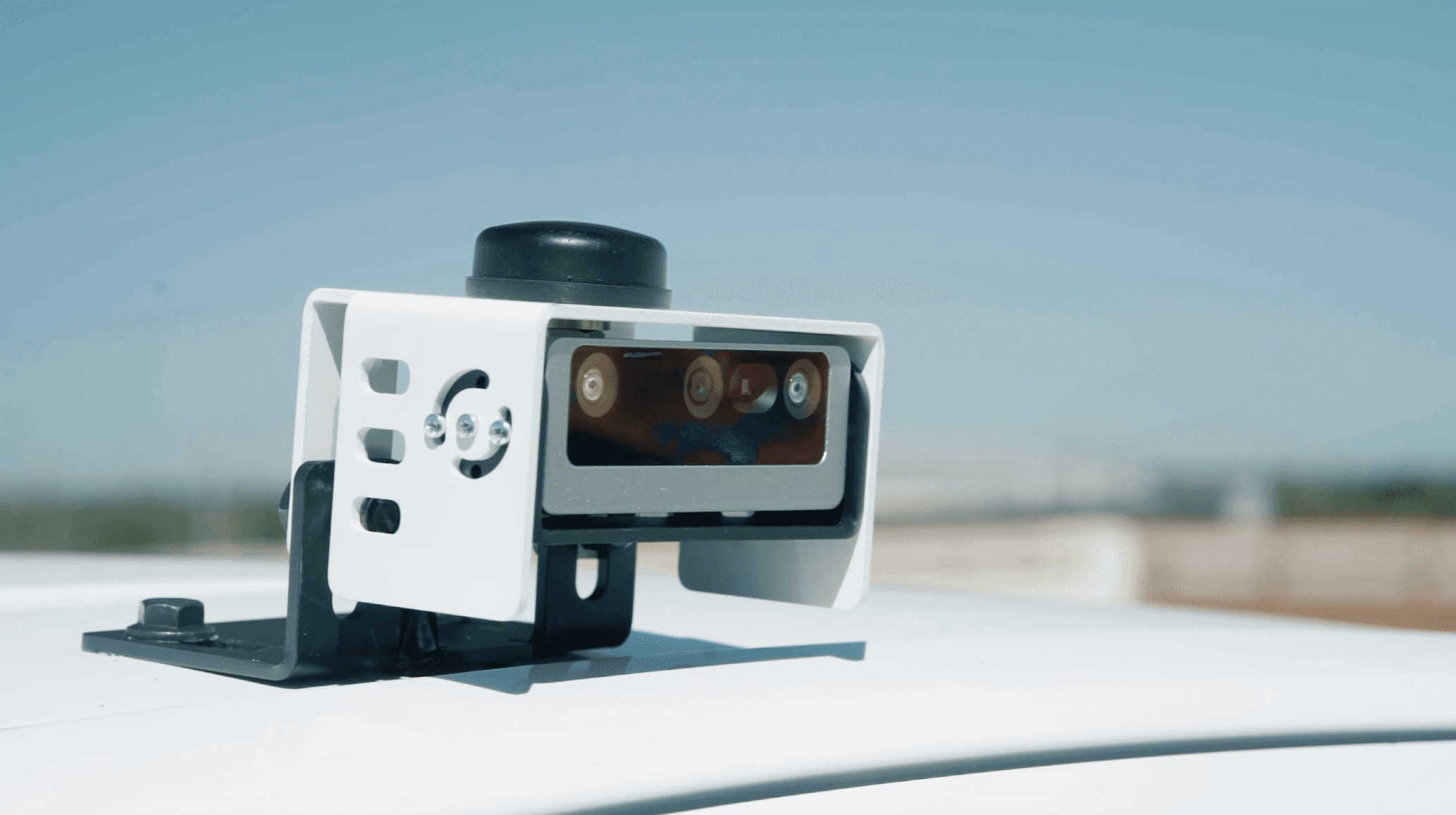
That is the whole trick, and it is deceptively simple. City Detect, based in Tuscaloosa, Alabama, mounts cameras on vehicles a city already owns - trash trucks, street sweepers - and runs the footage through its computer-vision platform, PASS AI. The software reads the built environment the way a code enforcement officer would: boarded-up windows, sagging roofs, overgrown lots, illegal dumping, graffiti, missing street signs, potholes. More than 100 distinct signs of neglect, scored and pinned to a map. What used to require a person with a clipboard driving slowly down every street now happens as a background process.
01 / THE PROBLEMThe windshield survey was overdue for a rewrite
Cities have a name for the old way of doing this: the windshield survey. A staffer drives a route, looks out the window, and writes down which properties are falling apart. It is slow, expensive, and out of date the moment it is finished. The scale of the gap is the pitch. A code enforcement officer, working by hand, files roughly 50 reports a week. PASS AI surfaces thousands a day.
The clearest illustration comes from Cleveland. Before working with City Detect, the city ran a comprehensive property survey the traditional way - 40 officers over six months, at a cost of about $170,000. A single camera-equipped vehicle can now cover the same ground in a matter of weeks. That is not a marginal efficiency gain. It is a different category of operation.
Surveying a city: old way vs. City Detect
02 / HOW IT WORKSThree steps, and one of them is "keep driving"
City Detect's method is intentionally light. The company does not ask a city to buy vehicles or change its routes. It installs cameras on the fleet that already runs, collects imagery as those vehicles go about their day, and turns the footage into maps, lists and reports that a code enforcement team can actually act on - including auto-generated educational notices for property owners.
Mount
Cameras attach to existing city vehicles - garbage trucks, street sweepers.
Detect
PASS AI analyzes the imagery for 100+ signs of blight and damage.
Act
Cities get maps, priority lists, reports and notices to fix issues faster.
There is a design decision buried in the pipeline that is worth pausing on. The system automatically blurs every face and license plate it captures. That is not a compliance afterthought; it is the product's stated point of view.
This is a built-environment tool. It blurs faces and license plates because they're not relevant to the problems we are solving, which is cleaning up communities and improving neighborhoods.Gavin Baum-Blake, CEO & Co-Founder
03 / THE ORIGINA patent, a professor, and a trash truck
City Detect did not start in a garage. It started in a research project. In 2021, the University of Alabama and the City of Tuscaloosa filed a joint patent to detect community blight, an effort connected to Dr. Erik Johnson, an economics professor at UA's Culverhouse College of Business. The early experiment was as literal as it sounds - attach cameras to Tuscaloosa's garbage trucks and see what the images could tell you as they drove the city.
Turning that experiment into a company fell to Gavin Baum-Blake, a U.S. Army signals-intelligence veteran and licensed attorney who had watched municipalities try to manage urban decay with stretched teams and outdated tools. He runs the company as CEO. The Alabama roots are not incidental to the culture: by the company's own account, roughly a third of the team are University of Alabama graduates, and City Detect operates as a fully remote workforce spread across the country.
By leveraging vehicles that are already driving every street anyway and using AI to analyze what they see, we're able to deliver thousands of valuable insights to cities daily rather than just dozens.Gavin Baum-Blake, CEO & Co-Founder
04 / THE PROOFWhat happens when cities actually use it
The case studies are where the abstraction becomes concrete. In Stockton, California, the platform flagged more than 4,000 code violations across 2,500 properties in a single week, feeding the city's RISE program. The number that matters to a city manager is what came next: an 80% voluntary compliance rate. Most residents fixed the problem after a first notice, before enforcement escalated. In Cathedral City, California, a first notice produced roughly 40% voluntary compliance across a survey that covered about 90 miles and generated 500 educational notices.
The staffing math points the same direction. City Detect reports a roughly 25% reduction in officers' fieldwork where the platform runs. The pitch to a department is not "replace your inspectors." It is "stop making your inspectors do the driving," so the humans spend their time on complex cases and community engagement instead of clipboard mileage.
05 / THE MODELBoring market, clean economics
City Detect sells to local governments as a subscription - a business-to-government software service layered on hardware the customer already owns. It is not a flashy market, and that is the point. The value proposition is cost displacement against a process cities already pay dearly for, which makes the return on investment unusually easy to argue. The company reuses existing fleet vehicles, so it adds no new trucks and no new emissions; the data collection is effectively a free ride on routes that were happening regardless.
The customer list has grown into real metros. City Detect works with cities including Dallas, Cleveland, Stockton, Cathedral City, Newport News, Greenville and Miami-Dade County, among 17-plus deployments. That traction is what the money is chasing.
Funding to date
The March 2026 round is earmarked for expansion in three directions: into more American cities, deeper into public works departments (infrastructure asset detection, post-storm damage assessment), and tighter integrations with the municipal software platforms cities already run. City Detect had already tested the storm angle - scanning roughly 300 miles of storm-affected roadway in Greenville and flagging around 1,200 high-severity damage indicators - which reframes the same camera-and-model stack as a disaster-triage tool.
City Detect's customers didn't just love their product, they evangelized about it. City Detect's AI enables a rearchitecture of how they perform this important work.Gavin Myers, Managing Partner, Prudence
06 / THE EDGEWhere it fits, and where it might not
The competitive frame is less about other startups and more about the status quo. City Detect's real rival is the manual windshield survey and the in-house code enforcement team running it, plus general-purpose tools cities already reach for - GIS survey software, municipal data platforms, and 311 complaint systems that wait for a resident to report a problem. City Detect's distinction is that its capture is passive, continuous and city-wide, and its model is purpose-built for blight rather than adapted from something else.
It is worth being honest about the conditions where the approach strains. The method assumes a fleet that already drives most streets on a regular cadence; a rural county with sparse routes or a city with thin municipal fleet coverage gets a patchier picture. Detection is only the first mile - the harder work of remediation, funding and enforcement still belongs to the city. And selling AI into government means clearing procurement, privacy and trust hurdles that move at government speed. City Detect has leaned into that last point deliberately: it is SOC 2 Type II compliant, a member of the GovAI Coalition, and it publishes a responsible-AI policy - the unglamorous credentials that get an AI vendor through a city council meeting.
07 / THE TAKEAWAYReactive to proactive
City Detect's own tagline - "reactive to proactive city management" - is a fair summary of the bet. Instead of waiting for a 311 call about the collapsing house next door, the AI has already flagged it, and often the owner fixes it before enforcement even shows up. For a founder, the copyable lesson is almost aggressively unglamorous: find a five- and six-figure manual process, replace the labor with hardware the customer already owns plus software, and charge a subscription. City Detect did exactly that to the oldest chore in code enforcement, grew fourfold doing it, and just raised $13 million to keep going.