Catherine Solazzo's marketing department has a backlog. It works in squads. It plans in two-week sprints. The team tracks its work in Jira, the same system that many Appfire customers spend their days configuring, extending and occasionally glaring at. This is either a very committed exercise in customer empathy or an elaborate way to ensure that nobody in marketing can claim a ticket got lost. For Solazzo, it is both practical and philosophical: the people marketing tools to developers should understand how developers actually work.
Her phrase for the principle is admirably plain: "We should be our own best customer use case." It sounds obvious only after somebody has said it. Companies routinely sell collaboration while departments hoard context, automation while approvals multiply, and visibility while the numbers live in six dashboards. Solazzo's response at Appfire has been to bring the promise indoors. Marketing does not merely describe the developer experience. It borrows the rhythms, tools and language of it.
That choice contains the story of her career. Solazzo is a marketer, certainly, but the word has never managed to keep her in its allotted box. Across IBM, Tech Data, TD SYNNEX, Syntax and now Appfire, her remit has repeatedly spilled into sales, operations, digital systems, partner programs, data and customer experience. She calls the resulting role a "CMO plus." The plus sign is doing honest work.
An apprenticeship in the ecosystem
The long first act took place at IBM. Solazzo joined after studying communications at Marist College and stayed for 17 years. Her assignments moved through performance and product marketing, digital business, partner ecosystems and executive operations. She served as chief of staff to IBM's chief digital officer, led worldwide developer programs and startups, and later ran worldwide partner ecosystem performance marketing. For three years, she worked in Japan.
The titles are useful, but the range matters more. A developer program is not a conventional campaign. A partner ecosystem cannot be ordered about like a captive sales force. A chief of staff sees where executive intent gets tangled in operating reality. The overseas assignment added the daily discipline of reading a market whose professional language and habits were not simply replicas of home. Solazzo emerged with a view of marketing as connective tissue: part message, part machinery, part diplomacy.
There was a mentoring habit early, too. A Marist alumni publication reported in 2011 that she managed an IBM internship team, hired a Marist student who had interned with her for two summers, and returned to campus to recruit more. Her public service record later included several years as a Big Sister and volunteer work with the YMCA of Greater St. Petersburg's after-school reading program. These are modest entries compared with an executive title. They also make her later reputation for building teams less abstract.
“Unless you've truly been in a dev team, it's very hard to understand what resonates with this audience.”Catherine Solazzo on marketing to technical buyers
The middle passage: merger, firsts and extra jobs
In April 2021, Solazzo left IBM for Tech Data as senior vice president of marketing in the Americas. She was asked to build an integrated center of excellence around digital marketing, platforms, data, analytics and agency services. The timing was almost comically brisk. Tech Data was preparing to combine with SYNNEX, which meant the new marketing leader arrived just as a familiar corporate identity was about to be dismantled and rebuilt.
She discussed marketing's place in a merger in one of her first large channel interviews. Later that year she hosted a conversation about the legal and practical details of TD SYNNEX branding. This was marketing in the less glamorous but more consequential sense: names, rights, systems, internal alignment and the thousand small decisions required to make two companies appear as one.
- IBM
A tenure spanning marketing, digital leadership, partner ecosystems, developer programs and a Japan assignment. - Tech Data and TD SYNNEX
Americas marketing leadership during the combination and rebrand. - Syntax
The company's first CMO, with marketing, communications, inside sales and sales operations in scope. - Appfire
Global marketing, communications, customer experience and partner programs.
In 2022 she became the first chief marketing officer of Syntax, a managed cloud and technology services company. There the plus sign grew larger. By 2024, she was leading global marketing, communications, inside sales and sales operations. She helped with the integration of Beyond Technologies and served as executive sponsor of the Syntax Women in Technology employee group. CRN placed her on its Women of the Channel list and its Power 100 Solution Provider subset that year.
Solazzo has described organizational transformation as a passion. It is a revealing preference. Transformation is the corporate world's favorite grand noun and least favorite Tuesday afternoon. The announcement is clean; the integration is calendars, compensation plans, duplicate software and colleagues wondering whether the new chart has a place for them. Her work has gravitated toward that Tuesday.
Marketing moves into the workshop
Appfire recruited Solazzo in July 2025. The company makes enterprise apps that extend platforms including Atlassian, Microsoft, Salesforce and monday.com. Its audience includes developers and technical teams, while its route to market runs through a large partner community. Solazzo's older experiences suddenly sat together neatly: developer programs, ecosystems, cloud adoption, transformation and the mechanics of global teams.
She began changing how marketing worked. The team moved its workflows into Jira and adopted sprint planning. Squads could make priorities visible, limit work in progress and learn in shorter loops. The method also removed a little theater from customer empathy. It is easy to produce a persona called "the developer." It is harder to sit inside the tools, ceremonies and tradeoffs that shape a developer's week.
The goal is not to cosplay as engineering. It is to shorten the distance between customer reality, team decisions and measurable work.
Her broader diagnosis is that the traditional marketing funnel has become chaotic. Buyers discover products through search, communities, peers, marketplaces and AI assistants. Technical buyers remain especially alert to unearned claims. Solazzo favors precision over volume - fewer initiatives, with more thought and investment behind them. In an age when machines can produce endless competent sentences, abundance is no longer a convincing strategy.
She also argues that the revenue experience extends far past advertising. Documentation, release notes, product pages, partner training and customer feedback all help a technical buyer understand, adopt and expand with a product. Under that view, handing a lead to sales is not the triumphant end of marketing. It is one handoff in a system whose seams the customer can feel.
“If marketers can position themselves as a growth function and not a cost center, they can't lose.”Catherine Solazzo on the modern CMO
Data, partners and the useful discomfort
The systems question leads to data. Solazzo has pushed to place sales and marketing CRMs, partner tooling and their governance under shared leadership. Her reasoning is less about collecting territory than reducing contradictions. If one team owns privacy, another owns the platform and a third interprets the customer, consistency becomes a negotiation. Bringing those responsibilities closer together lets the organization see the same journey and apply the same rules.
Partners receive similar treatment. By 2026, her remit included Appfire's partner programs as well as marketing, communications and customer experience. She wants to open the company's demand generation and enablement engine so partners can spend more time with customers and less time administering marketing and training. That is an operator's version of partnership: not merely appreciation, but the removal of friction.
Awards have followed the work. Solazzo appeared on CRN's 100 People You Don't Know But Should list in 2020, its Power 100 in 2021, and Women of the Channel lists in 2020, 2021, 2024 and 2026. She joined The Marketing Academy's US Fellowship in 2023. The recognitions trace the same movement as her jobs, from respected ecosystem operator to executive responsible for connecting more of the commercial machine.
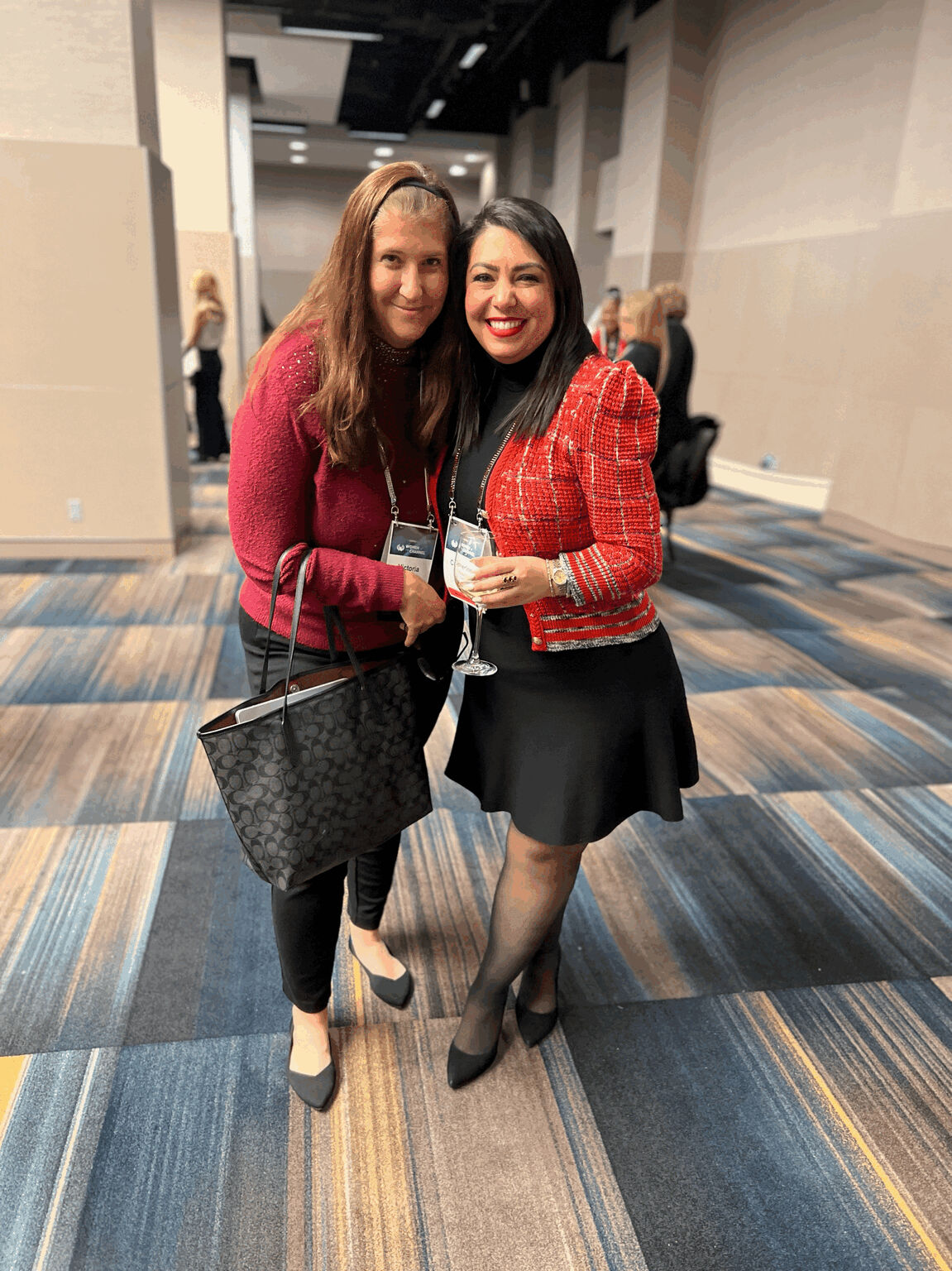
She is not entirely gears and governance. Before a 2026 run of Appfire regional kickoffs, Solazzo posted an Appfire-branded manicure and confessed that her Christmas tree was still standing. At a Women of the Channel event she wrote fondly about a ballroom full of sequins, hugs, familiar faces and shared war stories. Enterprise software does not usually arrive with excellent nails. Perhaps that is an oversight.
The cleanest test of the team
In July 2026, almost a year into the Appfire role, Solazzo published a different kind of operating review. In 23 years of work, she wrote, she had never taken two consecutive weeks away. Earlier trips had included email near the Great Wall of China, calls from an Italian vineyard and purchase-order approvals from a Paris cafe. Pretty scenery, same office.
This time she prepared a list of decisions that actually required her, cleared those decisions before leaving and made the work visible. Her colleagues respected the boundary. When she tried to check in once, the team told her to return to her vacation. Her assistant quietly reserved two hours on the first morning back so re-entry would not become a collision.
The company kept moving. This discovery should not have been surprising, but leadership is full of truths that remain theoretical until the laptop stays closed. Solazzo's holiday became a test of the same system she builds at work: clarify dependencies, remove the bottleneck, trust the team, then inspect what happened. The successful result was not that she was indispensable. It was that she could be absent.
That may be the most human expression of her CMO plus idea. A larger remit need not mean a leader sits at the center of every transaction. It can mean designing a system in which messages, data, partners and people meet without waiting for one heroic person to connect them. Solazzo's favorite Appfire maxim says growth and comfort cannot coexist. Her career has supplied the discomfort. Now she is making it operational.