The least glamorous problem in business software is also one of the most expensive: nothing talks to anything else. A bakery updates its hours on Google, answers reviews in another tab, drafts Instagram posts in a third, checks ads in a fourth and keeps customer details somewhere everyone promises to clean up next Friday. Artificial intelligence arrives with a grand proposal - open one more tab.
Webidoo has built its new identity around refusing that proposal. Founded in Milan in 2017 by Giovanni Farese, Daniel Rota and Egidio Murru, the company spent its early years selling the practical pieces of digital transformation to small and midsize businesses: websites, e-commerce, advertising, social media, cloud services and support. That work was less a detour than a long field study. The founders saw what owners bought, what they used, and what quietly became shelfware with a monthly charge.
Today Webidoo calls itself an AI operating layer for business. The phrase is grander than the entry point. Its core products begin with familiar chores: keeping business listings accurate, replying to reviews, scheduling social posts, reading email, creating files and coordinating content across markets. The ambition is to connect those chores, their data and the decisions around them - then let software execute, with a person nearby when reality gets lumpy.
Three products, three levels of mess
Webidoo’s portfolio makes more sense when read as a ladder. Jooice is the first rung, aimed at microbusinesses, professionals and local operators. It combines listings, reviews and social media in one dashboard, adding AI-generated text, suggested actions and performance reporting. Public U.S. pricing currently starts at $9 a month on annual billing for one module; the complete bundle is listed at $79 month-to-month or $59 a month billed yearly. That makes the opening wager small enough for a restaurant, salon or independent practice to test.
Groow moves from marketing into operations. Its agents can create and organize files, read email, analyze company data and work through chat, email, Telegram or WhatsApp. The interface choice matters. An owner who ignores a specialized automation console may still answer WhatsApp before breakfast. Groow is aimed at midsize organizations with recurring administrative work and enough process consistency to delegate it.
Welpy addresses a different customer entirely: a multinational team trying to coordinate content and digital advertising across languages and countries. It mixes generative AI with local specialists, turning governance - approvals, adaptation, execution and oversight - into the product. The three platforms share infrastructure, but they do not pretend a neighborhood florist and a global brand have the same problem.
“The average small business runs 20 tools that don’t talk to each other.”Giovanni Farese, CEO and co-founder
What failed first was the premise
There is no public tale of Webidoo driving into a spectacular corporate ditch. The more useful failure is the one embedded in its thesis: giving a small company access to software does not mean the company has transformed. The old premise was that more capable tools would naturally produce more capable businesses. In practice, every new tool introduced another login, another data island and another decision the owner had to make.
That observation appears to have changed Webidoo’s product direction. The business began as a service provider. Jooice productized the repeated marketing jobs in 2022. Welpy added an AI assistant in 2023 and evolved toward multicountry content governance. Groow arrived in 2025 to delegate work beyond marketing. In 2026, Webidoo widened the frame again: not a collection of apps, but a modular layer capable of using its own products and selected outside systems.
The loop Webidoo built
The human part is not decoration. Under the label Human+, customers can get guided setup or ask Webidoo to configure and operate the system. Pure SaaS investors may see labor hiding in the margins. A time-starved shop owner may see the only reason the subscription gets used. Webidoo’s wager is that assistance can be standardized enough to preserve software economics while solving the adoption problem that self-serve products politely leave to the customer.
The business model has more than one door
Jooice brings recurring SaaS revenue through direct subscriptions. Human support adds higher-value service packages. Groow and Welpy open larger contracts, while the wider group still sells engineering and transformation work. A 2025 investor brief described recurring SaaS, usage-based pricing, modular AI-as-a-Service and a hybrid direct-plus-partner go-to-market. Webidoo reported nearly $16 million in 2024 revenue and roughly $3 million in EBITDA; for 2025 it reported more than $18 million in revenue and again more than $3 million in EBITDA.
Distribution is the clever bit others can copy. Webidoo did not rely only on owners searching for “AI marketing platform” at midnight. TIM marketed Jooice through its business network. Apple reseller Juice put it in more than 60 Italian stores. Nexi paired it with payments. BPER offered digital-export support to business customers. Restaurant software company iPratico connected orders, receipts and feedback to automated marketing. Each partner contributes something an unfamiliar SaaS vendor lacks: context and borrowed trust.
The market around Webidoo is crowded in pieces. Yext, Birdeye and Podium work on local presence and reputation. Microsoft Copilot, UiPath, Make and Zapier automate tasks. Agencies will happily run campaigns, while consultants integrate enterprise systems. Webidoo’s distinction is the attempted span: self-serve marketing, agentic execution, multinational governance and optional human delivery in one family. The risk is the mirror image. A platform broad enough to connect everything can become the twenty-first tool it promised to eliminate.
The $25 million American test
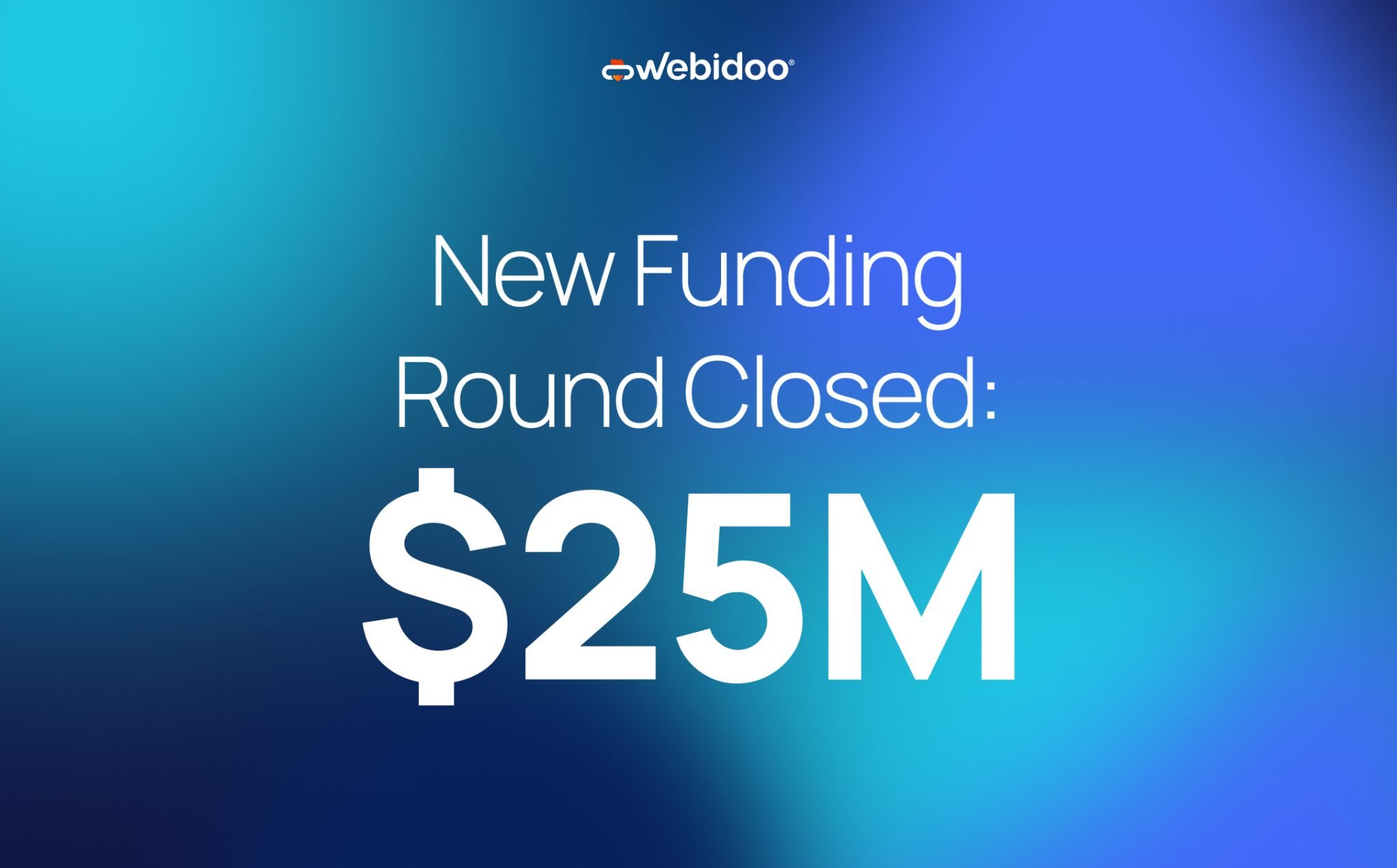
In May 2026, Webidoo closed a $25 million round led by the IXC3 fund managed by Azimut Libera Impresa, joined by existing investors 8a+ and TIM Ventures. Added to the 2021 round of roughly $7.1 million, disclosed funding now exceeds $30 million. The company plans to expand its platforms, grow adoption of agentic AI and acquire U.S. SaaS companies and marketing agencies. Chicago is the operating base; in June, the team presented the strategy at Nasdaq MarketSite in New York.
The acquisition plan is more than financial engineering. Buying a client-facing SaaS business or agency can deliver product capability, a sales channel and customers whose work Webidoo can automate. It can also produce an integration swamp. Different data models, incentives and service cultures do not become one operating layer because a slide says they do. The next chapter will be judged by whether acquired customers experience less fragmentation after the deal.
What a reader can steal
The Webidoo playbook begins before AI. Watch people perform a frequent service. Write down the repeated steps. Separate judgment from routine. Build the smallest module around the routine, price it low enough to test, and preserve a human path for setup and exceptions. Then distribute through organizations that already serve the customer. Only after one workflow earns trust should the product expand into adjacent work.
Copy this - under the right conditions
- Start with repetition: weekly review replies beat an annual strategic exercise.
- Make value visible: fewer corrections, faster responses or hours returned.
- Borrow a channel: banks, telecoms and vertical software already know the buyer.
- Design the escape hatch: let a person handle permissions, ambiguity and exceptions.
It will not work everywhere. A process that changes every week cannot be cleanly automated. Poor customer data will produce fast, tidy mistakes. Highly regulated or safety-critical decisions need stricter oversight than a marketing workflow. A business with unusual systems may spend more on integration than it saves. And an owner unwilling to standardize any process is not buying an operating layer; that owner is buying a new argument.
Webidoo’s latest research makes the same point from the other side. Its 2026 AI Maturity Index estimated possible productivity and efficiency gains of up to 30%, but found many SMEs unprepared because AI cannot perform well without integrated digital foundations. That is both diagnosis and sales thesis. The company wins if it can build the foundation while customers are already trying to stand on it.
The enjoyable irony is that Webidoo’s big AI idea came from years of very human, very ordinary client work. Its advantage is not merely access to models that competitors can also rent. It is the memory of why the restaurant owner did not update the listing, why the sales team ignored the dashboard, and why “simple setup” still ended with a support call. The $25 million question is whether that memory travels from Milan to Chicago without becoming another layer of complexity.