Achintya Gupta had a peculiar sales problem. People were trying the product. Developers were asking questions, working through documentation and testing an API. Yet the pipeline assembled from sales conversations seemed to describe a different business. The prospective customer was busy. The sales report was waiting for an introduction.
Gupta was responsible for revenue at Phyllo, the creator-data infrastructure company he had co-founded. He could recognise the work of evaluation without being able to assemble a complete account of it. An executive might take a meeting, then hand the real examination to a developer. The person doing the consequential work could remain outside the conversation that sales knew how to record.
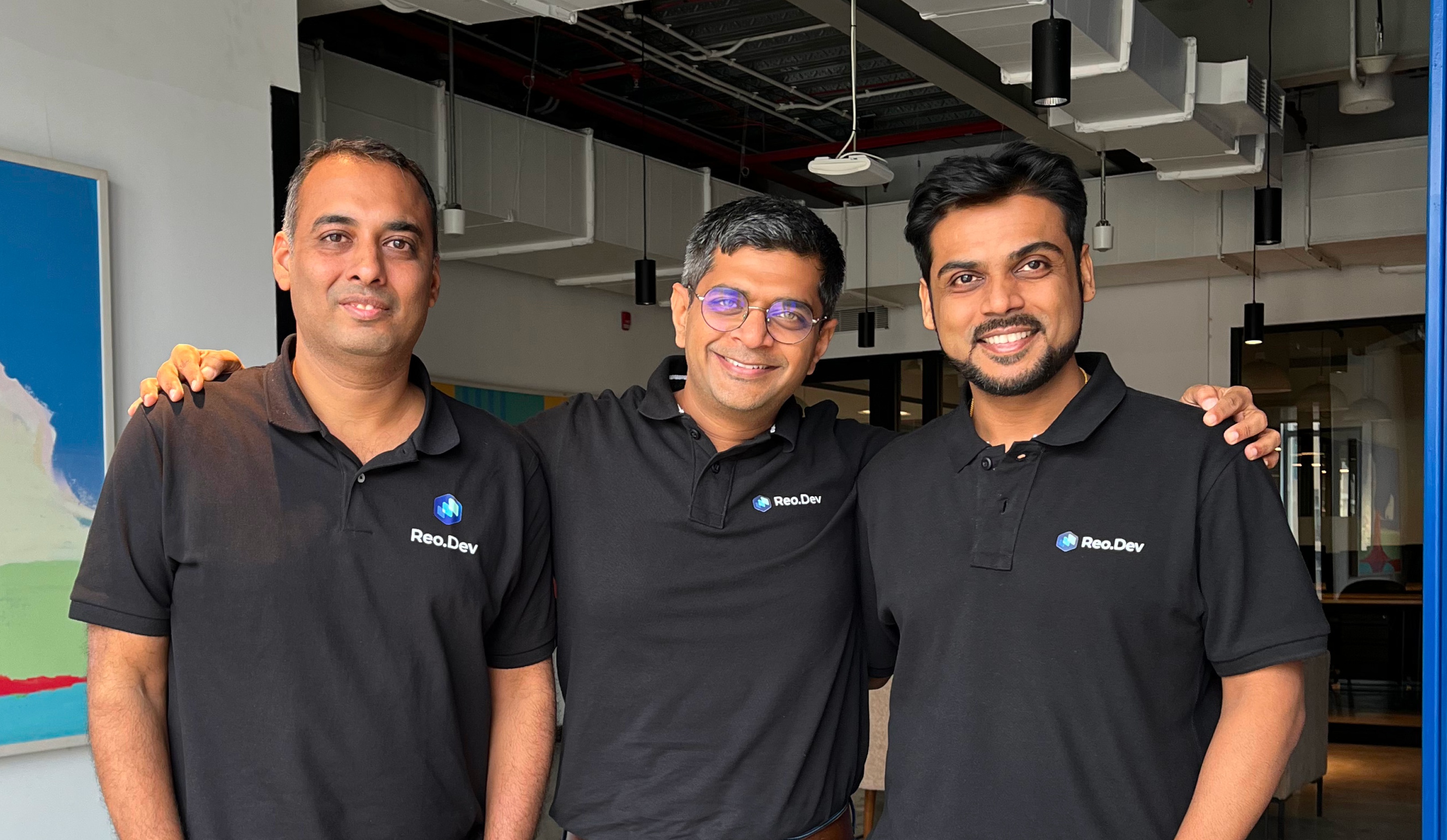
That discrepancy became the starting point for Reo.Dev, which Gupta founded with Gaurav Jain and Piyush Agarwal in 2023. Today he is its CEO. The company interprets technical activity for businesses selling to engineering teams. Behind that description is a rather human difficulty: a person can be interested in what you have made while having very little interest in being sold to.
The unusual value of going back
A much earlier career decision gives Gupta’s story an unexpected turn. In 2012, he left Kuliza to study at the Indian School of Business. After business school, he returned to Kuliza. The familiar office had apparently survived the acquisition of an MBA.
Writing about the decision in 2015, he recalled worrying about its reception, both inside the company and among people who knew him. With other employers recruiting at ISB, returning could look like a failure to move forward. He nevertheless went back and took responsibility for sales and marketing. Other colleagues had made their own departures and returns.
Gupta drew a measurement question from this experience. Employers tracked the people who left. What might they learn by tracking those who came back? His proposed employee-return rate treated a voluntary return as evidence about the work and culture waiting inside. It is an appealing detail in a founder’s biography: years before the developer-intent business, he was already interested in the behaviour a familiar scoreboard left out.
“A lot of conviction happened through our customers.”
Achintya Gupta, on investor diligence
A marketer with an engineering degree
Gupta studied chemical engineering at IIT Delhi, attending from 2004 to 2009. His subsequent work moved toward customers, positioning and the business of technology. In 2009, he coauthored Brand Management; the book appears in an IIT Delhi marketing-management course outline alongside established texts in the field. It is a less predictable early credit than another software internship.
His older presentation archive also contains talks about social media and the way stories and conversations change marketing. Those titles belong to an earlier internet, but they give his later work a longer history. Long before developer intent became the product description, communicating a product’s value was part of his working vocabulary.
At Kuliza, that work acquired the demands of enterprise sales. He held sales, marketing and business leadership roles, including Chief Business Officer. As the company developed its lending-software business, he spoke about the technology transformation financial institutions needed. Selling in that setting meant dealing with organisations whose decisions had consequences well beyond a favourable response to a campaign.
He also appeared as Kuliza’s Director of Sales and Marketing at the Elets BFSI CTO Summit in 2016. A later conference report placed both Gupta and Gaurav Jain, then Kuliza’s CTO, on the programme. Their professional paths crossed before the Reo.Dev founding team existed.
An API business changes the question
Phyllo brought Gupta into creator-data infrastructure. His public career record places his cofounder tenure in 2021 and 2022; his Reo.Dev biography identifies his revenue leadership there as the experience that supplied the next company’s problem. The move connected an enterprise-software background to a product that developers would inspect and integrate themselves.
That distinction matters to the story. A technical evaluator has work to finish. A product’s documentation, examples and behaviour may tell them more than a sales conversation can. For the revenue leader, however, those separate encounters are difficult to reconcile. The organisation’s buying process and the seller’s reporting process can proceed on different tracks.
Gupta published Reo.Dev’s founding thesis in March 2023. His argument centred on connecting developer-led adoption to revenue. It asked for a useful account of evaluation across the places where technical work happens. The origin was practical rather than ceremonial: an operator wanted a clearer view of the business for which he was accountable.
The work before the meeting
Explore a repository.
Try an API.
Assess the context.
The hobbyist problem
Seeing an activity is only the first difficulty. Knowing what it means is harder. In his short recorded explanation, Separating Opportunity from Hobbyists, Gupta describes the resemblance between someone experimenting with a tool and someone evaluating it seriously. Both can generate quite plausible evidence of interest.
His explanation of Reo.Dev moves from discovering accounts with developer activity to assessing where an opportunity may exist and tracking what happens next. He describes looking across patterns, including recency and the number of developers involved. Context makes the difference between an account worth investigating and another item in a very long list.
The word “hobbyist” contains the commercial awkwardness neatly. Experimentation can be valuable without producing a purchasing decision. A sales team still has to decide where to spend its time. Counting everyone who touches a product answers a simpler question than identifying which organisation has a problem the product might solve.
For Gupta, the distinction also explains why a developer-focused business needs something more specific than a generic lead list. A technically busy account can be commercially quiet. Understanding the work takes interpretation. A dashboard full of dots is still capable of leaving its owner thoroughly in the dark.
When customers do the persuading
The company raised a $1.2 million pre-seed round in February 2024, led by India Quotient. A $4 million seed round led by Heavybit followed in October 2025, with India Quotient and Foster Ventures participating. These milestones supplied capital for a business built around a specialised customer.
Gupta’s account of fundraising gives customers an active role in the process. Investors spoke to them during diligence, and their enthusiasm helped build conviction. His explanation puts an everyday product relationship at the centre of an event usually described through the names on a cheque.
In July 2026, Reo.Dev announced an $11.3 million Series A led by Elevation Capital. Reporting on the round described US sales and marketing expansion and further product development as priorities. The company said it served more than 200 customers. Its progress had brought Gupta from an individual operator’s frustration to the responsibility of building a business around the same problem for others.
Led by Elevation Capital. A funding milestone in Reo.Dev’s effort to understand technical buying.
The record and the decision
Gupta has continued writing about the systems behind sales work. In a February 2026 opinion article, he argued that a CRM records interactions while teams increasingly need another layer to decide which accounts deserve attention and why. His proposed intelligence hub combines an evolving customer definition, intent, action and feedback.
The argument assigns the CRM a continuing place in execution and visibility. It puts the judgement that precedes an action elsewhere in the architecture. His emphasis is on combining scattered evidence into a useful decision, then learning from what follows. That is a systems question, with a revenue operator’s impatience behind it.
Read beside his career, the essay makes sense. Gupta has worked on positioning, sales processes and revenue strategy. He is concerned with what a team does after receiving information. Producing another alert is easy to admire in a product demonstration; making that alert useful in somebody’s working day is a sterner assignment.
Now the evaluator has an agent
The newest development returns Gupta to the problem of a buying journey becoming difficult to see. Reo.Dev’s Agent Intent Gateway extends its attention to AI agents interacting with products through MCP, the Model Context Protocol. The company describes capturing those interactions to make agent-assisted evaluation visible to commercial teams.
Gupta also brought the subject to his public discussion of technical marketing in 2026, promoting a September keynote on the changes AI introduces. The technology has moved since his early observations at Phyllo. The question still concerns work happening before the seller has a clear account of the buyer.
There is a pleasing complication here. Tools that help people research software can move the research farther from the places sales teams habitually watch. Gupta’s response is to follow the work. His company’s next chapter depends on whether that effort produces understanding customers find useful.
For someone whose career includes a brand-management textbook, returning to a former employer and selling technology to banks, this is a fairly consistent destination. The names of the tools have changed. Gupta keeps coming back to the evidence outside the usual report: who returned, who tried the product, who is doing the evaluating. Somewhere beyond the booked demo, a purchasing decision is taking shape.