The Feed had a peculiar problem for a retailer: more customers could make things worse. Its manual warehouse was already running three shifts. Returning shoppers nearly exhausted its capacity. New business threatened to become a queue of disappointed athletes waiting for nutrition orders. Before the company could accelerate sales, somebody had to change what happened between a shelf and a shipping box.
- Autopicker brings a robotic arm into the warehouse aisle.
- Monthly robot hire lowers the initial capital hurdle, with a minimum fleet commitment.
- Awkward items still have a route to human pickers.
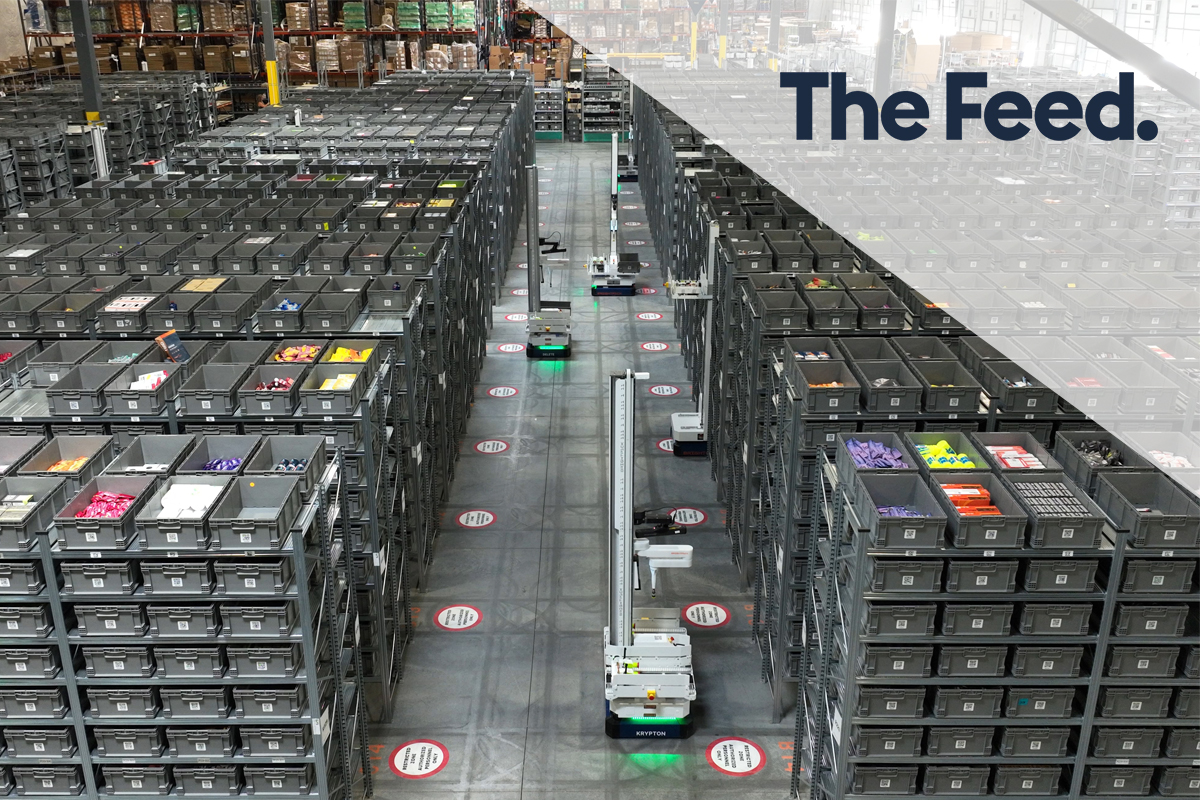
The Feed began with 48 Brightpick Autopickers in early 2024. By its January 2026 case study, the installation had grown to 103 robots, picking 70,000 items daily. Brightpick reports an 80% labor reduction and a 65% reduction in operating costs there. Those are vendor-published customer results, rather than a forecast for every warehouse. Still, the expansion poses an interesting question: what exactly did the customer buy?
A cart with its own arm
A familiar warehouse automation arrangement brings goods to a person at a workstation. Brightpick’s Autopicker puts a robotic arm on a mobile base and takes it into the aisle. The machine retrieves a storage tote, transfers an item into an order tote, and continues building the order. Picking happens close to storage, reducing journeys back to a central picking station.
The 2025 Autopicker 2.0 added a particularly satisfying wrinkle: picking-in-motion. After collecting a storage tote, the robot starts travelling toward its next destination while completing the pick. Brightpick says this overlap removes an average of 15-20 seconds from a picking cycle. It reports average output of 70-80 picks an hour for the upgraded robot. A faster arm helps; making travel time useful helps too.
the tote
+ pick
near next stop
Conceptual sequence for picking-in-motion.
This is a company shaped by seeing. Its founders developed machine-vision business Photoneo before establishing Brightpick in 2021. CEO Jan Zizka has explained that customers needed help beyond visual accuracy: labor shortages, seasonal demand and errors were problems across the operation. Better eyes became the foundation for a whole fulfillment system.
Make failure part of the route
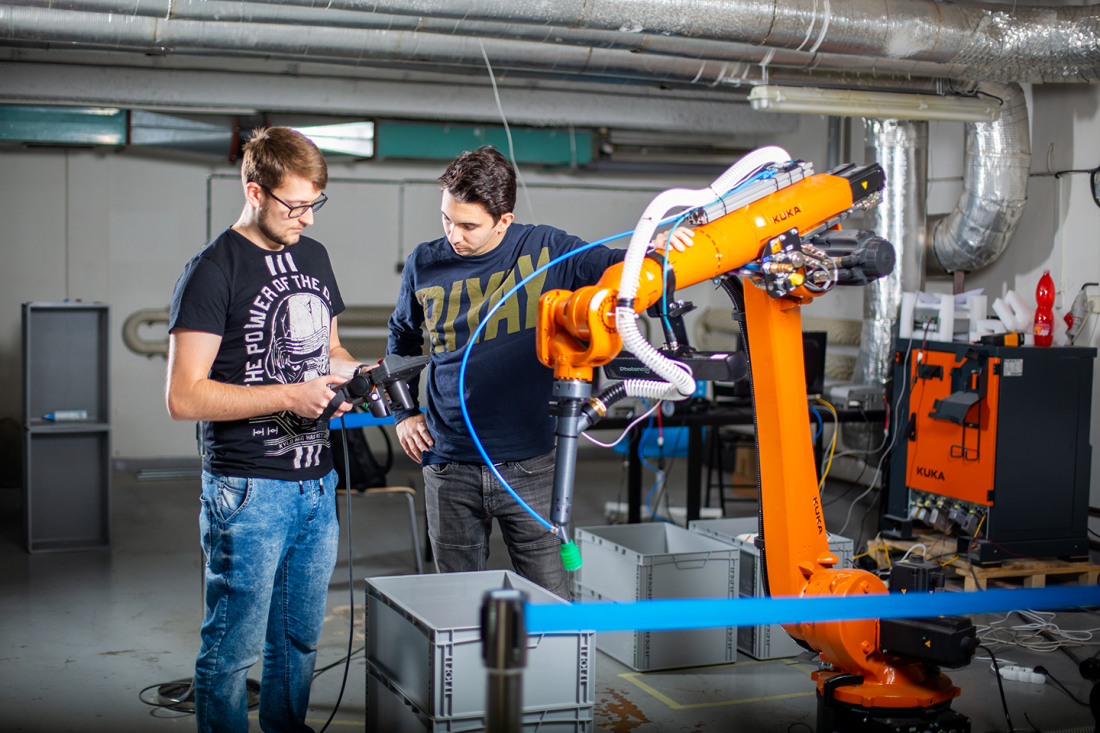
The useful engineering details are refreshingly unglamorous. Brightpick uses wheels, vacuum grippers and simple two-axis arms. Products sit in totes, giving the robot a more controlled environment. In a July 2026 essay, Zizka argued that extra mechanical complexity brings extra maintenance and potential failure points. Software carries more of the burden.
Intuition, Brightpick’s AI and orchestration software, combines vision with pressure and suction feedback. Its published picking architecture starts with a small neural network on the robot. An unsuccessful attempt can trigger a larger model on the warehouse’s own server. After up to three attempts, an exception can go to remote teleoperation or a staffed goods-to-person station.
That last step deserves attention. The Feed’s system includes four human picking stations for heavy or complex items, plus an assisted lane for fast sellers. Automation works around the product mix. A buyer can copy that discipline: test the awkward packaging, the unusually heavy item and the busy-hour order, then measure the whole route to completion.
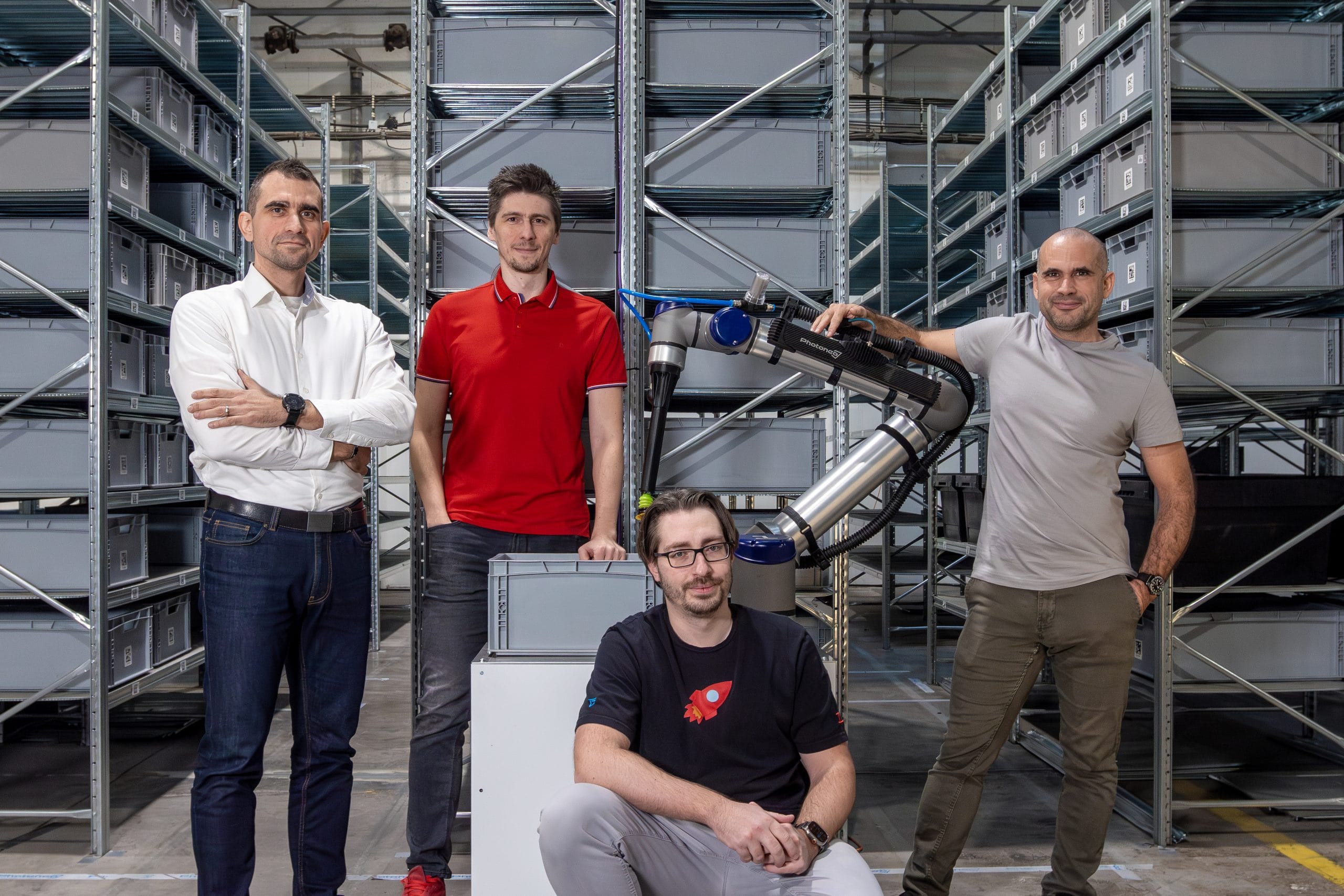
The working culture Zizka describes follows a similar preference for getting something into use. In a 2023 interview, he advocated fast prototypes and encouraged employees to contribute beyond their job descriptions. The practical test is whether the customer’s operation succeeds. That emphasis links the people developing the AI with the people installing and supporting the machines.
The monthly bill has a floor
Brightpick sells Autopicker outright or through Robots-as-a-Service. Its current pricing page starts at $2,190 per robot per month, with a minimum of 15 robots per warehouse. At that advertised starting rate, the robot fee alone would be $32,850 monthly. A small operation needs enough work to justify that floor.
$32,850 / month in robot fees, before other project costs. Illustrative calculation, not a quote.
Setup matters as well. A July 2025 company explainer described a $70,000 minimum upfront fee and separately purchased shelving and totes. Those historical terms need a fresh quote. Renting also leaves a recurring bill; owning may produce greater savings over a long enough operating life. The right comparison includes remaining labor, maintenance, integration and downtime.
The grid is a change of mind
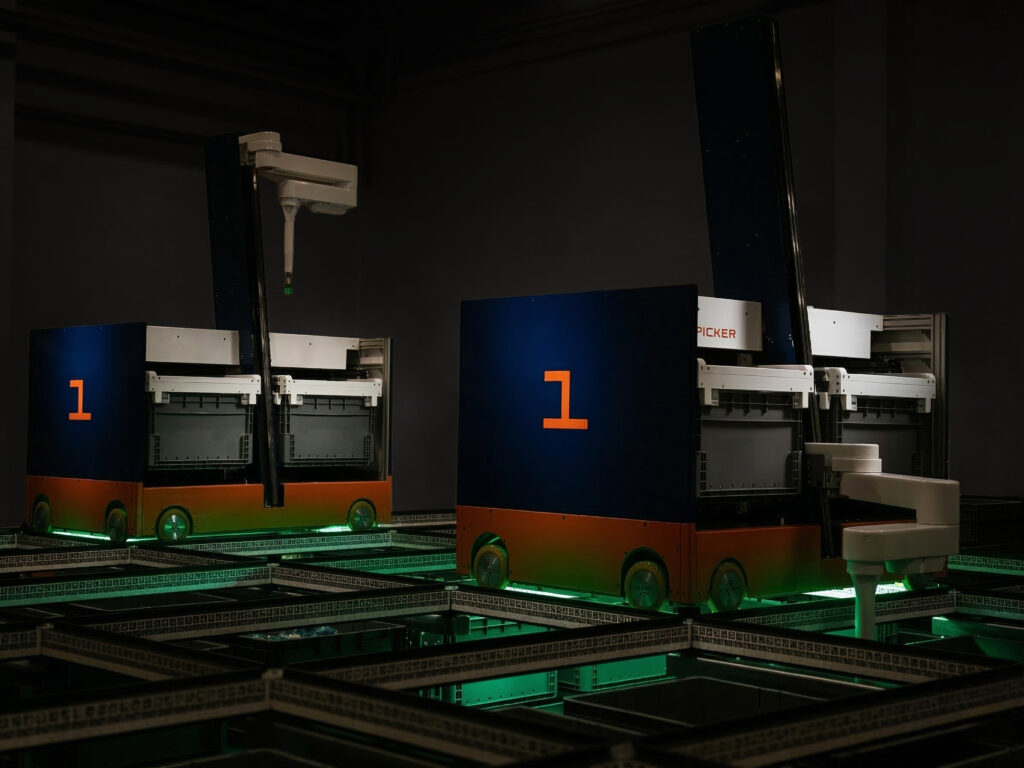
Flexibility has limits. At Gridpicker’s March 2026 launch, Zizka said high-volume fulfillment centers needed more throughput than AMR systems could deliver. Brightpick’s response put mobile picking robots above shelves on a fixed aluminum grid. Fetcher robots bring storage totes up on rails. The architecture changes the relationship between storage and movement.
Gridpicker is a custom-priced capital purchase; Brightpick says it is unavailable in Germany. Another product, Giraffe, serves a different constraint by retrieving totes from storage up to six meters high for Autopicker. Throughput, height and flexibility become separate design choices. There is no reason to assume one warehouse layout should satisfy them all.
The second order matters
Repeat deployments offer a useful test of the pitch. Dr. Max’s Prague installation grew from nine Autopickers to 30; in August 2026, Brightpick announced another 44 for Ostrava and Bratislava. NAPA followed a 2025 pilot with an additional-site agreement announced in February 2026, including more than 100 planned robots. These announcements distinguish existing fleets from future installations.
Brightpick remained independent when Zebra acquired Photoneo in 2025. Most sale proceeds were earmarked for its expansion, following a $12 million equity-and-debt raise in November 2024. Its market now spans groceries, medical distribution, ecommerce and industrial parts, with integration partners including Trew and MotionTech.
“we were cash flow positive within 60 days.”Matt Johnson, CEO of The Feed, in Brightpick’s customer testimonial
The night shift brings the argument back to time. Brightpick reports autonomous overnight picking and order buffering at The Feed. Packing, replenishment and exceptions still belong in the operating plan. The opportunity is concrete: prepare more orders while the building would otherwise sit idle, then judge the system by what is ready when people return.