Imagine a warehouse with two excellent robots. One carries goods. The other cleans floors. Each knows where it is going, each has a competent manufacturer, and each has an excellent reason to use the same narrow aisle. The purchasing department has bought two solutions. Operations has inherited a negotiation.
This is a thought experiment, but the problem it describes is InOrbit.AI’s business. The company builds software to monitor robots, intervene when they need help, and coordinate work across machines from different manufacturers. Its central proposition is pleasantly awkward: buying more automation can create more work unless somebody manages the relationships between the automated parts.
- What it sells: cloud software that connects robot operations with enterprise workflows.
- Who buys: robot makers and enterprise operators, including named customers Colgate-Palmolive and Genentech.
- The distinctive bet: coordinate vendor systems together, rather than demand one brand of robot.
- The latest move: OpenRobOps 1.0, a self-hostable fleet-management platform released in September 2026.
01The problem arrives with the second robot
The conventional robot demonstration is a solo performance. A machine picks something up, takes it somewhere, or finds its way around an obstacle. The applause comes when it finishes. A working facility is an ensemble, with people, doors, delivery schedules and several machines pursuing different instructions. Success depends on what happens between the performances.
At Automate 2026 in Chicago, InOrbit and the Association for Advancing Automation staged a demonstration of that ensemble. Robots from companies including Kärcher, Omron, Peer Robotics and Unitree operated in a shared space. The showcase included mobile robots, humanoids, quadrupeds and other equipment. Location-tracking integrations from Slamcore and Guide Robotics also brought manually operated vehicles into the picture.
Space Intelligence, InOrbit’s enterprise product, sits above vendor fleet-management systems. Its Business Execution System translates orders from warehouse, enterprise-resource-planning and manufacturing systems into robotic missions. The demonstration showed different systems coordinating in public. Its significance lies in the architecture: a business order can travel across several vendors without the operator having to become the human switchboard between them.
02A floor scrubber makes the argument
The Kärcher collaboration supplies a less theatrical example. InOrbit helped support the KIRA B 50 autonomous floor scrubber with robot-health monitoring, incident management and remote assistance. Kärcher built its autonomous cleaning solution on the platform. A manufacturer could concentrate on its cleaning machine while drawing on another company’s tools for running that machine in the field.
InOrbit’s Advanced Incidents uses configurable rules to identify operational problems. Some interruptions can be addressed remotely. That matters because a machine that has stopped cleaning may need a small intervention rather than a specialist dispatched to the building. The operational question becomes how quickly an exception is understood and resolved.
Kärcher also received early access to RobOps Copilot, introduced at Automate 2024. It lets users ask natural-language questions about operations data and obtain analyses and visualizations. Felipe Garcia Lopez, then identified as Kärcher’s manager of robotic systems and software, called the interface “super intuitive.” The useful promise is access: the person responsible for a shift should be able to investigate fleet performance without first becoming its data scientist.
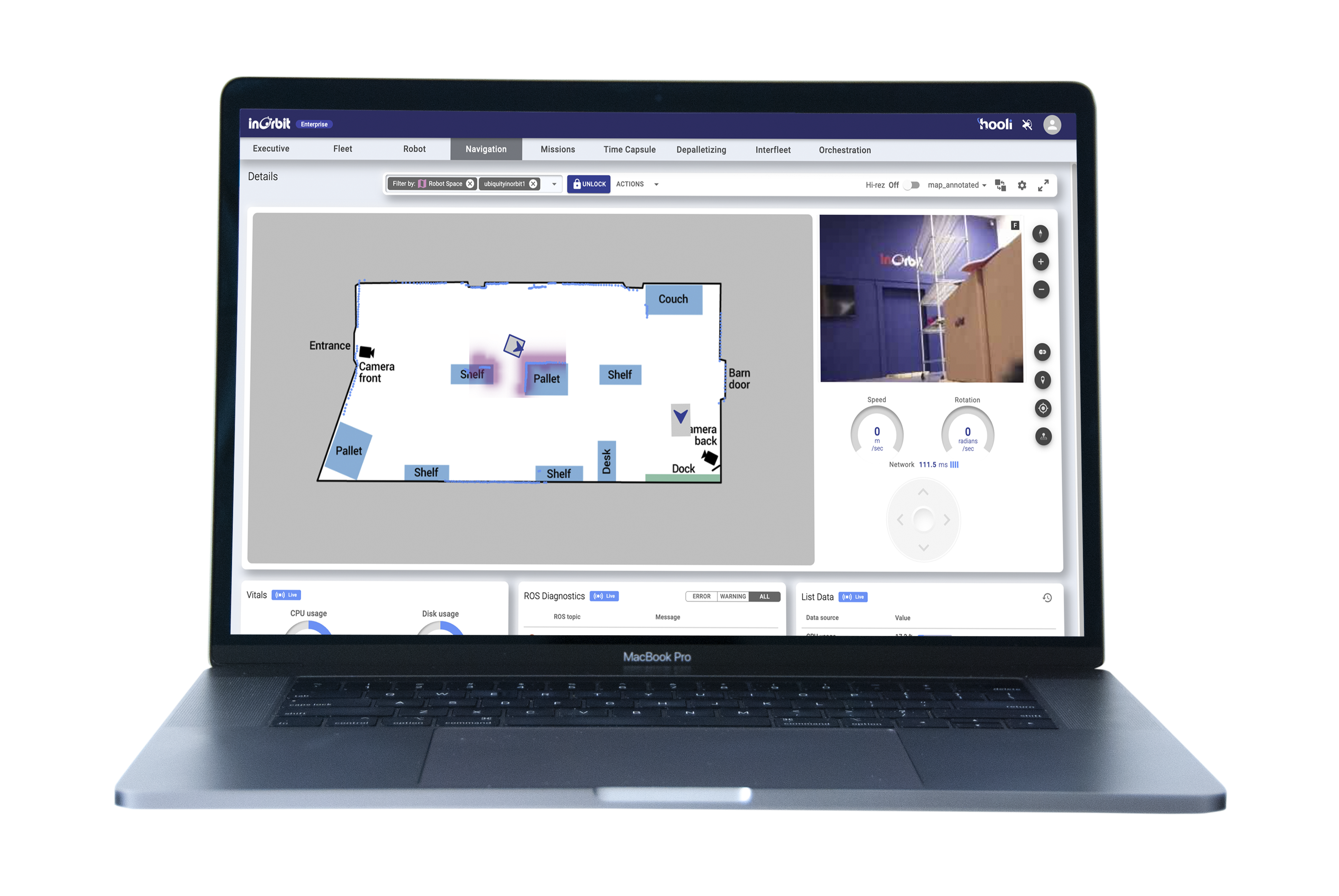
03The software between the order and the wheels
InOrbit was founded in 2017 by Florian Pestoni and Julián Cerruti. Pestoni remains CEO. The company’s current team page identifies Ramiro Diaz Trepat as CTO; he joined as head of AI in January 2024 and led the Copilot launch. The expertise spans cloud infrastructure, robot operations, integrations and interpreting the data those systems produce.
Its March 2026 product explanation draws three useful boundaries. Space Intelligence serves enterprise teams orchestrating physical workflows. Ground Control serves robot developers and robotics-as-a-service providers managing deployed machines. OpenRobOps supplies an open-source operations foundation. The distinctions follow who has the problem: the factory manager, the robot maker, or the engineer who needs a fleet manager to start with.
Ground Control provides monitoring, diagnostics, remote control and configuration tools. InOrbit’s public connector repository contains integrations for systems such as OTTO Motors, MiR, Omron FLOWCore and Instock. Those connectors use the interfaces the systems expose. Compatibility is consequently practical engineering work, involving data, commands and configuration, rather than a magic property conferred by the word “agnostic.”
There is a services business alongside the software. InOrbit Intelligence advises on robot selection, automation strategy, pilot implementation and return-on-investment validation. That makes sense in this market: an elegant dashboard cannot rescue a robot selected for the wrong task.
04The 300-times bill
InOrbit has encountered its own version of the buy-or-build dilemma. A November 2020 engineering account describes an unnamed analytics supplier changing its usage metering. The resulting bill was 300 times any previous monthly bill. InOrbit temporarily disabled the feature and built a time-series analytics replacement using open-source components.
One analytics invoice versus prior monthly bills.
Reported by InOrbit in November 2020; a billing ratio, not a dollar amount.
A separate message-broker supplier developed reliability problems as usage grew. Support stopped providing satisfactory explanations. InOrbit moved that component onto its own infrastructure, strengthened monitoring and on-call practices, and discovered that a migration estimated at one or two weeks took months.
The copyable lesson is precise. Evaluate a supplier’s billing rules, support and ability to grow with you, alongside its features. Changing providers can cost engineering time even when the replacement software looks simple. InOrbit’s account is useful because it includes the inconvenience, rather than pretending the architectural decision arrived fully formed.
05Giving away the plumbing
On September 15, 2026, OpenRobOps reached its first stable release. It is self-hostable and licensed under Apache 2.0. Its capabilities include telemetry, mapping, remote actions, incident rules and configuration as code. Developers can inspect and adapt the operational foundation instead of starting their own dashboard, backend and database from an empty directory.
InOrbit calls repeated reinvention of those basics the build trap. Its open-source work complements ROS and ROS 2, which handle the robot’s device-level software, and Open-RMF, which supports coordination between fleets and infrastructure. InOrbit and Ekumen had already released an open-source RMF fleet adapter in March 2023. The newer release extends the company’s effort to make the connecting layer reusable.
ORO also means gold in Spanish, a naming joke InOrbit makes quite deliberately. The commercial logic is more interesting than the joke. A free operations foundation can make it easier for developers to build systems that later participate in wider orchestration. That is a strategic reading of the product structure, rather than evidence that every open-source user will become a paying customer.
The commercial platform uses a SaaS model. InOrbit’s FAQ describes a free starting tier, paid subscriptions based on monthly active robots, annual volume arrangements and premium capabilities. Open-source licensing removes a licence fee for ORO; running a deployment still requires infrastructure, integration and somebody responsible for it. A budget should include those jobs.
“At InOrbit, we make robots work better, together.”
Florian Pestoni · September 2025
The Series A announced on September 30, 2025 was co-led by L’ATTITUDE Ventures and Globant Ventures. CB Insights reports a $10 million round. InOrbit’s announcement named Colgate-Palmolive and Genentech as customers and described deployments spanning four continents. Globant’s involvement also brings a collaborator working on the connection between enterprise AI and physical operations.
06A showroom for something you cannot touch
Software that coordinates robots has a marketing difficulty: its achievement is often that nothing dramatic happens. The robot does not stop awkwardly. The operator does not chase three dashboards. The scheduled job proceeds. InOrbit’s Robot Space, opened in early 2023, gives this invisible work somewhere to be seen.
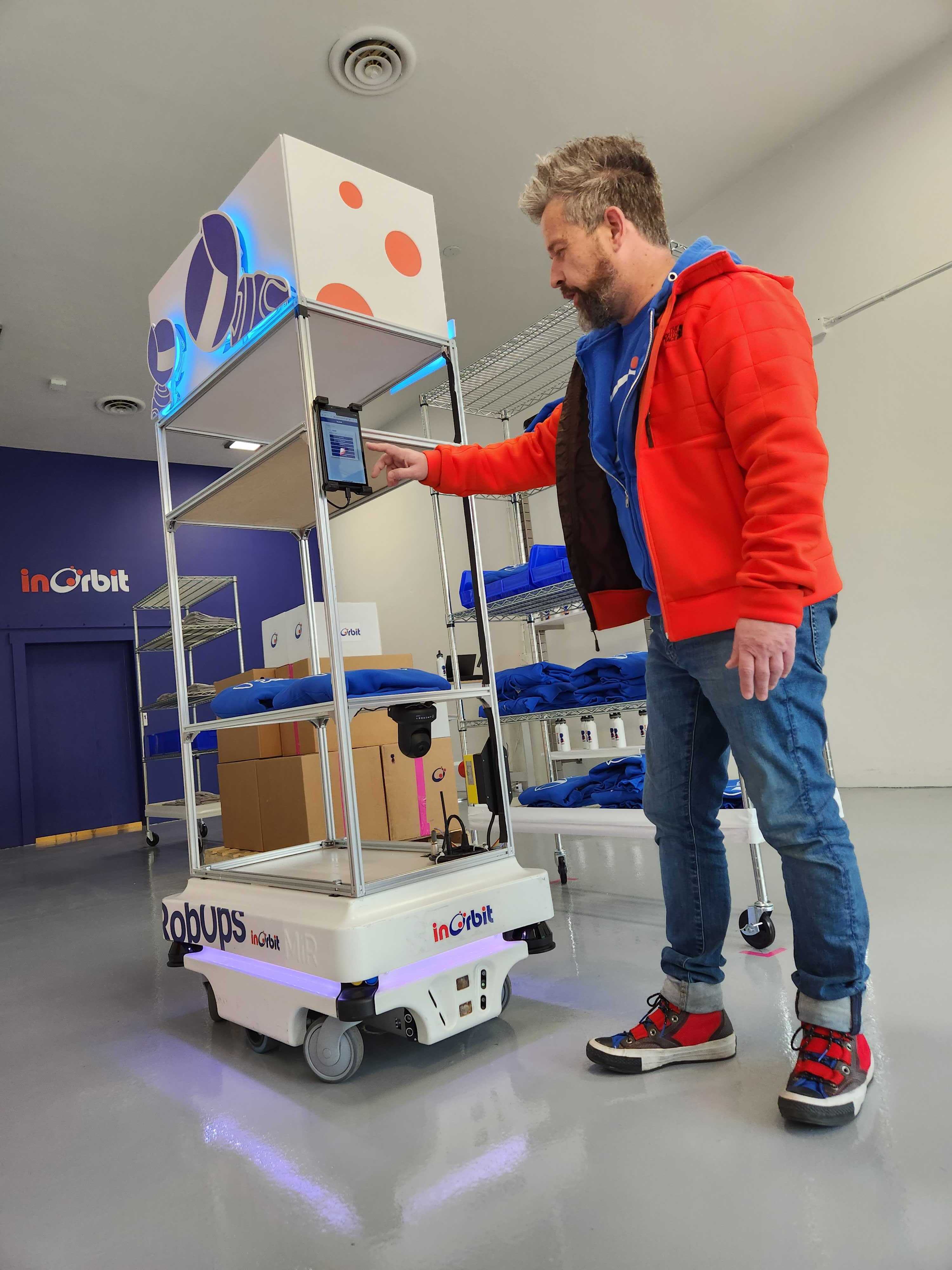
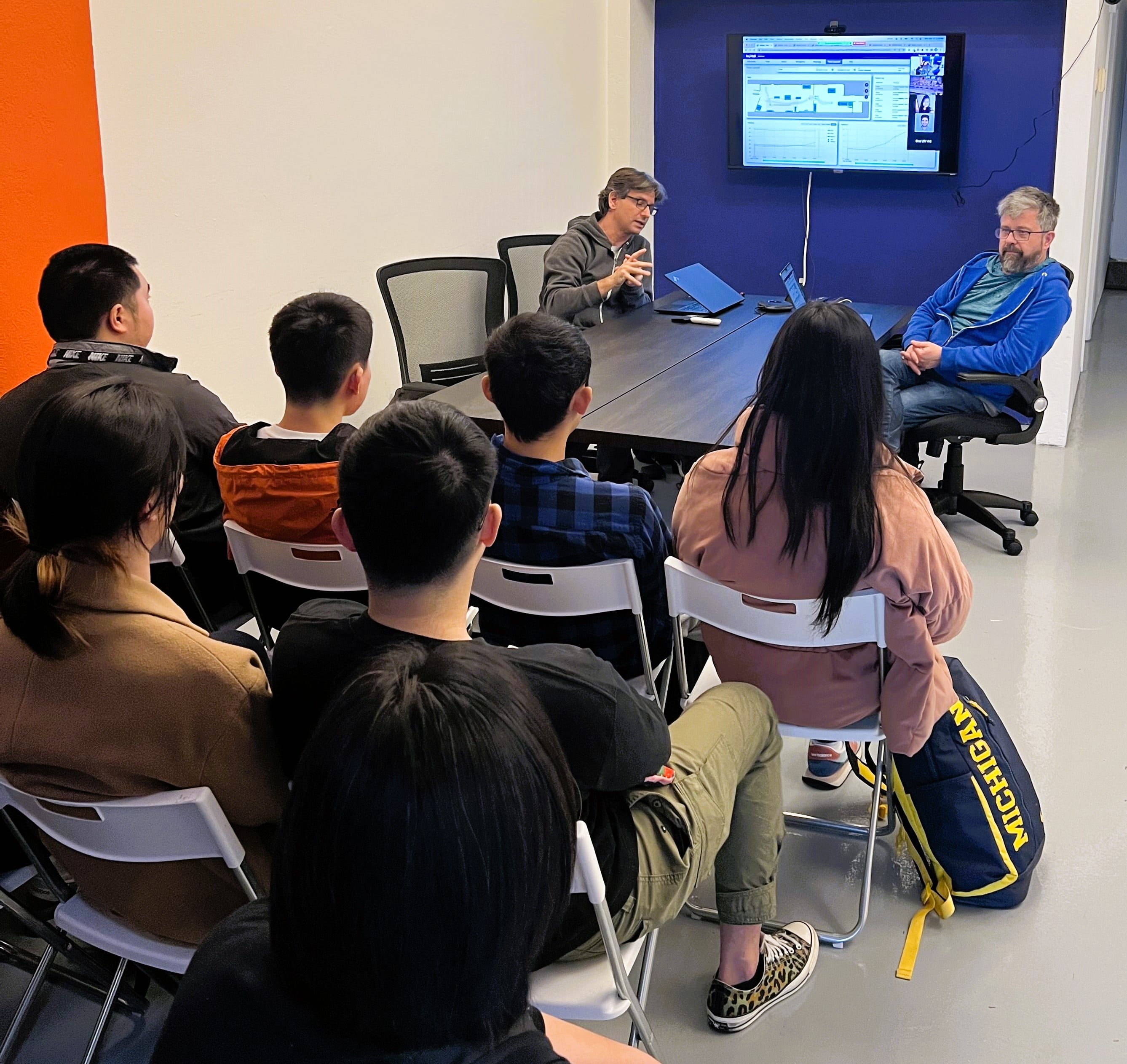
The Mountain View venue hosts in-person and remote demonstrations, meetups and educational activities. Partners bring hardware; software engineers can work with it. Visitors get to see machines from different vendors appear on a shared map and coordinate activities. It is part showcase, part working environment, part invitation to ask an inconvenient question while the equipment is actually present.
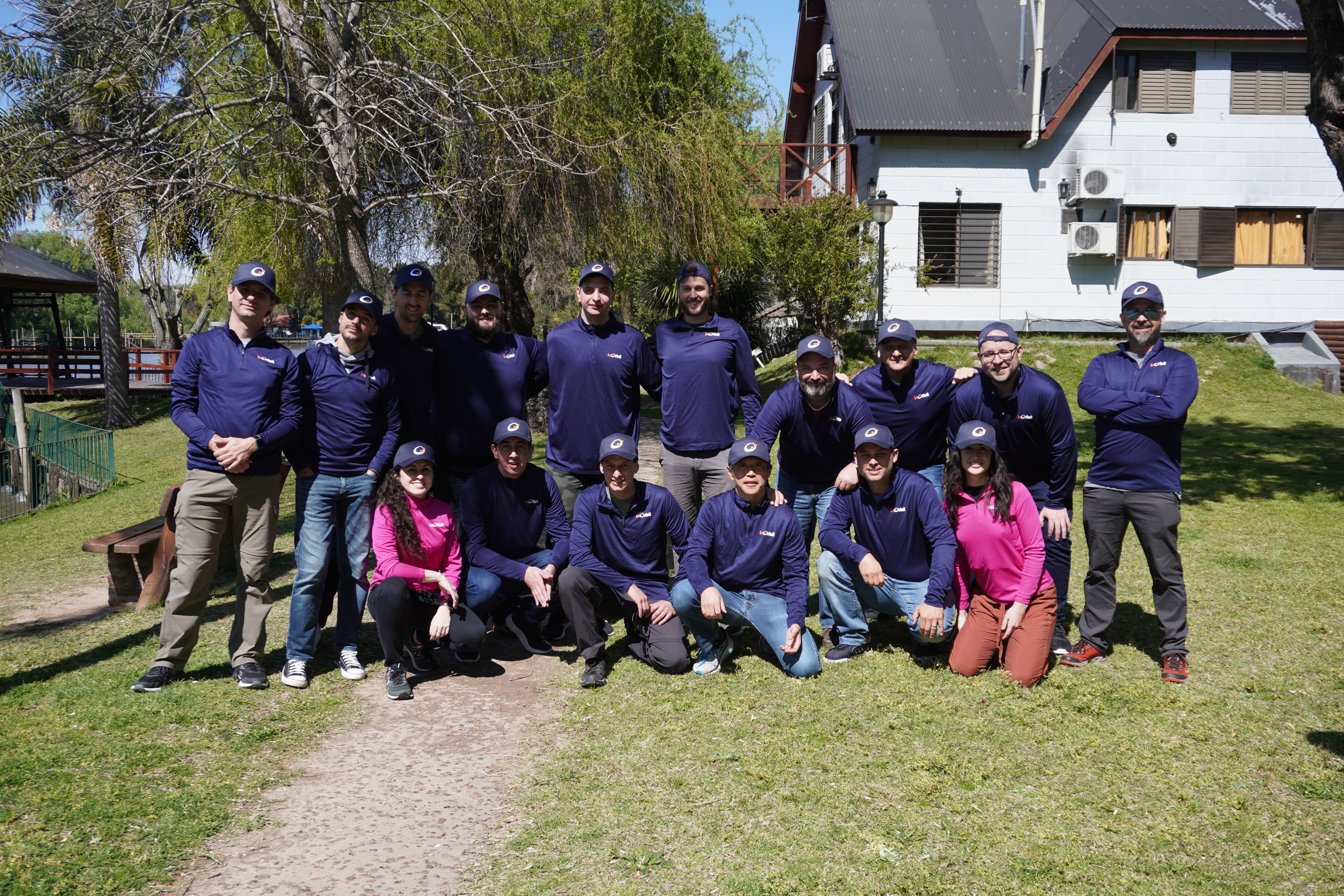
The company’s human geography is less tidy than its headquarters suggests. For its fifth anniversary in 2022, the distributed team gathered in Buenos Aires, with some colleagues meeting in person for the first time. That is a concrete glimpse of the culture: people building tools for shared physical spaces had themselves been collaborating across a distance.
07Buy a workflow, then count the waiting
InOrbit occupies the software layer between enterprise operations and heterogeneous machines. It has company there. Formant markets multi-vendor orchestration and robot operations. SVT Robotics focuses on connecting industrial systems through its SOFTBOT platform and also appears in InOrbit’s Connect directory. A buyer may encounter the same company as an alternative on one project and a partner on another.
InOrbit’s case rests on its particular combination of enterprise workflow translation, spatial coordination, developer operations tools and an integration ecosystem. For a buyer, the reasonable comparison begins with the existing facility. A single vendor’s fleet manager may be sufficient for a simple deployment. Shared-space coordination becomes more valuable as vendors, workflows and infrastructure interactions multiply.
The practical next step is a bounded pilot. Pick one workflow crossing systems. Measure completed jobs, waiting time, interventions and the effort needed to change the workflow. Test an interruption as well as a normal run. Confirm who owns recovery and which interfaces each vendor supplies. Those are evaluation criteria, not promised InOrbit results.
Orchestration needs usable operational data and machines capable of executing their assigned tasks. It cannot make a physically unsuitable robot suitable, or conjure an interface that a manufacturer does not expose. The purchase worth making is the one that improves the whole job. The aisle, after all, remains exactly the same width.