The variety pack is a small triumph of retail theatre. Twelve or twenty-four bottles stand in disciplined ranks, offering choice without demanding a decision until later. Lime now, peach tomorrow. On the shelf, the arrangement looks obvious. On a factory floor, it can resemble a practical joke with a purchase order attached.
Barak Bar-Cohen learned the difference at Bai Brands. He joined the beverage company as an early investor and chief operating officer, taking responsibility for production, quality, logistics, freight and co-packing. Mixed-flavor cases became a considerable part of Bai's volume and an engine of growth in club stores, grocery and online channels. They were also stubbornly difficult to assemble.
At one point, Bar-Cohen recalls, a 24-hour stretch could put 525 people across 20 lines, much of the work devoted to the plain act of placing bottles into boxes. Forty to 50 percent of Bai's volume was sold in variety packs. The consumer saw abundance. The operator saw touches, trucks, schedules and the risk that one missing flavor could stall the choreography.
Bai sold to Dr Pepper Snapple in 2017 for $1.7 billion. Bar-Cohen took a breath, but the operating problem followed him. Friends and brands kept calling to ask the same question: how had Bai managed variety packs at scale? Repetition has a way of turning an annoyance into a market signal. Here was demand for the product and confusion about the machinery behind it.
The vineyard answer
The useful analogy arrived from wine. Mobile bottlers travel to vineyards because hauling the whole harvest toward a distant line is often the foolish version of the journey. Bar-Cohen wondered why packaging could not behave the same way. Bring the automated line to the inventory. Assemble on site. Spare the product an unnecessary tour of industrial real estate.
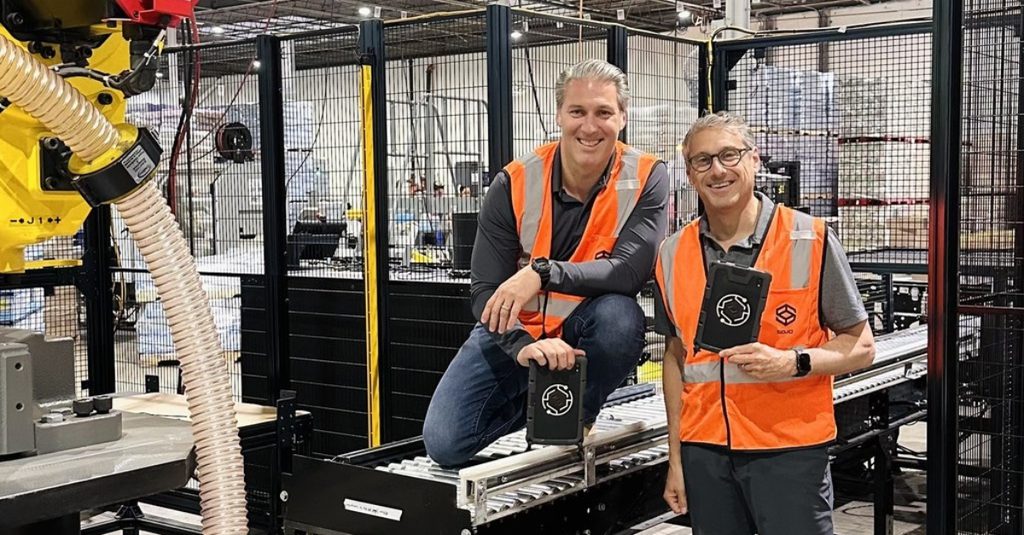
That inversion became Sojo Flight, a system of transportable, automated packing lines designed to be leveled, powered and running quickly at a manufacturer's or logistics provider's site. Sojo also built regional hubs for companies that still need fixed capacity, storage and onward distribution. By early 2026, Bar-Cohen described four hubs in Langhorne, Indianapolis, Redlands and Temple, with roughly 900,000 square feet in total and 33 lines deployed around the country.
Mobility introduces its own peculiar mathematics. A permanent line stays put. A mobile one can be useful wherever demand appears, which means every machine, crew, shift and customer deadline becomes a movable piece. Bar-Cohen calls the planning nine-dimensional chess. The phrase is comic until one remembers that the chessboard includes forklifts.
“You are welcome to make mistakes, but never the same mistake twice. Make a new one.”Barak Bar-Cohen on Sojo's operating culture
A rover in the family papers
The company name arrived by a more personal route. Bar-Cohen's father, Avram Bar-Cohen, was a mechanical engineer and an authority on thermal science. His work addressed the problem of keeping electronic systems functioning across severe changes in heat and cold, including NASA projects.
After his father died in October 2020, Bar-Cohen went through his papers and books. Among them was a connection to the 1997 Mars Pathfinder mission and Sojourner, the first rover to operate on another planet. Sojourner itself had been named for abolitionist Sojourner Truth. Bar-Cohen shortened it to Sojo and attached the name to a company whose machines would travel too, albeit between warehouses rather than across Martian rock.
It is an elegant inheritance because it resists sentimentality. The tribute lives inside the engineering premise, with motion embedded directly in the business model.
An operator before a roboticist
Bar-Cohen came to machinery by a circuitous route. He studied economics at Brandeis and earned an MBA from Dartmouth's Tuck School. His early career ran through economic consulting, investment banking and RCN, the cable, telephone and internet provider. He later became president and chief operating officer of Narrowstep, a London-based internet television platform, and held executive roles at KIT digital, later known as Piksel.
Telecom and streaming may appear far from cans on a conveyor, yet each business punishes casual thinking about scale. Networks must stay available. Video must arrive intact. Drinks must be where the customer expects them, in the right configuration, without turning freight into an expensive hobby. Bar-Cohen's specialty became the unphotogenic middle: the systems between an attractive idea and its reliable delivery.
Several maps at once
His geography has been as mixed as his industries. Bar-Cohen grew up in southern Israel and later served in the Israel Defense Forces as a returning citizen. He holds American and Israeli citizenship. Work took him through London, where Narrowstep was based, and Prague, one of the stops in his digital-media career. Princeton became the durable center. He and his wife, Alexandra, raised three children there, interrupted by stretches abroad.
That history helps explain the ease with which his career crosses categories and borders. He can speak like a financier about contribution margin, like a warehouse operator about forklift time and like a software executive about data architecture. His public language is rarely shy. Professional posts arrive with exclamation points, team nicknames and “LFG,” the compressed rallying cry of founders who consider a single exclamation point an underinvestment.
There is play in the culture too. After an internal bowling tournament in 2023, Bar-Cohen praised the winning team's skill and tenacity, then used the celebration to recruit an accountant who could bowl. The joke did useful work. It presented a factory company as a group of recognizable people rather than an anonymous arrangement of steel cages and conveyors.
Alongside operating companies, he founded Desert Angel in 2017 to invest in and advise early food and beverage businesses. He has supported technology projects connected to Ben-Gurion University and invested in Israel's Hapoel Beer Sheva basketball team. The portfolio is varied, though the interests rhyme: teams, systems and ideas expected to perform under pressure.
Economic consulting, investment banking and operating roles at RCN.
Executive leadership in internet television at Narrowstep and KIT digital.
COO at Bai Brands, where variety packs became both growth engine and operating lesson.
Sojo Industries begins with Bar-Cohen and logistics executive Steve Rubin.
$40 million in financing, a larger Pennsylvania footprint and a widening physical AI program.
At Sojo, that middle now joins machinery to software. Sojo Shield records critical tracking events through QR scans, geolocation and a blockchain ledger, allowing cases and pallets to be traced through production and distribution. The company's phrase for the broader ambition is “atoms to bits”: physical events become usable data, and that data returns to improve the physical operation.
Bar-Cohen has described collecting information from machine controllers, error codes, downtime, enterprise systems and everyday engineering work. His goal is for customers to see what was produced, where it is and what happened along the way without assembling the answer from a small archaeological dig of spreadsheets.
Sell the saved mile
There is a climate argument inside this model. If a line travels once and prevents repeated loads of product from moving to and from a co-packer, fewer truck miles follow. Early in Sojo's life, Bar-Cohen says, he led with that point. He later discovered that his enthusiasm for emissions reduction was sometimes greater than the buyer's.
So he changed the order of the pitch. Start with cost savings, lower complexity and flexibility. Explain that brands can try more formats and respond faster. Then note that the same decision avoids freight and its emissions. The climate case survived; it simply learned to enter through the finance door.
“Making that climate-responsible decision sure feels good, especially when it saves money and drives growth.”Barak Bar-Cohen
That pragmatism extends to culture. Bar-Cohen calls strong employees “solutionaries,” people who remain useful when the line stops at 2:05 in the morning and the usual expert cannot be reached. His rule permits mistakes while refusing repeats. It is a humane standard with an operator's edge: curiosity is welcome, amnesia is expensive.
He has also had to change his own job. As Sojo moved from its first fifty employees toward a larger organization, Bar-Cohen said professional managers were needed to bring structure, accountability and margin discipline. His role shifted toward guarding what he calls the “Sojo Mojo,” an exuberant phrase for the habits that let a young industrial company move before bureaucracy hardens around it.
The next stage is less about making a robot move than making an entire network learn. Bar-Cohen imagines manufacturing decisions happening closer to the customer, with mobile equipment responding to demand and operating data sharpening the next decision. Sojo's 2025 financing from S2G Investments gave the company $40 million more to pursue that plan, expand its footprint and enter categories beyond beverages.
The variety pack remains a fitting emblem for the work. It is cheerful at the front and complicated at the back, a consumer promise supported by a maze of industrial choices. Bar-Cohen has spent much of his career in that maze. His latest answer has wheels.