There is a small cruelty in a cardboard box. Its sides look cooperative until a flap bends the wrong way, a corner catches, or a paper insert asks for just enough force and no more. A human solves these problems without writing a line of code. A factory robot has traditionally demanded a patient engineer and an obliging, repeatable box. Generalist, the San Mateo company building AI for robot control, would like to change the arrangement: show the machine what to do, then let it work out the rest.
In August 2026, its GEN-1.5 model learned short tasks from a single 3-to-12-second demonstration inserted into a 30-second context window. A person could show it a marker going into a cup, a pouch being unzipped, or bolts being poured. The model would then issue robot actions at 100 hertz. In Generalist’s ten-task evaluation, it succeeded 59% of the time on average. Five minutes of task data and a brief fine-tuning step lifted average success to 83%. A marvelous start, if you are a researcher; a challenging shift schedule, if you own the factory.
- Generalist builds foundation models that control robots, with dexterous manipulation as the first target.
- Its training engine draws on large amounts of human physical activity, captured through wearable devices, then adapts to robot hardware.
- GEN-1 showed high reliability on selected simple tasks; GEN-1.5 explores how quickly a new one can be learned.
- Early access is offered through business partnerships, with pricing and broad deployment results undisclosed.
A company built around the hand
Generalist was founded in 2024 by Pete Florence, Andy Zeng, and Andrew Barry. Florence and Zeng came from Google DeepMind; Barry came from Boston Dynamics. The wider team cites work at OpenAI as well as those two robotics laboratories. Its offices span the Bay Area and Boston. The company’s stated mission is to build general intelligence for the physical world and make it useful to everyone. The first practical chapter is less grand and more gripping: grasping, folding, inserting, packing, and applying the right pressure when surfaces resist.
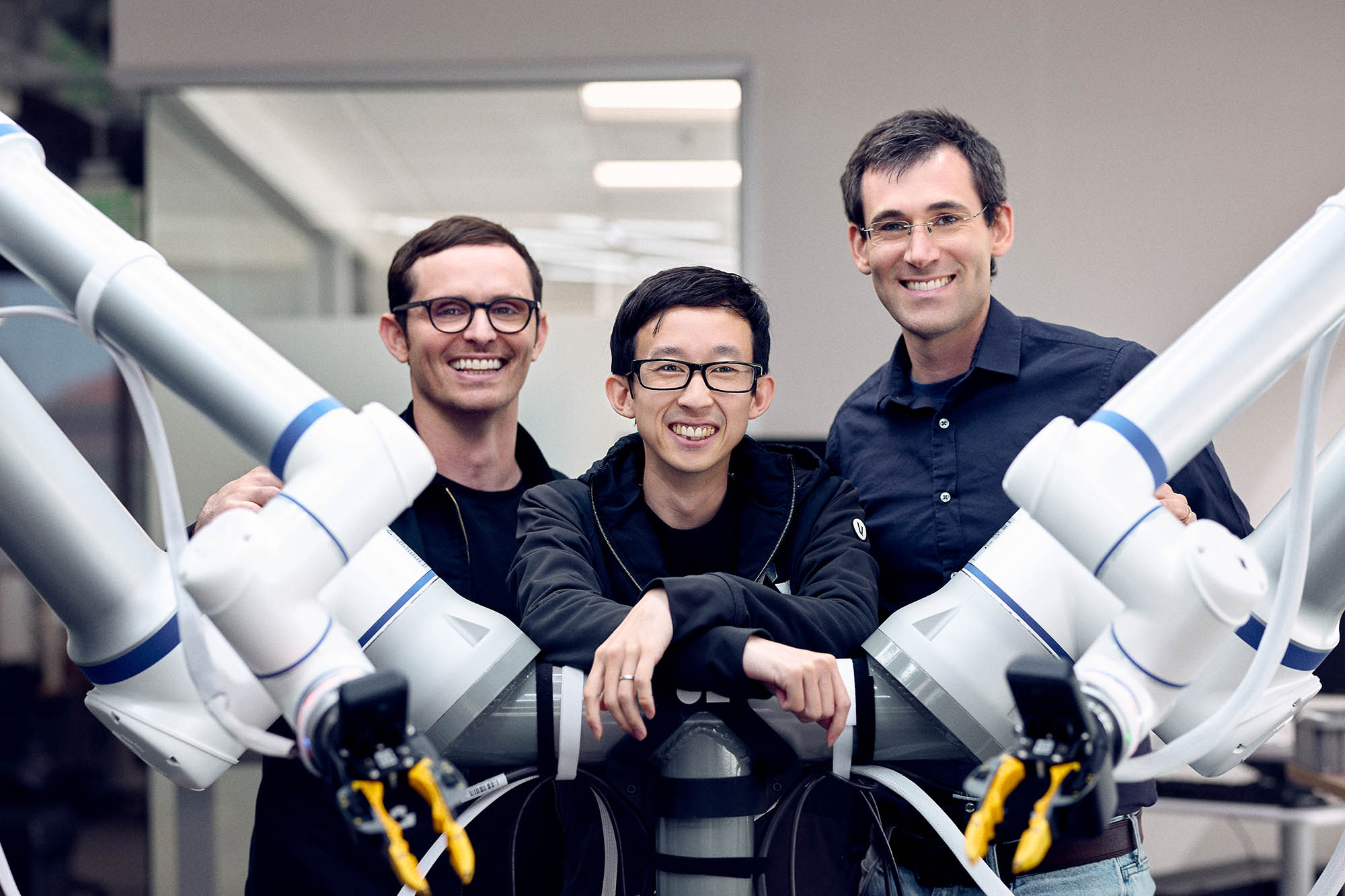
The customer is an organization with physical work that repeats, but never repeats perfectly. Generalist’s contact form asks for videos of the tasks a prospect wants automated. That is a revealing request. A job title such as “packing” is too vague; a video catches the slippery wrapper, the stubborn flap, and the moment when one object blocks another. The company has spoken of factories, warehouses, laboratories, and other workplaces, while a trade report in August described a handful of customers helping tailor the model to specific uses. Their names and commercial terms have not been made public.
The training data is the product’s quiet machinery
Robot intelligence runs into an awkward shortage: robot demonstrations are expensive to collect. A specialist can guide a machine through a task, but that process does not easily become hundreds of thousands of hours of varied experience. Generalist’s answer is to gather human manipulation data with low-cost wearable devices. Its GEN-0 announcement in November 2025 described more than 270,000 hours of real interaction data across homes, warehouses, and workplaces. By the April 2026 GEN-1 report, the company said the corpus exceeded half a million hours.
The bet is subtle. Human hands do not move like every robot gripper. Yet both confront the same physical questions: which edge can be lifted, how a hinge yields, where friction helps, when a tug becomes a tear. Generalist pretrains its base models on that human experience, then adapts them to a particular robot and job. The company says GEN-1’s base pretraining used no robot data. That is a specific claim about its training recipe, not a claim that the final deployed system never needs robot-specific practice.
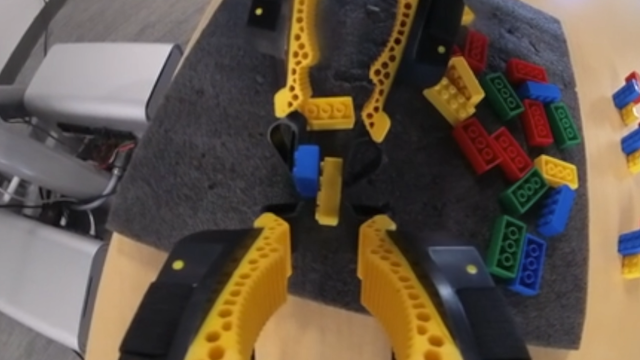
That chain is what a reader can copy, even without half a million hours of data: record the actual task, include the messy exceptions, define success in terms of reliability and speed, and measure how much new data the system needs when the tool or environment changes. The lesson is about the quality of the learning loop, not the glamour of the robot’s body.
Ninety-nine and fifty-nine are different stories
GEN-1, introduced in April, reportedly crossed 99% success on several selected simple tasks, using roughly one hour of robot data per task. Generalist also reported execution up to about three times faster than prior systems in its comparisons. The company called its standard “mastery”: reliable work, enough speed to matter, and the ability to recover when the unexpected happens. These are company-run tests on particular tasks, but they address the arithmetic that decides whether automation earns its keep.
GEN-1.5 asks a different question. Rather than refining a task for an hour and measuring the best result, can the robot watch one example and begin immediately? The answer is now sometimes yes. The price is a lower average success rate. Put the two figures side by side without pretending they describe the same experiment, and the company’s agenda appears: compress the journey from first exposure to dependable work.
GEN-1.5 mean success across ten short tasks; the second result used about 50 demonstrations and ten gradient steps. Company-reported measurements.
There is no disclosed price list for GEN-1 or GEN-1.5, nor a public cost per automated task. There is, however, a visible bill for the attempt. In June, Generalist announced $400 million in new funding, taking its declared total above $500 million. Radical Ventures led the round; 8VC, Union Square Ventures, Hanabi Capital, Norwest, and existing backers participated. Reporters later described a near-$200 million extension led by 8VC and a $3 billion valuation, which the company did not confirm. This is an expensive way to make simple tasks look simple.
The box went to a trade show
One of Generalist’s more persuasive anecdotes came at NVIDIA GTC in March. Universal Robots invited it to demonstrate GEN-0 on a new mobile manipulation platform using UR7e arms, a MiR base, and a Vention frame. The platform reached Generalist’s office with only a handful of days left for setup. The team practiced packing a box, shipped the system, and said it ran during all exhibit hours without collecting data inside the hall. It was a limited public demo, but it was also a test of a valuable claim: moving a learned skill to unfamiliar hardware and a new room should not require rebuilding the whole application.
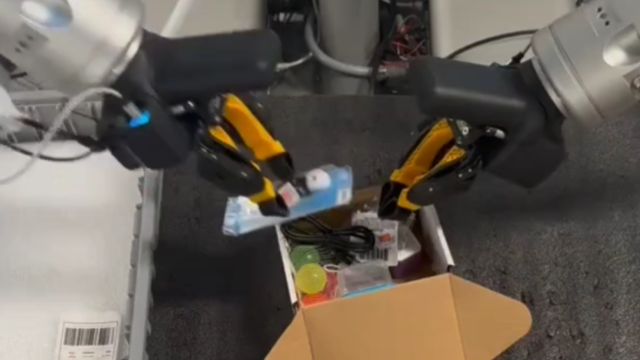
What failed first in the broader research story was not a dramatic public crash. It was the older assumption that a useful general robot could be assembled by attaching actions to an existing language or vision model, or by painstakingly gathering robot-only demonstrations for each job. Generalist’s own account says it redesigned the model from the ground up for physical interaction; about 99% of GEN-1’s parameters were trained from scratch. Its shift toward wearable human data came from a conviction that the scale and variety of physical examples mattered more than a clever shortcut.
In July, the company showed GEN-1 working with a range of end effectors, from five-fingered hands to specialized tools. It said its data contained roughly 9,000 gripper variations. The commercial point is plain: industry already owns many useful arms and tools. A model that transfers among them may reach customers sooner than a model waiting for one universal machine to be invented. Competitors such as Physical Intelligence and Skild AI are chasing general robot models too; conventional programmed automation still wins where a job is stable, narrow, and reliably specified.
“If interacting with a robot reduces to simply showing it what to do”Generalist, on GEN-1.5
The useful question is what happens on Tuesday
A one-shot demo works best when the task is short, the objects stay within the model’s learned physical vocabulary, and occasional failure is tolerable. A production line asks for an uglier test: long sequences, rare interruptions, safety boundaries, maintenance, and the same quality after thousands of cycles. GEN-1.5’s own report calls its tasks simple and short-horizon. That candor makes the result more useful. It gives buyers a reason to start with a tightly bounded process and a clear threshold for success, then widen the job only as the numbers justify it.
Generalist’s proposition is therefore both ambitious and modest. It wants a common intelligence for many robot bodies. Today it offers early access to models that have learned some short jobs quickly and others reliably after additional data. The distance between those two virtues is the company’s real workspace. A robot that watches you close a box is a curiosity. A robot that can close the next million, even as the cardboard changes, is a business.