Brian Shimmerlik wanted something to eat in a taxi. This was a modest ambition, even by the standards of a night out with business-school friends. There was a passenger, there was a journey, and there was no snack. To Shimmerlik, the missing item suggested a company. New York had managed to put televisions inside its cabs. Surely it could find room for a little shopping.
The company that grew from that thought is Vengo. Its co-founder and CEO now works in a business whose inventory includes advertising opportunities on screens across the United States. The snack was an effective opening line. The more interesting part of his career is what happened when he stopped insisting that the opening line had to be the whole story.
The impulse to sell went back further. As a child, he cut flowers from his mother’s garden and sold them down the street. His mother was unimpressed by this approach to sourcing inventory. He also sold candy in middle school, an early glimpse of the product category that would later occupy his working days.
His route includes an unsuccessful grocery-delivery venture, six years in finance, a business-school restart, a competition win and a television negotiation. It also includes a fairly expensive education in the properties of physical objects. Software can travel through a network. A vending machine requires somebody to move it.
Before the taxi, a grocery run
At the University of Michigan, Shimmerlik had already noticed a gap between people and the things they wanted. In a later account of his sophomore year, he described acquiring access to a car and discovering Hiller’s grocery store beyond campus. Students without cars could not make the same convenient trip. He and a Ross classmate started Big House Delivery to connect them with better groceries.
The idea did not get off the ground. Grocery stores turned them down. That is an unglamorous beginning for a founder biography, which makes it useful. Shimmerlik’s first lesson in distribution arrived as a series of refusals. Finding a customer’s inconvenience was only the beginning; other businesses still had to agree to help solve it.
He graduated from Michigan Ross in 2005 with a BBA in finance and accounting. Finance followed, including work at J.P. Morgan and Emigrant Bank. The work involved interest-rate risk and investment valuation. It gave him a conventional professional route. He eventually decided that route did not offer the working life he wanted.
The banker takes an internship
In 2011, before beginning his MBA at NYU Stern, Shimmerlik interned at Conductor, the search technology company. After years inside banking hierarchies, he was working for minimum wage in a startup. Within two weeks, his responsibilities had moved from producing reports for an account manager to working closely with the CEO.
What interested him was the atmosphere: people cared about what they were building and wanted to be there. The internship made entrepreneurship tangible. It supplied a daily picture of a different career, rather than another job title to pursue. Business school became a place to try that life, with people nearby who could help turn an observation into a prototype.
TaxiTreats was the initial proposition. In 2012, while he was still a Stern student, it became one of two winners of the NYC Next Idea competition. The contest attracted more than 270 applicants from 62 countries. A taxi ride had become a business plan worth taking seriously, with prize money, workspace and connections to help it along.
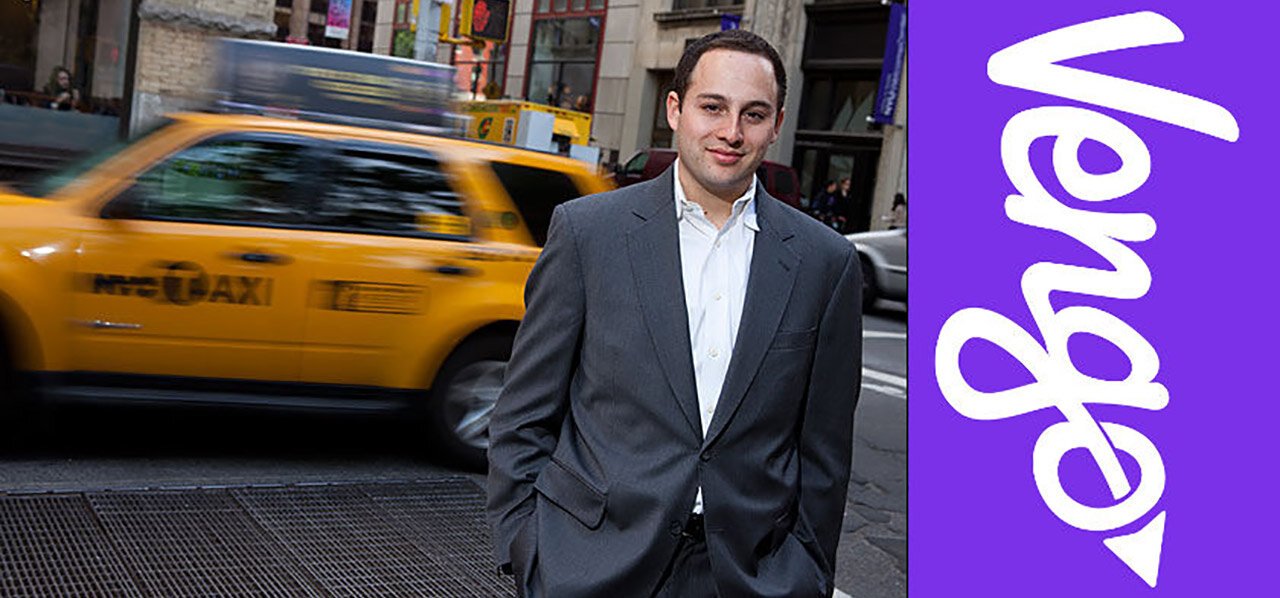
A good idea meets a moving vehicle
The first prototype was assembled from 3D-printed internals, a shell built by a friend and an adapted iPad. It was enough to demonstrate the direction of travel and help secure a $1 million seed round. A prototype has a wonderfully limited job: it must make the next conversation possible. This one did.
Putting machinery inside taxis introduced questions about safety, crash testing and regulation. Those were substantial obstacles for a young company looking for early adoption. Vengo moved toward stationary locations, including bars, gyms, hotels and colleges. The original insight survived the change of address: put useful products near people at the moment they want them.
The engineering mattered. Co-founder Steve Bofill brought an aerospace background to the machine, and his father, Brian Bofill, also worked on the product. Shimmerlik supplied the finance and commercial perspective. The team was making a small physical object do several jobs: dispense products, handle digital interactions and give brands a presence in spaces where conventional retail would struggle to fit.
Capacity was the wrong contest
Vengo deliberately made its machine smaller. Traditional vending rewarded capacity: more room meant more products. Shimmerlik saw an opening in the locations a bulky machine could not enter. A compact unit attached to a wall could become part of a college, gym or hotel without asking the building to surrender a generous patch of floor.
That design choice also changed the commercial conversation. The machine could offer product samples and screen-based campaigns as well as purchases. Brands could meet a customer close to the moment of trying something. In his own writing about marketing, Shimmerlik returned to convenience, the customer’s time and the need for a fair exchange between what a person gives and receives.
His advice on loyalty was practical: “Put your customer first and carry through for them, repeatedly.” The last word matters. A clever installation can earn attention once. A useful experience has to keep earning its place. For a founder selling both products and advertising opportunities, the person standing in front of the machine remained part of the calculation.
“I like leading as part of the team and not from above.”
Brian Shimmerlik · 2014
The cameras arrive. The work stays.
In March 2016, Shimmerlik and Bofill appeared on Shark Tank. They asked for $2 million in exchange for 12.5 percent of Vengo. The negotiation produced an on-air agreement with Kevin O’Leary and Lori Greiner: a $2 million loan at 7 percent over three years, alongside a 3 percent equity stake. The appearance gave the compact machine a television audience, with its founders beside it answering questions about how the business worked.
By then Shimmerlik had practised presenting Vengo to investors well beyond the studio. Joanne Wilson led the seed round; introductions connected him with Brad Feld, David Tisch and Gary Vaynerchuk. Vengo’s backers also included Nas and Tony Hsieh. The names attracted attention, but the underlying work was accumulating trust through one conversation after another.
The compact machine was easier to explain on television than the company’s several revenue streams. Advertising, hardware and products pulled the discussion in different directions. Shimmerlik’s preparation advice was fittingly unromantic: “You want to prepare under suboptimal conditions.” A pitch should survive interruptions. The business behind it must survive rather more.
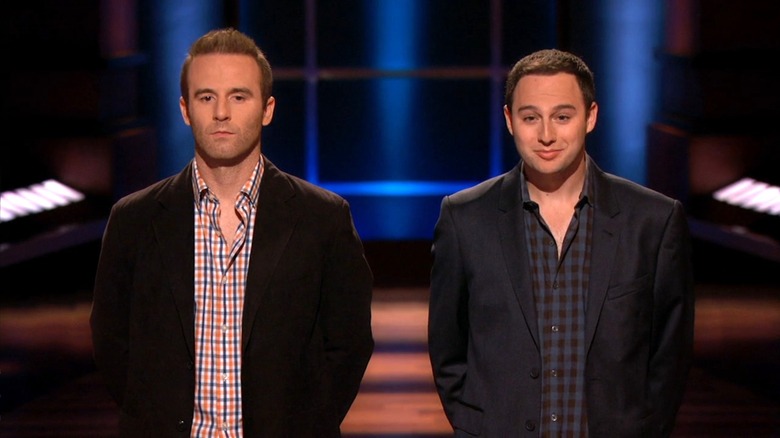
The object that would not fit a funding bucket
In January 2019, Vengo announced a $7 million Series B led by Arcade Beauty, with other participants including SPINS, Joanne Wilson, Grace Beauty Capital and Kensington Capital Ventures. Beauty sampling offered a new application for a business already working across more than 1,000 locations. A machine originally imagined for a cab could now help somebody encounter a product at a very different kind of stop.
Fundraising exposed a difficulty Shimmerlik described plainly: Vengo sat across retail, media and consumer products. Investors with a fixed thesis could find the combination awkward. Raising capital also consumed time that the company needed for operations. Physical deployment added another constraint. Every new location represented work beyond a line of code.
His advice to founders seeking capital was to grow the business through customers. That is a particularly revealing recommendation from somebody whose career includes prominent investors and a televised negotiation. The durable question was whether the company could deliver something valuable enough for another business to pay for. The funding story only became useful when it supported that exchange.
He followed the screen out of the box
By 2020, Vengo had committed to a software monetization model. The team had learned to generate advertising revenue from its own digital screens. Other screen owners had a similar need. Vengo could offer its software and sales capabilities, then retain a share of the advertising revenue it generated. New business no longer depended on manufacturing every display it served.
The April 2023 description of Shimmerlik’s Bucket List Careers interview put the network at 27,000 screens. In February 2024, he described 53,000. Those figures describe the broader screen business, rather than a count of snack machines. The distinction is essential to understanding his career: the company had learned a skill through building hardware, then found a wider market for that skill.
The newer business also gave his stated ambition a different route. He wanted to expand the advertising operation and had spoken about a possible acquisition within digital out-of-home. Those were aspirations, with the uncertainty any founder’s plans contain. The concrete change was already visible: the company could connect existing screens instead of sending out a newly built machine each time.
The screen network expands
The customer is still somewhere nearby
In August 2025, a partnership with VIOOH opened programmatic access to a Vengo network reported at 65,000+ screens across all 50 states. Grocery stores, convenience stores, bars, offices, gyms and malls were among the settings. Vengo’s current website continues to advertise that screen count. The unit of opportunity had travelled a considerable distance from a packet of candy.
Yet Shimmerlik’s account of the work remains rooted in selling. In a 2024 conversation, he described accompanying a new salesperson on visits from a diner to a deli. The company had appeared on television and built a national network. There were still doors to walk through and people whose needs had to be understood. A screen does not conduct that conversation by itself.
The continuity in his career is the effort to close a gap: groceries beyond campus, snacks beyond reach, advertisers separated from screens. He has changed the proposed solution when the first one became difficult to sustain. The taxi supplied a place to begin. Shimmerlik’s more consequential decision was allowing the business to go somewhere else.
Follow the conversation
More from Shimmerlik and the work around Vengo.
- Vengo · company website
- Brian Shimmerlik · LinkedIn
- Twitter / X · linked public profile
- Facebook · linked public profile
- Watch · Exit Rich interview on YouTube
- Watch · his NYC Next Idea story
- Listen · Bucket List Careers
- Read · the early working day
- Read · his Michigan Ross first-person story
- Read · the 2019 funding interview
- Read · VIOOH partnership announcement
- Read · his customer-loyalty essay