Brett Wingeier had a practical problem to explain: people have hair. In a 2017 demonstration of Halo’s wearable headset, he pointed out why the design needed to accommodate it. “Not everybody looks like me,” he joked. His own head offered considerably less resistance. Here was a founder with a doctorate, explaining that a product’s success could depend on getting past somebody’s hairstyle.
It is a useful place to begin his story. Wingeier co-founded Halo Neuroscience and later Magnus Medical, where he was the founding CEO. He has worked across research, software, hardware and management. Yet the hair problem catches something the titles miss. An idea eventually meets a person, and that person arrives with inconveniently individual specifications.
The small matter of somebody else’s head
The headset looked familiar enough: a band, two ear cups, the visual vocabulary of ordinary headphones. Familiarity helped conceal the amount of engineering underneath. In a 2017 teardown, Wingeier and product design engineer Ian Shain walked manufacturing engineer Sylvia Wu through the construction. Two bands served different purposes. The ear pads let sound through so an athlete could still hear a coach.
That last detail deserves a moment. A person training with a coach needs to hear the coach. On paper, it is almost insultingly obvious. In a product, somebody must remember it, make room for it and get it to work alongside everything else. Otherwise, the clever device has managed to interrupt the activity it was supposed to join.
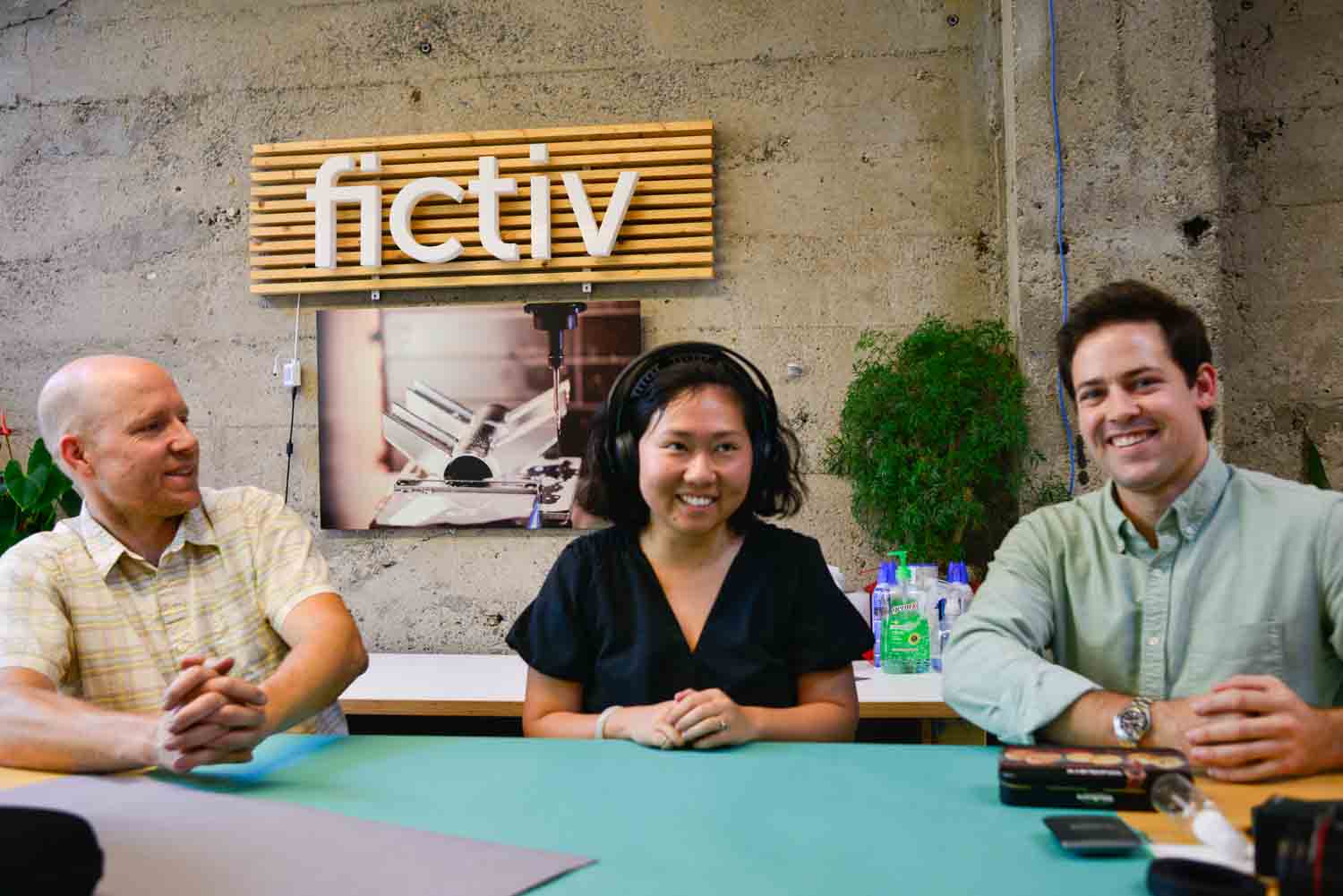
Invention tends to look more orderly once it has acquired a product photograph. The workbench restores the loose ends. Parts must flex, fit and go together. Customers will bring their own expectations. Wingeier’s career has repeatedly put him at that junction, where a promising technical result has to become an object other people can live with.
New Orleans, Melbourne, then the long apprenticeship
His education took him through Tulane University in New Orleans and postgraduate research at the Brain Sciences Institute in Melbourne. He completed his undergraduate engineering degree in 1996 and his doctorate in 2004. Later came Biodesign studies at Stanford. The geography is varied; the recurring interest is the relationship between scientific understanding and something an engineer can build.
He joined NeuroPace in 2001 and remained there until 2013. That is a substantial stretch of a working life before the co-founder chapters begin. His responsibilities included writing core firmware, managing projects and analyzing data. These are different kinds of attention: the instructions inside a device, the coordination around a project, the interpretation of what comes back.
A founder biography can make an earlier job look like a waiting room. Wingeier’s later account gives this one more weight. When he returned to NeuroPace, he credited what he had learned there with informing the work he built afterward. The first company remained part of the story even while he was working elsewhere.
“As a kid, I wanted to build stuff.”
Brett Wingeier, IT Visionaries, 2019
The childhood ambition was uncomplicated. Its adult execution required a much wider set of skills. A person can understand the science and still have to learn manufacturing. He can write software and still have to coordinate a team. The career begins to make sense when those jobs sit beside one another, rather than disappearing beneath the most recent title.
The customers had other plans
Wingeier and Daniel Chao co-founded Halo in 2013. They initially had endurance athletes in mind, a choice with a personal connection: both founders were weekend cyclists. It is an appealing starting point for a business. You know the activity, recognize the frustrations and can imagine the person who might buy what you make. The imagined customer is practically wearing your shoes.
Then actual customers entered. After shipping began in late 2016, Halo found demand from military units and professional sports organizations. The company had to learn new purchasing processes and adjust its offering for institutions. Later came musicians. Its market was acquiring people who had not been central to the original plan.
The lesson is pleasantly awkward for anyone who enjoys a finished strategy document. A customer’s use of a product can be more informative than the founder’s explanation of it. Once the thing leaves the building, other people get a vote. They may also bring procurement forms, which are a less picturesque but equally persuasive form of feedback.
In 2019, Halo’s collaboration with Berklee College of Music gave that last group a concrete setting. A summer fellowship involved Berklee students and guest participants from Stanford and Yale. They wrote, practiced and played music. Wingeier spoke about improving musical training and exploring further questions around attention and creativity. The project placed the company in the company of people whose daily work involved instruments and songs.
There is something refreshing about the change of scene. A cyclist and a musician have different equipment, different rituals and different audiences. Both spend time practicing. For a product builder, noticing a shared activity is only a beginning. Understanding the surrounding lives takes another round of listening.
When the thing you build is a company
Magnus followed in 2020, co-founded by Wingeier and Brandon Bentzley. Wingeier became its founding CEO and also served as CTO. In October 2021, the company announced $25 million in Series A financing, co-led by JAZZ Venture Partners and Red Tree Venture Capital. The names and the amount mark a new company-building chapter, with investors and a team joining the undertaking.
The sum is easy to put in large type. The less compact part is the responsibility attached to it. A company must turn a collection of specialized efforts into coordinated work. Technical judgment still matters, but the decisions now involve who does what, what can happen next and which dependencies will hold everybody up.
Series A financing announced by Magnus.
Co-led by JAZZ Venture Partners and Red Tree Venture Capital.
Wingeier’s path through both CEO and CTO roles makes the distinction tangible. One title concentrates attention on the technology; the other widens the field to the organization around it. Neither removes the need to explain a decision clearly to people doing different work. The product and the company have to progress together.
Public communication became another part of the job. In March 2023, he joined a World Science Festival discussion moderated by Brian Greene, alongside Takao Hensch and John Krakauer. The setting brought an entrepreneur into conversation with researchers before a wider audience. Explaining an idea outside the team is another test of how well its builder understands it.
A beginner in another language
There is a quieter version of Wingeier in his school-board biography. He and his family lived in San Francisco, and his daughters attended the German International School of Silicon Valley. Although of Swiss German descent, he was not a native German speaker. He was learning the language alongside his wife and children.
Ancestry, it turns out, does not do the homework. The detail gives a welcome sense of proportion to the doctorate and the executive titles. A person can be experienced in one setting and still need instruction in another. Family learning puts everybody back in contact with the ordinary business of getting things wrong and trying again.
He served on the school’s board from 2017 to 2023, including chairing its risk management committee. Beyond work, he identifies as a cyclist and climber, and has discussed his piano practice in an interview. These interests do not need to be converted into a theory of leadership. They are things he does, and they make the person easier to see.
Back to the people who taught him
On September 4, 2024, NeuroPace announced Wingeier’s appointment as vice president of research and development. He was returning to the organization he had joined 23 years earlier. In his own announcement, he named Benjamin Pless, Bruce Kirkpatrick, Eric Frech, Cairn Seale and Martha Morrell, thanking colleagues whose lessons had stayed with him.
His stated priorities included greater ease of use and efficiency. After the founder chapters, he was again leading engineering work within an established team. The return gives his career a shape that a ladder cannot quite capture: experience gained elsewhere comes back into contact with the people and work that helped form it.
There is another small record of collaboration in a patent issued in February 2026. Wingeier appears alongside Ian Shain, Colin Davis, Victoria Hammett, Mardis Bagley and Phnam Bagley. Shain is also the engineer beside him in the teardown photograph. An invention gets a number; the list of names preserves something of the group effort.
By 2024, his appointment biography reported more than 70 issued patents. It is a considerable paper trail. The photograph offers a different kind of record: three people at a table, discussing how a thing goes together. Both belong in this story. Wingeier’s career has room for the formal claim and the practical conversation, right down to whether the person wearing the result can hear somebody speak.