A television picture has an obvious destination: the screen. What happens after someone watches is a messier business. An inquiry needs an owner. A prospect needs a relevant reply. A marketing team needs to know whether the expensive bit worked. BrandStar Tech occupies that less photogenic territory between attracting attention and doing something useful with it.
- Technology services built inside a television and marketing group.
- Custom applications, reporting, automation and virtual-event production.
- A useful lesson from its own outreach: clean the data before increasing the volume.
Its unusual asset is proximity. The division emerged inside BrandStar, whose business includes branded educational television, production and marketing. Software here has a nearby, practical customer: people making shows and helping brands reach audiences. That setting helps explain a service menu that stretches from CRM integration to streamed events. The common problem is getting one activity to feed the next.
01 / The studio has a software problem
BrandStar’s account of the division’s beginnings dates its founding to January 2020 and identifies Brett Malden as its leader, then vice president of innovation and technology. The timing matters. Its description places the new division amid remote working, distance learning, contactless shopping and virtual gatherings. Each demanded a different way to connect people, content and transactions.
The parent’s own history supplies another clue. By 2015, television clients were asking for help beyond their appearances on shows. BrandStar expanded into studios and marketing services. Think of the resulting demand: a brand has secured attention, but now needs somewhere to send it, something to measure it with, and a system that remembers the customer tomorrow.
That is where the technology work fits. It includes web, mobile and software applications; custom analytics dashboards; process automation; and outsourced product engineering. A client can commission software for its own business, while another brand can use the team as a white-label developer or joint-venture partner. The delivery model follows the assignment rather than a single downloadable product.

02 / A broadcast with a return path
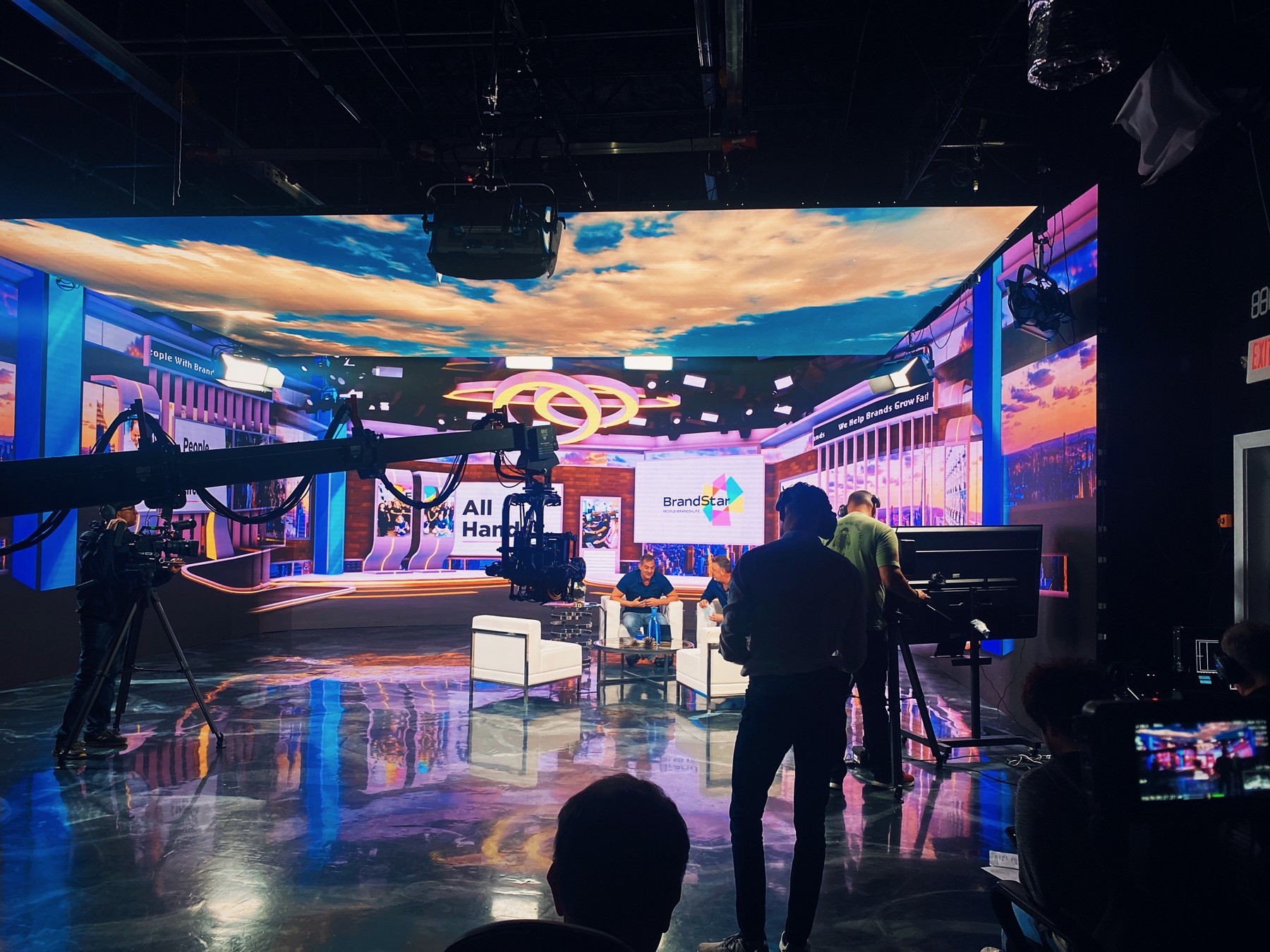
BrandStar Virtual Xperiences, or BVX, makes the combination tangible. Its published proposition joins studio production with the technology needed to deliver live, virtual and hybrid events. The intended customers include brands and content creators running events, trade shows and training. Production, distribution and audience interaction belong in the same brief.
participants worldwide, according to BrandStar’s technology FAQ. Capacity is a product claim, not an attendance result.
There is expensive physical infrastructure behind that pitch. In September 2021, BrandStar Studios announced a multimillion-dollar upgrade to its then 43,000-square-foot facility, including LED screens and Unreal Engine tools for virtual environments. The investment belonged to the studio operation. It illustrates the resources surrounding Tech without becoming a claim about Tech’s revenue or funding.
The distinction from a basic meeting subscription is fairly concrete: a client can buy help conceiving, producing and distributing the experience. A presenter still needs a good reason for people to watch. But a team launching a product or teaching a distributed audience can have production specialists and workflow specialists working on the same event.
03 / First, fix the list
A Mailshake case study, updated in January 2026, offers a smaller, more revealing example. Eric Goldstein, identified as BrandStar Tech’s director of customer engagement and marketing automation, inherited manual prospecting. The initial request was for more contacts. He saw a workflow problem: no CRM, little automation and inadequate reporting.
He introduced HubSpot, used Mailshake for sequenced delivery and worked with MethodData to connect the process. People researched and enriched records; software moved them into campaigns; other people handled replies and meetings. The vendor reports a shift from roughly 1,000 emails monthly to capacity for 10,000 daily. Those figures describe sending, not sales.
Then open rates roughly halved. Goldstein paused the system for about a week and a half for list cleaning and delivery optimization. He said he should have done that work first and increased sending gradually. The lesson is portable: define the human handoffs, maintain the records and test delivery before scaling. More volume can expose the weakness faster.
- 01ResearchMake the record useful.
- 02ConnectMove it between tools.
- 03RespondGive a person ownership.
04 / Buying the connections
The broader business model combines commissioned services with product engineering and intellectual property. BrandStar describes licensing arrangements for internally developed capabilities and shared revenue opportunities. This makes Tech closer to a development and marketing partner than a conventional software subscription company. Its expertise sits in translating operational needs into working applications and processes.
For a buyer, the alternatives depend on the job. A software agency can build an application. A marketing automation specialist can connect a CRM. An event platform can deliver a stream. BrandStar Tech’s case rests on coordinating those jobs with a production organization. The likely value is fewer awkward handoffs when a campaign crosses several disciplines.
“make complex technology simple”BrandStar Tech’s stated promise, in the 2022 website announcement
Its own parent became a demonstration customer. In April 2022, Tech and its iLab contributed to a BrandStar website that organized 37 brands and companies, integrated a virtual tour and served employees, prospective clients, recruits and investors. This was information architecture with an organizational problem attached: help different visitors find their way through the same sprawling business.
Clutch lists a $5,000 minimum project and a $200-$300 hourly range. Treat those as directory indications for scoping, rather than a quote for an event or application. A buyer should specify the result, integrations, ownership and ongoing support before comparing proposals. The smallest useful project has a clear finish line.
The fit narrows when someone only needs an uncomplicated webinar or a standard website. Coordinating production and custom development adds work that a simple requirement may not justify. The more useful starting point is a broken handoff: viewers who never become inquiries, records that never reach a salesperson, or reports nobody can act on. Start there. Make that connection work.