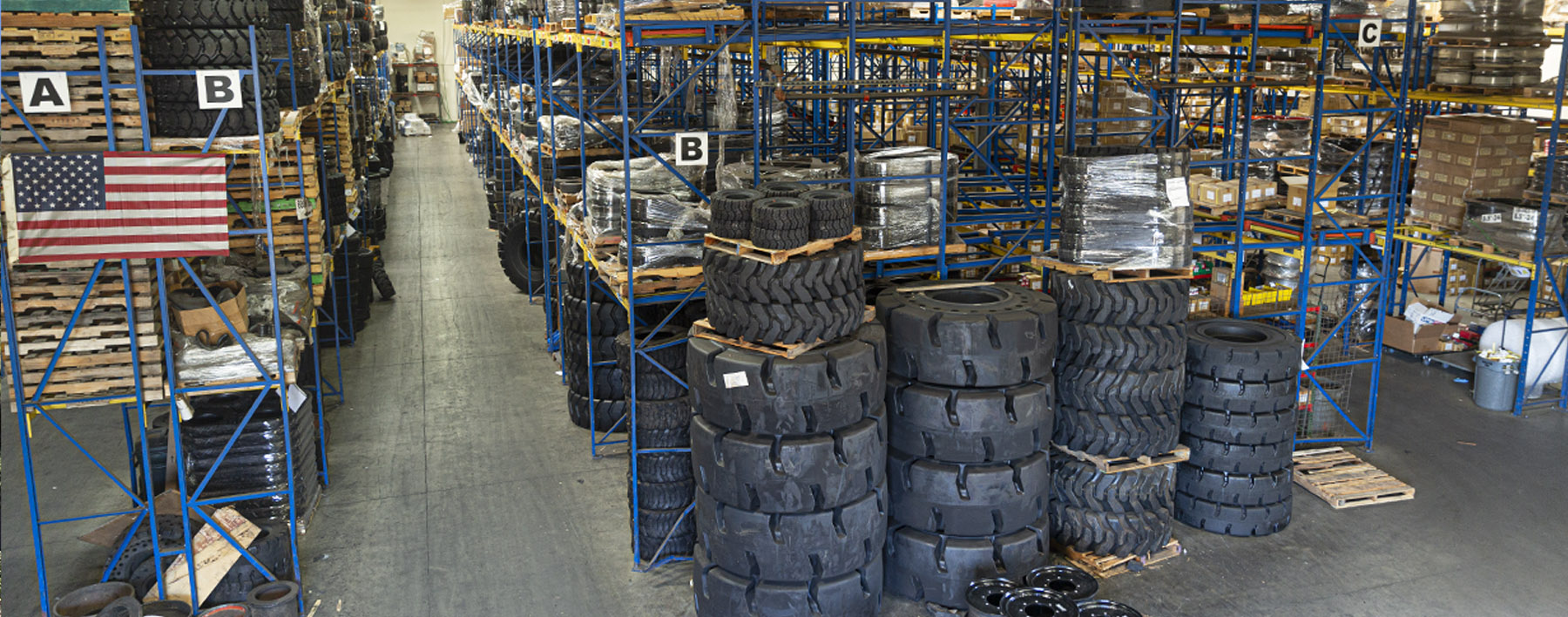
There is a photograph on Brandcreative’s website that explains the company rather well. It shows blue storage racks, wooden pallets and tires stacked in broad, black columns. An American flag hangs above an aisle. Nobody is presenting a mood board. This is the part of selling things where somebody has to find the thing.
Brandcreative advertises a 30,000-square-foot warehouse. For a marketing agency, that is a wonderfully concrete answer to an otherwise slippery question: what, exactly, does “full service” include? Here, it can include receiving freight, tracking inventory and sending a product out the door. The photograph is a useful place to begin because it changes how you read everything else the company offers.
01 / The plus sign has a loading dock
The company calls its approach Marketing+. It says the experience comes partly from operating brands of its own. That matters: a business that sells physical goods has to think about stock, product information and delivery alongside the campaign that creates interest.
Its menu brings those jobs together. Brandcreative offers design, websites, social content and film production, then continues into overseas sourcing and distribution. On its distribution page, it describes barcode inventory control, pick-and-pack fulfillment and sales support across Amazon, Walmart and eBay. These are operational services with quite different demands from choosing a typeface.
“We already have the containers rolling so we can plug you in.”
Brandcreative, describing its sourcing offer
The potential advantage is coordination. A product launch gives several teams versions of the same problem: what is this thing, who wants it, how do we describe it, and can we deliver it? Keeping those questions close together could reduce contradictory answers. That is the logic of the model, rather than a promise that every client needs the entire menu.
Warehouse space advertised by Brandcreative. A measure of infrastructure, not campaign performance.
02 / The car parts are a clue
Brandcreative’s automotive work gives this broad proposition some specificity. In 2016, the agency announced a multi-year strategic marketing relationship with Garrett by Honeywell. The remit included product communications, website development, social content and sponsorship relations. It was a collection of connected assignments around a technical product brand. Founder Steven Tran’s project history records the relationship.
There is another version of the same sensibility in the industrial design portfolio: a red Garrett wastegate, rendered with its bolts, fittings and lettering visible. It is an object for which appearance and explanation belong together. A convincing image needs to preserve the details that make the part recognizable.

The design process starts with user research and continues through visualization, human interaction, prototyping and production support. The company explicitly includes manufacturing feasibility, timing and cost-of-goods constraints. That is a useful distinction for a buyer: a good-looking concept still has to become a producible object.
The public work is particularly legible for automotive and industrial businesses. The agency also markets to other sectors, including healthcare, real estate and aerospace. Those advertised sectors describe its intended reach; the tire films and component renderings show a reader something more tangible about its experience.
03 / A tire gets a storyline
For Maxxis, Brandcreative made a launch film for the Victra Sport VR2. The idea centered on pursuing a personal best. That gives an ordinary production problem - how to make another tire announcement interesting - a specific organizing thought.
In its account of the production, the agency describes storyboarding with Maxxis, scouting locations, working with professional drivers and using drones and high-speed cameras. Close views of the tread and sidewall were combined with driving sequences. Editing, color grading and sound then gave those pieces a common rhythm.
The useful detail is the relationship between the shot and its job. A tread close-up describes the object. A driving sequence supplies context. Neither needs to carry the whole argument alone. The agency’s broader film portfolio includes Maxxis Trepador footage, DuraSlic product content, and tradeshow films for Genius Tools Americas and Sentry Tire.
For a company commissioning similar work, the copyable practice is simple: give each scene something to explain before choosing how it should look. That is an editorial lesson from the published process, not evidence of a particular sales lift.
04 / The database behind the beautiful website
Brandcreative’s web offering includes Magento, WordPress and Shopify work. More revealing are the adjacent services: preparing product data and connecting websites to backend systems. The company names Salespad and Dynamics GP among the systems it works with, and describes linking customer behavior with email tools such as Klaviyo.
Imagine a product title corrected on a storefront while the old version survives somewhere else in the business. Or a customer buying an item because a page and a stock record disagree. These are illustrative problems, not reported Brandcreative incidents. They explain why data preparation deserves a place beside design in an ecommerce brief.
The business is built around services for other businesses, with its own brand operations alongside them. A buyer can approach it for a specific creative assignment or discuss a broader commercial operation. The interesting comparison is with hiring several separate specialists: a studio, a web integrator and a logistics provider. The decision turns on how much those jobs need to talk to one another.
05 / A team page with warehouse staff
The team page identifies Steven Tran as founder and managing partner and Edward Chou as a partner. It also lists creative direction, web development, visual media, sourcing and warehouse roles. The roster makes the warehouse photograph feel less like a stray image and more like a description of how the business is organized.

Its footprint stretches beyond Southern California. The company lists offices in Japan and Taiwan and a customer success team in Mexico. Its About page names NOVEL Racing Japan as an international distribution partner. For a business offering overseas sourcing, those are relevant relationships to examine alongside the creative portfolio.
There is a smaller, quite practical example in BuilderConnect. The page lists opportunities for 2026 SEMA builds, including parts and vehicle placement. It also advertises certain product exchanges tied to photo and video shoots. Vehicle requirements make the offer concrete: a brand needs an appropriate car or truck, while a builder wants parts or exposure. The match depends on the brief.
06 / Follow the order all the way home
For a prospective client, the sensible starting point is an actual product and an actual bottleneck. Bring the catalog, the sales channels and the intended launch date. Identify whether the problem is explaining the product, maintaining reliable data, getting stock into place or coordinating all three. A broad agency can only be usefully broad when the assignment is specific.
The cost discussion should follow those boundaries. Separate creative production, development, advertising spend and physical fulfillment when scoping the work. Compare the same deliverables and responsibilities across proposals. That is a buying discipline, not a description of Brandcreative’s fee schedule.
The integrated model is most relevant when those activities overlap. A business seeking a single graphic has less reason to value warehousing. A company with established fulfillment and tightly controlled internal systems may prefer a narrower engagement. Coordination also requires access to the people and information needed to make decisions; placing more services on a contract does not create that access by itself.
Before commissioning the next campaign, follow one order from the first image a customer sees to the package they receive. Mark each handoff. Brandcreative’s service menu makes that exercise worth doing. Somewhere between the storyboard and the stockroom, the meaning of a successful campaign becomes much more specific.