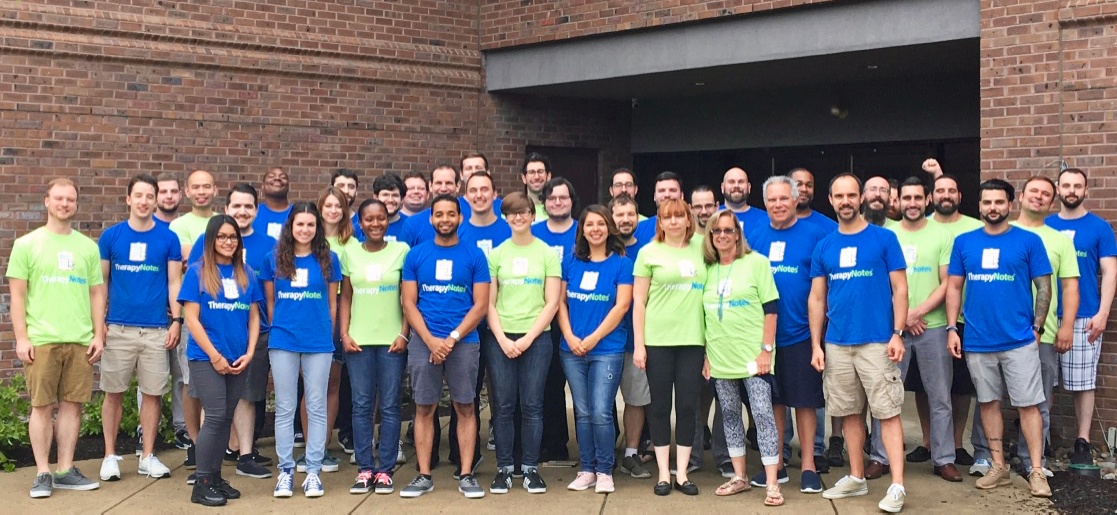
The target was fifty. At the beginning of 2017, Brad Pliner’s company had thirty people, and he wanted twenty more by December. There are grander ways to announce an ambition. This one had the virtue of being countable. By the time he looked back on the year, TherapyNotes had fifty team members. A sentence written in January had become a room full of colleagues.
For Pliner, co-founder and CEO of the Pennsylvania software company, that year offers a particularly revealing portrait. It contains the pleasant business of needing more desks and the miserable business of explaining why customers cannot get into your software. It includes a larger building, an interrupted service, and an unexpected delivery from competitors. The pizza belongs in the story. So does the arithmetic.
Thirty people, then fifty
His January reflections on 2016 described a company that had grown from twenty-five full-time employees to thirty. The plans for the following year were specific: more people, faster feature development, and continued investment in stability, security, and performance. Behind the hiring target sat another kind of preparation. The development team had been working on the application’s architecture so a larger group could work together more easily.
That is an unshowy detail with consequences. Adding developers creates its own coordination problem. More people need to understand the same system, make changes without colliding, and agree on what should happen next. Pliner put that preparatory work into his account of the year, alongside improvements customers could actually see. In his telling, building capacity included changing the way the builders could build.
The fifty-person result matters because the intention came first. Read together, the two year-end accounts give the growth a beginning and an outcome. They also locate ambition at a human scale. Twenty additional colleagues means recruiting, explaining, training, and finding enough work worth doing. A growth chart can omit all four.
Before the single product
Pliner arrived at this work through computer science and custom development. He earned his master’s degree at Drexel University, then ran Pliner Solutions, providing web applications and IT consulting. That earlier business exposed him to different industries. A client brings a particular problem; the developer has to learn enough of the client’s world to make something useful.
There was also Metrodate, the dating website he founded in 1998. Twenty years later, he described an international service available in thirteen languages. The early web chapter adds a welcome complication to his résumé: before the daily routines of business software, there were searchable profiles, local connections, and people hoping an introduction would lead somewhere.
One connection reached his own extended family. His cousin met his wife through Metrodate, Pliner said in 2018. Their children gave him a recurring reminder that a website could leave a mark outside a browser. It is a pleasingly literal example of software producing something its developer could never put on a feature list.
The two businesses involved different audiences, but both required people to return to something he had built. A custom project has a brief and a handover. An ongoing service keeps accumulating obligations. There is always another day on which it needs to work, and another person whose idea of success may differ from the programmer’s.
A business built by two people
TherapyNotes began in 2010 with Pliner and his wife, Debra. He brought the web development experience; she brought experience operating a practice. That pairing is central to the company’s origin. The product grew from a combination of technical capability and familiarity with the working day it was intended to support.
A partnership of this kind gives the software conversation somewhere concrete to begin. What happens first? Which task is repeatedly forgotten? Where does an administrator spend time? Those questions are less theatrical than imagining the future of an industry, but their answers determine whether a tool earns a place in someone’s routine.
Pliner’s later interviews returned to everyday administration: calendars, reminders, getting tasks completed, and reducing the effort of moving between them. His subject was often the sequence of work. A feature has to be understandable in the moment someone needs it. That gives the founder a problem larger than writing code: deciding how the separate parts should fit.
For a former consultant, staying with one product also changes the rhythm of learning. The audience does not disappear when a project ends. Its questions return, its needs develop, and the consequences of an earlier decision become visible. Product development provides repeated opportunities to discover whether the first answer was any good.
Room for the next hire
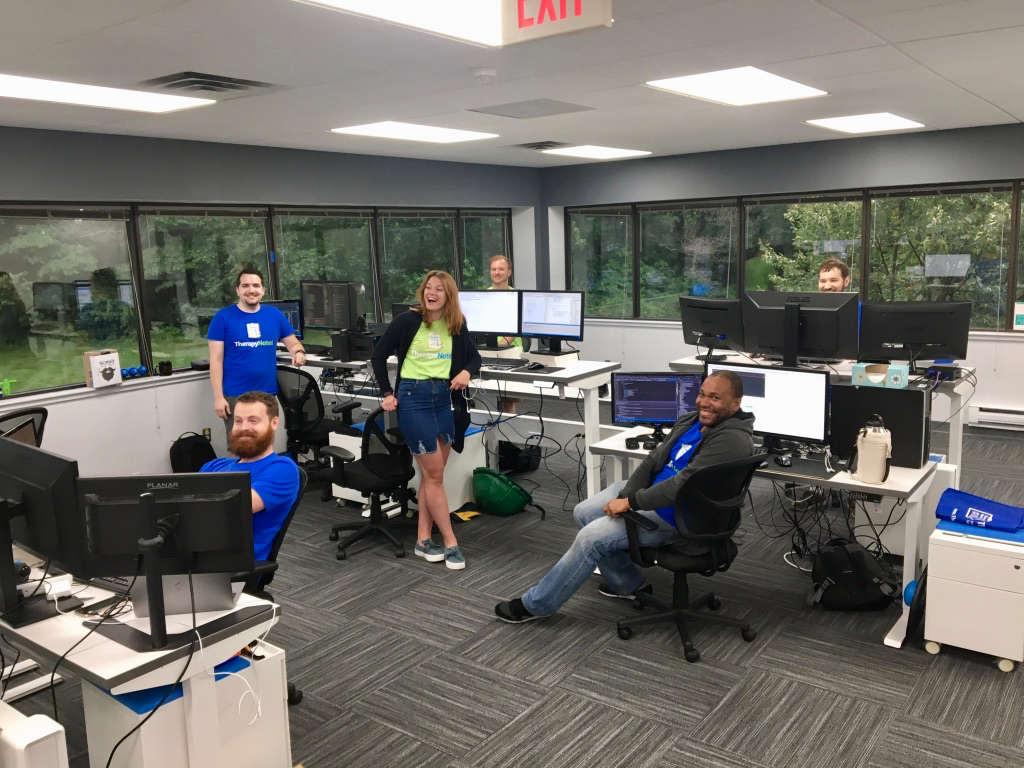
By July 2017, the team was moving again. The office announcement described electronic sit/stand desks and a virtual reality room, with more communal spaces planned. Even an account of square footage found room for a little play. Developers were photographed trying the desks, an appropriately practical response to new furniture.
The details make the expansion easier to picture. Growth is usually described from above, as a curve or a percentage. At desk level, someone needs a place to sit, somewhere to hold a meeting, and a colleague close enough to answer a question. An office move gathers those requirements into one conspicuous bill.
A larger building also commits a company to an imagined future. The space arrives before all the people who might fill it. For Pliner, the move sat alongside a publicly stated hiring plan. The empty room and the open position were two versions of the same expectation: there would be more work, and more people to do it.
When the servers stopped
The same summer brought an entirely different test. A ransomware incident interrupted TherapyNotes in June 2017. Pliner later described a shutdown, a rebuild, and a return of the main website after about sixty hours. He also acknowledged that estimates had been wrong and communication needed improvement.
In his account, the team rebuilt systems rather than simply restarting them. Customers sent food during the recovery. So did competitors. That last detail caught him off guard: professional rivalry had briefly made space for the knowledge that another group of people was having a very bad week.
“We even received pizza and supportive emails from our competitors”
Brad Pliner · July 2017
The episode complicates the comfortable office-expansion story. A company can be preparing for growth while discovering how much work remains in its existing operations. The founder who announces new rooms must also explain an unavailable service. Both messages go to people being asked to trust the same organization.
The work after the recovery
Another operational update followed in February 2018. After slow performance and outages, Pliner described investigations across the servers, database, network, and application. The response included monitoring changes, debugging tools, load testing, and infrastructure improvements. It was an account of work distributed across several technical layers.
There is a useful distinction between recovering a service and understanding what made it fail. The first restores access. The second asks a team to learn enough to improve the next response. Pliner’s update discussed both the immediate changes and the tools intended to make diagnosis easier later.
He also apologized personally. The language was direct, attached to a description of what the company had done. For readers judging a founder, these documents offer something concrete to examine: whether an explanation acknowledges uncertainty, whether responsibility is visible, and whether the proposed work relates to the problem customers experienced.
Software leadership has a long middle. It contains maintenance, investigations, hiring, and decisions that produce no attractive launch photograph. Pliner’s operational writing gives that middle a place in his story. The work continues after the service returns and after the announcement has slipped out of view.
The expanded team also changed the company’s availability to customers. In his review of 2017, Pliner announced weekday live phone support from nine in the morning until nine at night Eastern time. The schedule made the hiring story tangible in another way. A customer looking for help could encounter growth as a person answering the phone. For the company, those hours required enough colleagues to cover them. It is a useful measure to place beside the headcount: what did the additional people make possible for someone outside the building?
Permission to be funny
There is a lighter voice in his public exchanges, too. On LinkedIn, Pliner joked about the marketing team making memes, then explained why the company used them: customers connected with short videos and jokes that showed an understanding of their working lives. Traditional advertising, he added, was less fun.
That is a modest but recognizable piece of personality. The same executive who writes about databases can appreciate a marketing department with a sense of timing. Humor gives a company another way to sound human. It also requires some knowledge of the audience; a joke falls flat when nobody recognizes the situation.
Back at the fifty-person target, the numbers now contain more than headcount. There are developers changing a shared system, people answering questions, colleagues finding their places in a new building, and a team working through an interruption. Pliner’s career can be followed through those ordinary responsibilities. Somewhere among them is a delivery of pizza, sent by people who understood the assignment.