On July 1, 2024, something happened at Bentley Systems that had never happened before: the chief executive was no longer a Bentley. Nicholas Cumins took over from Greg Bentley, the eldest of the five brothers associated with the company’s creation. Forty years into the business, the family name stayed on the software. It came off the CEO’s office.
Greg moved to executive chair. The distinction matters. He had helped build a company whose customers plan roads, railways, water systems and other things expected to survive their designers. Now he was participating in a different kind of long-term engineering: arranging for the business to outlast its original leadership.
A family company makes succession unusually personal. A decision about the next executive can also sound like a judgment about the next generation. The Bentleys had addressed that awkwardness before the vacancy appeared. Their 2020 letter to prospective shareholders explicitly ruled out a dynasty. Children could work in the company; inheritance would not automatically supply its next chief executive.
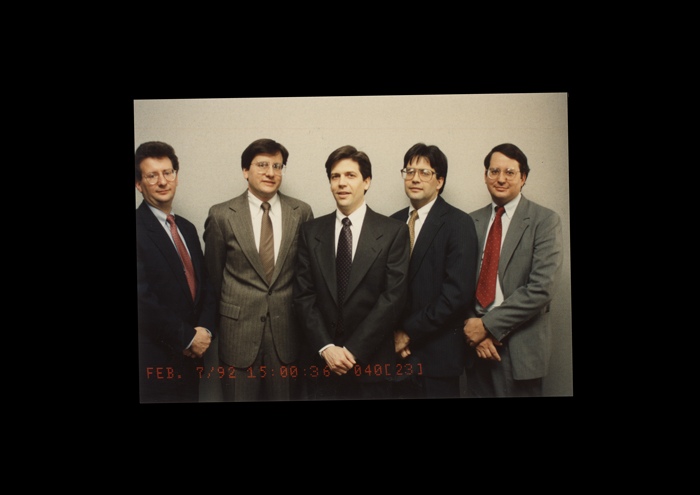
That gives Greg’s story an interesting shape. He arrived after his brothers had begun. He brought experience from a separate software venture. And when he left the chief executive’s job, he helped open the door to somebody who had no place in the family photograph.
Five brothers, one useful outsider
The Bentley boys grew up in Wilmington, Delaware, sharing paper routes and working at Wassam’s Variety. They attended John Dickinson, the neighborhood public high school. Their father worked as an engineer at DuPont. Before software became the family business, Christmas trees were another way to earn extra money. It is a rather pleasing origin for a technology enterprise: delivery rounds, shop work and seasonal inventory.
Greg’s education took him to Wharton, where he earned a bachelor’s degree in economics and an MBA in finance and decision sciences. His professional start was in financial trading software. He founded and led Devon Systems International, which SunGard acquired in 1987. From 1991 to 2005, he served on SunGard’s board, including its audit committee.
This made him useful to a family of technical builders. Barry, Keith and Ray had backgrounds in chemical, electrical and mechanical engineering respectively. Greg’s training dealt with decisions and money. The family later described his earlier software work as “financial engineering.” The phrase let him into the engineering club without requiring a new diploma.
Keith and Barry had launched Bentley Systems in September 1984. Greg joined in 1991. The company’s early opportunity grew from making engineering drawings accessible on less expensive computing equipment. MicroStation became its foundation. Greg worked on business development, a developer network, support and international expansion. A program needed customers, colleagues and a route into the world. Those were problems he could help solve.
The business hiding inside the drawing
Engineering software rarely gets the applause awarded to the finished structure. People photograph a bridge; fewer photograph the model used to check it. Greg’s career has unfolded in that gap between the visible result and the less visible work that makes it possible.
Bentley’s software serves civil, structural, geotechnical and plant engineers, alongside the firms delivering projects and the owners operating infrastructure. Its work spans design, construction and operations. That breadth helps explain why the business expanded beyond its early drawing platform. A road is a design problem, a construction problem and, for years afterward, an operating problem.
Greg became president and chairman in June 1996, then CEO in August 2000. By then, the family had already spent years building distribution and acquiring software. His tenure would stretch across changes in personal computing, online collaboration, cloud services and digital twins. These shifts arrive quickly in the software industry. The customer’s bridge tends to observe a less hurried calendar.
At an investor conference in 2025, Greg connected the company’s technical continuity to that mismatch in timescales: infrastructure projects run for years, and the resulting assets serve generations. For a supplier, continuity therefore has practical value. The engineer working with yesterday’s model still needs tomorrow’s tools to understand it.
It is a useful way to read his leadership. A new capability must fit into work already underway. Customers have drawings, calculations, records and obligations they cannot simply abandon. The business opportunity comes partly from helping that accumulated work remain useful as the technology changes around it.
Going public without packing a suitcase
Bentley Systems reached Nasdaq in September 2020, thirty-six years after its founding. On its first trading day, shares rose from the $22 offering price to $33.49. The business was already substantial: around 4,000 employees worldwide, with more than half of the previous year’s sales coming from Europe and Asia. Its public debut followed decades of operating work.
The founders’ letter gave the flotation a particular purpose. More than 1,200 current and former colleagues had earned over a third of the company’s ownership through stock programs. Before the IPO, nearly a million additional shares were distributed across approximately 4,000 colleagues. A market price could make those years of participation easier to value.
Greg, Barry, Keith and Ray said they were not selling shares in that offering. They also described an intention to preserve long-term decisions under family stewardship, rather than reshape the business around quarterly expectations. Public shareholders were being invited into an existing set of habits.
The revealing detail is that the same letter discussed succession. The brothers wanted successors capable of improving on their leadership, particularly beyond engineering. They acknowledged that brothers are difficult to impress. Anybody who has brought an ambitious plan to a family table will recognize the efficiency of that review process.
The IPO and the eventual handover belong together. One created a public market for ownership. The other widened the pool of people who could run the company. Both required the family to decide which traditions were worth carrying forward and which privileges could be relinquished.
Current and former colleagues had earned over a third of company ownership before the 2020 IPO.
THE OWNERSHIP STORY · 2020 FOUNDERS’ LETTERA chocolate milk interlude
One smaller scene makes Greg easier to picture. In January 2010, he was having lunch at the company with Xander Leatherwood, a ten-year-old fifth grader. Macaroni and cheese was on the menu. Children could build little cars using straws and candy wheels. Chocolate milk accompanied the conversation.
The pair had met through Big Brothers Big Sisters’ Beyond School Walls program, which brought pupils into workplaces to spend lunch with mentors. Greg had also been a Big Brother in the 1970s. By the time of that lunch, about fifty Bentley employees were volunteering as mentors, up from roughly thirty the year before.
“Xander is an expert in the history of video games,” Greg said. It is a warm detail because the executive granted the child an area of expertise. For that moment, the person with the MBA was introducing the person with the game knowledge.
Years later, Greg would argue that people comfortable creating and navigating virtual worlds could bring useful skills to infrastructure work. The lunch does not prove where that idea came from. It does show him noticing an interest that adults sometimes dismiss. A boy’s command of video-game history was worth saying aloud.
Gamers, generalists and a place to learn
In a 2019 interview, Greg suggested looking for future infrastructure talent among gamers and people who create animated environments. Their comfort with visualization could transfer to models of the physical world. He also favored generalists and encouraged greater familiarity with coding and data tools. The recruitment brief was wider than a conventional engineering job description.
His proposed route into digital work was gradual: connect and automate useful workflows, then build on the results. He wanted executives to treat research and development as an investment in how their firms delivered work. Apprenticeships were another part of the answer. New tools would need people able to use them, and people would need opportunities to learn.
Education also appears in his life away from investor presentations. Greg is a Drexel trustee and serves on the advisory board of its Pennoni Honors College. He and his wife, Caroline, supported the creation of Bentley Hall, a home for the college that combines residential life with space for study and programming.
The building makes an abstract educational preference tangible. Students can live near the conversations, activities and research that stretch their interests. Greg’s support for that setting sits comfortably beside his interest in generalists. A useful idea can arrive from the next discipline, or the person at the next lunch table.
The completed asset keeps working. Its engineering information can, too.
The next CEO gets his own room
The handover was announced in March 2024 at the opening of Bentley’s new UK headquarters in London. Cumins had joined as chief product officer in September 2020 and become chief operating officer in January 2022. The succession therefore involved years of working inside the company before taking its top job.
Greg described an incoming leadership group about twenty years younger, with public-company experience. As executive chair, he planned to support Cumins behind the scenes, retain responsibility for overall capital allocation, including potential platform acquisitions, and continue speaking with investors. He was changing his assignment while remaining involved in the business.
The balance is delicate. A former CEO can help a successor with history, relationships and judgment. He can also occupy too much room. Greg’s stated division of responsibilities gives the transition a practical outline: a new chief executive runs the company, while the experienced chair contributes in defined areas.
By June 2026, his public comments on Cumins emphasized balance, including stronger marketing, attention to smaller customers and recruitment of executive talent internationally. That is consistent with the ambition expressed before the IPO: successors should add abilities the founders had not developed as fully. The family’s confidence in engineering could coexist with an admission that other skills deserved more space.
“AI is software, by the way.”Greg Bentley · June 2026
The model should keep working
Greg remains interested in the life of infrastructure after construction. In his June 2026 investor remarks, he discussed using digital twins during operations and maintenance, where engineering information can continue to improve an asset’s performance. He also described AI as a way to bring previously difficult software ambitions within reach.
There is a recognizable continuity here. His work began with software for decisions in financial markets. It moved into the business surrounding engineering models. It now includes arguments for keeping those models useful after the project team has packed up. The recurring concern is what people can do with information once it has been created.
His own succession asks a related question. What should remain useful after the original team stops running every meeting? Technical knowledge, patient ownership, the habits of supporting customers and colleagues: these can travel beyond the founder’s job title. The next leader also needs enough freedom to improve them.
Greg’s career contains an exit from a financial-software venture, an entrance into his brothers’ company and a carefully arranged departure from its chief executive’s office. In between are public markets, engineering models, a university building and a lunch with a boy who knew his games. They make a fuller picture than the title alone. The office has a different occupant now. Greg still has work to do.
Keep the conversation going
- Bentley Systems executive biography ↗
- Bentley Systems company profile ↗
- Watch: Behind the Bell with Nasdaq ↗
- The 2024 handover announcement ↗
- The founders’ letter on ownership and succession ↗
- Read the interview on digital skills ↗
- The workplace mentoring story ↗
- Greg and Caroline Bentley Hall ↗
- June 2026 investor conversation ↗