BATTERY VENTURES
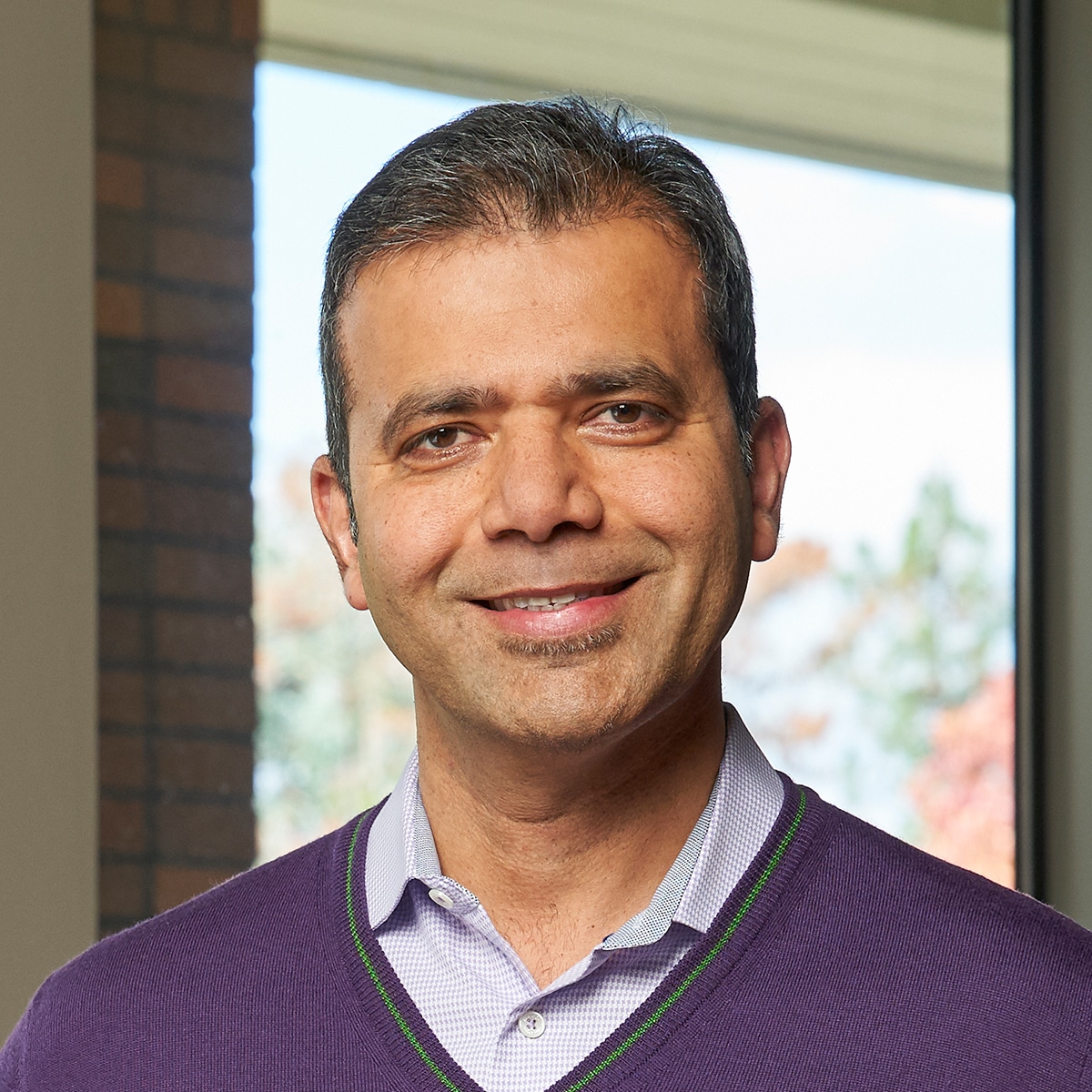
Dharmesh Thakker, General Partner at Battery Ventures
YesPress Profile  |  Venture Capital

Dharmesh
Thakker

General Partner  /  Battery Ventures  /  Menlo Park

An engineer who learned to love people more than chips. A founder who chose venture over his second startup. An immigrant who turned the long game into a philosophy - and a portfolio.

Cloud Infrastructure AI / Open Source Enterprise Software B2B DevOps
30+
Active Portfolio Cos
$3.25B
Latest Fund
3
Portfolio IPOs
10+
Years at Battery
"
"My journey as an immigrant to the U.S., and entrepreneur-turned-VC, taught me the value of adaptability, perseverance and commitment to the long game." - Dharmesh Thakker, General Partner, Battery Ventures

From Silicon Wafers to Silicon Valley's Boardrooms

Somewhere between his first job designing semiconductors and his seat at the table at Battery Ventures, Dharmesh Thakker made a discovery that changed his trajectory: he found people more interesting than chips. Not a small admission for an electrical engineer. A career-defining one.

Thakker came to the United States from India, built his engineering chops at UT Austin, earned his Wharton MBA, and then spent nearly a decade in the trenches of enterprise software - product management at Keynote Systems, Manhattan Associates, and two startups that got acquired before most people in Silicon Valley knew what "cloud-native" meant. The exits weren't career-defining. The pattern recognition was.

By the time Intel Capital came calling, Thakker had something rare in venture: he'd lived both sides. He knew what it felt like to fight for enterprise budget from the inside of a small company. He understood the politics of procurement at the Fortune 500 level. At Intel Capital, he put that to work running the firm's global cloud and big-data practice - and got an additional education as a strategic advisor to Intel's $14 billion datacenter division. When you're sitting inside one of the largest chip-to-cloud ecosystems in the world, watching how hyperscalers buy, build, and disrupt, you develop strong opinions about what wins.

In 2015, Battery Ventures came calling. Thakker joined as General Partner, based in Menlo Park, to build out the firm's infrastructure, data, and cloud practice. What followed is one of the cleaner track records in enterprise venture: early bets on Databricks, Postman, and Gong, three companies that became foundational to how modern engineering and sales teams operate. Plus Confluent, JFrog, and Sumo Logic - all of which went public. Bridgecrew, acquired by Palo Alto Networks. Bionic, acquired by CrowdStrike. The exits read like a greatest-hits of cloud infrastructure.

His active portfolio tells the next chapter: Weaviate (vector databases), Arize (AI observability), Baseten (model inference), Reflection AI, SambaNova, ClickHouse. These aren't incremental bets. Thakker is positioning Battery - and himself - at the center of AI-native infrastructure, the layer that will define software's next decade.

He chose VC over starting another company for a personal reason: becoming a parent shifted the calculus. Venture, he's said, is the next best thing to founding. You stay intellectually engaged with the hardest problems in technology without the 100-hour-a-week commitment of building from scratch. For Thakker, the portfolio is the startup. Thirty companies at different stages, sectors, and challenges - each one a new thesis to test.

$3.25B
Latest Battery Fund (2026)
30+
Active Portfolio Companies
3
Portfolio IPOs
$600B→$1.8T
Thakker's Software Market Prediction
$14B
Intel Datacenter Div. He Advised

AI Is a Fabric, Not a Feature

When Thakker describes his view of artificial intelligence, he doesn't reach for the usual VC vocabulary. No "transformative" or "generational." Instead: a fabric. AI as the connective tissue running through every layer of the technology stack, not a vertical category you can invest in from a distance.

The argument is structural. Cloud computing changed where software ran. Mobile changed who used it. AI changes what software can do - specifically, it automates the thing that used to require a human brain. That's a bigger disruption than the two revolutions that came before it, in Thakker's reading, because the addressable market isn't servers or smartphones. It's human judgment.

Thakker's Market Thesis

The Software Doubling

The global software market sits around $600 billion today. Thakker's projection: $1.2 to $1.8 trillion within five to seven years, powered by AI-enabled productivity gains across every sector.

  • The enterprise software industry spends over $500B annually on sales - AI could automate roughly half of that through intelligent outreach and customer engagement
  • Companies growing 20-30% annually can now reach cash-flow breakeven almost immediately by applying generative AI to S&M, R&D, and recruiting
  • Major consolidation ahead: 10 to 20 tech companies will ultimately dominate at $500B to $1T valuations each
  • Open source isn't a business model - it's a customer acquisition channel that enables cloud-native monetization

The practical application of this thesis shows up in his portfolio choices. Weaviate is building vector database infrastructure. Arize is watching AI models behave in production. Baseten is making model inference fast and cheap. SambaNova is building custom AI chips. These aren't bets on AI as a product category. They're bets on AI needing an entirely new infrastructure layer to run on.

90-90-90: Time to Value

Thakker has distilled a decade of watching cloud companies win and lose into a single evaluative framework. The clock starts the moment a user touches the product.

The 90-90-90 Framework for Product-Led Growth
90s
Time to Start
A user should be running the product within 90 seconds of signing up
90m
First "Aha"
90 minutes to the moment where the product's core value becomes undeniable
90d
First Deal
First commercial transaction within 90 days of initial user adoption

The logic is deceptively simple: the shift from executive-led procurement to end-user influence expanded the addressable market for companies like Atlassian by 5-10x. Developers and data scientists choose their own tools now. Speed of perceived value - not depth of feature sets - determines who wins those bottom-up decisions. This framework is how Thakker screens whether a company's product motion matches the era it's operating in.

Companies He's Bet On

Thakker's active portfolio spans the full stack of AI-era infrastructure and application software. His exits - through IPO and acquisition - established his credibility in cloud and DevOps. His current bets show where he thinks the next decade's winners will be built.

Active Companies
Databricks
Data & AI Platform
Weaviate
Vector Database
Gong
Revenue Intelligence
Postman
API Platform
Arize
AI Observability
Baseten
Model Inference
ClickHouse
OLAP Database
SambaNova
AI Infrastructure
Reflection AI
AI Research
InfluxData
Time Series DB
Collibra
Data Intelligence
Theta Lake
Compliance AI
Orkes
Orchestration
Galileo
AI Quality
LinearB
Dev Metrics
Opal Security
Identity Security
Notable Exits
Confluent
IPO - CFLT
JFrog
IPO - FROG
Sumo Logic
IPO - SUMO
Bridgecrew
Acq. Palo Alto Networks
Bionic
Acq. CrowdStrike
MongoDB
Exit - MDB

What Dharmesh Says

"I look at AI as a fabric. You're automating human intelligence - this could be a more significant revolution than cloud computing or personal computers."

"Companies growing 20-30% can now be cash-flow breakeven almost immediately by applying generative AI to sales and marketing, R&D, recruiting."

"I enjoyed interacting with humans more than I did interacting with chips and wafers."

"Open source is a customer acquisition channel, not a business model. The best companies complement community adoption with cloud products and PLG to monetize."

"The shift to end-user adoption expanded addressable markets by 5-10x for companies like Atlassian. That shift is permanent."

"My journey as an immigrant taught me the value of adaptability, perseverance, and commitment to the long game."

The Long Game

Early Career
Electrical engineering at semiconductor companies - design and testing of chips and wafers. Built the analytical foundation, then decided people were more interesting than silicon.
Late 1990s - Early 2000s
Nearly a decade in product management and go-to-market at Keynote Systems and Manhattan Associates, plus two startups that were subsequently acquired. Learned enterprise sales, procurement cycles, and what makes B2B products stick.
Pre-2015 — Intel Capital
Managing Director leading Intel Capital's global cloud and big-data investment practice. Made early- and later-stage investments globally while advising Intel's $14B datacenter division on long-range strategy.
2015 — Battery Ventures
Joins as General Partner to build the infrastructure, data, and cloud practice. Bases in Menlo Park. Early investments in Databricks and the first wave of cloud-native enterprise companies.
2016
Named to Forbes Midas Brink list of up-and-coming venture capitalists. Recognition of a growing track record in enterprise and infrastructure.
2018
Business Insider's 23 Top Venture Capitalists in Enterprise Tech. Portfolio hitting its stride across DevOps, data, and security.
2021
Confluent and JFrog go public. Launches the "Billion-Dollar B2B" podcast, interviewing Ali Ghodsi of Databricks in the debut episode.
2022-2024
Sumo Logic IPO. Begins building AI-native infrastructure portfolio: Weaviate, Arize, Baseten, SambaNova, Reflection AI. Speaks at TechCrunch Disrupt on founder exit strategy.
2026
Battery Ventures closes $3.25B fund - one of the firm's largest ever. Portfolio now spans 30+ active companies across AI infrastructure, security, DevOps, and open-source data.

Billion-Dollar B2B: The Podcast

Most VCs advise. Thakker broadcasts. The "Billion-Dollar B2B" podcast, which he hosts for Battery Ventures, is a live demonstration of his investment thesis: interview the founders who built the largest cloud-first B2B companies, pull out the repeatable patterns, and share them with the next generation of builders.

The debut guest was Databricks CEO Ali Ghodsi - a company Thakker had backed as an investor. The conversation covered technical founders learning to scale, open-source monetization, and what product-led growth actually looks like when you're selling to enterprise. Not theory. Testimony.

Beyond the podcast, Thakker writes for TechCrunch and Forbes on topics including open source economics, cloud infrastructure, and AI-era software strategy. His 2016 co-authored essay "Tracking the Explosive Growth of Open-Source Software" is an early example of the research-driven publishing that distinguished him from the quieter members of the Battery partnership.

The Credentials

🏆
Forbes Midas Brink List
2016 · Up-and-Coming VCs
Business Insider Top 23
2018 · Enterprise Tech VCs
🎓
Wharton MBA
University of Pennsylvania
BS Electrical Engineering
University of Texas at Austin

The Details That Matter

💡

Started his career designing silicon chips - then realized people were more interesting than wafers. That pivot defined everything that followed.

🎙️

Hosts "Billion-Dollar B2B" - a podcast about building $1B+ cloud companies. He backed several of the guests before they became billion-dollar companies.

🌐

Immigrant from India who credits adaptability and "the long game" as the core lessons from his journey to becoming a partner at one of tech's oldest VC firms.

📈

Predicts the global software market will more than double - from $600B to $1.8T - within seven years, driven by AI productivity gains.

🔬

Chose venture over founding another company after becoming a parent. VC was "the next best thing" to entrepreneurship - with 30 startups to engage with simultaneously.

🗂️

Advised Intel's $14 billion datacenter group before joining Battery - giving him a front-row seat to how hyperscalers build and buy infrastructure.

Share This Profile