Sean McCloskey had a family business available to him. He went elsewhere first. That small complication makes his career more interesting than a surname followed by a job title. Today he is CEO of Tax & Financial Group in Newport Beach, helping business owners make decisions about their companies and their personal wealth. He arrived with experience acquired well beyond the family office door.
Consider the problem from an owner’s side of the desk. A company may occupy much of a working life. It provides income, imposes obligations and gives shape to the week. Deciding what happens to it can change several things at once. A proposed transaction has a price; the owner also has to live with its consequences. McCloskey’s career has come to sit in that space between the business decision and the person making it.
A surname is only the beginning
His father, Dick McCloskey, founded TFG in 1970. Sean studied accounting at the University of Southern California, began at Ernst & Young in Los Angeles and later worked in New York investment banking. The return west came in 2004, when he and his wife Shari moved closer to their families. Even then, his next workplace was The Courtney Group. He joined TFG in 2008, after referring clients there.
Those dates give the story its shape. Geography changed before employer did. Being nearer to family and working in the family firm were separate decisions, made years apart. It is tempting to read a second-generation CEO’s biography backward from the title, treating every earlier job as preparation for a predetermined destination. This sequence leaves room for something more ordinary, and more persuasive: a professional discovering where his experience could be useful.
“I pursued my own path.”
Sean McCloskey, 2022
The sentence is brief enough to resist embellishment. It allows both attachment and independence. A family enterprise can give its next generation a place to work; an outside career gives that person other workplaces against which to judge it. The eventual return has a different meaning when there were other options along the way. Here, the route home included clients whose needs helped establish a working connection with TFG.
- 2004Return to Orange County
- 2008Join Tax & Financial Group
- 2022TFG family-business award
- 2023Announce brand update
Learning what a business is worth
McCloskey’s professional background spans investment banking, private equity and venture capital. It also includes twelve years leading a business valuation firm, hundreds of valuations and expert-witness work. He earned an MBA with a finance emphasis at Wharton. His CPA and ABV credentials sit alongside Series 7, 24 and 66 registrations. These are different kinds of preparation for examining a company and the financial choices around it.
Valuation introduces a useful discipline to a subject full of personal attachment. A founder can remember the first customer, the first difficult payroll and the employee who stayed. Those memories belong to the company’s history. An assessment of financial value asks a different set of questions. Bringing the two conversations into the same room takes care: a number may be rigorously considered without saying everything an owner wants to know.
Expert-witness work adds another dimension to that background. It puts professional conclusions in a setting where they must be explained and examined. The appeal of that experience for advisory work is easy to understand. Owners need more than a result at the bottom of a page. They need to grasp what an assessment describes, what decision it bears on and how it fits with the rest of their circumstances.
The combination helps explain the range of McCloskey’s present work: opportunities for growth, changes in ownership and decisions about succession. There is a practical relationship between knowing how to examine a business and helping an owner consider its next chapter. Technical vocabulary can make that relationship sound remote. The underlying questions are familiar. What have I built? What are my choices? What happens after I choose?
The owner has a life outside the company
TFG’s business-planning work connects an owner’s company finances with personal planning. Its listed transition possibilities include family transfers, sales to employees, outside buyers and employee stock ownership plans. Each route changes the cast of people involved. The work also includes shareholder conversations, successor preparation and attention to how knowledge and relationships pass to the people taking over.
That last point deserves a pause. The knowledge inside a business does not all reside in a spreadsheet. Some of it is held by people who know whom to call, what a customer expects or why a particular arrangement exists. A transfer of ownership and a transfer of understanding can run on different schedules. Planning has to accommodate both if the next group is to do more than inherit the paperwork.
The firm’s writing on exit planning places family harmony and continuity alongside financial objectives. It also acknowledges how closely an owner’s identity can be tied to the company. That is a useful frame for understanding McCloskey’s field of work. A successful professional life can make the question of leaving harder to answer. The familiar routines have been doing more than filling a calendar.
There is a mildly comic quality to the word “exit.” In a building it usually means a clearly marked door. In a company it may mean a long discussion involving relatives, colleagues and several people with credentials after their names. The word promises a tidy movement from one place to another. The actual decision can require an owner to describe a future that has not yet become familiar.
McCloskey’s profile makes sense against that background. His experience concerns transactions and valuations; his role addresses the owner as well as the asset. The wider perspective does not make a financial decision effortless. It gives the discussion more room. A company’s future can be examined alongside the plans of the person who has spent years building it, rather than leaving those plans until the documents are signed.
A family firm with more than one family
In 2024, McCloskey appeared in the Orange County Business Journal’s OC500. The entry described a firm with more than 100 employees and at least five tenured associates whose children or siblings also held important roles. TFG had received the publication’s Family-Owned Business Award in the midsize category in 2022. Family connections extended beyond the founder and his son.
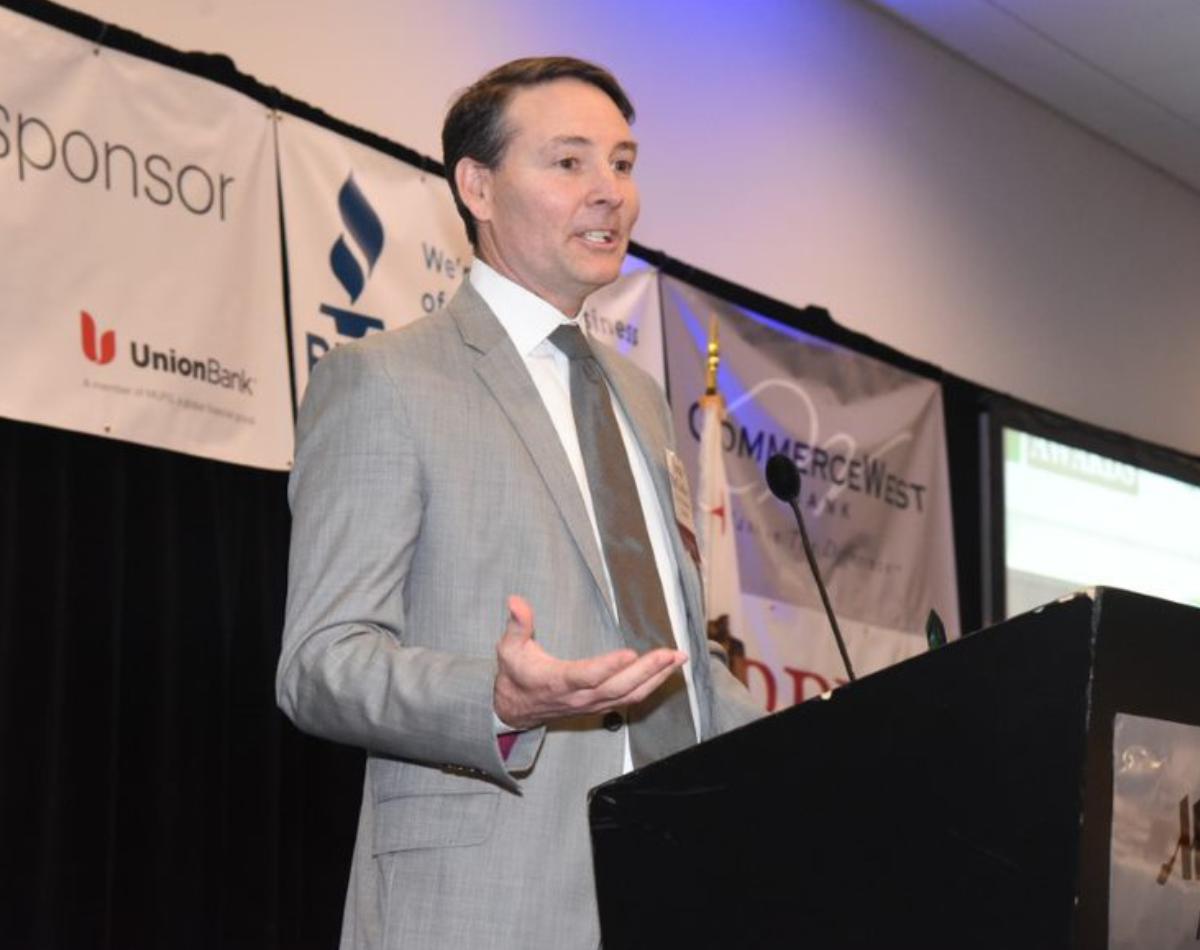
The company describes an advisory model that combines a dedicated financial professional with in-house specialists. McCloskey sits on an executive committee with Andy O’Brien, Tae Kim and Christine Tapia. Its specialist team includes financial-planning, investment-advisory and analysis roles. A May 2023 measure put its financial professionals’ average tenure above 22 years. That date matters; the figure describes a particular point in the firm’s history.
Long tenure gives continuity a human form. People remember earlier decisions and have working relationships that predate the latest organization chart. For a successor, those colleagues are part of the institution being led. Their knowledge is useful, and their presence makes change a conversation with people who have already contributed years of work. The past has seats at the table.
A company post in February 2025 described McCloskey leading a session on responsibility, excellence, integrity and happiness. The last item is an unexpectedly cheerful companion to the others. Responsibility sounds ready for a boardroom. Happiness sounds as though it might ask whether anyone enjoys being there. Putting the words together at least makes room for that question in the firm’s stated values.
Changing the sign, keeping the conversation
In April 2023, TFG announced a brand update, including a new logo, with an enhanced website planned for later that year. The firm was marking its 53rd anniversary. McCloskey discussed the changes as CEO. A business with a long history still has to decide how it will introduce itself to people encountering it for the first time.
That is a quieter leadership task than a headline-making deal, but a recognizable one. The existing clients know the conversations they have had. Prospective clients first see a name, a page or an introduction. The public presentation has to carry enough of the business to make the next conversation possible. A logo cannot do the advisory work. It can invite someone to find out who does.
TFG’s own history records additions to its services over time: comprehensive financial planning in 1985, investment advisory services in 1991 and business strategies in 2005. The firm McCloskey joined had already changed considerably from its beginnings. Its current description emphasizes relationships, specialized expertise and attention to the client’s goals. Continuity here includes a history of adding capabilities.
This is the useful tension in his story. A family firm offers a connection to something established. An independent career offers experience of other ways to work. McCloskey’s route brought those together without requiring the early chapters to look like a straight line. The next generation can arrive with familiar relationships and an unfamiliar set of professional reference points.
The questions he now helps owners address give that route a particular relevance. How does a company continue? What should change? Who is ready to take responsibility? His own career contains a return, a period of working nearby and a decision to join. The long way to the family business left him with something to bring to the conversation when he got there.