The feature sounded simple: let a house hunter book a property tour. In Acquaint Softtech’s account of building the Great Colorado Homes website, that feature failed several test runs. The fix took longer than expected. The company says the overall delivery stayed on schedule.
There is something useful about that admission. A property website looks like photographs and search boxes. Underneath, live listings, user accounts, and appointments must agree with one another. The awkward part of software often begins where two apparently straightforward things meet.
- The work: custom software and engineers who join your team.
- The specialty: Laravel, with related CMS and commerce expertise.
- The decision: how much delivery you want to manage yourself.
Acquaint sells help at those meeting points. Its customers include startups, software businesses, agencies, and larger organizations. Some need an application built. Others already have one and need more people to improve it. The distinction determines how the relationship works.
Choose who holds the clipboard
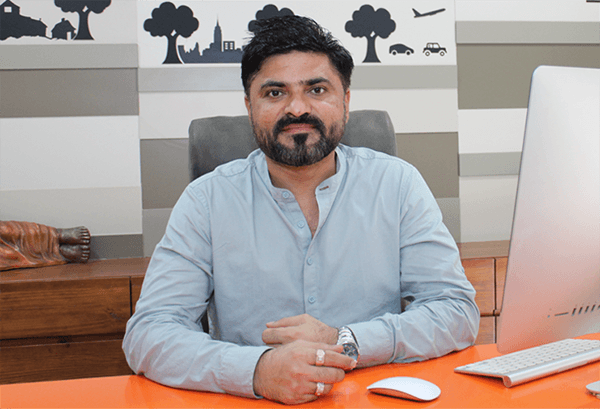
Founder and CEO Mukesh Ram leads a company whose pitch centers on access to developers. Acquaint describes three principal arrangements: staff augmentation, dedicated teams, and end-to-end outsourcing. They sound similar until you ask who decides what happens on Monday morning.
With augmentation, engineers enter the client’s existing workflow. The client keeps delivery control and supplies direction. A dedicated team gives a product continuing, exclusive attention. Managed outsourcing assigns the provider responsibility for planning, development, testing, and delivery against agreed scope and milestones.
The practical difference is management capacity. A business with an effective technical lead may need another backend engineer more than another project manager. A business without that lead has a different problem. Extra hands cannot settle a disagreement about what the product should do.
The price tag has an asterisk
Acquaint’s Laravel page advertises dedicated developers from $22 an hour or $3,200 a month. Those are starting offers for different arrangements. They should not be treated as interchangeable measures, or as the finished cost of an application.
Scope, seniority, availability, and engagement terms need a quote.
Clutch lists a $5,000 minimum project size and a $25-$49 hourly range. Those figures describe a broader marketplace profile, rather than an identical package. A sensible buyer would ask what engineering, testing, management, deployment, and support each proposal includes before comparing the totals.
SuperFi offers a more concrete example of the work. Acquaint’s case study describes a UK debt-management product with mobile applications, an administrative system, and banking integrations. It says React Native was chosen to avoid building separate applications for Android and iOS, reducing duplicated effort.
TrueLayer supplied banking-data and payment connectivity; Intercom provided customer engagement. Acquaint’s job included making these pieces work together. That is a useful distinction for anyone commissioning an app: using an existing service can save development effort, while leaving substantial integration work to do.
In a March 2026 retrospective, Acquaint claimed SuperFi saved more than $60,000 against equivalent internal hiring. Treat that as the provider’s comparison. It illustrates the sales argument, but it is not a quoted project bill or a saving every customer should expect.
A specialty you can inspect
Software agencies tend to accumulate long lists of technologies. Acquaint lists Python, JavaScript stacks, mobile frameworks, cloud tools, and AI services. Its more legible distinction is the cluster around Laravel, the PHP framework used to build web applications.
Laravel’s own directory lists Acquaint as a Community Partner. Statamic lists it as a partner agency, and Bagisto includes Acquaintsoft among its solution partners. These relationships place the company in a connected market: custom applications, content-managed websites, and online commerce.
The distinction matters most when a buyer already uses those tools. An established Laravel application may need an upgrade, a faster API, or a better editorial interface. Familiarity with the surrounding ecosystem can make the conversation about an existing system more specific.
“making developers easily accessible and affordable to all”
Mukesh Ram’s stated aim, on Acquaint’s Laravel page
There are also small products to inspect. Acquaint’s Geolocation Tracker for Forms is listed on Statamic at $10 per site. It captures location information alongside form submissions. Stata Mailer, a free add-on, simplifies mail configuration. Both have public source repositories linked from their marketplace listings.
Neither tool establishes how a large client engagement will turn out. They do, however, give a prospective customer something tangible to examine: documentation, code, and a narrowly defined function. That is a useful complement to testimonials.
Keep someone at the wheel
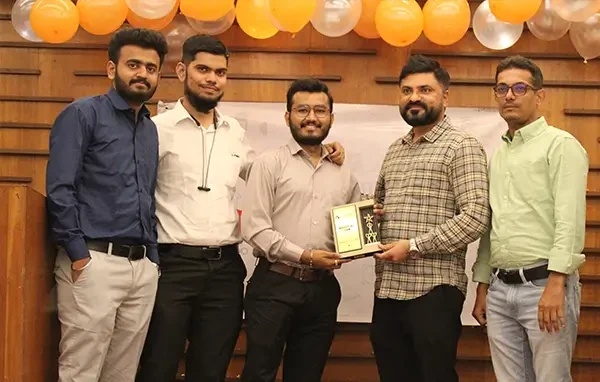
Acquaint’s stated working culture emphasizes clear ownership, early communication about risks, and continuing relationships. Its February 2026 Laravel News partnership announcement extends that positioning into sharing practical development knowledge. The commercial logic is continuity: the people maintaining a product benefit from understanding how it was built.
For buyers, the useful habit to copy is to define a complete user journey before celebrating individual features. Find a property, create an account, request a tour. Then test the connections. Acquaint’s booking example shows why a plausible feature list needs that extra scrutiny.
The arrangement also needs someone able to make timely decisions. Augmentation becomes difficult when priorities are unresolved. Fixed-price work becomes harder when requirements keep moving. Acquaint offers several ways to buy engineering help; choosing among them requires an honest account of the management work the customer can supply.
Before committing, ask for a small piece of representative work with an agreed definition of done. Review the result with whoever will maintain it. Request access to the repository, clarify how changes are approved, and put support responsibilities in writing. Those questions make a remote engagement easier to judge because they concern work you can actually see.
That is where this company fits: a specialist services partner for businesses that need software built and kept useful. The test is pleasingly ordinary. Can the user finish what they came to do?
Explore the work
WATCH THE CLIENT CONVERSATIONS
▶ Andrew Fortune · Great Colorado Homes ↗▶ Nick Spiller · SuperFi ↗