A toy shop can sell a teddy bear halfway around the world and still struggle to answer a simpler question: did the franchise send its sales report? At Hamleys, franchise partners used different reporting platforms. There was no universal tool for checking submissions. Umbrella IT built software that inspected an FTP server and flagged missing files. The assignment was modest enough to sound dull. Imagine being the person who had to chase those files.
- The work: custom software, embedded engineering teams and IT consulting.
- The sweet spot: products and business systems that need to work together.
- The lesson: investigate the handoff before adding another feature.
That is a useful introduction to Umbrella IT. Its clients include publishers, retailers and software businesses; its services extend from mobile development to machine learning. Yet the revealing detail is often a gap between two things that already exist. A report and its recipient. A customer record and a contract. A working feature and the next release.
01 / The trouble between systems
Consider Revenue River. Its customers’ information lived in multiple products, in incompatible formats, updated on different schedules. Some systems lacked an API, the connection software normally uses to exchange information. Umbrella IT mapped the data, identified the entities that needed connecting and built an integration server with a backup database. Its account describes more than ten custom HubSpot integrations, including connections with PandaDoc, Hint Health and EnCompass.
Buying another application would not necessarily have settled those disagreements. Someone had to decide what each record meant and how changes should travel. This is the less photogenic part of digital business: a customer can have one identity in the sales system and another in the operational machinery.
At Penske Media Corporation, the problem involved infrastructure support agreements. Monitoring contract performance manually took time and invited mistakes. Umbrella IT describes connecting a management platform to Zabbix and Ansible, gathering infrastructure information, notifying contractors and calculating monthly support costs against failures and downtime. The deliverable connected technical events to a financial consequence.
02 / A developer is only part of the purchase
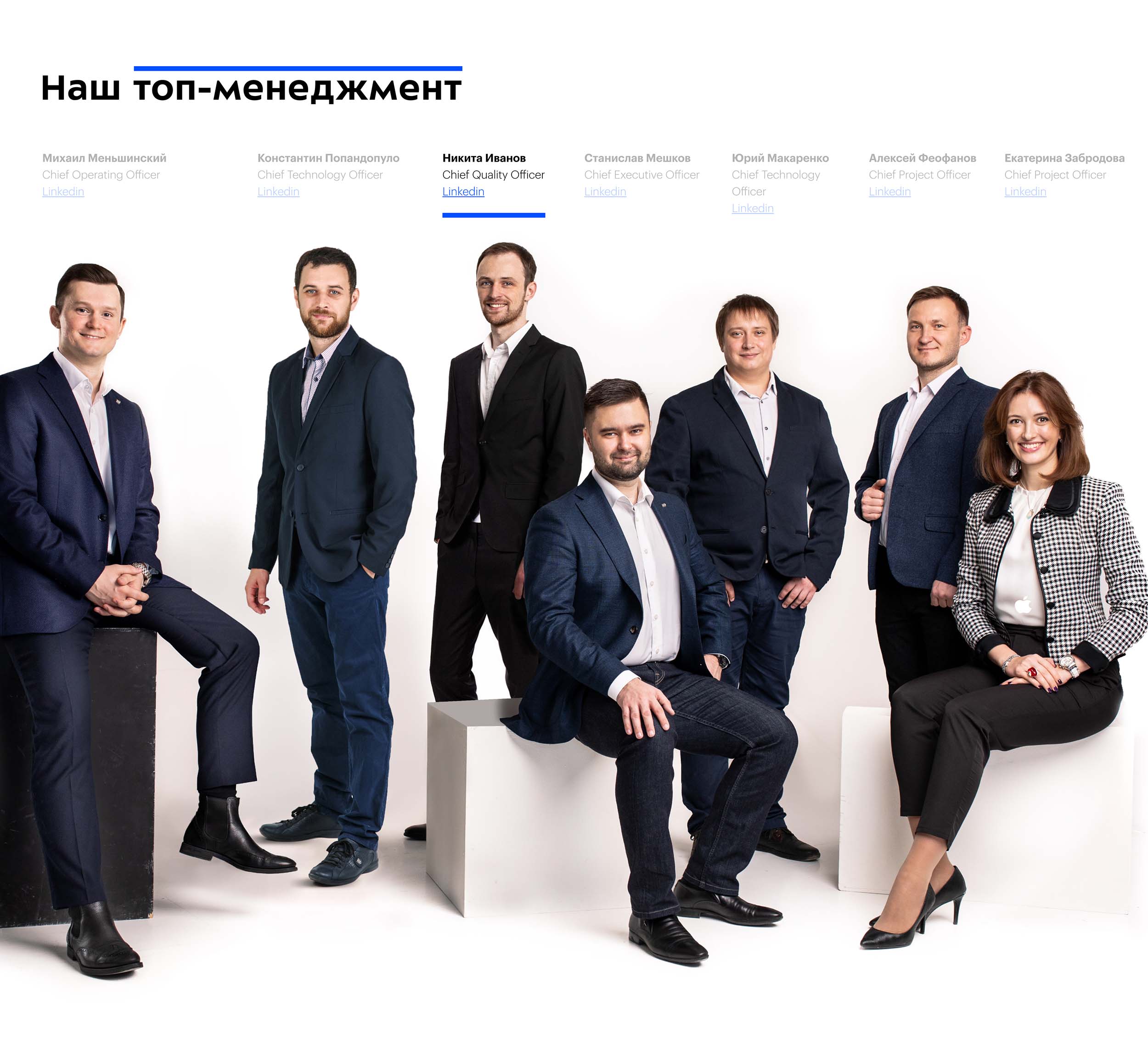
Stanislav Meshkov established the Umbrella brand in December 2009. The company’s history describes an early team of roughly ten to twelve people and projects for customers in the United States, Australia and France. Training prospective employees was part of the operation. During 2015-2017, the business expanded into consulting and its own products; the IT suffix arrived during its 2018 rebranding.
Today, the purchase can take several forms. A customer can recruit a permanent employee, borrow remote developers, commission a defined application or engage a team for continuing releases. The service catalogue includes designers, testing, DevOps, architecture reviews and technical debt reduction. Umbrella IT also offers a rescue team for troubled projects. That last service acknowledges something every software buyer eventually discovers: development includes inheriting decisions somebody else made.
Its position in the market is therefore practical. It competes for work that could go to an internal engineering department, independent contractors or another development consultancy. Its pitch combines staffing with responsibility for understanding the surrounding system. The distinction becomes useful when the bottleneck requires several disciplines rather than an extra pair of hands.
03 / The scanner met the cocktail party
Umbrella IT’s own Take My Card project exposes a different kind of integration problem. The initial idea involved scanning business cards into contacts. Research found that people preferred scanning after conferences. Scanning a card and immediately returning it could also seem rude. The team changed emphasis toward sharing virtual cards through shortcuts, widgets and Siri. The assumption about social behaviour needed fixing before the interface did.
“Working with Umbrella IT has been a collaborative effort.”Yuriy Zaycev, CEO, Driving International Authority, in a 2020 client review
The company applies this interest in work beyond client commissions. Its website lists UnSpot, a workplace management product, RomDo, a programmer marketplace, and AtTrack. These products give the service business another perspective: hiring people and coordinating their activity are themselves software problems. They also explain why a firm selling development time would spend time studying how work happens.
04 / Put a price on the experiment
Software services have an awkward unit of purchase: hours are measurable, usefulness takes longer to establish. Umbrella IT describes time-and-material engagements with one- or two-week sprints and demonstrations of results. Its website also advertises fixed-price application work. Those arrangements allocate uncertainty differently. A changing backlog suits iterative purchasing; a defined deliverable gives a fixed-price agreement something concrete to contain.
Approximate cumulative spend reported by translation business Driving International Authority over three years, in its January 2020 review.
That client described a Symfony website, a WordPress blog and maintenance. The useful budget question is what remains after launch: support, changes and the responsibility for keeping the product usable. A project price becomes more informative when its duration and continuing obligations sit beside it.
05 / Copy the investigation
OneSky’s testing assignment offers a concrete method to borrow. Umbrella IT had helped develop only some modules of a complex microservices application. Its team first investigated behaviour and expected results, then covered endpoints with automated tests. Before automating checks, establish what a correct outcome actually is. Otherwise, faster testing can simply preserve a misunderstanding.
The same reasoning has limits. A small, standard requirement may be better served by existing software. An outsourced team also needs access to knowledgeable people and timely decisions. If nobody can explain the business rules, or approve a change, additional engineers will inherit the queue. These are purchasing implications of the work, rather than a promise that every project needs a consultancy.
In September 2026, Umbrella IT reported that its HENDERSON mobile app reached the G8 Creative Awards shortlist. The project replaced a packaged app and connected website and mobile commerce within a redesigned architecture. Different scale, familiar question: what has to happen between the parts? For a buyer, that is a sharper starting point than a shopping list of technologies.