Consider the distance between deciding to see a therapist and actually speaking to one. There is a search, a question about privacy, an appointment, a payment. Each step can lose somebody. In Codiant’s published account of its work for Labayh, a mental health platform serving the Middle East, these small obstacles are the substance of the assignment. Arabic-language access, confidential consultations and integrated booking all belong to the same problem: getting a person through the door.
- Codiant builds custom software and supplies development teams.
- YASH acquired it in 2017 for mobility, commerce and user experience expertise.
- Its AI products target everyday work: food logs, clinical notes and hiring.
This is a useful place to begin with a company whose website offers enough technologies to fill a conference agenda. Codiant sells the engineering that connects an intention to a completed task. Its customers include startups building their first products and businesses repairing or expanding existing systems. The software might be a marketplace, a mobile app or an internal tool. The difficult part is often everything that has to happen between the screens.
Before AI, there was the appointment
Labayh makes that difficulty visible. Codiant describes a fragmented journey through sessions, payments and follow-ups, complicated by privacy fears and difficulty finding Arabic-speaking therapists. Its response combined private one-to-one bookings, localized content, group support and in-app payments. The work crossed design, application development and the mechanics of running a service. A prettier front page alone would have left most of the assignment untouched.
The distinction matters when choosing a developer. A customer can buy a screen. A business needs the booking to reach the right person, the payment to settle and the next interaction to make sense. Codiant’s portfolio sits in that larger territory. Public client references include Autism West Midlands, Cosmetic Choice, Clinical Trial Company and Same Day Dispatch Services. Health care is prominent, but the underlying work also appears in delivery, retail and commerce.
The acquisition explains the company
In October 2017, YASH Technologies announced that it had acquired Codiant. The buyer named three capabilities it wanted to expand: enterprise mobility, user experience management and commerce platform development. Its announcement reported more than 500 engagements for over 100 customers. Codiant would continue independently as a wholly owned subsidiary. The logic was straightforward: a specialist application business could extend the services of a broader technology organization.
The company’s own timeline starts with Neuron in 2010 and records the Codiant name in 2015. It places an offshore development center in Indore in 2012. That geography helps explain the offer: a US headquarters, engineering delivery in India and a customer base spread across markets. For a buyer, the relevant distinction is a mobile and product development specialist with a larger parent behind it. Whether that combination helps depends on the assignment.
Lunch is now an interface
By 2025, the portfolio had acquired a new vocabulary. CalCounts uses meal photographs and barcode scans to help people log food. CalCounts Pro gives nutrition and fitness professionals a companion dashboard. The interesting design choice is the input. Recording lunch ordinarily requires searching a database and estimating what went on the plate. A photograph is an attempt to shorten that chore enough that somebody might keep doing it.

“It’s a tool that simplifies nutrition tracking and supports consistency, not perfection.”Vikrant Jain · Codiant founder and CEO · CalCounts launch, June 2025
Scribeflo applies a related idea to clinical paperwork. It is designed to turn live or recorded consultations into structured SOAP notes: Subjective, Objective, Assessment and Plan. HireGroww addresses recruitment through resume parsing, assessments, video interviews and dashboards. These are different professions with a familiar software problem: useful information arrives in an inconvenient form. Codiant is selling ways to turn it into something a workflow can use.
That product layer sits beside commissioned AI work, including chatbots, agents and retrieval-augmented generation. Customers can also buy mobile and web engineering, interface design, cloud work and application modernization. The breadth gives a buyer several entry points. It also makes a precise brief essential. “Add AI” describes a technology preference; “turn this consultation into a reviewable note” gives a team something concrete to build.
Three ways to buy the work
Codiant’s commercial menu spans a complete custom project, dedicated developers who extend a client’s team, and white-label starting points. TeleDocto, TaxiWheel and Grofee illustrate the latter approach across telemedicine, taxis and groceries. The choice changes who owns daily decisions and how much must be designed afresh. An established internal product team may need engineering capacity. A founder may need discovery, design and delivery together.
Published in Codiant’s September 2026 pricing guide. Planning ranges; scope determines the quotation.
Those ranges are useful because they make the size of the decision visible. A module and an enterprise platform are different purchases. Codiant’s pricing guide also separates developer hiring from complete project budgets and highlights costs such as data preparation, integrations and cloud usage. Comparing a freelancer’s hourly rate with a whole delivery team’s proposal can conceal more than it reveals.
Meet the Codianters
The company calls its employees Codianters. Its public culture archive gives the name a setting: festival celebrations, Women’s Day activities and an internal cricket league. In 2023, four teams competed, with the Strikers beating the Blasters in the final. The photographs supply a welcome change of scale after all the talk of enterprise platforms: colleagues in matching shirts, a playing field and a table crowded with trophies.
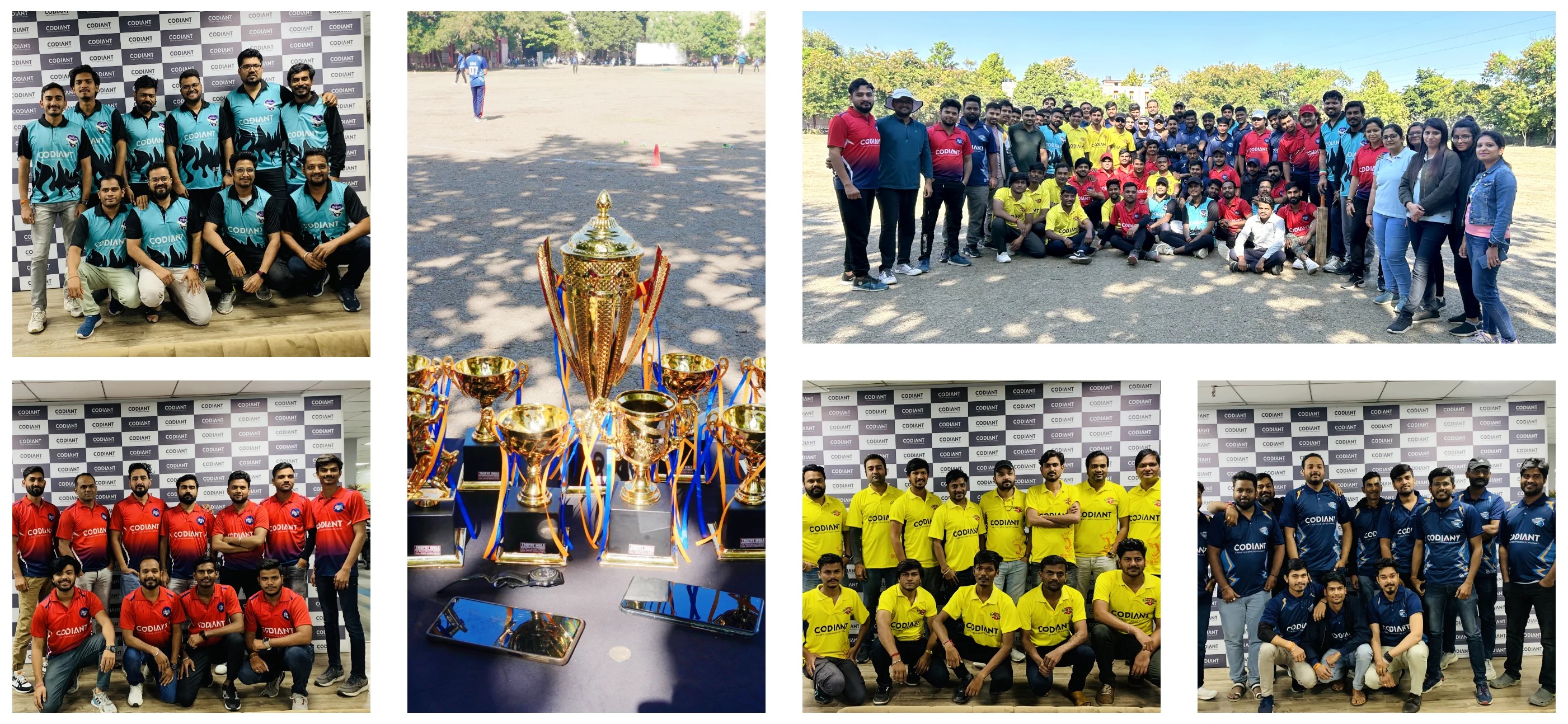
For customers, the corresponding human question is how the working relationship feels after the sales conversation. A development partner will ask for decisions, challenge requirements and need timely feedback. The team model succeeds through that ordinary collaboration, repeated over weeks and months. A portfolio is the introduction; the review meeting is where the relationship earns its keep.
The part worth borrowing
Codiant’s published process has a pleasantly unglamorous sequence: analyze requirements, approve features, prepare wireframes, approve designs, then develop in sprints of no more than two weeks. It includes acceptance testing and handover documents. Readers can copy that sequence without hiring Codiant. Agree on what a completed task looks like, inspect working increments and decide who will operate the result.
That arrangement demands an involved buyer. A project with unclear priorities or unavailable data still needs those problems resolved. A standard tool may be sufficient when the workflow needs little customization. Codiant occupies the space where a business needs software shaped around its operations and wants outside help building it. Its AI chapter is easiest to judge there, one appointment, one note and one meal at a time.